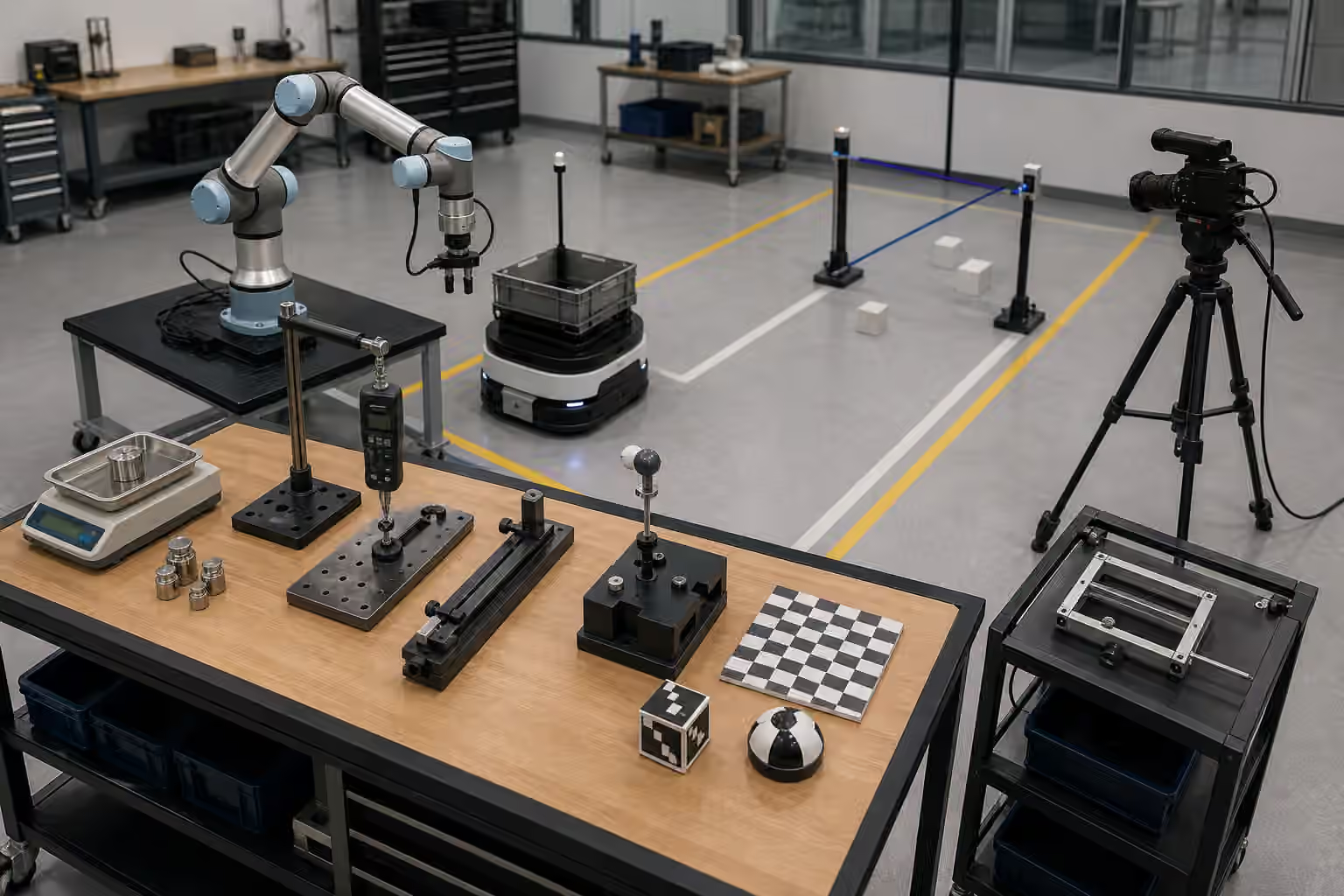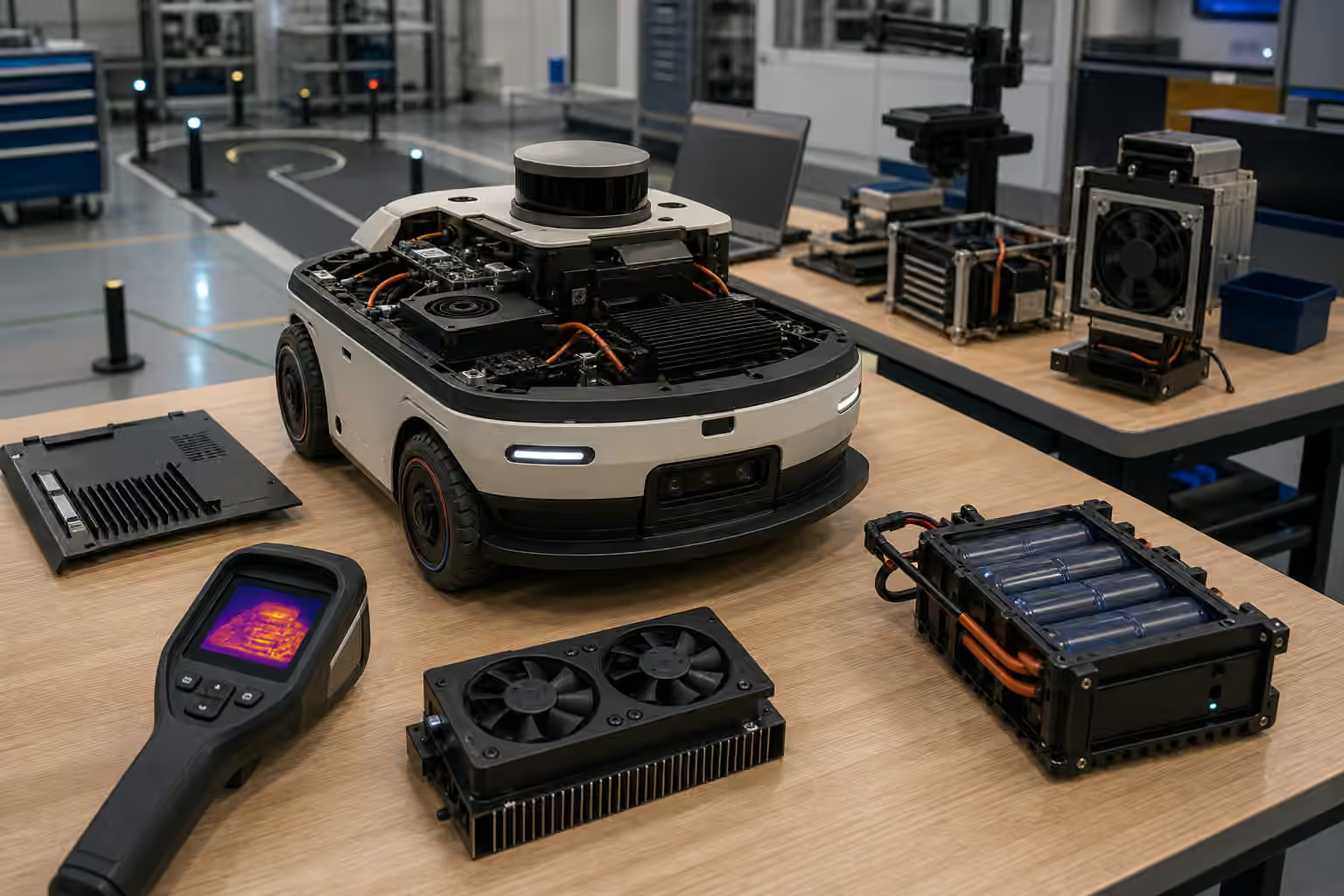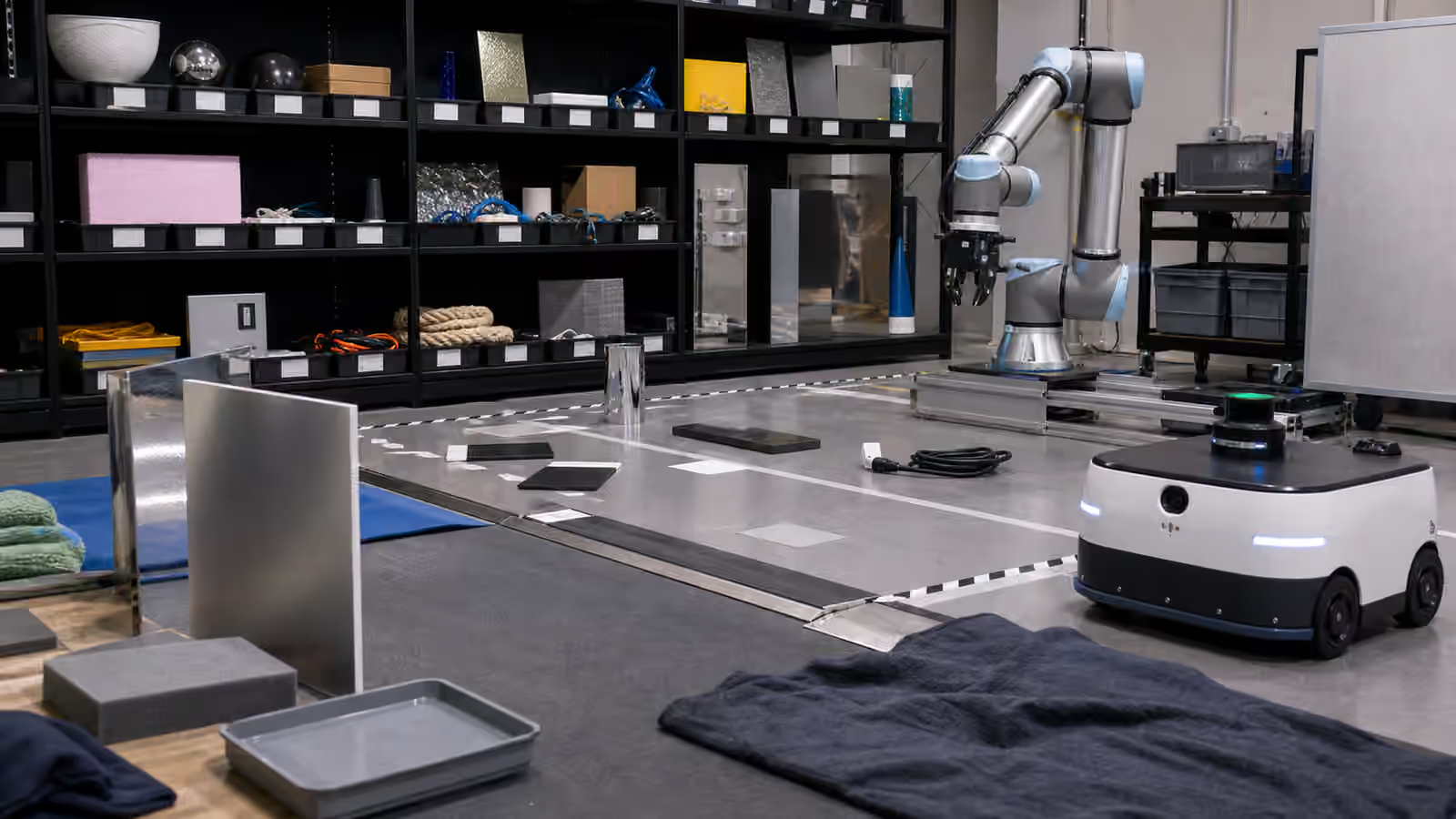
An edge case is a story until it becomes a test.
Someone remembers the robot failed on a glossy pouch. A technician says it dislikes the south hallway after cleaning. An operator mentions that the gripper slips on one supplier’s carton. A support engineer recalls a navigation fault near a low cable cover. These stories are useful, but they are fragile. They change as people retell them, disappear when shifts change, and become arguments when the robot improves in one place while failing in another.
A robot edge-case test library turns those stories into reusable evidence. It collects scenarios, objects, surfaces, lighting conditions, routes, logs, replay bundles, acceptance criteria, and recovery expectations so the team can ask a better question: does this robot still handle the cases that taught us something?
The Library Begins With Real Friction
Edge-case libraries should not begin as a list of imagined dangers from a conference room. They should begin with the actual friction of the deployment. The missed grasp. The false obstacle. The glare patch. The label that curled. The cart that blocked a turn. The soft bag that collapsed under suction. The human handoff that failed because the station filled earlier than expected.
Robot Data Collection explains how physical experience becomes useful data. An edge-case library is one of the ways to keep that experience alive. It does not need to capture every ordinary run. It should capture the cases that reveal a boundary, a false assumption, a maintenance issue, or a gap between the robot’s task definition and the site.
The most useful cases are specific. “Bad lighting” is too broad. “Glossy black package on the left side of the tray under afternoon window glare” is the start of a test. “Blocked route” is too vague. “Tall cart parked at the blind corner before the dock during shift change” is a scenario that can be reproduced, simulated, or at least recognized in logs.
A Case Needs Context, Not Just Media
A photo or video of a failure is valuable, but it is not enough. The test case needs the task, robot version, map or workcell state, object details, lighting, payload, human actions, sensor health, and what counted as success or failure. Without context, the team may fix the visible symptom and miss the condition that mattered.
A failed pick may have been caused by object shape, gripper wear, lighting, calibration, fixture placement, or a stale model. A mobile robot stop may have been caused by a real obstacle, dirty sensor, floor slip, map mismatch, conservative safety behavior, or a bad route assignment. The edge-case record should preserve enough context that future reviewers can understand why the case belongs in the library.
Robot Observability and Field Logs gives the operational record that supports this. A strong library links human description with robot evidence. The story says what people saw. The log says what the machine believed.
Reproduction Has Levels
Not every edge case can be reproduced perfectly. A home robot failure involving a pet, a toy, changing sunlight, and a moving person may be hard to recreate. A warehouse route issue may depend on traffic that varies by shift. A manipulation failure may require a damaged package that is not always available. That does not make the case useless.
Reproduction has levels. Some cases can be rebuilt physically with the same objects and layout. Some can be approximated with a representative fixture or material. Some can be replayed from recorded sensor data. Some can become a simulation case. Some can remain a field watch condition that the logs search for after each update.
Sim-to-Real Robot Learning is helpful because simulation is strongest when it is anchored to real disagreement. An edge-case library can tell the simulation team which materials, lighting, contact conditions, and route events deserve attention. It can also stop simulation from becoming too clean.
The Library Should Include Successes
It is tempting to store only failures. Failures are memorable, but successes around the edge are just as important. A robot that rejects an ambiguous object correctly has produced a useful case. A robot that slows near glare and asks for a better view has acted well. A mobile robot that refuses a route after a floor condition changes may be doing exactly what the domain requires.
Robot Failure Recovery separates failure from response. The edge-case library should do the same. The question is not only whether the robot completed the task. It is whether the robot acted appropriately for the evidence it had. A safe refusal can be a passing case. A successful action taken on weak evidence may be a warning case.
Storing good edge behavior protects the team from regression. A later update may improve average performance while making refusals less cautious. A planner may get faster but stop pulling out of a crowded area cleanly. A perception model may classify more objects but become overconfident on reflective surfaces. The library should catch the cases that matter, not only the average score.
Physical Samples Need Care
Some edge cases live as physical samples: a glossy package, a bent tray, a worn gripper pad, a reflective panel, a threshold strip, a cable cover, a cloth pile, a scratched sensor cover, or a set of objects that confuse the classifier. These samples need care if they are going to remain valid tests.
A sample can degrade, disappear, or be “improved” by accident. A soft bag may flatten differently after storage. A label may be replaced. A cable may be coiled more neatly than it was during the original failure. A reflective panel may collect dust. If the physical sample changes, the test may no longer mean the same thing.
Robot Spare Parts and Consumables Planning connects unexpectedly here. Test artifacts are part of operational memory. They should be labeled, stored, versioned when necessary, and retired when they no longer represent the field condition. The goal is not museum precision. It is enough discipline that a future test still answers the intended question.
Cases Need Owners
An edge-case library without ownership becomes a shelf of curiosities. Someone needs to decide which cases enter, which are duplicated, which are stale, and which must be run before a release, pilot expansion, or hardware change. Ownership may sit with systems engineering, field support, QA, safety, or a deployment lead, depending on the organization. The role matters less than the habit.
Robot Software Updates and Change Control should include edge-case selection. A perception update may require visual cases. A gripper change may require manipulation cases. A map change may require route and traffic cases. A new customer site may require only the cases that match its domain plus new cases discovered during commissioning.
The library should not become a ritual where every case runs every time without thought. That wastes effort and teaches people to ignore the results. It should be a living set of evidence tied to the change being made.
Edge Cases Support Expansion
A robot’s operating domain grows by learning what used to be outside it. Edge cases show where that growth is earned. If a robot once failed on a glossy package and now handles several glossy materials under tested lighting, the domain may expand. If it still handles only one staged version, the claim should stay narrow. If a new gripper solves one object and creates a problem with another, the library should reveal both.
Robot Operational Design Domains gives the language for this expansion. An edge-case library gives it evidence. The team can say not merely that the robot is better, but which previously troublesome conditions were tested, how often, under which version, and with what failure behavior.
This is especially useful during procurement and pilots. Robot Pilot and Procurement Evaluation asks for proof that resembles the work. A buyer can bring known edge cases into a pilot instead of accepting a generic demo. A vendor can learn whether the site has realistic evidence or only anxieties.
Surprises Should Become Assets
Robotics will always produce surprises because the physical world is richer than the design document. The question is whether surprises evaporate after the incident or become assets for the next decision. A good edge-case library gives the team a way to remember honestly. It connects field experience to tests, tests to updates, updates to domain claims, and domain claims back to daily work.
The library should stay grounded. It should avoid theatrical impossibilities and focus on conditions the robot may reasonably meet. It should include the boring cases that actually stop work: worn labels, shifted mats, partial occlusion, unexpected human timing, dirty sensors, awkward objects, and stale maps. Those are the cases that make a robot dependable when solved and understandable when not.
An edge case is not an embarrassment. It is a useful boundary made visible. When the boundary is captured, named, tested, and revisited, the robot team gains something more valuable than a highlight reel: a memory that improves with use.