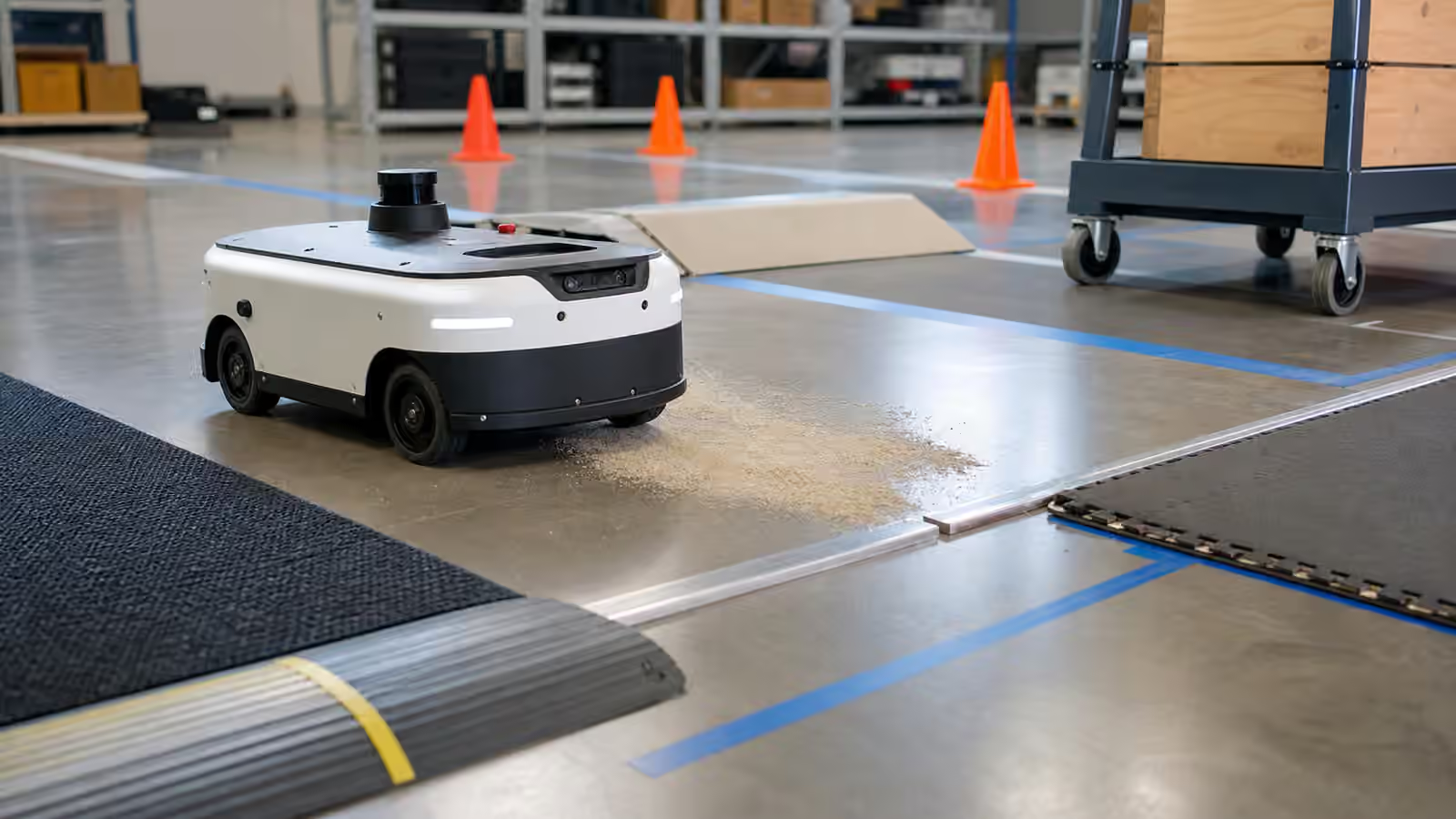
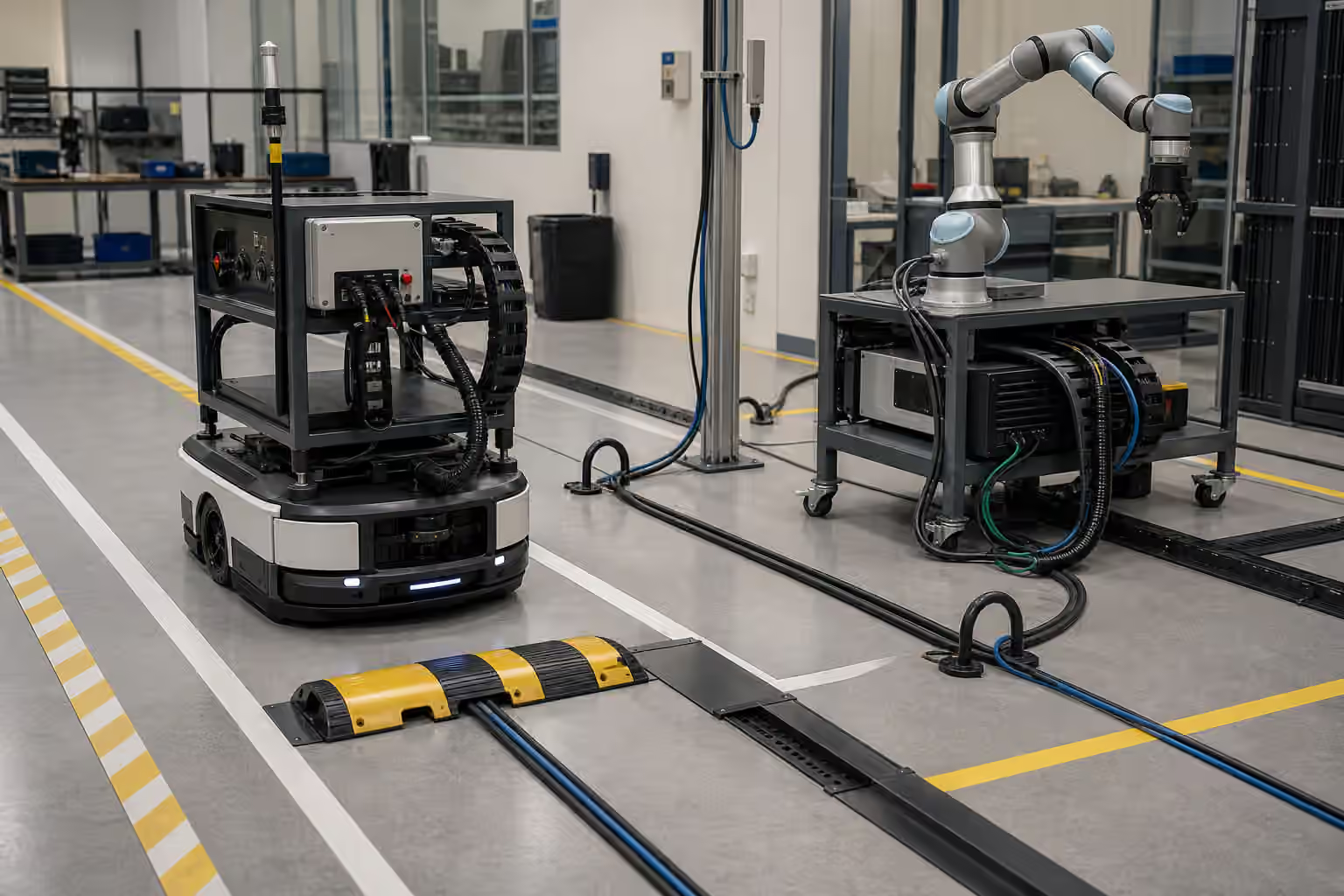
A robot that cannot be cleaned is not ready for many kinds of real work. It may move well, perceive well, and complete the task in a demo, but the deployment changes when dust collects on sensors, product residue builds up around a gripper, fibers wrap around a wheel, oil reaches a cable channel, or a sensitive workspace requires repeatable cleaning before the next shift.
Cleanability is easy to overlook because dirt is not part of the highlight clip. The robot is filmed when it is new, dry, calibrated, and surrounded by tidy objects. Field work is less polite. Warehouses have dust, cardboard fibers, tape, broken packaging, floor grit, and spilled liquids. Food, agriculture, life science, and healthcare-adjacent settings have stricter contamination expectations. Homes have hair, crumbs, grease, pet mess, and bathroom humidity. The robot’s body has to survive that contact without turning maintenance into a daily disassembly project.
Robot Maintenance and Reliability covers the broader work of keeping machines alive after launch. Cleanability is one of the most physical parts of that story. It asks whether the machine can be restored to a usable state, whether the cleaning process damages the robot, and whether the site can trust the robot around the material it handles.
Dirt Changes Robot Behavior
Contamination is not only an appearance problem. Dirt changes sensing, motion, grip, cooling, and safety. A dusty camera lens lowers contrast. A smeared depth sensor loses confidence. A wheel coated with powder slips differently. A suction cup with residue fails to seal. A gripper pad covered in oil may squeeze harder and still drop the object. A clogged fan can raise compute temperature. A dirty charging contact can make docking unreliable.
These changes can look like software problems from a distance. The robot misses a pick, stops more often, docks poorly, or reports noisy perception. Engineers may inspect models, maps, and logs while the real cause sits on a lens, fingertip, caster, or connector. Robot Observability and Field Logs helps because health signals can show patterns, but the design has to make physical inspection straightforward enough that technicians can confirm the cause.
A cleanability plan should name the surfaces that matter. Some surfaces are product contact surfaces. Some are sensor windows. Some are human touch points. Some are floor-contact components. Some are hidden crevices where residue accumulates until it causes failure later. The robot does not need every part polished to the same standard, but the team should know which parts carry operational or contamination risk.
Cleanable Geometry Beats Heroic Cleaning
A machine is easier to clean when its shape cooperates. Smooth surfaces, accessible edges, sealed seams, protected connectors, managed cable routing, removable covers, and visible contact points matter more than heroic effort with a cloth after each shift. If cleaning requires awkward angles, tiny tools, or guesswork, it will be skipped, rushed, or done inconsistently.
Robot arms often bring this issue into focus. The arm may have beautiful motion but exposed fasteners, grooves, cable loops, sensor brackets, or end-effector crevices that collect residue. A mobile base may have wheel wells that trap fibers, casters that hide debris, floor-facing sensors that smear, and charging contacts near dust paths. A humanoid may multiply the issue because its body has many joints, covers, seams, and contact surfaces.
Robot End-Effectors and Tooling is especially relevant because the tool is where the robot meets the object. A gripper that handles dry cartons may tolerate dust and be cleaned on a maintenance schedule. A tool that touches food packaging, lab containers, medical supplies, or wet materials may need a stricter design. The right tooling question is not only whether the robot can grasp the object. It is whether the tool can be cleaned, inspected, and returned to service without degrading its grip or hiding contamination.
Boundaries Matter More Than General Cleanliness
Contamination control begins with boundaries. What is allowed to touch the product? What is allowed to touch the floor? What may move between zones? What must be cleaned before crossing a boundary? What can be handled by the robot only in sealed packaging? What should never be handled by the robot at all?
These questions are deployment-specific. A warehouse robot may need to avoid spreading dust from one zone to another. A lab robot may need to keep instrument areas separate from waste areas. A food handling robot may need to separate raw and finished material paths. A home robot may need to avoid moving from a bathroom mess to a kitchen surface. The site does not need vague confidence that the robot is “clean.” It needs a clear account of where contamination could travel.
This links cleanability to Robot Operational Design Domains . The operating domain should include contamination assumptions. Dry cartons in a low-dust aisle are different from wet produce, powder, pet hair, or sticky residue. A robot that is acceptable in one domain may be inappropriate in another unless the body, tool, procedure, and validation change.
Cleaning Can Damage The Robot
Cleaning is not harmless. Liquids can enter seams. Solvents can cloud plastics, soften rubber, or remove markings. Wiping can scratch lenses. Compressed air can push debris deeper into bearings or connectors. Strong chemicals can degrade seals. Repeated cleaning can loosen covers, wear cable jackets, or change the texture of gripper pads. The process that protects the work can quietly harm the machine.
The deployment team needs cleaning instructions that match the robot’s materials and the site’s expectations. Those instructions should be realistic. If a surface cannot be exposed to certain cleaners, the site needs to know before buying the robot for a setting that uses them. If a sensor window needs a specific cloth or motion, that should be part of maintenance training. If a tool has a limited cleaning life, replacement should be planned rather than discovered after failures start.
Robot Environmental Robustness covers dust, light, water, and workplace conditions. Cleanability adds the maintenance side of that environment. The robot may tolerate splash during operation but not pressure washing. It may tolerate dust while moving but need regular sensor cleaning. It may handle a dirty floor but not sticky material inside a wheel assembly. Robustness and cleaning should be designed together.
Inspection Has To Be Easy Enough To Do
Cleaning is only useful if the site can tell whether it worked. That does not always require lab testing. It may require a visible inspection point, a cleanable sensor window, a removable tool, a docking-contact check, a gripper-pad wear mark, or a simple way to see whether residue remains near a seam. The important part is that the inspection matches the risk.
If the robot handles ordinary packages, inspection may focus on sensor clarity, wheel debris, charging contacts, and tooling wear. If the robot operates in a controlled lab, inspection may include stricter separation of surfaces, documented cleaning intervals, and material compatibility. If the robot works near food or biological material, the requirements may be much more formal and site-specific. A general robotics guide cannot replace the site’s rules, but it can point to the engineering habit: make inspection visible and repeatable.
Inspection should also feed reliability records. A repeated finding of debris in the same location is not only a cleaning issue. It may be a design issue, a route issue, a floor condition, or a tooling mismatch. Robot Failure Recovery begins when the robot gets stuck or fails. Cleanability aims earlier, at the physical patterns that make failure more likely.
People Need Safe Access
A robot that can be cleaned only by reaching around powered joints, lifting heavy covers, or placing hands near pinch points has a training problem and a design problem. Safe access matters. The robot should provide a clear maintenance state, stable posture, lockout or isolation behavior appropriate to the setting, and reachable surfaces that do not require improvised body positions.
Access also affects time. A five-minute cleaning task that fits into a shift routine is different from a thirty-minute partial teardown that only a vendor technician can perform. Some sensitive deployments may require the longer procedure, but it should be planned as part of the operating model. A robot sold as a labor-saving tool can lose value quickly if every useful run creates hidden cleaning labor.
This is one reason Robot Site Readiness should include maintenance space. Cleaning needs a place to happen, supplies that are approved for the machine and the site, waste handling where relevant, good lighting, and a way to return the robot to service without blocking the workflow. The cleaning station is part of the deployment surface, not an afterthought.
Cleanability Should Influence Procurement
Buyers often ask about speed, payload, autonomy, uptime, and integration. They should also ask about cleanability. What parts are considered product contact surfaces? Which cleaners are allowed? Which components are sealed? Which areas collect debris? How are sensors cleaned? How often are gripper pads replaced? What evidence exists from similar environments? What cleaning tasks are customer-owned rather than vendor-owned?
These questions may not sound glamorous, but they prevent bad fits. A robot that performs well in a dry demo may be the wrong choice for a sticky, wet, dusty, or sensitive process. A system that is easy to wipe down may still fail if its tooling traps material. A mobile base that survives warehouse dust may be inappropriate for a cleanroom. Cleanability is not a universal score. It is a match between robot, task, material, and site.
Robot Pilot and Procurement Evaluation argues for buying evidence rather than a demo. Cleanability deserves evidence too. A pilot should include ordinary dirt, cleaning intervals, inspection, and the actual people who will maintain the machine. If the robot is too fragile or awkward to clean during the pilot, scaling will not make that easier.
A Clean Robot Is A Maintained Boundary
Cleanability is not about making robots look new forever. It is about maintaining boundaries that matter: between safe and unsafe contact, between reliable and degraded sensing, between routine maintenance and hidden labor, between one zone and another, between a good demo and a machine that survives its setting.
The useful robot has a body that can be cleaned, a tool that can be inspected, a procedure that people can follow, and an operating domain that admits what kinds of contamination it can handle. It does not pretend that dirt is outside robotics. It treats dirt as part of the physical world the robot was built to meet.
When cleanability is designed well, it becomes almost boring. The technician knows where to look. The surface is reachable. The tool comes off cleanly. The sensor recovers after a wipe. The log shows when maintenance happened. The site trusts that the robot can return to work without carrying yesterday’s problem into the next task. That boring confidence is exactly what many deployments need.