A robot can have excellent motion planning and still be defeated by a cable.
The failure usually looks ordinary. A wrist cable rubs against a fixture. A pneumatic hose catches on the edge of a tray. A prototype mobile base drags a power tether through a chair leg. A charging lead falls where a wheel can pinch it. A sensor cable slowly loosens because the strain relief was treated as a detail instead of part of the robot. The autonomy stack did not become less intelligent. The physical path around the machine was never made honest enough.
Cable and tether management belongs inside physical AI because robots move through their own infrastructure. Power, data, air, fluid, test instrumentation, charging, and temporary debugging equipment all need routes. Those routes can support reliable work, or they can create invisible tripwires that only appear after the demo becomes repeated motion.
The Cable Is Part Of The Mechanism
It is tempting to describe cables as accessories. The robot arm is the machine; the wire is merely attached to it. The mobile robot is the platform; the charging cable is merely nearby. In practice, every cable that moves with a robot becomes part of the mechanism. It adds stiffness, drag, bend limits, vibration paths, snag points, and maintenance needs. A cable that works when the robot is still may fail when the robot repeats a reach one thousand times.
This matters most at the places where motion changes direction. A wrist harness may twist during an end-effector change. A camera cable may flex near a sensor mast. A hose may loop outward during a fast arm move and collide with a fixture that was outside the nominal swept volume. The robot’s planner may keep metal links clear while the soft services trail behind in a different path. If the planning model ignores the cable, the installation has an unmodeled limb.
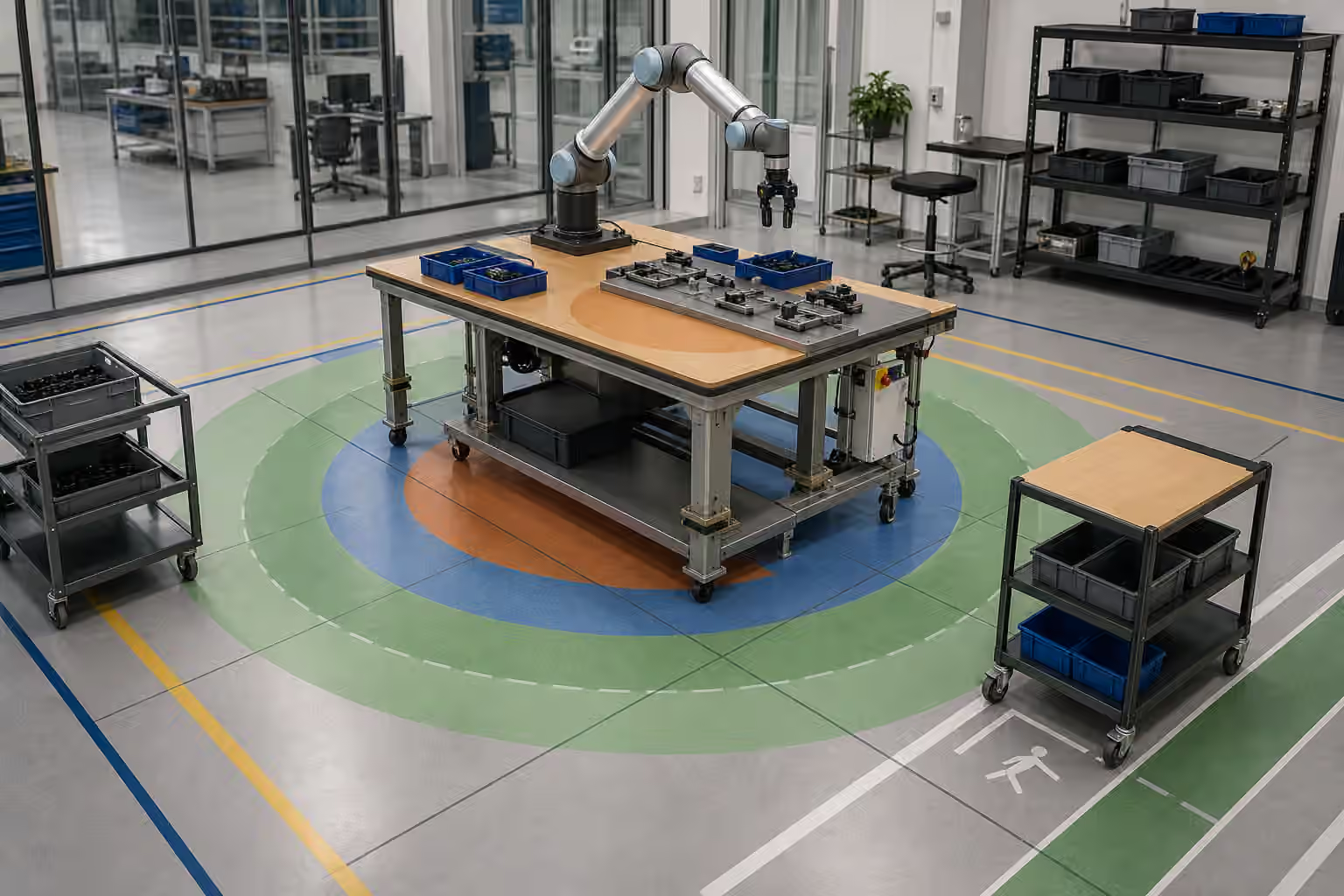
Robot Workcell and Fixture Design is the natural companion here. A workcell is not only the robot, table, guard, and part. It is also the routing of everything that lets the robot operate. Cable carriers, overhead drops, service loops, conduit, clamps, tool changers, and protected pass-throughs shape the cell as much as a tray or fence does.
Tethers Make Prototypes Look Easier Than Deployments
Lab prototypes often use tethers because they are practical. A development robot may need external power, a high-bandwidth data link, a safety leash, a compressed-air line, or measurement equipment that has not been integrated into the platform. That is not a flaw. Early systems need instrumentation. The risk begins when a tethered prototype is judged as if the tether will disappear without consequences.
A tether changes the task. It limits range, changes turning behavior, creates a second object that must be kept clear, and often requires a person to manage slack. A mobile robot may navigate cleanly while someone quietly walks the cable behind it. A manipulation system may run perfectly while the engineer watches the hose loop. The task succeeded, but the support behavior was part of the success.
Robot Demo Evaluation teaches readers to ask what a video leaves out. Cable handling is one of those hidden denominators. How many attempts were stopped because the tether caught? Did a person guide the cable? Was the robot allowed to rotate freely? Could it dock, retreat, or recover without someone touching the line? A tethered test can still be valuable evidence, but only if the evidence names the tether as a constraint.
Routing Should Follow The Robot’s Real Motion
Good cable management starts by watching the robot move through its actual task, not by making the resting pose look neat. A service loop that is tidy at home position may become taut at the far corner of the reach. A cable that hangs safely during slow teaching may whip during production speed. A floor cover that protects one route may become an obstacle when a cart is moved or a robot reroutes around people.
The useful question is not “Does the cable look organized?” The useful question is “Where does the cable want to go during every normal, abnormal, and recovery motion?” That includes startup, shutdown, calibration, emergency stop, manual jog, tool change, cleaning, docking, and maintenance access. Many cable failures happen outside the happy path because people move panels, open covers, pull carts close, or run a recovery move that was never watched from the cable’s point of view.
Robot Task Design and Acceptance Tests can include this plainly. The acceptance test should not only verify that the arm reaches the object or the base completes the route. It should verify that cables, hoses, and temporary measurement lines remain inside safe paths across the task envelope. A robot that completes the motion while slowly abrading its own harness is borrowing reliability from the future.
Strain Relief Is Reliability Work
Strain relief is not cosmetic. It decides where force goes when a cable is pulled, flexed, twisted, bumped, or vibrated. Without it, connectors become structural members. A connector that should carry signal starts carrying motion. Pins loosen, seals fail, intermittent faults appear, and the failure may look like software because the symptom is a dropped sensor frame or a flaky device.
Robots make this worse because they generate repeated small motions. A cable on a stationary machine may sit for years. A cable on a robot may flex with every cycle, every dock, every bump, every operator intervention, and every maintenance panel opening. If the route is not designed for replacement, the team may hesitate to fix a worn harness until it fails fully.
Robot Maintenance and Reliability frames this as ordinary upkeep. The cable route needs inspection points. The team should know what normal wear looks like, which bend radius is acceptable, which clips are sacrificial, and which signs require service before a shift. Field logs should treat repeated cable faults as physical evidence, not as isolated electrical mysteries.
Mobile Robots Need A Cable-Free World
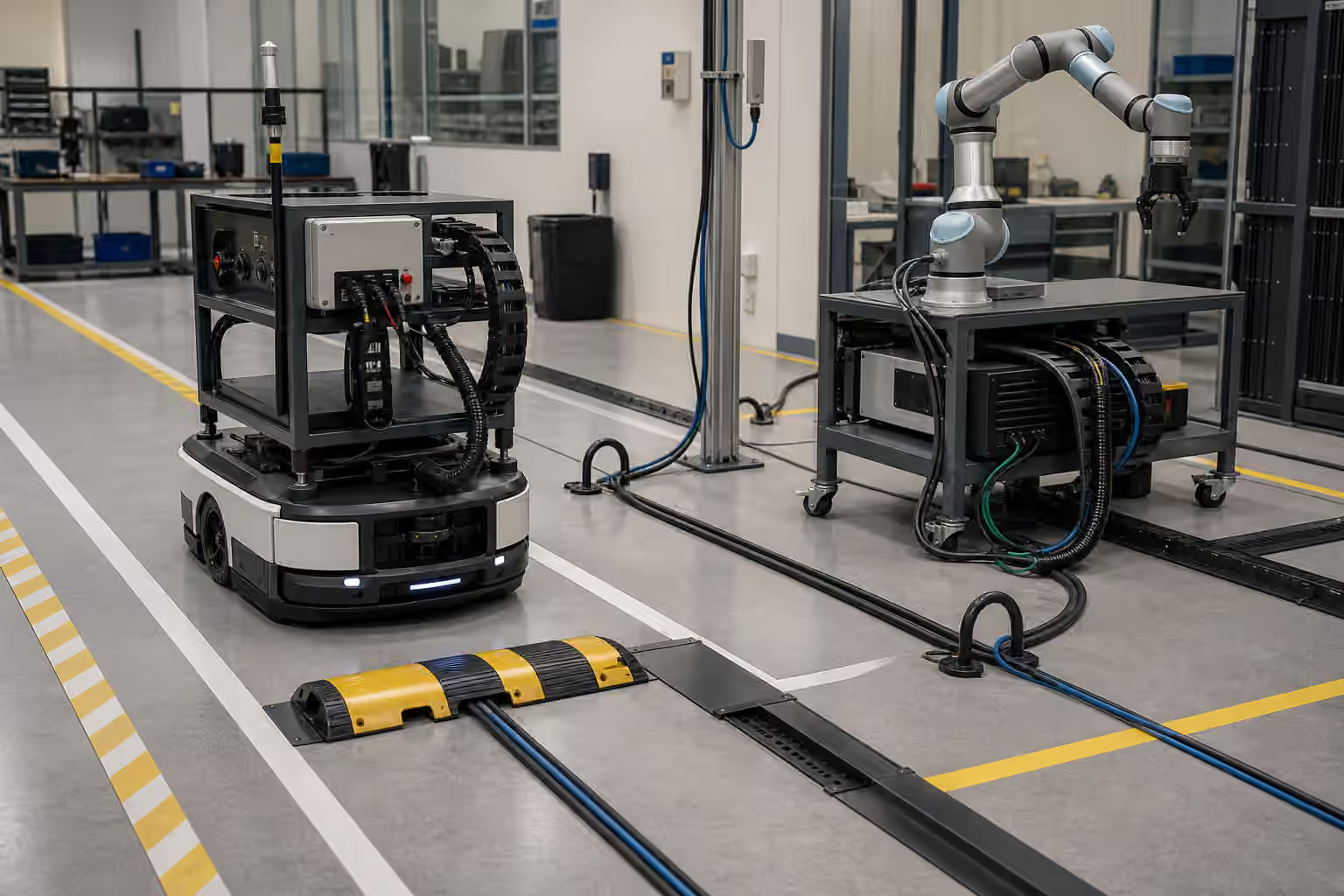
Mobile robots have a special relationship with cables because they meet cables placed by everyone else. Extension cords, scanner chargers, lift-gate cables, floor-cleaning equipment, temporary event wiring, power strips, and loose dock leads can all become obstacles. A person can step over them, lift them, or recognize that a cable is too fragile to cross. A robot may see a low shape, miss it entirely, or treat it as a bump that can be driven over.
The answer is not to demand a perfect site. The answer is to include cable behavior in site readiness. Where are temporary cords allowed? How are charging leads stored? Which routes must stay clear? How are floor cable covers chosen so they do not become ramps the robot cannot handle? What happens when a cable appears in a mapped lane? Robot Site Readiness covers the building-level preparation; cable discipline is one of the quiet habits that decides whether the building remains robot-ready after installation day.
Docking deserves particular care. A charging cable that falls across the approach path can turn energy management into a recovery problem. Robot Charging and Energy Management explains why docks are infrastructure. Cable routing around those docks should make the normal action obvious: the lead returns to its protected place, the robot has a clean approach, and people can see when the area is blocked.
The Best Cable Design Is Boring
Cable management succeeds when people stop noticing it. The robot moves without tugging its own services. Operators can clean, inspect, and replace parts without guessing how the harness should sit. Temporary test equipment has a known route. The cable carriers are not overloaded. The hose does not brush the part. The charging lead does not fall into traffic. The cell can be serviced without creating a new snag hazard.
That quiet result takes design effort. It requires the team to treat cables as moving geometry, not as afterthoughts hidden after the machine is assembled. It asks prototype teams to be honest about tethers, deployment teams to watch recovery motions, and maintenance teams to record wear before it becomes failure. A robot’s useful intelligence depends on physical paths that stay clear, repeatable, and serviceable. Cable management is one of the least glamorous ways to make that happen, which is exactly why it belongs in the lab.