A mobile robot’s hardest obstacle is not always an object on the floor. Sometimes it is a door that closes too quickly, an elevator that cannot be called, a threshold that catches a caster, a badge reader the robot cannot use, a fire door it must never block, or a corridor rule that exists only in the habits of the people who work there.
Buildings are full of interfaces designed for humans. We press buttons, pull handles, wave badges, hold doors, step over thresholds, read signs, wait for elevators, notice that a hallway is temporarily closed, and understand that some doors are private even when they are physically open. A robot moving through the same facility needs some way to respect those interfaces without depending on improvisation at every crossing.
Robot Site Readiness looks at the building before deployment. Building interfaces are the moving parts of that readiness plan. They decide whether a robot can travel between useful places, whether it can do so without annoying people, and whether it can fail safely when the building does not answer.
Doors Are Workflow Devices
A door is not just an opening. It has timing, force, access rules, swing direction, sensor behavior, clearance, and social meaning. A wide automatic door in a warehouse is different from a fire-rated stairwell door, a badge-controlled office door, a patient room door, a lab door, or a residential door with a rug bunched at the threshold.
For a robot, door timing matters. The robot may need to approach, request opening, wait, confirm that the opening is clear, cross without clipping the frame, and verify that it did not trap a person or object in the path. A door that stays open for a walking person may close too soon for a loaded mobile base. A door sensor that sees a person may not reliably see the robot. A glass door may confuse perception. A heavy manual door may be outside the robot’s body plan entirely.
This is where Robot Operational Design Domains becomes concrete. If the robot cannot open or request a certain class of door, that door defines the operating boundary. The boundary may be acceptable. A robot can still be useful if its route avoids manual doors. The danger comes when a sales claim quietly assumes that “moves through the building” includes interfaces the robot has never been given a safe way to use.
Elevators Turn Navigation Into Coordination
Elevators are not simply vertical corridors. They are shared machines with schedules, doors, occupancy, access controls, emergency behavior, and human expectations. A robot that uses an elevator has to coordinate with a system that was not originally built for autonomous traffic.
The robot may need to call the elevator, wait in a place that does not block people, recognize the correct car, enter with enough clearance, avoid crowding passengers, select a floor or communicate through an integration, exit before doors close, and recover if the car is full or the trip is interrupted. It also needs a plan for priority. A hospital, hotel, office tower, or warehouse lift may treat robot traffic very differently.
Robot Fleet Management matters because elevator use can become a fleet bottleneck. One robot waiting for a lift is a small scheduling problem. Ten robots using the same elevator during peak human traffic can turn a useful route into congestion. Dispatch needs to know when vertical travel is expensive, when routes should be delayed, and when robots should avoid certain times or floors.
Access Is Both Digital And Physical
Many building interfaces involve permission. A badge reader, automatic door controller, elevator panel, gate, roll-up door, security desk, or restricted area may decide where the robot is allowed to go. The robot should not bypass those rules just because it can physically fit through a space. It needs a permission model that matches the building’s policy.
That model may be digital, physical, procedural, or a mix. A robot may integrate with a door controller. It may request access through a fleet system. It may be escorted by a trained worker. It may be limited to public corridors. It may be given a route that avoids private rooms. What matters is that access is explicit rather than improvised.
Robot Security and Access Control gives the broader security frame. Building interfaces are where that frame becomes visible. Who can authorize a robot to enter a zone? What happens if permissions change? Can a robot enter after hours? Can it hold a door open for a person without creating a security issue? Does the log show which robot requested which access event? These are deployment questions, not abstract policy debates.
Thresholds Are Small Until They Stop The Robot
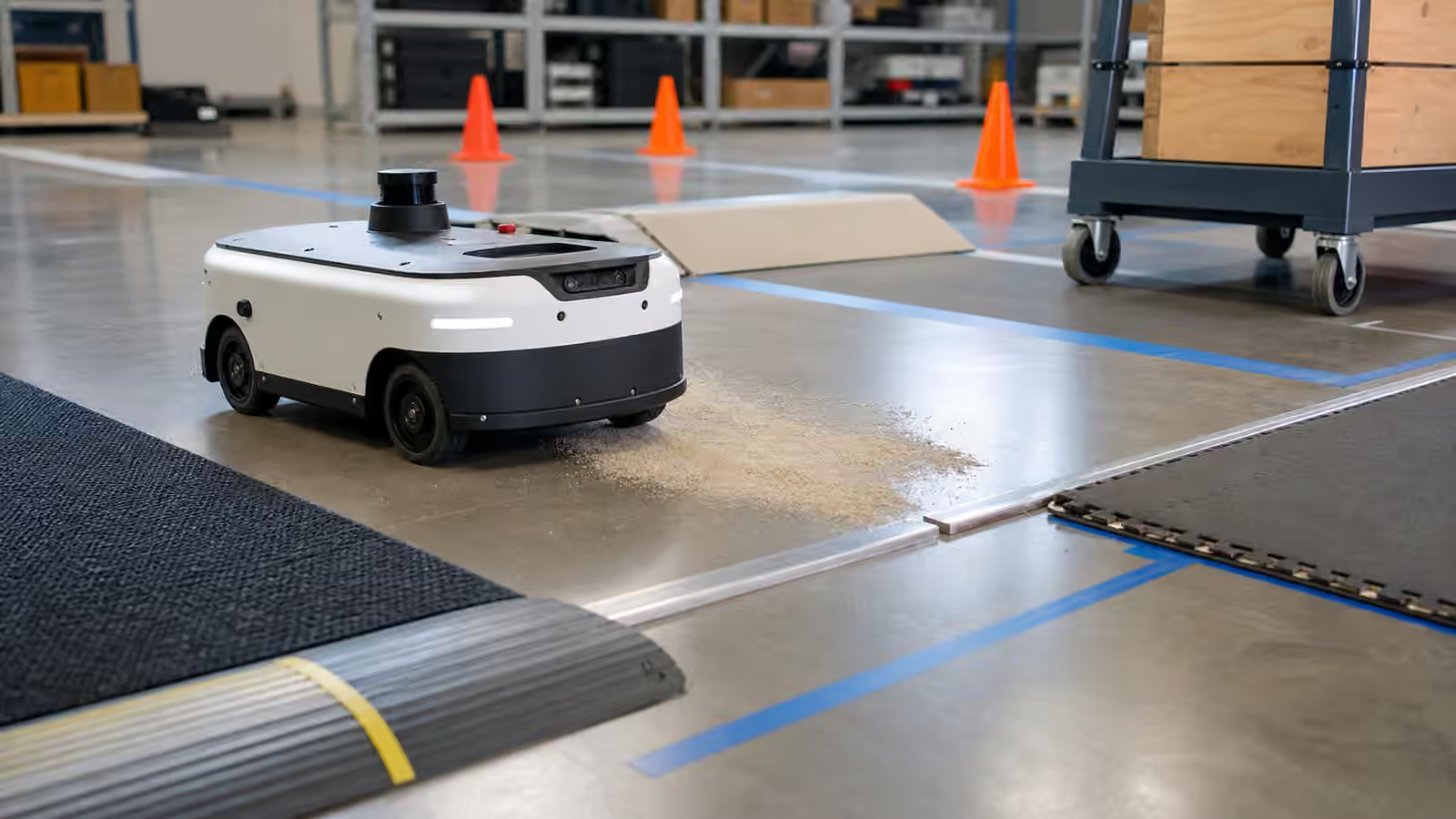
A threshold can be enough to change a deployment. Door saddles, elevator gaps, floor transitions, mats, expansion joints, ramps, cable covers, and uneven tile can all affect mobile platforms. A human barely notices them. A robot may hit them with a caster, lose localization confidence, tip a payload, scrape a sensor, or slow enough to disrupt the route.
The issue depends on the robot’s base, wheels, suspension, payload, speed, and sensing. A small indoor AMR may need smooth transitions and predictable floor friction. A heavier platform may handle rougher thresholds but require more stopping distance and stronger floor ratings. A humanoid can step, but stairs and thresholds still involve balance, energy, fall risk, and slow recovery. The body plan changes the interface but does not remove it.
Robot Mobility Platforms explains how wheels, legs, and the ground shape autonomy. Building interfaces are the places where that ground changes abruptly. A route survey should measure these points before the pilot, not after the robot repeatedly stalls in the same doorway.
Timing Must Include People
A robot may treat a door or elevator as a sequence of states. Request, wait, enter, cross, exit, continue. People experience the same sequence socially. Is the robot blocking the doorway? Is it yielding? Is it trying to enter a crowded elevator? Is it waiting in a place where someone can pass? Did it stop so close to the door that a person feels trapped?
Good interface design respects both versions. The robot needs enough time to move safely, and people need enough room and clarity to continue their work. A robot that always claims the center of the corridor may be technically stable and socially clumsy. A robot that waits too far from a sensor may never trigger the door. A robot that enters elevators aggressively will lose trust even if no collision occurs.
This is why Robot Worker Training and Floor Etiquette belongs near building interfaces. People should know how the robot behaves at doors and elevators, but the robot should also behave in a way that makes the training believable. If the site tells workers that robots yield, the route logic and door timing should actually yield.
Failure Modes Need Local Answers
Building interfaces fail in ordinary ways. A door controller goes offline. An elevator is taken out of service. A hallway is blocked by maintenance. A badge permission changes. A threshold mat shifts. A crowd gathers near the route. A fire alarm changes the building’s behavior. A robot that cannot handle these cases should not be trusted to continue as if the route still exists.
The fallback can be simple. The robot may wait in a safe pull-off area, reroute, ask for help, return to a dock, or mark the job as blocked. The important part is that the fallback is local enough to protect the building. A robot should not stop in the doorway it failed to cross. It should not hold an elevator open indefinitely. It should not repeatedly request access after denial without a reasoned limit.
Robot Failure Recovery covers the larger recovery discipline. Building interfaces add a facility-specific requirement: the robot’s safe state must make sense to the people and systems around it. A stopped robot in an open aisle may be fine. A stopped robot inside an elevator doorway, near a fire exit, or halfway through a secure door is a different problem.
Integration Should Be Boring And Auditable
When robots connect to building systems, the integration should be boring. Commands should be limited, logged, permissioned, and understandable. The robot should request an action, receive a clear response, and preserve enough evidence to diagnose failures. If the door did not open, the team should know whether the robot failed to request it, the controller denied it, the network was unavailable, or the door hardware itself failed.
This is the same systems thinking described in Robot Systems Integration . A building interface is an API with physical consequences. Bad state handling can trap the robot in a loop. Weak identity can create access confusion. Poor logging can turn every door fault into a debate between the robotics vendor and the facilities team. The integration does not need to be elaborate, but it needs ownership.
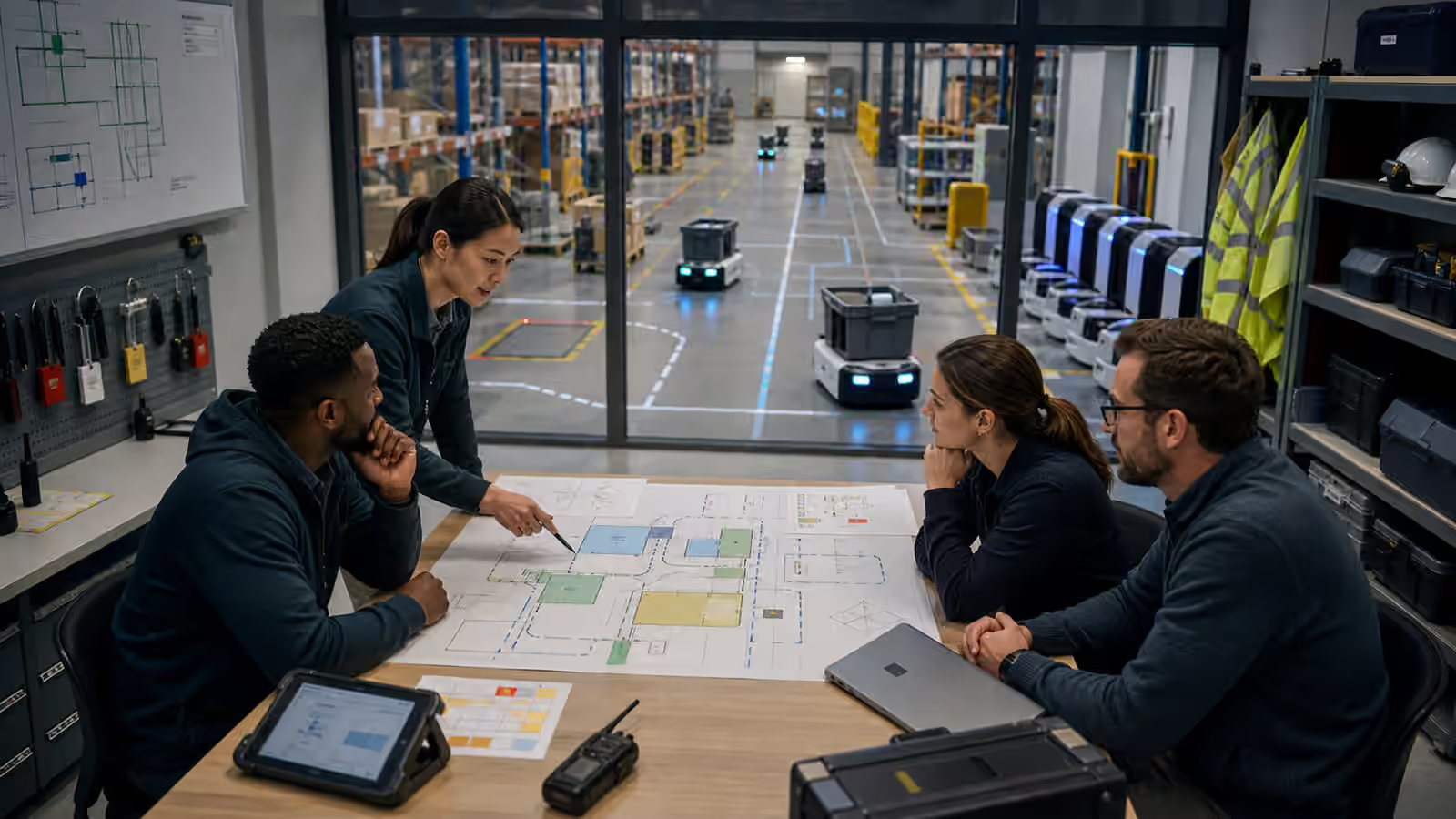
Facility teams should be involved early because they know the building’s hidden rules. They know which door is unreliable, which elevator is reserved at certain times, which hallway changes during events, where cleaning carts are parked, and which access policies are flexible or strict. A robot route planned only from a map misses that living knowledge.
The Building Is Part Of The Robot System
Physical AI often looks like a machine problem, but a mobile robot’s world includes the building itself. Doors, elevators, thresholds, access controls, corridors, docks, signs, people, and facility routines are not background. They are part of the system the robot must negotiate.
A deployment becomes stronger when those interfaces are named before they fail. The task says which rooms matter. The site survey identifies thresholds and doors. The access model defines permission. The fleet manager accounts for elevator delays. The robot has safe pull-off behavior. Workers know what to expect. Facilities knows who owns integration faults. The logs show what happened.
That kind of preparation may feel ordinary compared with autonomy research, but it is often the difference between a robot that performs a route in a demo area and a robot that becomes useful infrastructure. The robot does not need to conquer the building. It needs a clear, respectful way to move through the parts of the building where its work belongs.