People often hear a robot before they understand it.
The sound may be a fan, a motor whine, a wheel rattle, a reversing alert, a docking clack, a brake release, a speaker prompt, or the loose rhythm of a cart being pulled over uneven floor. None of these sounds has to be loud enough to be dangerous to become operationally important. A robot that sounds anxious can make people anxious. A robot that chirps too often can train people to ignore it. A robot that is quiet in the wrong moment can make its motion harder to anticipate.
Acoustic comfort is not decoration. It is part of how robots share space. Sound affects trust, attention, fatigue, perceived safety, and whether people treat a machine as helpful equipment or an irritating visitor. The goal is not silence at all costs. The goal is sound that matches the robot’s risk, motion, setting, and human workflow.
Noise Carries Intent, Even When It Was Not Designed
Every robot makes accidental signals. A wheel squeak may tell workers the machine is approaching. A fan surge may suggest the robot is under strain. A relay click may warn a technician that motion is about to start. A buzzing motor may imply cheapness or fragility even if the system is working correctly. People build interpretations from whatever evidence the machine gives them.
Robot Status Signals and Floor Cues covers intentional signals such as lights, sounds, and route cues. Acoustic comfort looks at the broader soundscape, including the sounds designers did not mean to communicate. If a robot’s mechanical noise contradicts its official signal, people may believe the machine rather than the interface. A calm green light does not feel calm if the robot is grinding near a shelf.
This is why noise should be observed during real motion. Bench testing a speaker prompt does not reveal how it interacts with wheels, fans, conveyors, forklifts, carts, doors, floor cleaners, and human conversation. The robot’s sound has to be judged inside the place where people will live with it.
Alerts Should Be Rare Enough To Matter
Sound is powerful because it reaches people who are not looking. That power makes it easy to misuse. If every blocked route, pause, and minor retry produces an urgent tone, the site learns that robot alerts are background noise. If a sound is too similar across severity levels, people cannot tell whether the robot is waiting politely or asking for immediate help.
Good alert sound is tied to a clear state and an expected action. A gentle acknowledgement may fit docking, task start, or handoff readiness. A sharper cue may fit motion in a blind corner or a request for the route to clear. An urgent alarm belongs to conditions that genuinely require attention or avoidance. The sound should not be chosen because it is attention-grabbing in isolation. It should be chosen because it helps the right person make the right decision at the right time.
Robot Operator Interfaces matters here because sound rarely works alone. A tone should have a visible companion when possible: a light, display state, map event, or clear robot behavior. People who cannot hear the alert, work in noisy areas, wear hearing protection, or process sound differently should still be able to understand the robot’s intent. Sound can support legibility, but it should not be the only channel for critical meaning.
Mechanical Sound Reveals Design Choices
Some robot noise is a symptom of mechanical design. Hard wheels on rough floors can rattle. Loose covers can buzz. Poorly damped carts can chatter behind a mobile base. Fans can surge because airflow paths are constrained. Gearboxes can produce tonal whine that becomes irritating even at moderate volume. Brakes and docks can make sharp sounds that startle nearby workers.
Robot Floor Surfaces and Traction already shows how the floor shapes mobility. Acoustic behavior is another way the floor speaks. The same robot may sound acceptable on smooth sealed concrete and harsh on tile, ramps, metal thresholds, or worn expansion joints. A robot that runs in a warehouse may be acoustically fine there and unacceptable in a clinic, library, hotel, or home.
Sound can also signal maintenance needs. A new rattle, squeal, fan tone, or docking impact may reveal wear before a fault code appears. Robot Maintenance and Reliability should include listening as a small field skill. Operators often notice that a machine “sounds different” before they can name the part. A support process that respects that observation can catch problems earlier.
Quiet Robots Still Need Presence
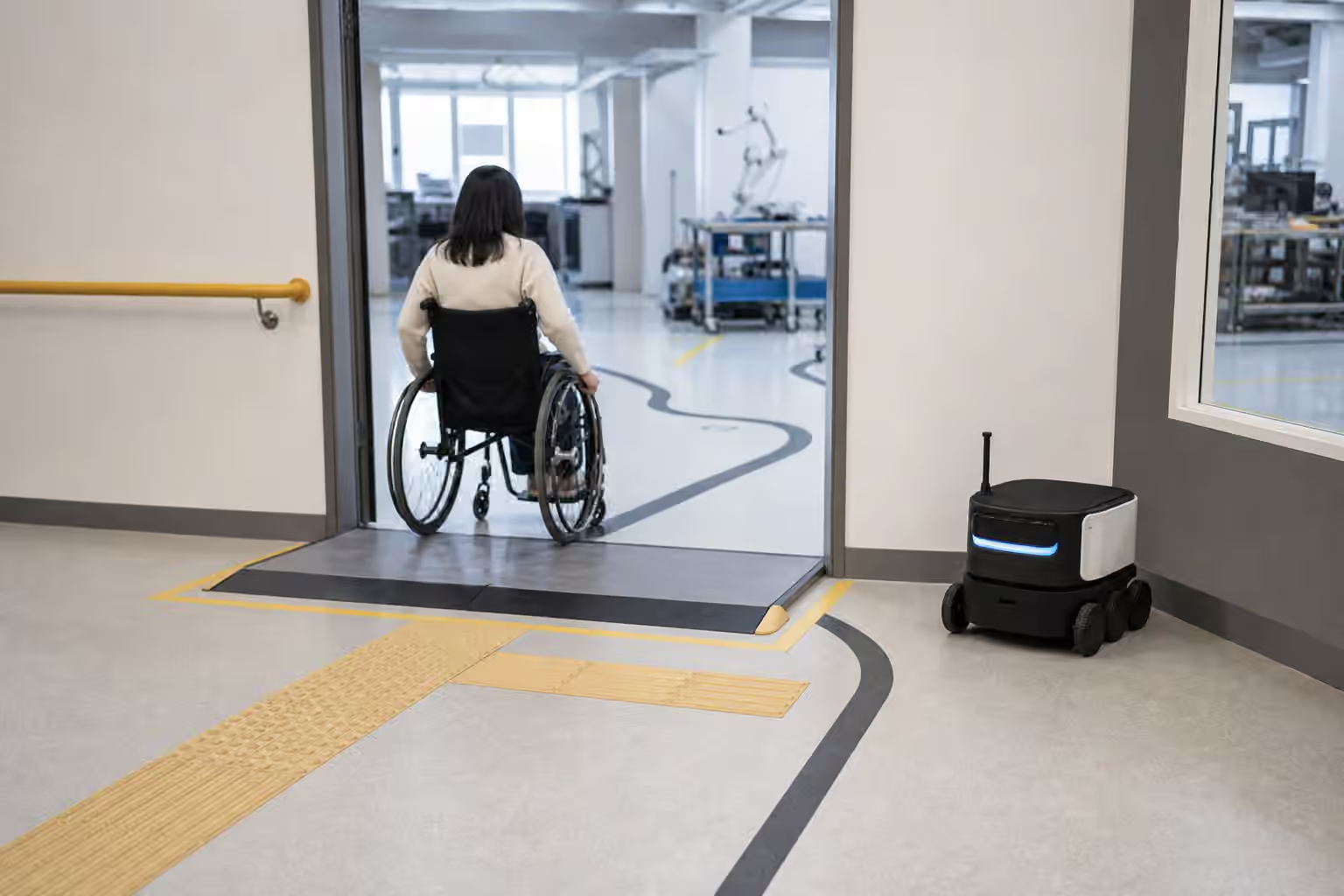
Silence has its own risks. A robot that moves quietly through a shared space may surprise people from behind, especially around corners, carts, shelves, or doorways. Quiet motion can feel premium in one setting and unsafe in another. The right acoustic design depends on the context and the robot’s ability to make intent visible through other means.
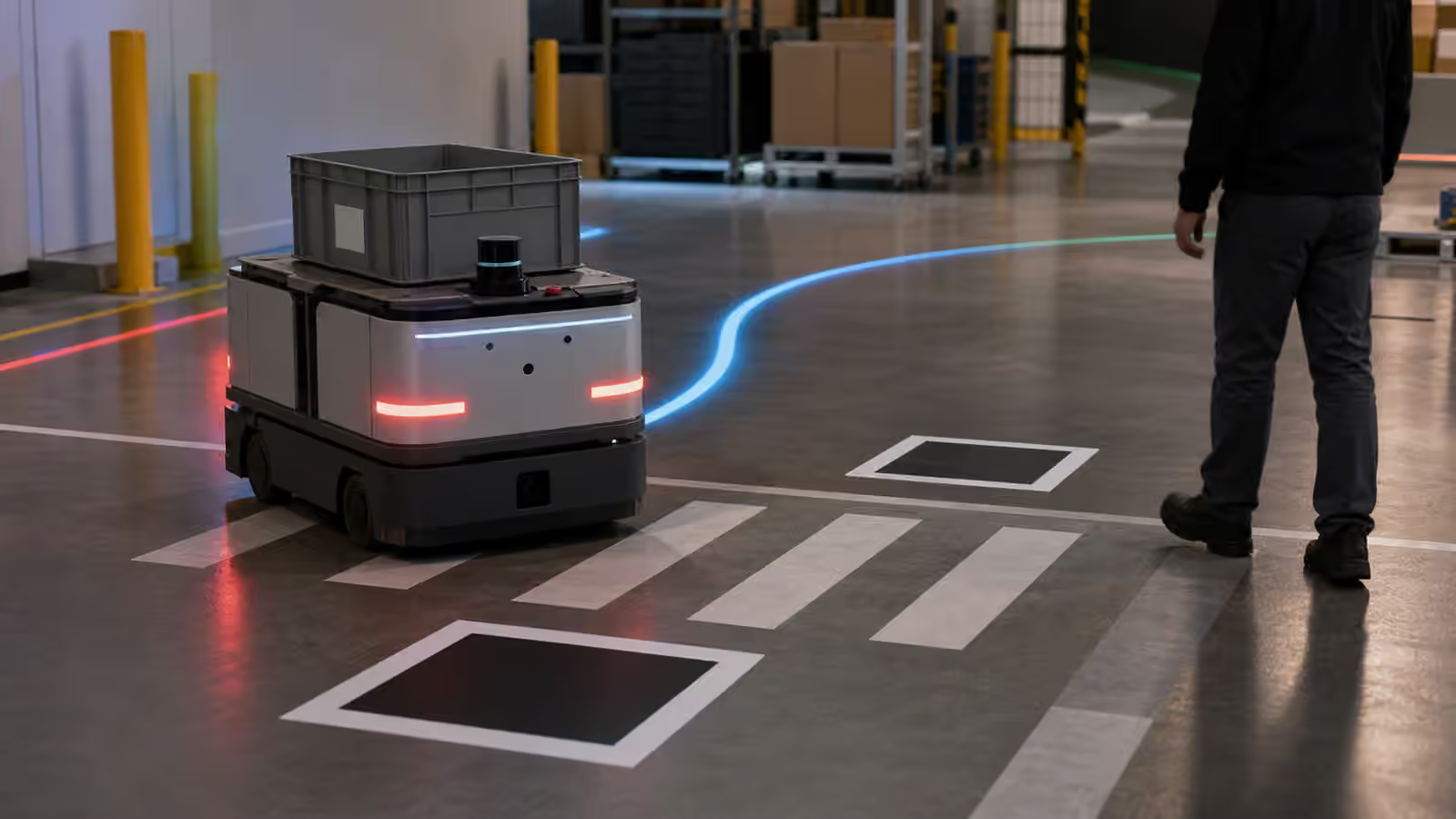
Robot Shared-Space Traffic is useful because traffic is a conversation. People infer right-of-way from speed, path, eye contact, posture, signs, and sound. Robots do not naturally offer many of those human cues. A carefully chosen approach sound, motion rhythm, or status tone can help people notice the robot without creating annoyance.
The sound should match the behavior. A slow service robot in a hallway may need a subtle presence cue rather than a warning alarm. A cart-moving robot approaching a crossing may need a clearer cue because the load changes stopping distance and sight lines. A home robot may need soft sounds that do not wake a household yet still make motion understandable. The same sound library should not be pasted across every environment.
Social Comfort Is A Deployment Variable
Robots are often evaluated by task completion, but people also judge how it feels to share space with them. A machine that constantly beeps, hums, or startles staff may face resistance even if its metrics look acceptable. People may reroute around it, shut it off, lower its speed, or avoid assigning it work. Those adaptations can be misread as cultural resistance when the physical experience is the real issue.
Robot Worker Training and Floor Etiquette covers human routines around robots. Acoustic comfort belongs in that training, but training cannot fix bad sound design. Workers should know what the robot’s sounds mean, but the sounds should be restrained, distinct, and respectful of the setting. A good deployment does not ask people to tolerate needless noise as proof that they accept automation.
Social comfort also changes by audience. Trained warehouse staff, office workers, patients, shoppers, hotel guests, children, and home residents bring different expectations. A sound that feels normal near industrial equipment may feel intrusive in a quiet hallway. A friendly voice prompt may be helpful for a first-time user and irritating for workers who hear it hundreds of times. The robot should be tested with the people who actually share the space.
Acoustic Evidence Should Be Practical
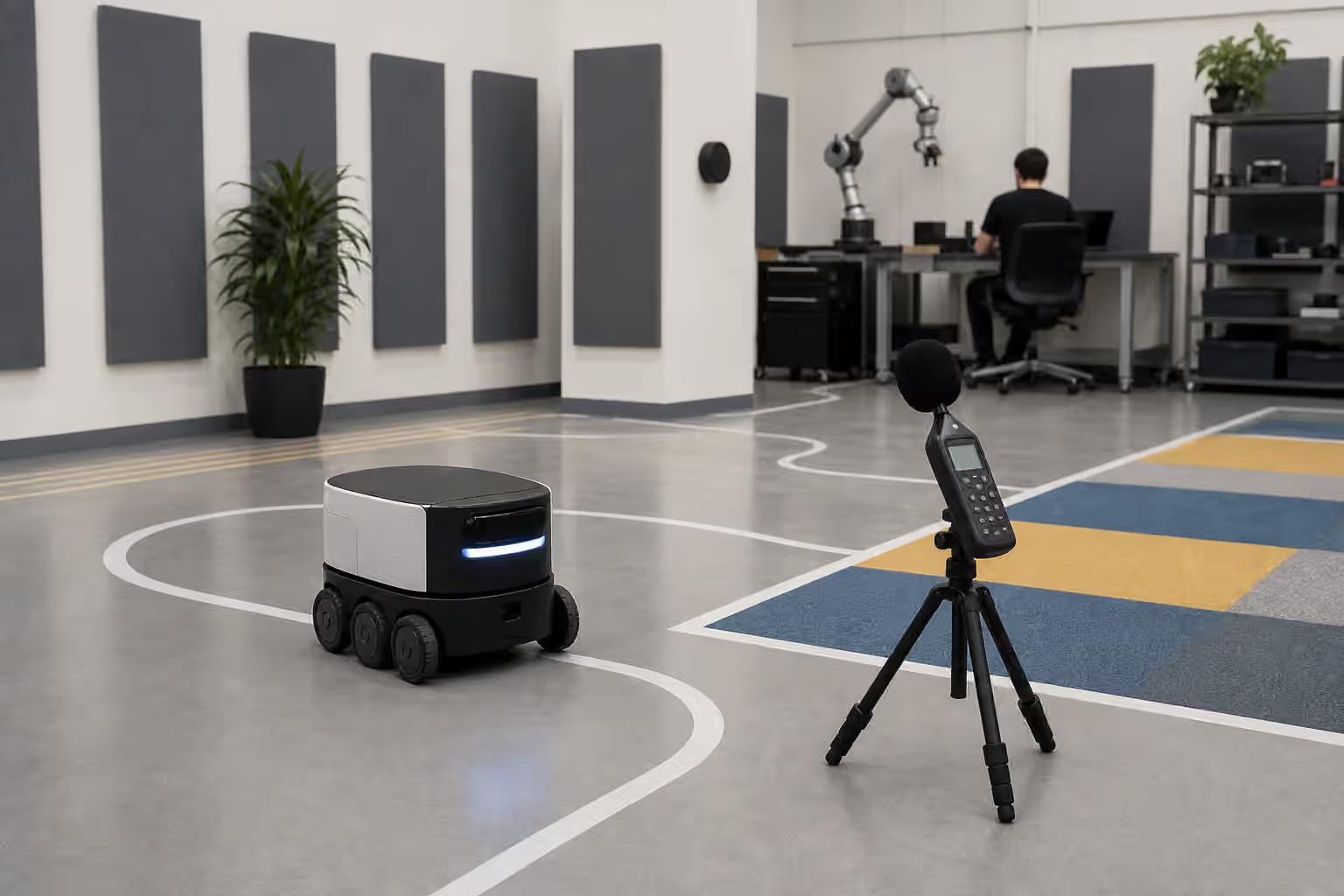
Robotics teams do not need to turn every deployment into an acoustics research project, but they do need evidence beyond “it seemed fine.” Sound should be observed at the robot, at nearby work positions, around corners, near docks, during charging, during faults, and after covers are installed. It should be checked across normal floor conditions and under realistic background noise.
The most useful evidence combines measurement and listening. A sound-level meter can show whether a robot is generally louder than expected, but a tonal whine, repeated beep, or startling transient can bother people even if the average number looks modest. Human reports matter when they are collected carefully. Where is the sound annoying? When does it happen? Does it communicate useful information? Does it mask speech, alarms, or other site cues?
Robot Incident Review and Near Misses can include sound when confusion or surprise contributes to an event. Did a person miss the robot’s approach? Did repeated nonurgent alarms create alert fatigue? Did a fault tone cause someone to intervene too quickly? Sound is part of the evidence because sound is part of the shared environment.
The Best Sound Design Feels Proportionate
A robot’s acoustic design should feel proportionate to what the machine is doing. Minor states should not sound urgent. Serious states should not sound polite. Continuous work should not create unnecessary fatigue. Quiet motion should still be legible. Maintenance changes should be audible to people who know the machine. Alerts should be distinct enough to guide action without turning the workplace into a chorus of robot complaints.
This proportion is one of the marks of mature physical AI. The robot is not only performing tasks; it is joining an existing soundscape. It has to communicate without dominating, warn without exhausting, and move without making people feel hunted by machinery they cannot interpret. The physical lab should listen to the robot as carefully as it watches it move.