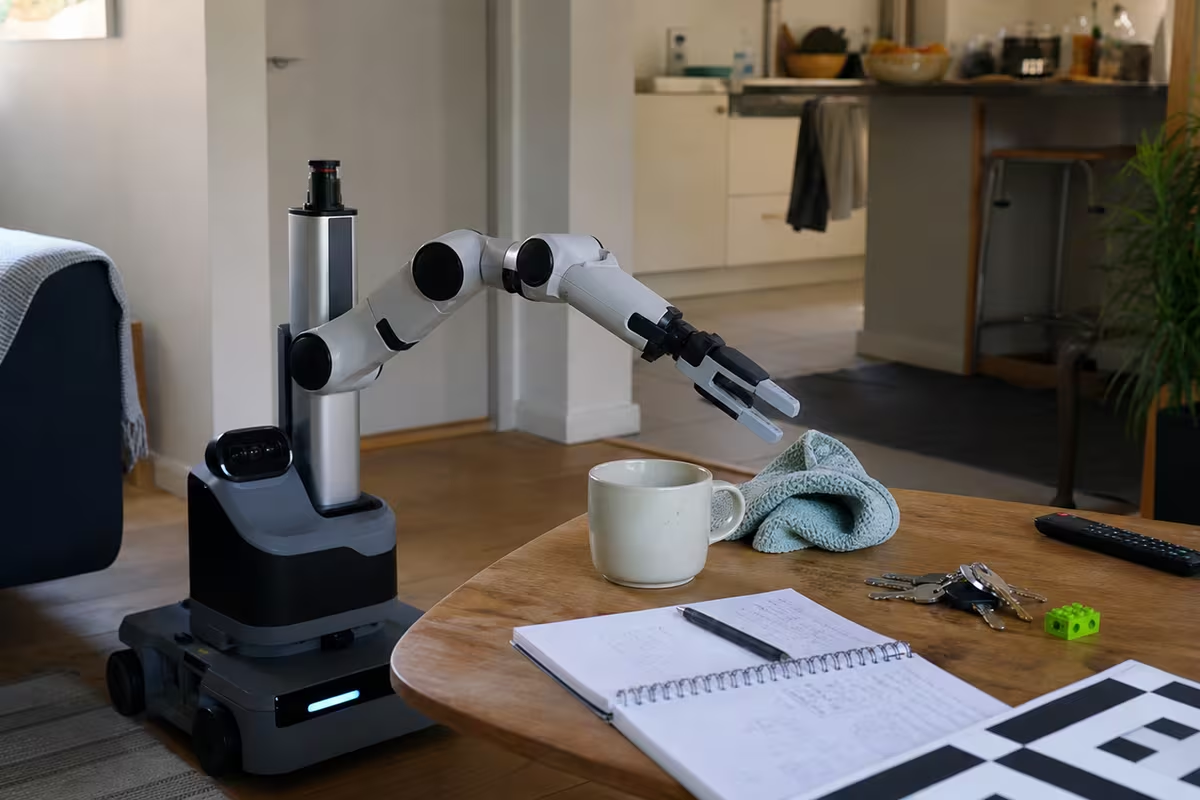
Home robots are already useful. They are also much narrower than the phrase suggests.
The successful home robots usually do one job in one kind of space: vacuuming floors, mopping, mowing lawns, cleaning pools, carrying small items in planned environments, monitoring a room, or providing a simple telepresence path. The dream robot that cleans the kitchen, folds laundry, cooks dinner, watches children, and fixes the sink is a different problem.
Why homes are hard
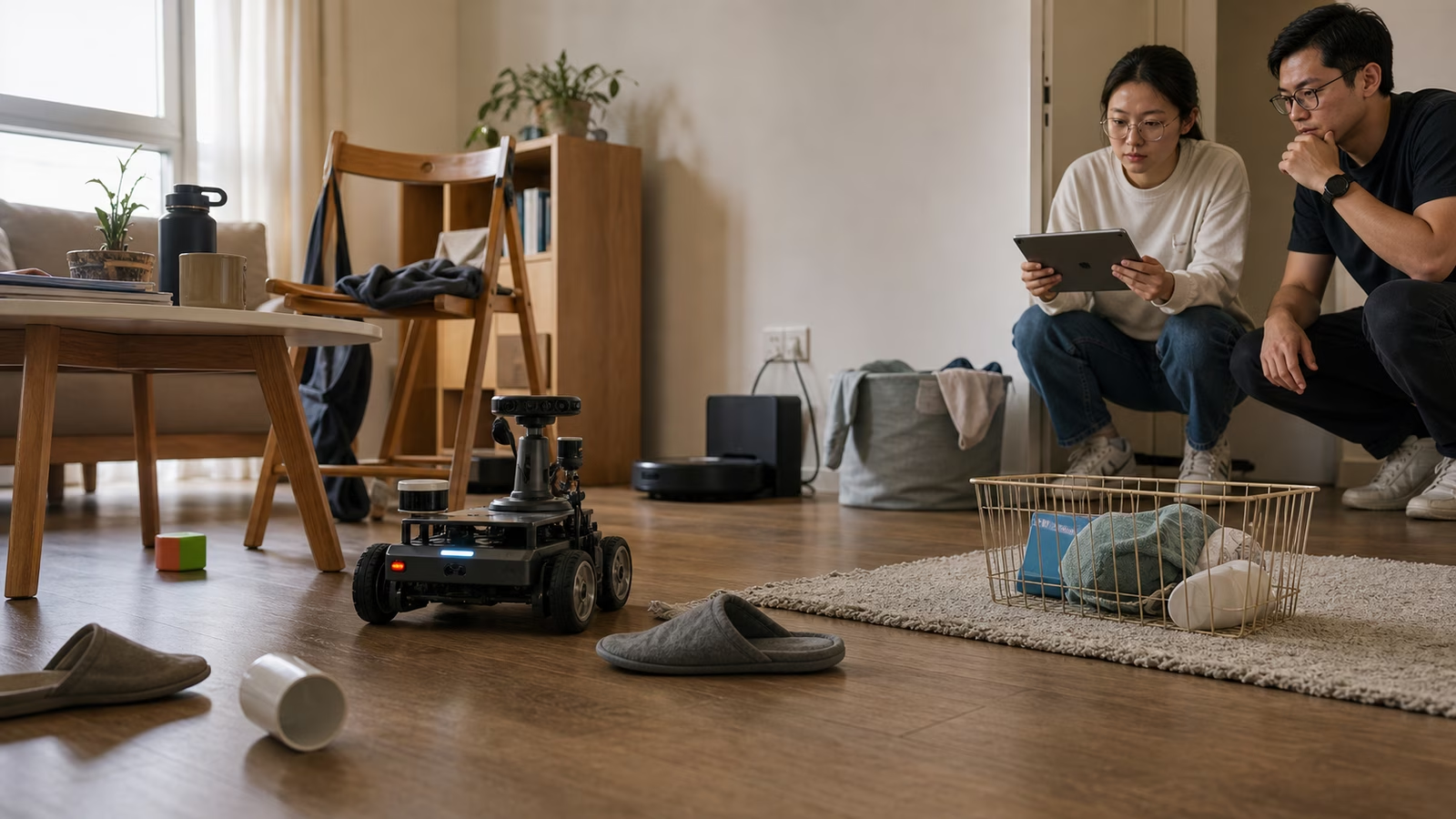
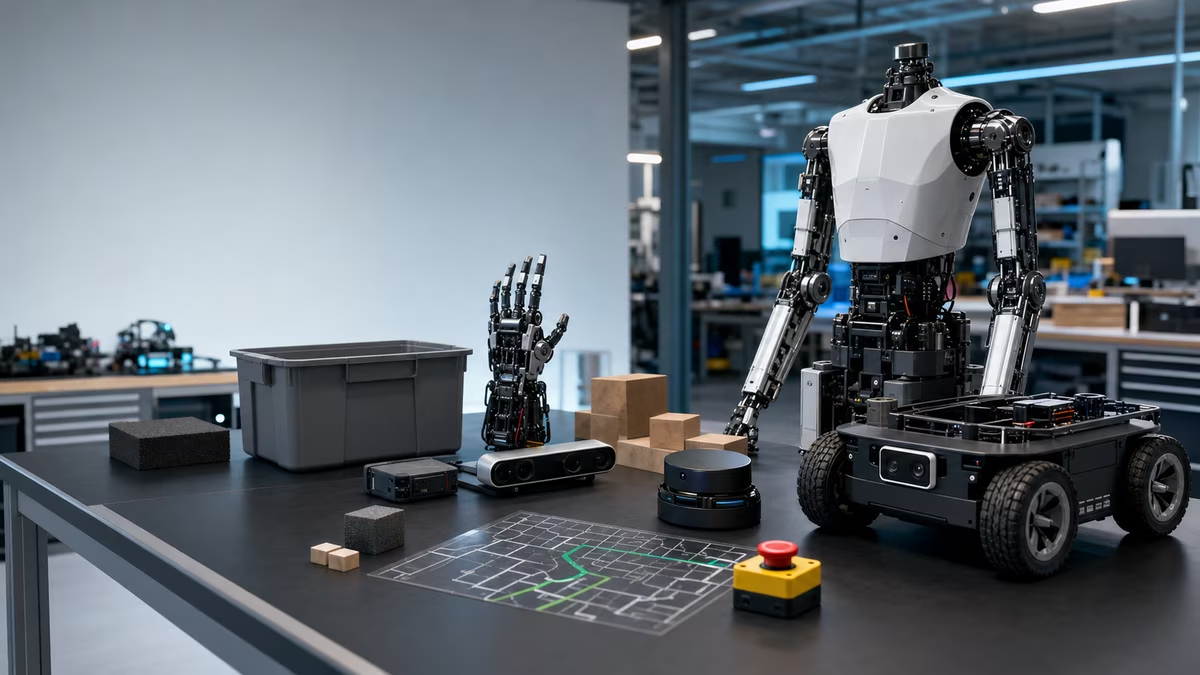
Factories and warehouses can be engineered. Homes are negotiated. A normal home has changing clutter, cords and clothing on the floor, pets, children, thresholds, rugs, stairs, chair legs, mirrors, windows, dark corners, bright sun, private rooms, fragile objects, and odd messes. It also has no trained operator and no maintenance department standing by.
A home robot has to be useful without turning your home into a lab.
Categories that work now
Robot vacuums and mops
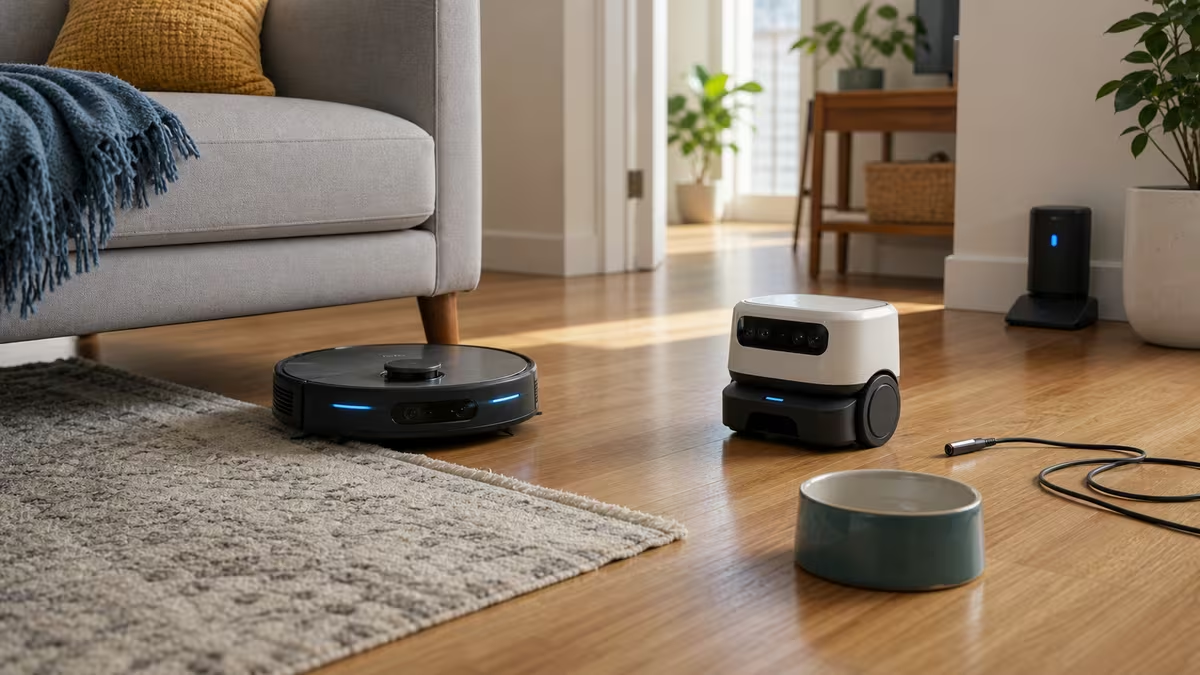
These are the most mature domestic robots because the task is surface-based. Good models can map rooms, avoid some obstacles, schedule cleaning, return to docks, and handle regular maintenance. They still struggle with cords, pet messes, wet surprises, deep corners, high thresholds, and clutter.
Lawn robots
Lawn robots are similar in spirit: a bounded surface, repeated work, and a predictable environment. The hard parts are boundaries, slopes, weather, pets, toys, theft, and blade safety.
Pool cleaners
Pool cleaners work because the environment is constrained and the task is repetitive. The robot still needs cleaning, filter maintenance, and physical retrieval.
Telepresence and monitoring
Mobile cameras and telepresence devices can help with remote check-ins, but they raise privacy questions. A robot that moves through your home is a camera with wheels unless designed otherwise.
Assistive and elder-support robots
Assistive robots can be valuable in narrow roles, especially reminders, telepresence, delivery, or mobility support in managed settings. Be cautious with claims around care. Human dignity, reliability, emergency response, consent, and liability matter more than novelty.
The home-robot promise ladder
Think in levels:
- Surface cleaning: floors, pools, lawns
- Monitoring: camera, sensors, alerts
- Delivery: carry small items between known points
- Interaction: voice, reminders, calls, simple routines
- Manipulation: open, pick, fold, load, clean specific objects
- Household work: broad chores across changing rooms
Most consumer products are in levels 1 through 3. The farther you climb, the more you need dexterity, safety, social judgment, and recovery.
Privacy checklist
Before bringing a robot home, understand what it senses and where that data goes. A camera, microphone, lidar map, or room map is not just a feature; it is a record of private space. Check whether processing happens locally or in the cloud, whether maps and recordings can be deleted, whether no-go zones are reliable, who can access live views, what happens if the account is compromised, and whether the core job still works without internet. Guests should also be able to tell when sensors are active.
Privacy is not an afterthought. It is part of the product.
Maintenance checklist
Home robots are not appliance magic. They need care. For floor robots, that usually means cleaning brushes, filters, mop pads, wheels, sensors, dock contacts, bags or bins, water tanks, and the app maps or schedules that tell the robot where to go.
For lawn robots, expect blades, wheels, boundary checks, weather care, and seasonal storage.
For any home robot, ask whether replacement parts are easy to buy. A robot with no parts pipeline becomes e-waste faster.
Buying decisions that hold up
Match the first robot to the easiest valuable job. Mostly hard floors and pet hair point toward a robot vacuum with good brush access and a bin you will actually empty. Mixed rugs and clutter call for mapping and no-go zones, not a basic schedule-only cleaner. A small simple lawn may fit a mower if boundaries, toys, slopes, pets, and theft are managed. Remote check-ins usually work better as a fixed camera or narrow telepresence role than as a roaming privacy surprise. Elder support should stay narrow unless the system has serious reliability, consent, escalation, and human backup.
What home robots should not do alone
Be careful with anything that crosses into childcare, medical decisions, emergency response promises, unsupervised cooking, stairs near people or pets, physical assistance, private rooms, or visitors. These are not ordinary convenience features. They involve consent, safety, dignity, and liability.
A home robot can be useful without being trusted with sensitive responsibilities.
Setup habits that make robots work better
Give the robot an easy charging dock, keep cables off the floor, set no-go zones around pet bowls and fragile areas, and start with supervised runs. Clean sensors before blaming navigation. Keep firmware updated, but read permission changes. Use room names and schedules that match real routines. When the robot gets stuck, treat that as feedback about the layout instead of pretending the next run will somehow be different.
Useful references
Next steps
Read Robot Hands and Dexterous Manipulation to understand why broad chores are still hard, then read Robot Safety before treating any domestic robot as a harmless gadget.
Ground the idea in the physical world
Physical AI becomes serious when the robot meets friction, weight, light, dust, latency, humans, and maintenance. For Home Robots: Useful, Narrow, and Hard, the useful habit is to connect the concept to the workcell, room, warehouse, home, or field site where it would actually run. A demo can be clean while the deployment environment is messy.
Start with the task boundary. What object is moved, sensed, inspected, cleaned, delivered, opened, closed, lifted, or avoided? What counts as success, and what counts as a safe stop? The robot needs more than a goal. It needs limits that make sense when the world changes.
Then look for variability. Object shape, floor condition, lighting, wireless coverage, human traffic, payload, calibration drift, battery life, and cleaning routines can all decide whether a system works outside a video. Robustness is often built through boring details.
A good deployment leaves traces: logs, incidents, maintenance notes, operator feedback, and clear ownership. Without those traces, teams argue from memory. With them, the system can improve.
Home Robots: Useful, Narrow, and Hard should make the physical side harder to ignore and easier to manage. The future of robotics is not only intelligence. It is reliable behavior in places that refuse to be perfect.