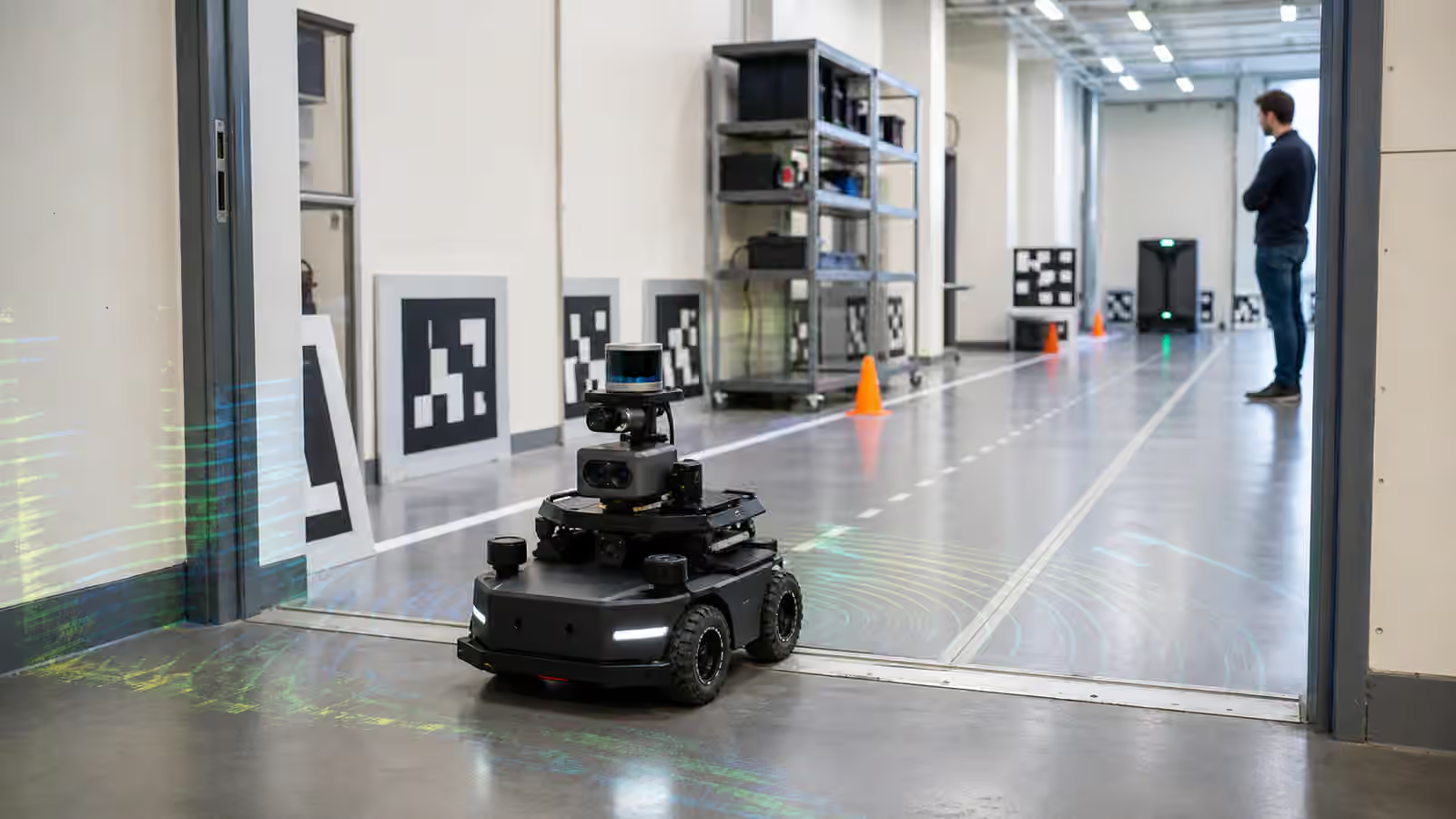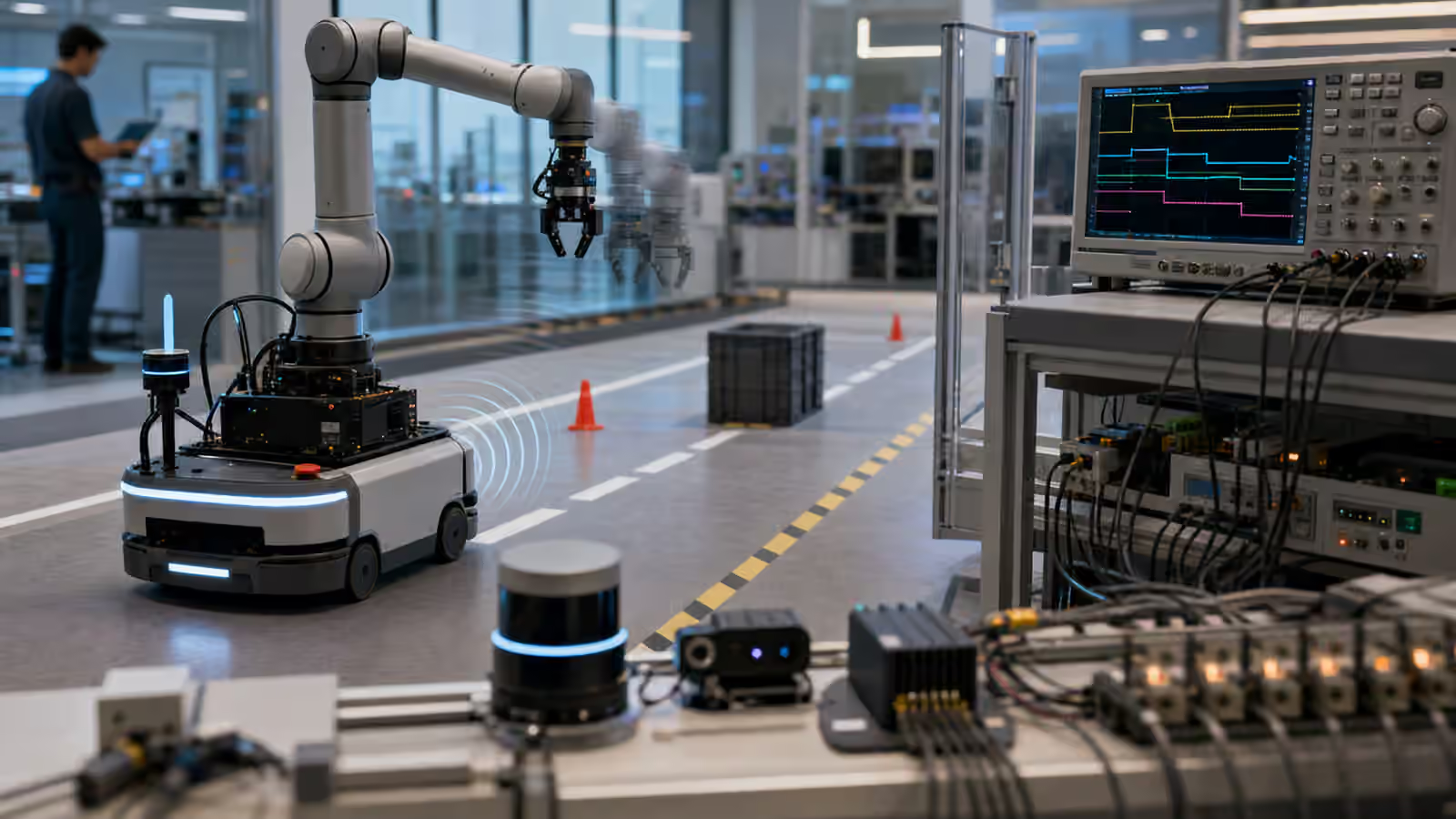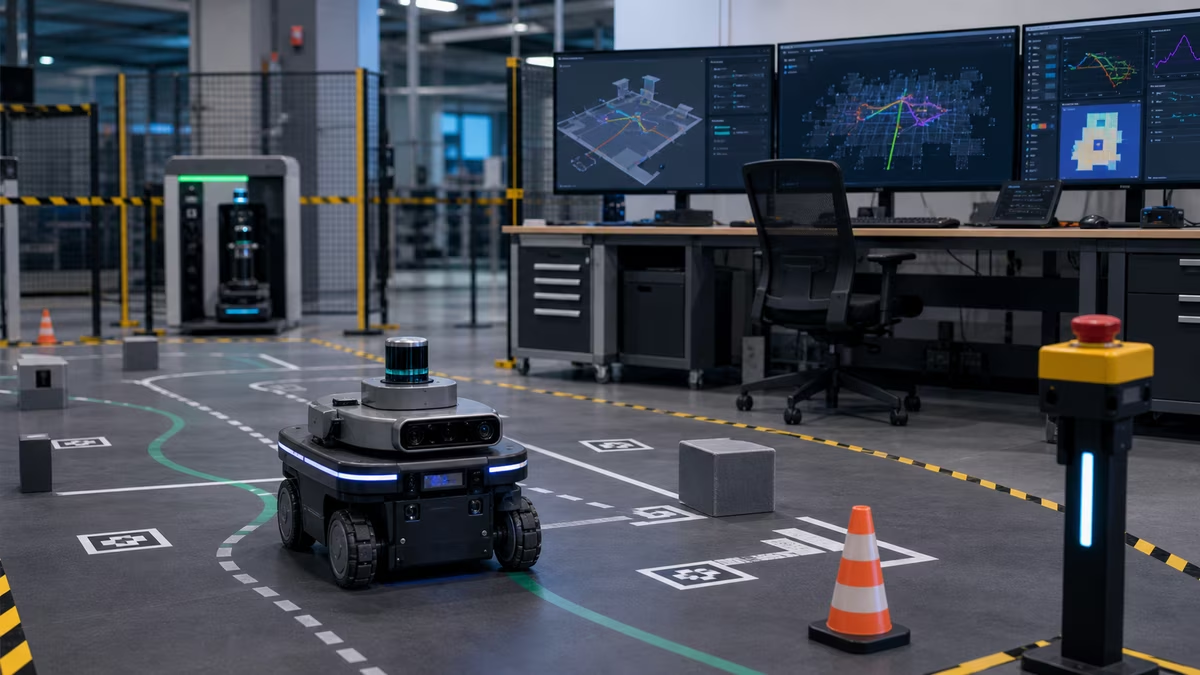
Robot autonomy is not one switch.
A robot can be autonomous in navigation but not manipulation. It can plan routes but need help with blocked doors. It can pick known objects but fail on new packaging. It can run all day in a mapped warehouse and be useless in a cluttered home.
Autonomy is a stack.
The autonomy layers
Sensors
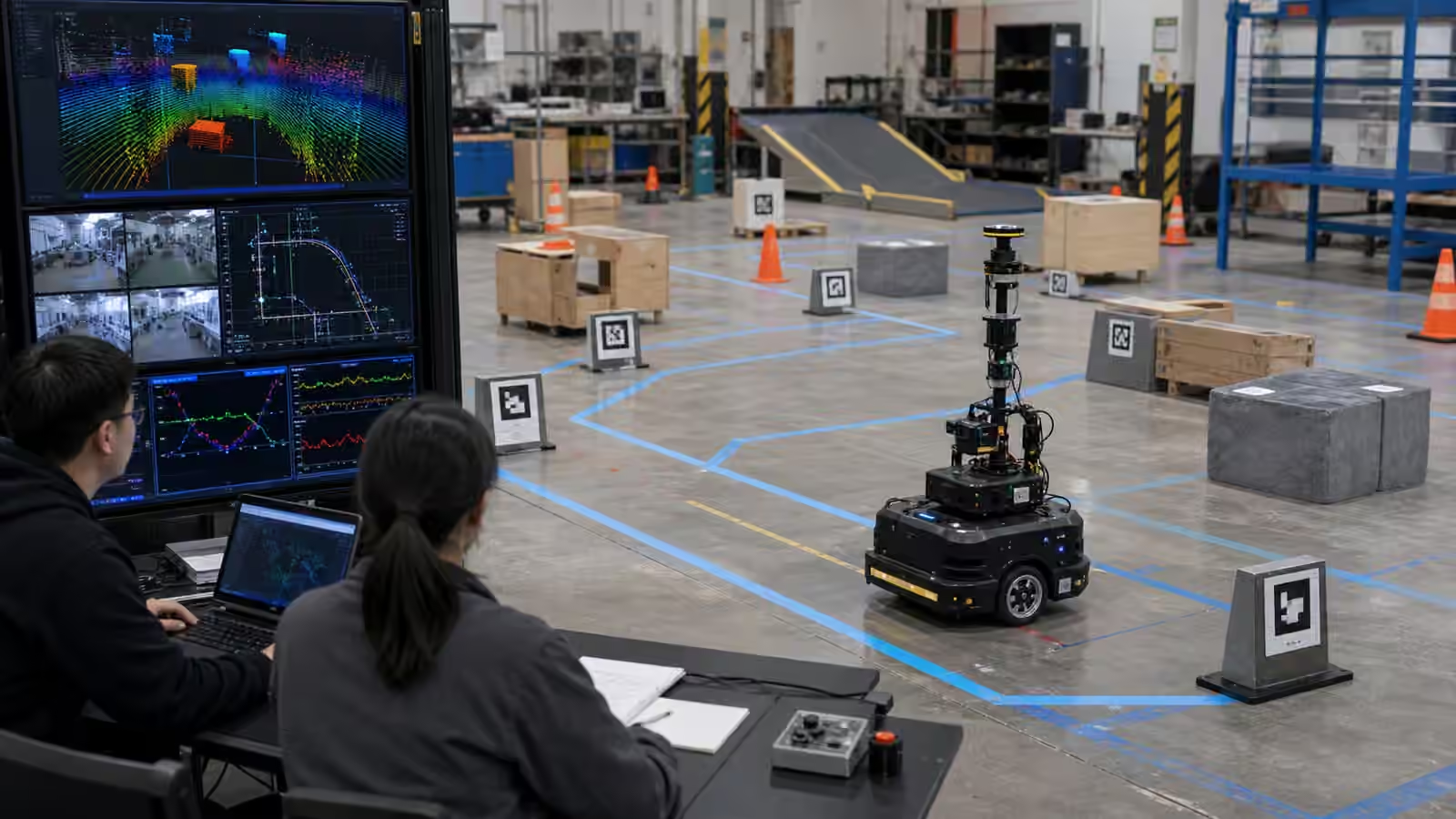
Robots sense with cameras, depth cameras, lidar, radar, ultrasonic sensors, encoders, IMUs, force sensors, tactile sensors, microphones, and other instruments. Each sensor has blind spots. Cameras struggle with glare and darkness. Lidar may struggle with glass. Force sensors detect contact only after contact happens.
Localization
The robot estimates where it is. Indoors, this can involve SLAM, fiducial markers, wheel odometry, inertial measurement, beacons, or maps. Bad localization makes every downstream decision worse.
Mapping
The robot needs a representation of space: walls, shelves, no-go zones, doors, workstations, chargers, humans, temporary obstacles, and semantic labels.
Perception
Perception identifies objects, people, signs, handles, labels, surfaces, hazards, and affordances. It answers “what is around me?”
Planning
Planning chooses what to do: route, arm motion, grasp, task sequence, charging schedule, or next inspection point.
Control
Control turns plans into motor commands. It keeps wheels, joints, grippers, and balance inside safe limits while reacting to feedback.
Safety layer
Safety monitors speed, force, zones, emergency stops, people, payloads, faults, and restricted actions. It should not depend only on the highest-level AI model behaving well.
Supervision
Supervision can be a human operator, remote support team, fleet manager, escalation policy, or approval gate. Good autonomy knows when to ask for help.
Degrees of autonomy
Use precise labels. Manual means a person controls the robot directly. Teleoperated means a person controls it remotely. Assisted autonomy protects or stabilizes part of the action. Scripted systems follow prebuilt routines. Semi-autonomous systems act inside a bounded task with human support. Autonomous navigation lets a robot route itself through a space, while autonomous manipulation lets it handle objects without direct control. Fleet autonomy coordinates many robots across jobs and charging. Open-ended autonomy is the broad, unfamiliar-task version people often imagine, and it is the hardest to make reliable.
Most real systems combine several of these.
Fallback behavior
The fallback is where autonomy becomes trustworthy.
Bad fallback: keep trying, block an aisle, drop the object, or guess.
Good fallback means the robot slows down, stops safely, preserves the object if it can, moves to a safe pose, marks the location, asks for help, gives a clear error reason, and logs enough sensor data for review.
If a robot has no good fallback, its autonomy is brittle.
The role of maps
Maps can make robots much more reliable. They can also become stale.
A warehouse map changes when racks move, doors close, pallets appear, floor markings change, or construction begins. A home map changes when furniture moves, rugs shift, toys appear, or a door is left open.
A map is not a guarantee. It is a hypothesis that must be updated.
Human-in-the-loop design
Human support is not failure. It is often the best way to make a system useful.
Good human-in-the-loop design defines which events require help, how the robot asks, what information the human sees, what actions the human may take, how the system learns from interventions, and when the robot must stop instead of asking.
The goal is not zero human involvement on day one. The goal is fewer, clearer, safer interventions over time.
Autonomy evaluation
Measure task success rate, intervention rate, mean time between interventions, near misses, false positives, false negatives, recovery success, path efficiency, energy use, object damage, safety stops, and operator workload.
A robot that succeeds 95 percent of the time may still be bad if the remaining 5 percent creates expensive or dangerous exceptions.
Autonomy and AI models
Large models can help with language, task planning, scene interpretation, and flexible policies. They should not be the only safety layer.
For physical systems, separate intent understanding, task planning, motion planning, low-level control, safety monitoring, policy and permissions, and audit logging.
This separation makes it easier to test, constrain, and debug behavior.
Build-vs-buy checklist
Before adopting an autonomous robot system:
- Name the task boundaries.
- Name the allowed operating area.
- Name the fallback state.
- Define who supervises.
- Define what gets logged.
- Define update and maintenance responsibilities.
- Measure the baseline human workflow.
- Pilot with real exceptions, not only ideal runs.
Useful references
Next steps
Read Embodied AI for model-driven skills, then Robot Safety for the constraints that must wrap any autonomy layer.
Ground the idea in the physical world
Physical AI becomes serious when the robot meets friction, weight, light, dust, latency, humans, and maintenance. For Robot Autonomy: The Stack Behind the Demo, the useful habit is to connect the concept to the workcell, room, warehouse, home, or field site where it would actually run. A demo can be clean while the deployment environment is messy.
Start with the task boundary. What object is moved, sensed, inspected, cleaned, delivered, opened, closed, lifted, or avoided? What counts as success, and what counts as a safe stop? The robot needs more than a goal. It needs limits that make sense when the world changes.
Then look for variability. Object shape, floor condition, lighting, wireless coverage, human traffic, payload, calibration drift, battery life, and cleaning routines can all decide whether a system works outside a video. Robustness is often built through boring details.
A good deployment leaves traces: logs, incidents, maintenance notes, operator feedback, and clear ownership. Without those traces, teams argue from memory. With them, the system can improve.
Robot Autonomy: The Stack Behind the Demo should make the physical side harder to ignore and easier to manage. The future of robotics is not only intelligence. It is reliable behavior in places that refuse to be perfect.