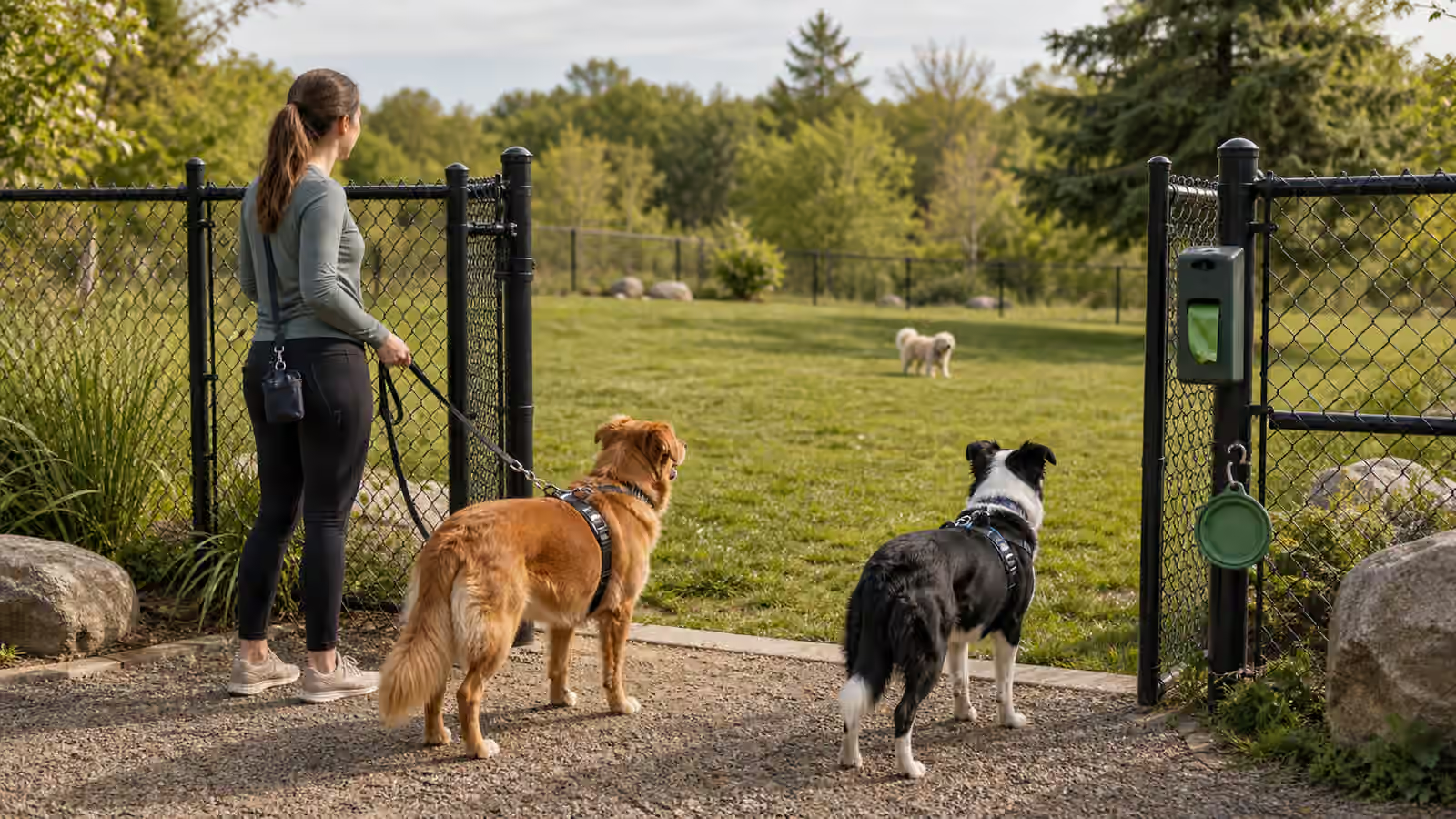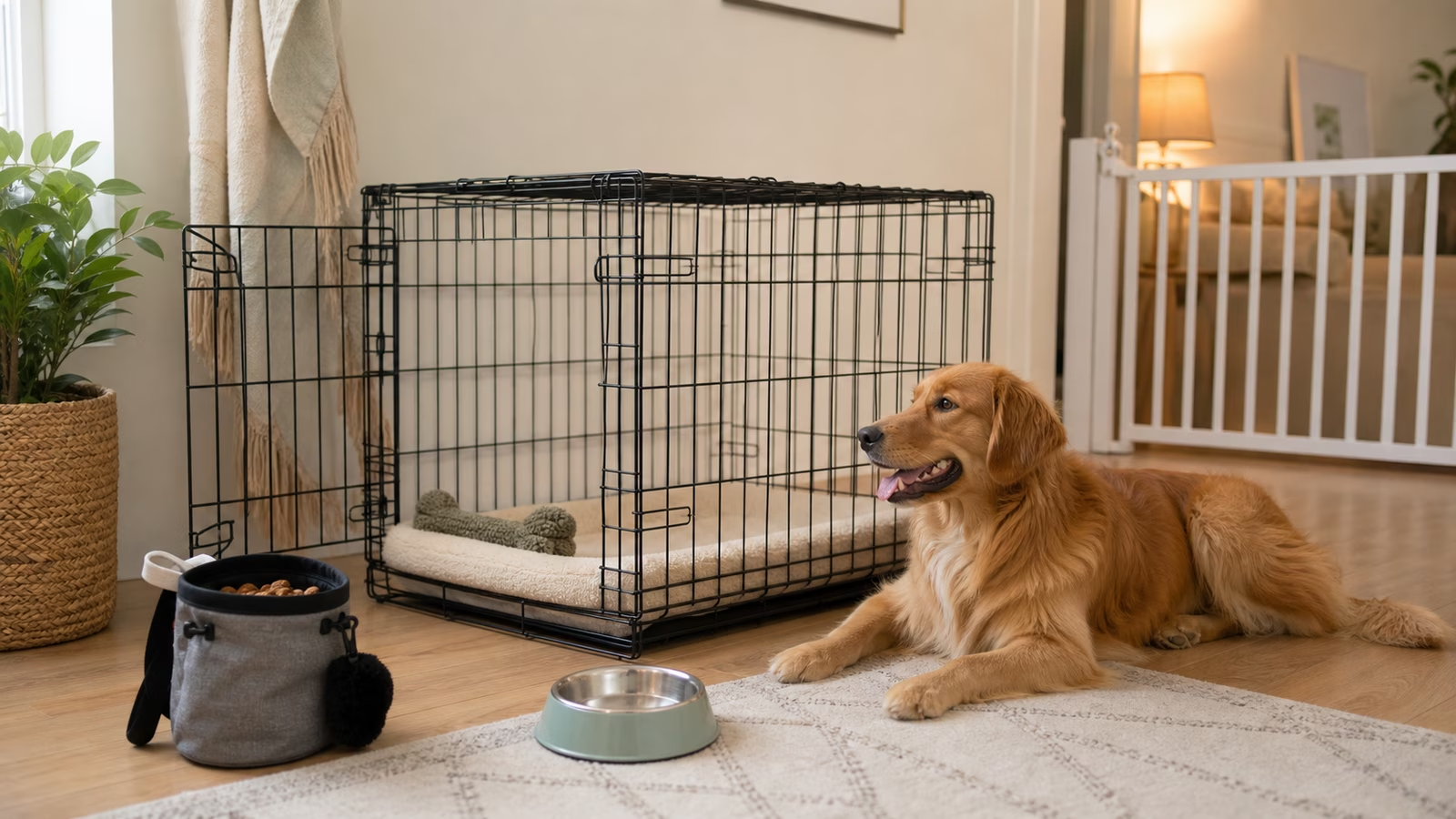
A walk is not a public meet-and-greet unless you choose to make it one. Many leash problems get worse because people treat every approaching dog as a vote on friendliness. The dogs meet head-on, the leashes tighten, the people stop moving, and everyone waits to see what happens. Sometimes it goes well. Sometimes it becomes barking, tangling, jumping, freezing, snapping, or a dog who starts scanning every sidewalk for the next negotiation.
Loose-Leash Walks Without Turning Every Walk Into Training covers the everyday rhythm of moving together. Sidewalk greetings are a narrower skill. They ask whether the dog can stay organized when another dog, person, stroller, bicycle, doorway, elevator, or tempting patch of grass changes the path. The answer is often better when the household stops making greetings the default.
Distance is a training tool
People often think distance means avoidance. For dogs, distance can mean information. A dog who can notice another dog from across the street, sniff the ground, take food if food is appropriate, and continue walking is learning a calmer pattern than a dog who is pulled into a nose-to-nose meeting on a tight leash. The distance gives the dog enough room to think.
Start by learning the distance where your dog can still function. Some dogs can pass on the same sidewalk with a little curve. Some need the other side of the street. Some need a driveway, parked car, hedge, or building entrance to create a visual break. That distance may change by time of day, energy level, weather, location, and the other dog’s behavior. A bouncy adolescent dog on a flexing leash is a different picture from an older dog walking quietly beside a person.
Distance is also kinder to the other household. Not every dog wants to greet. Not every handler can explain why. A calm pass says, without drama, that both teams can keep moving.
Read the dog before the bark
The loud moment is rarely the first moment. Before barking or lunging, a dog may close the mouth, lean forward, slow down, stare, lift the tail, lower the body, shake off, sniff intensely, scan, or move behind the person. Some dogs get excited and high. Others get worried and still. Reading Pet Body Language at Home matters on walks because the same dog who looks fine to a neighbor may already be working hard.
Your own body gives information too. If you hold your breath, shorten the leash, brace your arm, and stare at the approaching dog, your dog feels the change. That does not mean you caused the reaction. It means the routine needs a calmer script. Notice, create space, soften the route, and keep moving before the leash becomes a tight line between two animals.
Do not punish a growl, bark, or hard stare without understanding what came before it. The safer goal is to reduce rehearsals of the whole sequence. If your dog is already over threshold, the lesson is not happening. Create distance and recover.
Make passing easier than greeting
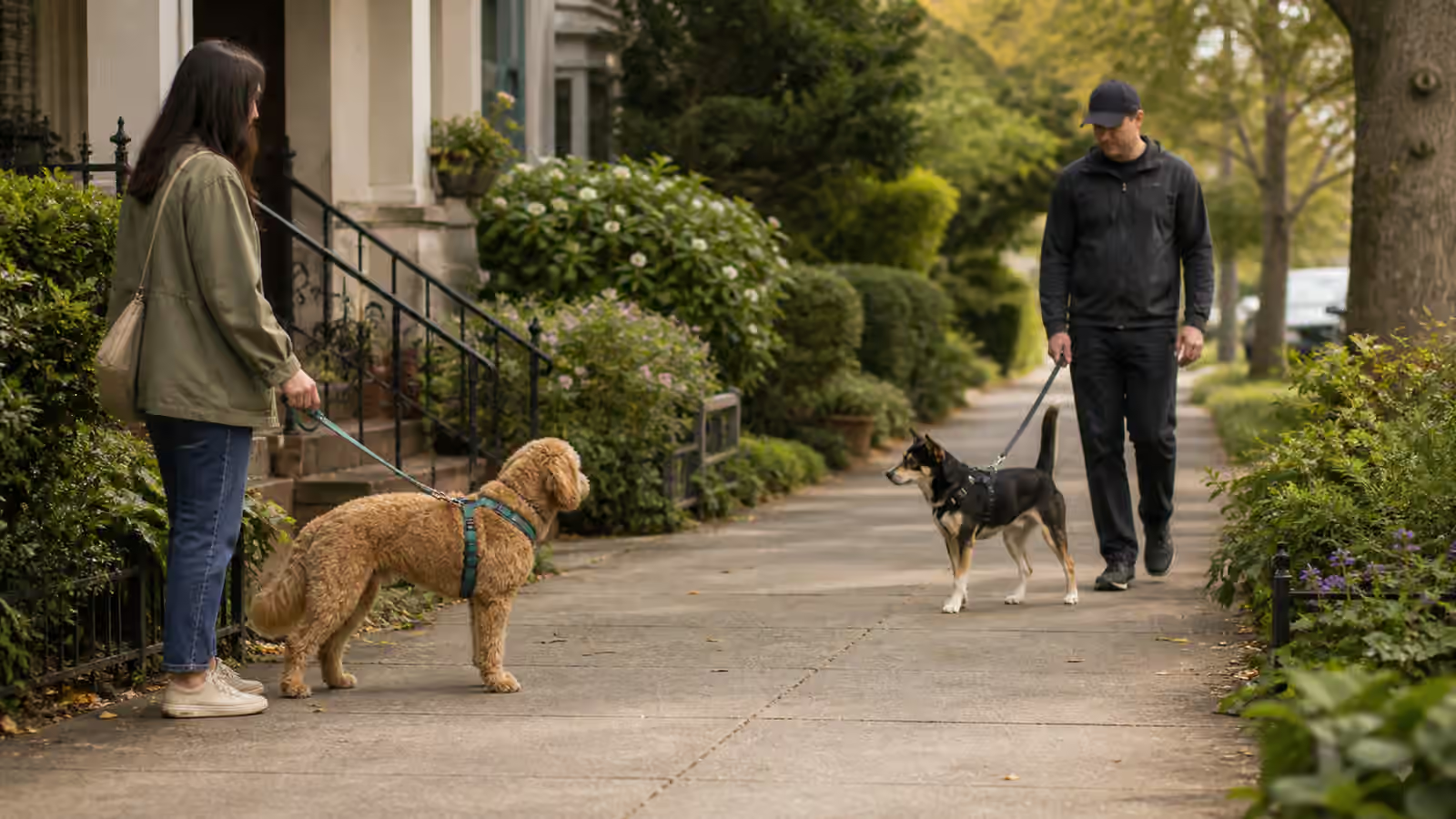
Passing is a skill. It can be practiced on quiet blocks, wide paths, parking-lot edges, and low-traffic times. The dog sees another dog, the person guides a gentle arc or crosses early, the leash stays loose enough to avoid pressure, and the team continues. The reward may be food, sniffing, praise, distance, or simply getting to move away. The dog learns that another dog predicts a clear path, not an argument.
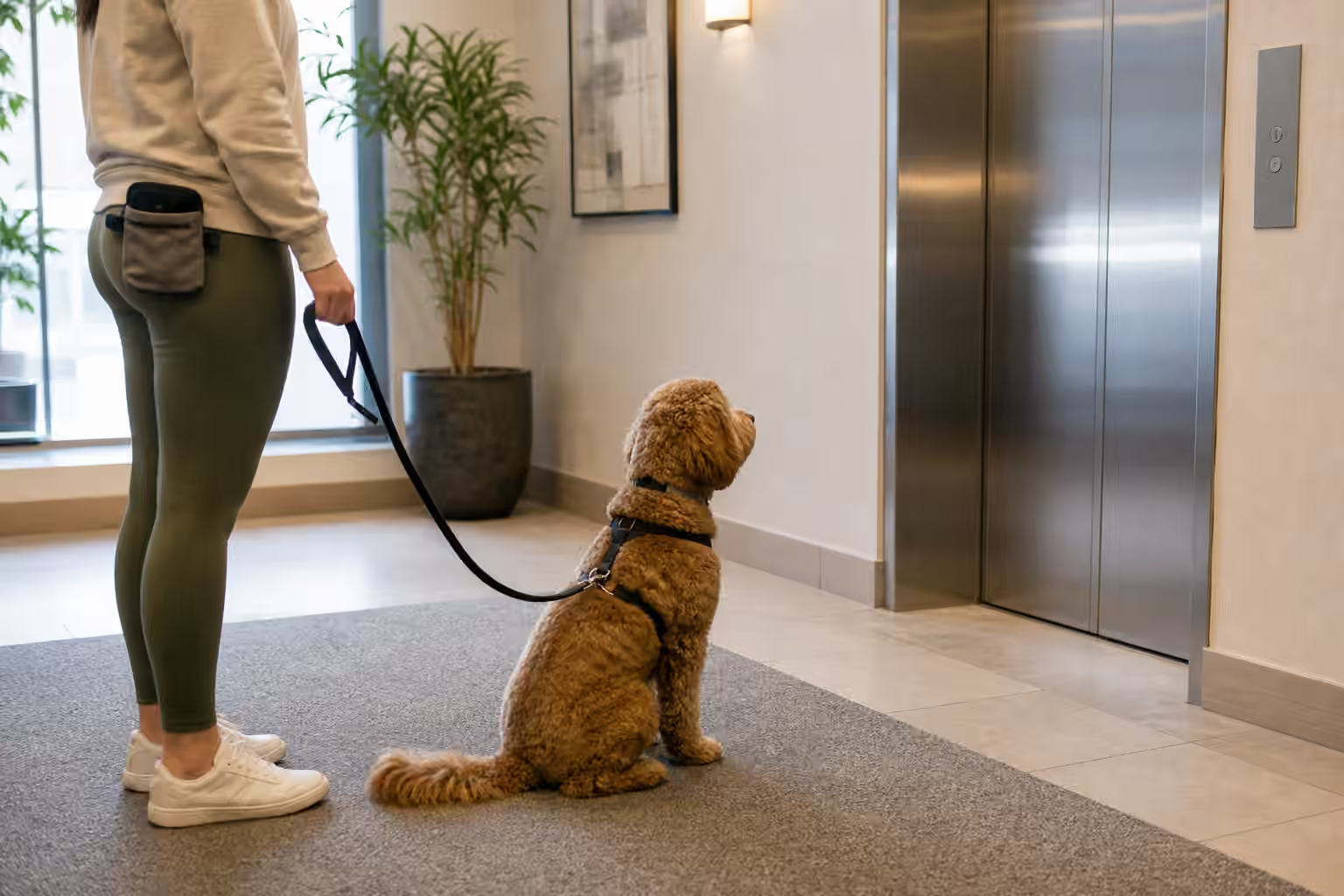
Head-on approaches are harder because dogs read them as direct pressure. Curves are easier. Pauses can be harder than motion because the dogs have time to stare and load up. Narrow sidewalks are harder than open paths. Doorways, elevators, and lobby exits are harder still because there is less room to adjust. The apartment entry planning in Apartment Pet Setup for Dogs and Cats applies before the walk even begins. A dog who explodes out of the building is already carrying speed into the sidewalk.
If someone asks whether the dogs can say hello, you can decline without a long explanation. A simple, calm refusal protects the training plan. Dogs do not need to greet every dog in the neighborhood to have a social life.
If greetings happen, keep them brief and easy to exit
Some dogs have known friends. Some neighborhoods make occasional greetings unavoidable. A better greeting is curved, brief, loose, and easy to leave. Both dogs should have enough room to move their heads and bodies without being trapped by leash tension. People should avoid wrapping leashes around legs, standing still while the dogs spiral, or letting one dog climb over the other.
Watch the quality of the interaction. Soft bodies, curved approaches, brief sniffing, and easy disengagement are different from hard staring, freezing, mounting, pawing, pinning, or one dog repeatedly trying to leave. End while the greeting is still easy. A three-second greeting that ends cleanly is often better than a thirty-second greeting that turns messy.
Gear matters because it shapes control and comfort. Harnesses, Collars, and Leashes Explained can help you choose a setup that fits the dog and the route. No piece of gear should be used as a substitute for distance, observation, and judgment.
Plan for the regular problem spots
Every route has predictable pinch points. The neighbor’s gate. The corner with poor visibility. The lobby door. The school pickup block. The narrow path beside parked cars. The house with the barking dog behind the window. A practical walking routine names those spots and changes the approach before the dog is already committed.
Cross earlier than feels necessary. Pause behind a visual barrier if your dog can actually settle there. Use a familiar turn rather than a last-second yank. Give sniffing time after a hard pass so the dog’s body can come down. If a block is always too crowded, choose a less dramatic route while training catches up.
Window and Hallway Barking Routines for Dogs pairs with this because many dogs rehearse the same feelings indoors. A dog who spends the morning shouting at hallway sounds may not begin the afternoon walk neutral. Home routines and sidewalk routines feed each other.
Keep the walk’s purpose visible
Some walks are for bathroom needs. Some are for sniffing. Some are for exercise. Some are short training loops. The more clearly you know the purpose, the less likely you are to improvise a risky greeting because a stranger seems friendly. If your dog is tired, ill, newly adopted, adolescent, recovering from a stressful event, or already overstimulated, that walk may not be a greeting walk.
The goal is not a dog who ignores the world like furniture. The goal is a dog who can see the world and stay reachable. Passing another dog calmly is a useful life skill because it makes sidewalks, vet parking lots, building entries, parks, and travel breaks less loaded. It also respects the other dog, who may be old, sore, fearful, in training, or simply not interested.
A good sidewalk routine looks uneventful from the outside. The handler notices early, the dog has space, the leash stays understandable, and the team moves on. That quiet pass is not a missed social opportunity. It is the foundation that makes better social choices possible.