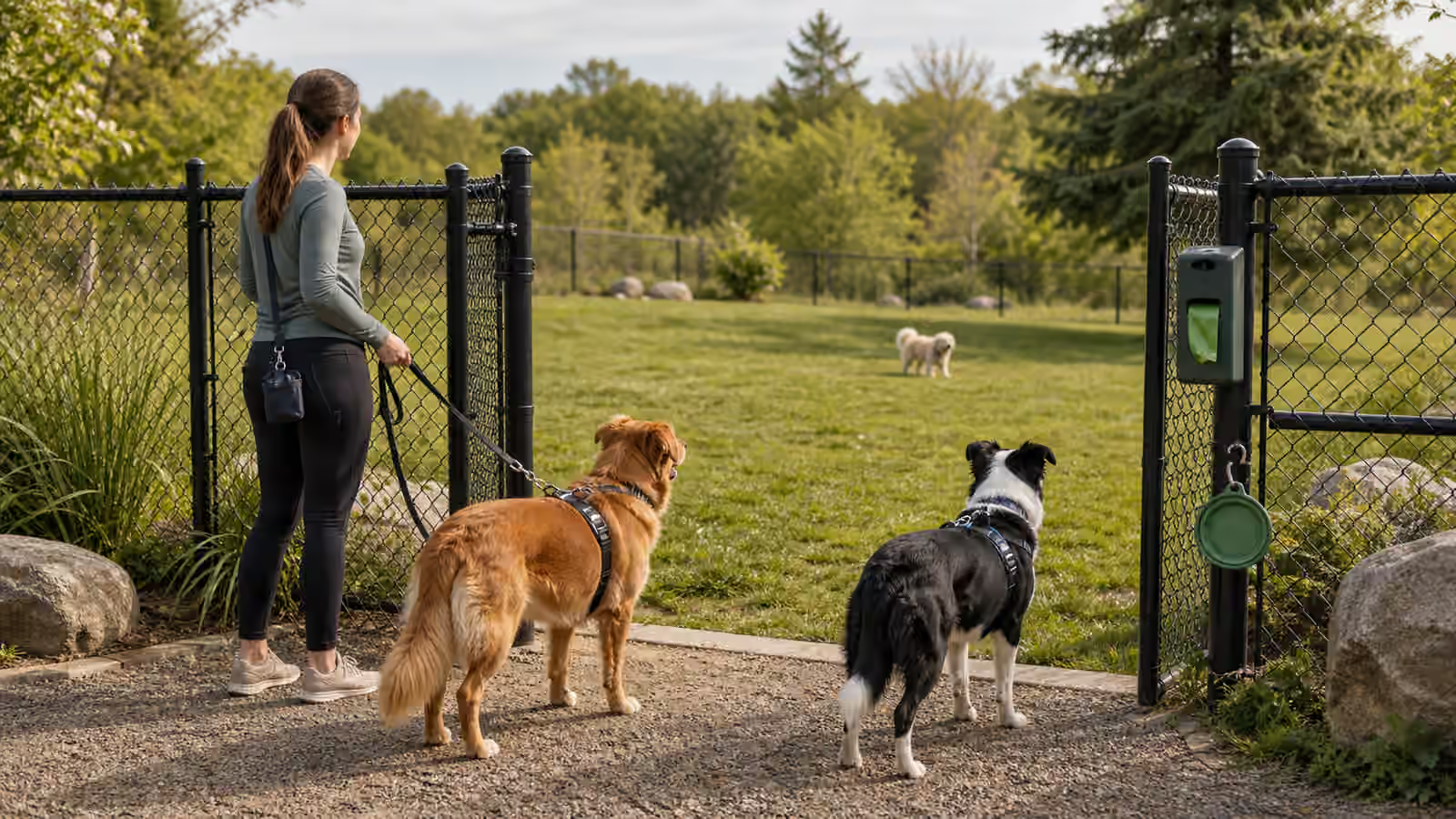
Reading body language is one of the most useful pet-home skills because it changes the timing of everything else. A household that notices tension early can add distance, shorten a greeting, end a grooming session, or make a room easier before the pet has to bark, bite, scratch, hide for hours, or bolt through a doorway. The goal is not to become a behavior expert from the couch. The goal is to see the ordinary signals that tell you whether the setup is working.
Body language is easy to misunderstand when it is read as one dramatic signal. A wagging tail does not always mean a dog is relaxed. A purring cat is not always comfortable. A quiet pet is not automatically fine. The useful reading comes from the whole picture: posture, movement, eyes, ears, tail, mouth, breathing, distance, and what the pet does next.
Start with the whole animal, not one part
A calmer read begins with the pet’s overall shape. A dog with loose muscles, curved movement, soft eyes, and easy breathing is giving different information from a dog who is tall, still, forward, closed-mouth, and staring. A cat who moves through the room with a flexible spine, normal tail carriage, and easy exits is different from a cat crouched low with a fixed stare and no path away. One ear flick or one tail movement may not mean much by itself. The pattern matters.
Context matters just as much. The same dog who leans into a scratch after a nap may duck away from the same hand near the front door because the doorway is already exciting. The same cat who arches into a cheek rub beside a familiar chair may flatten when a visitor reaches from above. Good observation does not label the pet as friendly, stubborn, dramatic, or sneaky. It asks what this room, this person, this sound, and this distance are doing to the pet right now.
This is why Pawstead routines begin with setup. A clear home base from Pawstead for Beginners gives you a baseline. When you know how the pet looks while eating normally, resting normally, using the litter box normally, or walking to the door normally, changes are easier to notice. Without a baseline, every reaction feels surprising.
Notice distance before contact
Most pets speak clearly with distance before they speak with teeth or claws. A dog who curves away, sniffs the ground, checks back to their person, or chooses a bed is giving you information. A cat who watches from a perch, leaves the room, ducks behind a chair, or pauses at the edge of a doorway is also giving information. These are not failures to socialize. They are choices that can keep the room calm if people respect them.
Problems grow when people erase those choices. A visitor follows the dog who moved away. A child reaches under the chair for the cat. An owner keeps brushing after the pet turns their head. The pet may learn that subtle signals do not work, so next time the signal gets louder. This is one reason the visitor routine in Visitors and Doorway Routines for Pets uses gates, beds, and safe rooms. Distance lets the pet communicate without having to make physical contact the only answer.
Distance also helps with dog-cat households. During introductions, the question is not whether the dog and cat can be close for a photograph. It is whether both animals can see, look away, move normally, and recover. If the cat can only feel safe on the highest shelf and the dog cannot stop staring, the distance is too small. The slower plan in Dog and Cat Introductions at Home works because it treats distance as information, not as a delay.
Read recovery after the moment
The seconds after a trigger often tell you more than the trigger itself. A dog may bark once at a hallway noise and then return to chewing. A cat may startle when a pan drops and then resume grooming. Those recoveries suggest the pet was surprised but not overwhelmed. A different pet may bark for ten minutes, scan the door, refuse food, or hide under the bed long after the sound ends. That is not the same event for that animal.
Recovery is especially important in training. A puppy who mouths during play and then settles after a short nap may need a better schedule. A puppy who becomes more frantic with every interaction may need less handling, more sleep, and a quieter room. The same idea applies to crate practice, leash walks, grooming, and alone time. The useful question is not only what happened. It is how long it took the pet to become ordinary again.
In Crate Training Without Confusion , opening the door before worry grows is not indulgent. It protects recovery. In Loose-Leash Walks Without Turning Every Walk Into Training , creating distance before the dog is at the end of their ability keeps the walk teachable. Body language gives you the timing for both decisions.
Watch for soft stress before hard conflict
Stress does not always begin with growling, hissing, barking, or swatting. Dogs may yawn when they are not tired, lick their lips when no food is present, turn their head away, lift a paw, shake off, sniff suddenly, close their mouth, or become unusually still. Cats may crouch, tuck paws, pin or rotate ears, lash the tail, ripple skin, stop blinking, freeze, refuse food, over-groom, or retreat into a hiding place. Any one of these can be ordinary in some contexts. Several together, especially when they appear during handling, greeting, confinement, or noise, deserve attention.
Soft stress signals are easy to miss because they do not inconvenience people yet. A dog who looks away during petting may be ignored because nothing bad happened. A cat whose tail starts thumping during brushing may be described as moody because the brush session is almost done. The better habit is to pause while the signal is still small. Stop petting for a few seconds. Let the cat step away. Give the dog more room. Lower the challenge before the pet has to prove the point.
This habit belongs in grooming more than almost anywhere else. Cooperative Grooming and Handling at Home works best when the person stops while the pet is still succeeding. If the only endpoint is a finished nail trim or a fully brushed coat, the pet’s early signals become obstacles. If the endpoint is a pet who can return tomorrow with trust intact, those signals become guidance.
Separate friendliness from consent
A social pet can still say no to a specific interaction. A dog who enjoys visitors may not want a hug. A cat who sleeps beside someone may not want to be picked up. A puppy who follows everyone around may still become overwhelmed by constant handling. Consent in a pet home is practical, not ceremonial. It means the person offers contact in a way the pet can accept, decline, or leave without being chased.
Try the pause test during ordinary affection. Pet for a few seconds, then stop. A dog who leans in, stays loose, or nudges gently may be asking for more. A dog who looks away, moves off, licks lips, ducks, mouths, freezes, or becomes frantic is giving a different answer. With cats, the pause is even more useful because many cats enjoy short contact and then need it to end. A cat who repositions toward your hand is different from a cat whose tail speeds up while the body stays trapped.
This is especially important for children and guests. The household should not ask a pet to tolerate rough affection as proof of being good. A calmer standard is simpler: the pet gets space, the person uses brief contact, and adults interrupt before the pet has to. If the pet has a history of biting, scratching, guarding, or intense fear, use the decision frame in When to Call a Vet, Trainer, or Groomer instead of turning everyday greetings into experiments.
Learn the pet’s normal signals around food and resources
Food, beds, toys, litter areas, and resting places can make body language sharper. A dog eating with loose posture in a quiet corner is different from a dog hovering over a bowl, eating faster when someone approaches, freezing, showing the whites of the eyes, or carrying food away. A cat who uses the litter box normally is different from a cat who rushes out, avoids the route, or watches another pet before entering. These signals are not invitations to test the animal. They are reasons to improve the layout.
The mealtime setup in Feeding Stations and Mealtime Routines for Pets becomes easier when you observe instead of crowding. Give pets enough room to eat. Keep children away from bowls. Feed animals separately if tension appears. For cats, protect the path to food, water, scratching, hiding, and litter. For dogs, do not reach into bowls or take things away to prove leadership. Trade when needed, manage the space, and get qualified help when guarding or conflict is present.
Resource signals often become visible during busy household transitions. A pet may guard a chew only when visitors arrive, become tense around the water bowl only when another pet is nearby, or resist moving from a bed only at night. Treat those details as useful. Body language is not a verdict on the pet’s character. It is a map of where the setup needs more space, more predictability, or more professional support.
Use body language to set the next step
The best next step is usually smaller than people expect. If the dog can look at the guest from behind a gate and then return to a bed, stay there. If the cat can watch the dog from a perch and still blink, eat, and leave calmly, repeat that version. If the puppy can handle one second of paw touch, reward and stop. Progress is not proved by making the next session harder every time. It is proved by the pet recovering faster, choosing calmly more often, and needing less emergency management.
Body language also tells you when not to train. A pet who is panting hard indoors without exercise, refusing high-value food in a situation where they normally eat, scanning constantly, hiding for long periods, or freezing under touch may not be in a learning state. The humane and useful move is to reduce pressure. That might mean closing a door, ending the session, changing the route, moving the litter box, asking guests to ignore the pet, or contacting a professional.
Over time, the household becomes better at seeing the quiet middle. Not every twitch is a crisis, and not every bark means the plan has failed. You are watching for patterns: what helps the pet soften, what makes them stiffen, how quickly they recover, and which setups produce normal eating, sleeping, toileting, playing, and resting. A home that reads those patterns can make better use of every other Pawstead routine, because the pet no longer has to shout before the room listens.