A pet who rushes the door is not always trying to escape in a dramatic way. Sometimes the door has simply become the most interesting place in the home. It predicts walks, visitors, deliveries, hallway smells, outdoor sounds, people returning from work, and sudden changes in energy. Dogs may crowd the threshold because movement has paid off before. Cats may slip toward the opening because the hallway is new, the porch smells different, or everyone is distracted.
Door-dash prevention works best when it is treated as an entryway setup problem, not a last-second reflex test. The pet should not have to make the safest choice while the door is already open, a visitor is talking, groceries are in one hand, and the hallway smells exciting. Build the routine earlier: where the pet waits, what the person does before touching the handle, how visitors enter, and what happens after everyone is inside.
Build a real threshold before the front door
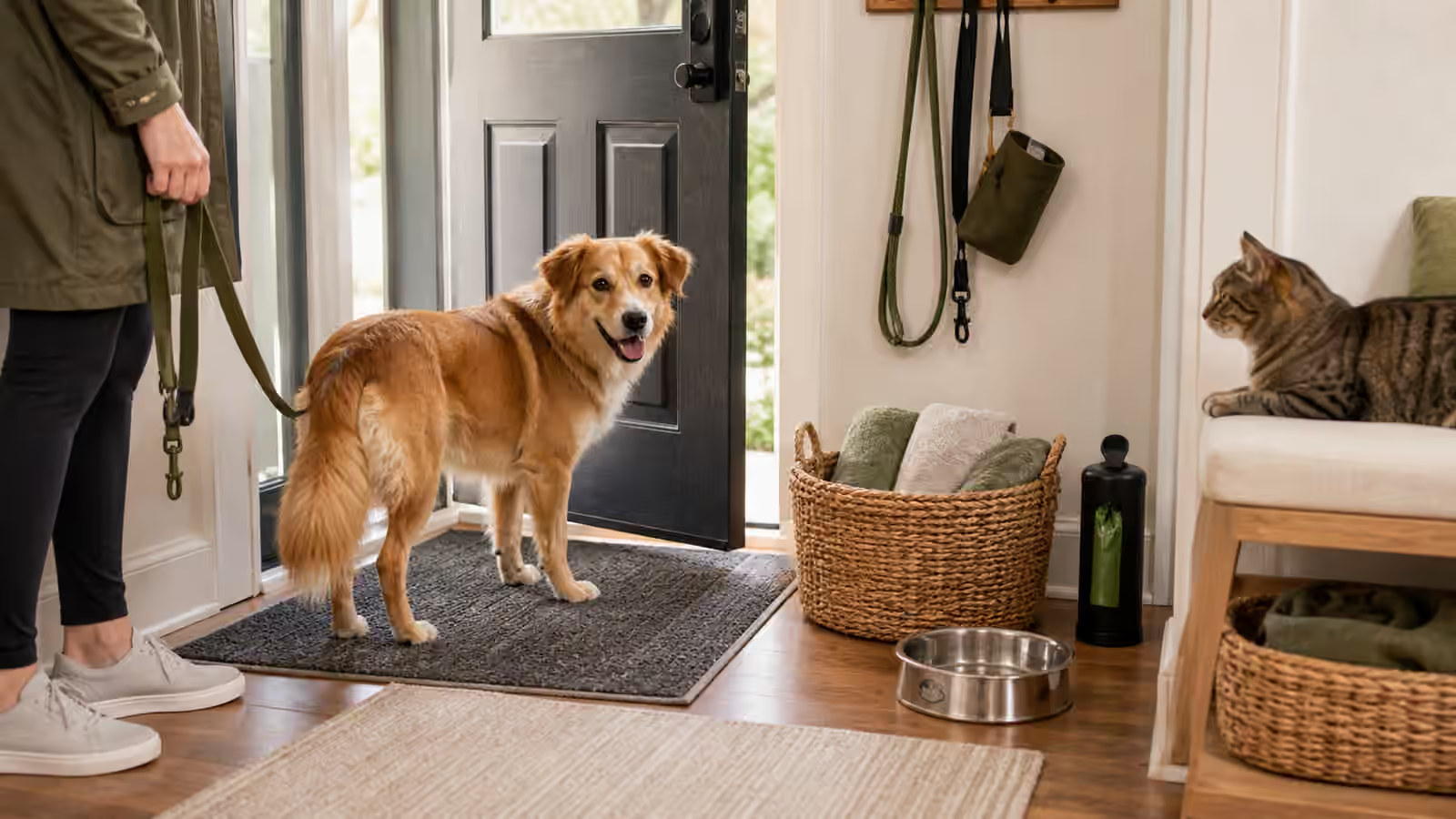
The safest entryways usually have two thresholds. The first is the management threshold: a gate, closed interior door, leash station, crate, mat, or cat perch that keeps the pet from being directly at the exterior door. The second is the actual front door. If the only barrier is the door itself, every arrival becomes a test of timing. A person opens the door, a pet lunges forward, and the household tries to train in the smallest and most exciting space.
For dogs, a gate or mat several steps back from the door gives the person room to move. The dog can learn that the mat is where good things happen while the handle turns. This does not require a performance-perfect stay. It begins with distance, food, repetition, and a door that opens only as far as the dog can handle. If the dog surges forward, the door closes calmly and the setup gets easier next time.
For cats, the threshold may be vertical rather than on the floor. A perch, side table, cat tree, or shelf away from the door can give the cat a job that is not “inspect the gap.” Put it where the cat can observe without being in the path of feet. A cat who enjoys looking down at arrivals from a predictable perch may be less likely to weave around ankles. This works especially well when the perch is part of the normal home, not a special object that appears only when people are worried.
Make departures boring before arrivals get hard
Many households practice only when the problem is already happening. The visitor rings, the dog barks, the cat approaches, and everyone tries to manage five moving parts at once. Start with ordinary departures instead. Pick up keys, touch the handle, open the door a few inches, close it, and return to normal life. Reward the pet for staying at the station or remaining away from the threshold. Keep the practice so small that it looks almost silly.
The point is to change what door movements predict. If every handle touch means a walk, delivery, visitor, or burst of attention, the pet’s excitement makes sense. If handle touches also predict quiet rewards, closed doors, and no big event, the door loses some power. This is especially useful for dogs who sprint to the door before the leash is even visible. Pair this work with Loose-Leash Walks Without Turning Every Walk Into Training so the walk begins calmly inside rather than trying to recover outside.
Cats may need a different version. Open and close interior doors while the cat is eating, playing, or resting elsewhere. Reinforce the perch or room boundary before using the front door. Do not wait until the cat has already learned that a person carrying packages is too distracted to notice a small body near the floor. A few seconds of rehearsal before real arrivals can prevent a habit that is much harder to change.
Give visitors a script before they arrive
Visitors often undo entryway routines because they feel awkward standing outside. They open the door wider, speak excitedly, bend toward the dog, call the cat, or apologize while stepping over the gate. A good visitor plan is short enough to say before the visit begins. The pet will be behind a gate. The visitor should wait. Greetings happen after the door closes. Nobody reaches over the barrier, and nobody rewards crowding.
This is not about making the home unfriendly. It is about giving the pet a predictable beginning. A dog who is allowed to explode at the first thirty seconds of every visit may spend the rest of the evening recovering. A cat who is called toward the entry may learn that the doorway is a social place. The visitor routine in Visitors and Doorway Routines for Pets covers greetings in more detail, but door-dash prevention narrows the focus: the outside door opens only when the pet is physically and emotionally out of the doorway.
Deliveries need their own plan because the person at the door may not participate. Use a gate, an interior room, or a leash before opening. If the home has a storm door, screen, hallway, or porch, treat those as helpful but not complete solutions. Screens fail, hands slip, and pets fit through gaps faster than people expect. The entry station should work even when the delivery is quick.
Separate walk gear from doorway chaos
Dogs often rush doors because walks begin with a rising sequence of signals: shoes, leash, collar, keys, bag, human voice, and finally the door. If every signal stacks excitement, the dog reaches the threshold already rehearsing forward motion. Move part of the routine away from the door. Clip the leash in a calmer area. Ask for a simple pause before approaching the entry. Keep treats where the leash lives so the person is not searching while the dog builds pressure.
Gear fit matters too. A dog who can back out of a harness, slip a collar, or tangle the leash near the doorway is not ready for casual threshold practice. The walking gear guide, Harnesses, Collars, and Leashes Explained , is worth reading before treating door rushing as only a manners issue. Equipment does not train the dog by itself, but it should not make a small mistake dangerous.
After the door opens, keep the first few steps plain. Some dogs rush because the outside landing is where sniffing, greeting, pulling, or barking begins. If the hallway or porch is too exciting, practice a shorter pattern: open, step out, pause, step back in, reward, and reset. The dog learns that crossing the threshold does not automatically mean charging into the world.
Give cats a door plan that respects speed and silence
Cats make door routines harder because they do not always announce themselves. A dog at the door is obvious. A cat behind a plant, under a bench, or beside a shoe tray may be invisible until the gap appears. This is why cat door prevention depends on layout more than verbal instruction. Do not store the cat’s favorite toys, food, scratcher, or resting mat beside the exterior door unless the door is rarely used and well controlled.
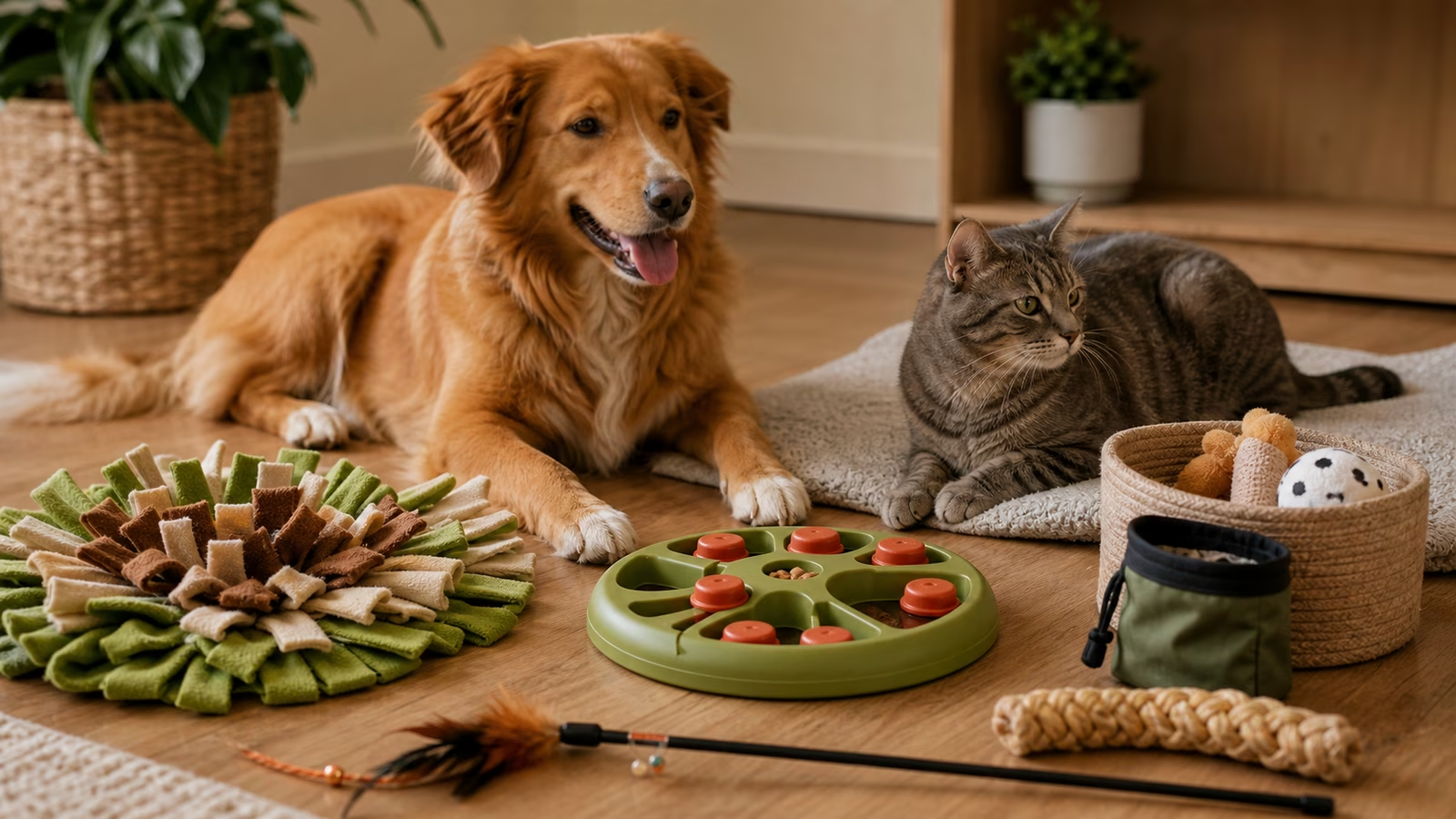
Create a more interesting cat destination away from the entry. A window perch, scratcher, food puzzle, or resting shelf can compete with the doorway if it is part of daily life. Before a known busy period, such as guests arriving or people leaving for school, refresh that destination. A tiny food scatter in a safe room, a short wand play session, or a closed-door rest can be more reliable than hoping the cat will choose restraint.
Multi-pet homes need extra spacing. A cat may move toward the door because the dog is crowding the room, or a dog may rush because the cat’s movement triggers chase. Resource Zones for Multi-Pet Homes helps here because the entry is also a resource: it controls access, attention, and excitement. Give each pet a route that does not require crossing the other’s station.
Practice the mistake point, not the fantasy version
Training fails when the practice version is much easier than real life. If the pet only practices when the house is quiet, the person is empty-handed, and no one is outside, the lesson may not survive groceries, children, weather, guests, or a ringing phone. Once the easy version is stable, add one real-life detail at a time. Carry a bag. Put on shoes. Have a family member knock softly. Open the door wider. Pause on the porch. Return and reset.
Keep the pet successful. If the dog breaks position every time the door opens halfway, open it two inches. If the cat appears at the threshold whenever people speak, practice in silence first, then add voice later. A routine that works at low difficulty can grow. A routine that fails repeatedly teaches the pet that rushing is still part of the sequence.
Outdoor boundaries matter beyond the front door. Porches, balconies, yards, garage doors, and screen doors all need the same honest assessment. Balcony, Porch, and Yard Boundaries for Pets is the next guide when the doorway opens to a tempting outdoor edge. The principle is the same: check the boundary before the pet is already testing it.
Know when management is the humane choice
Some pets should not practice at the front door until the setup changes. A newly adopted dog may need decompression before visitors and door rehearsals make sense. A fearful cat may need a closed safe room during busy arrivals. A pet with a history of bolting may need an interior barrier every time, even after training improves. Management is not failure. It is what keeps the animal safe while habits are rebuilt.
The best door routine feels uneventful. The dog has a station before the threshold. The cat has a better place to watch. Visitors know what to do. Walk gear is clipped before excitement peaks. The person opens the door without gambling on reflexes. Most households do not need a dramatic door transformation. They need a few feet of space, a repeatable script, and enough practice that the pet no longer treats every opening as a once-in-a-lifetime chance.