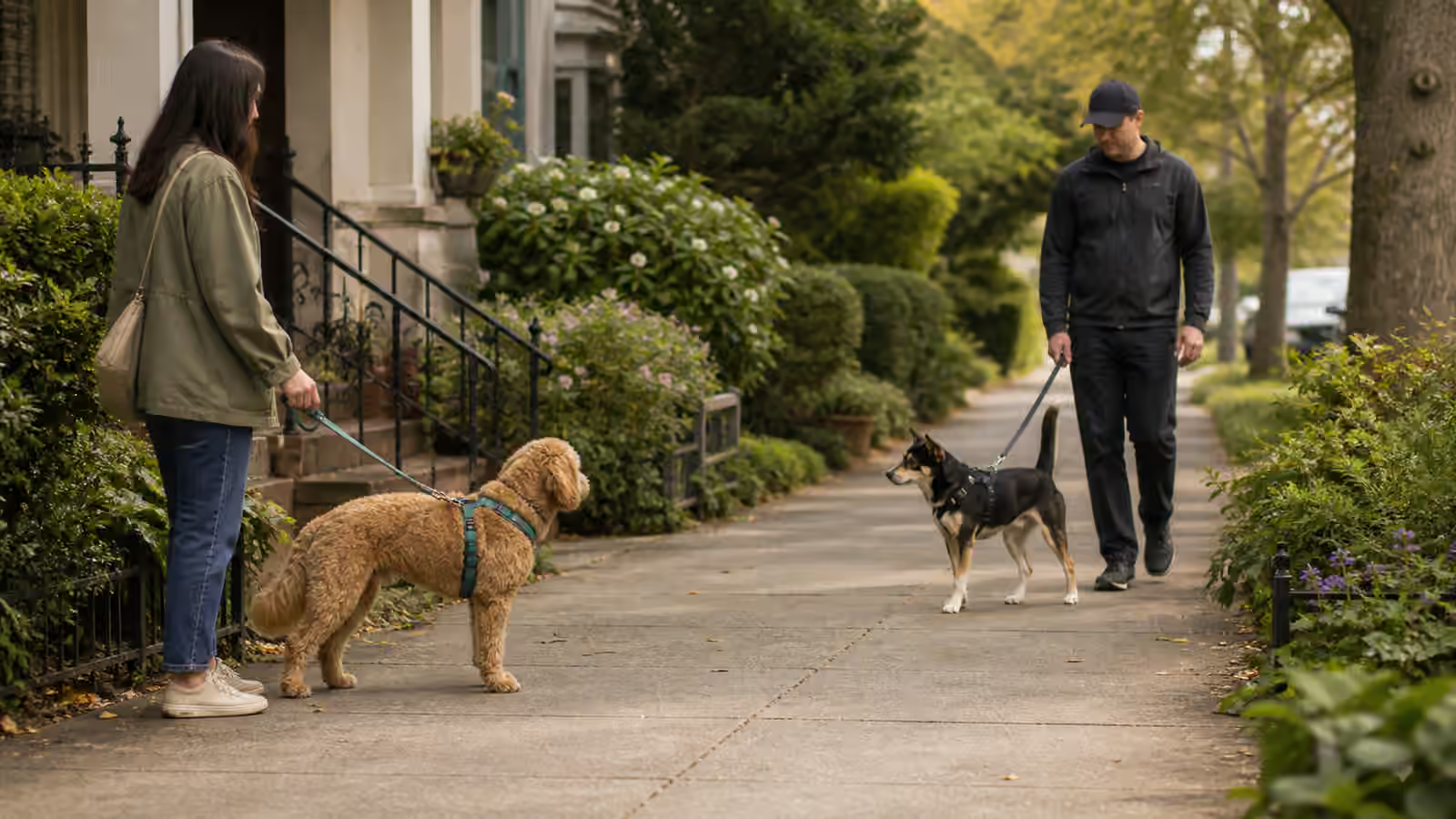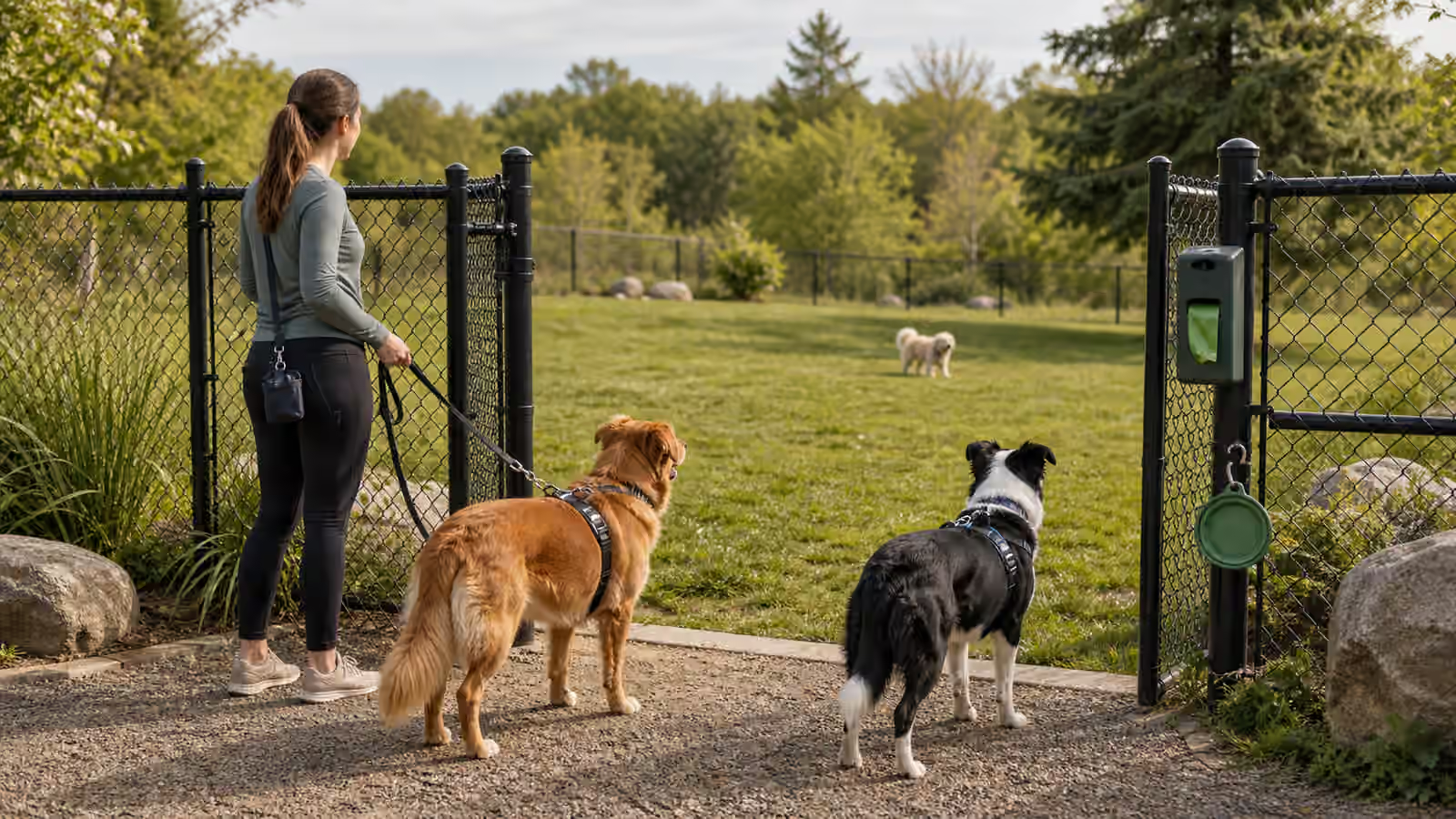
A dog park is not a universal reward. For some dogs, a well-managed off-leash area can offer movement, sniffing, and social play that fits their temperament. For others, the same gate creates pressure, rehearsed chasing, guarding, bullying, fear, or human distraction. The sign outside may say dog park, but the real question is whether the specific dogs, space, timing, and handler attention make sense today.
This guide connects to Loose-Leash Walks Without Turning Every Walk Into Training and Sidewalk Greetings and Passing Dogs Calmly , but off-leash spaces change the stakes. Once the leash comes off, distance and timing become harder to control. A good visit begins before the latch opens.
Decide Whether The Park Fits This Dog
Some dogs enjoy loose group play. Some enjoy walking the fence line and sniffing without much contact. Some prefer one familiar friend, a quiet field, a long-line walk where allowed, or no dog social time at all. A dog who avoids the gate, hides behind the handler, stiffens when dogs approach, guards toys, chases relentlessly, pins other dogs, panics when crowded, or cannot disengage is giving useful information.
Do not use the park to prove the dog is friendly. Friendliness is not a permanent label that survives every setting. A dog may be easy with a known neighbor dog and overwhelmed by six unfamiliar dogs at a narrow gate. A young dog may look confident because they rush into everything, then learn poor habits when nobody interrupts. An older dog may tolerate contact until the body is tired.
Reading Pet Body Language at Home applies outside too. Look for loose movement, curved approaches, brief pauses, self-interruption, sniffing, and recovery after excitement. Be cautious with hard staring, freezing, tucked posture, repeated mounting, relentless chasing, hiding, snapping, or a dog who keeps returning to a conflict.
Read The Gate Before Entering
The entrance tells you more than the name of the park. Pause outside. Watch the dogs already inside. Are handlers paying attention? Are dogs moving with space, or are several crowding the gate? Is one dog repeatedly controlling the entrance? Are toys, food, or water creating competition? Is there enough room for your dog to move away after entering?
The gate is often the hardest place because dogs gather, people fumble with clips, and newcomers arrive with energy. If the gate is crowded, wait or skip the visit. A dog does not need to enter just because you drove there. A calm walk outside the fence may be the better session.
Do not unclip in the outer area while other dogs are pressing against the inner gate. Manage the transition deliberately. If the park has separate spaces by size or temperament, use the one that fits your dog rather than the one that looks more active. Follow posted rules and local expectations, but remember that rules are a floor, not a substitute for judgment.
Keep Toys, Food, And Human Attention Simple
Many park conflicts are not about play at all. They are about balls, treats, water bowls, sticks, laps, gates, and people. A dog who shares toys at home may guard a ball in a group. A treat pouch can draw dogs who do not know you. A water bowl can become a crowding point when everyone is hot.
Leave high-value toys out unless the space and dogs truly suit them. Avoid feeding in the middle of loose dogs. If you carry treats for emergency recall or exit, keep them discreet and do not become a snack station. If your dog guards resources, the park may be the wrong place, or the visit may need to happen only at quiet times with no objects in play.
Resource Zones for Multi-Pet Homes is written for the house, but the principle travels well. Resources create social pressure. In a public dog area, you cannot control every resource or every dog, so prevention matters more.
Let Play Breathe
Healthy play usually has pauses, role changes, curved movement, and dogs who can stop. One dog chases, then another changes direction. A dog rolls and gets up. A dog shakes off, sniffs, drinks, or checks back with the handler. Play that never pauses may look impressive and still be too intense.
Interrupt early and calmly when play gets sticky. Call your dog away, move with them, create distance, and see whether both dogs recover. If your dog cannot hear you, cannot leave the interaction, or immediately returns to pressure another dog, the visit is too hard. That is not a reason to yell across the park. It is a reason to exit.
Do not rely on the phrase “they will work it out.” Dogs do learn from each other, but they also rehearse fear, bullying, chasing, and conflict. A handler’s job is not to micromanage every sniff. It is to notice when the interaction stops being fair or safe enough for the dogs involved.
Choose Exits Before Trouble Peaks
The best park visits often end earlier than people expect. Leave while your dog can still respond, drink calmly, move away from other dogs, and walk out without drama. Waiting until everyone is tired can backfire because tired dogs may become less patient and less coordinated.
Build a normal exit routine. Call the dog before clipping the leash. Move toward the gate without letting other dogs crowd. Avoid creating a pileup by lingering at the latch. Once outside, give the dog a few minutes to sniff or decompress before loading into a car or returning to a busy sidewalk.
Guest Pets and Playdate Boundaries at Home has the same lesson in a different room: successful social time does not require unlimited access. A clean ending protects the next meeting.
Use Alternatives Without Apology
A dog who dislikes dog parks still deserves enrichment. A sniff walk, quiet trail, fenced rental space where available, long-line practice where allowed, backyard search game, calm mat work, or one familiar dog friend may fit better. Pet Enrichment for Bored Dogs and Cats is useful because social play is only one form of enrichment, not the proof that a dog has a good life.
Puppies and adolescent dogs need special care. They are forming expectations about other dogs, people, gates, and movement. Random group play can teach useful skills in the right setting and poor habits in the wrong one. If you are unsure, ask a qualified trainer to help you choose environments that match the dog in front of you.
Skip the park for illness, injury, recovery, heat stress, severe fear, known aggression, repeated guarding, or any situation where you cannot safely interrupt and leave. Use When to Call a Vet, Trainer, or Groomer when the question has moved beyond ordinary outing judgment.
An off-leash area should make the dog easier to understand, not harder to control. The good visit is not the longest one or the busiest one. It is the visit where the handler reads the gate, protects space, keeps resources simple, notices play quality, and leaves before the dog has to explain discomfort the hard way.