Chewing is one of the clearest places where a home can either help a dog succeed or set the dog up to fail. Dogs chew because they are exploring, teething, relieving stress, using their mouths, settling after activity, or entertaining themselves when the room has no better option. A puppy chewing a chair leg is not making a moral statement about furniture. An adult dog stealing socks may not be stubborn. The home may simply be offering the wrong objects at the wrong time.
The goal is not to eliminate chewing. The goal is to give chewing a legal address. That means the dog has appropriate items, a place to use them, enough supervision to prevent rehearsing bad choices, and a room setup that does not leave shoes, cords, remotes, towels, toys, and trash as the most available entertainment. Pet-Proofing Rooms Before Giving More Freedom covers the larger room scan. This guide focuses on the chewing routine inside that room.
Start by changing the room, not the dog’s personality
People often describe a dog as a chewer as if that explains everything. It does not explain which objects are available, how much freedom the dog has, what happened before the chewing began, or whether the dog has a legal outlet nearby. Before adding more training words, look at the room from the dog’s height. Shoes smell like people. Remote controls are easy to pick up. Wood edges fit a mouth. Throw blankets move. Laundry baskets hold scent. Trash bins reward investigation. Cords can look like flexible toys to a bored puppy.
Move tempting objects before the dog practices with them. Closed storage, covered trash, cord covers, baby gates, laundry habits, and a real toy basket are not cosmetic choices. They are training tools. A dog who cannot reach the shoe does not rehearse chewing the shoe. A dog who repeatedly rehearses the wrong object learns that object well, even if people interrupt half the time.
This is especially important during new freedom. A puppy who has been reliable in one supervised room is not automatically ready for the whole house. An adopted adult dog may be quiet for the first week and then begin testing objects after decompression. The timeline in The First Month With an Adopted Adult Dog matters because chewing often appears after the dog becomes comfortable enough to explore.
Give chewing a place to happen
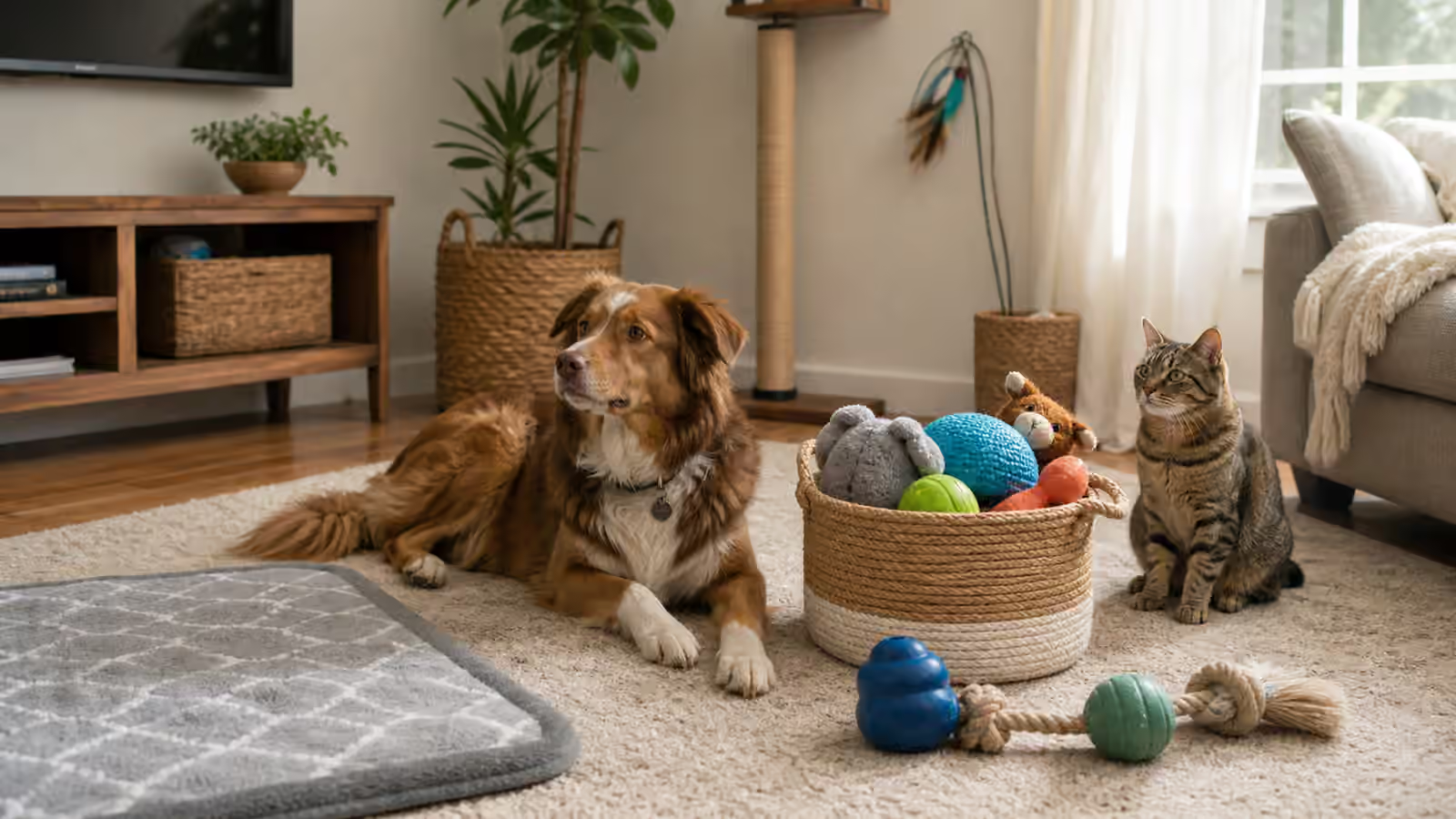
A legal chew zone is a simple idea: the dog learns that chewing happens on a mat, bed, crate-adjacent area, or washable rug with approved items. The zone should be close enough to family life that the dog is not isolated, but calm enough that the dog can settle. If chewing only happens when the dog is banished, the routine may feel like separation rather than relief.
Introduce the zone when the dog is ready to succeed. After a walk, play, meal, or short training session, offer an appropriate chew on the mat. Stay nearby at first. If the dog carries the item away, gently reset the scene by trading, moving the mat, or using a smaller space. The point is not to wrestle the chew from the dog. It is to make the right location easy and the wrong location less available.
For crate-trained dogs, chew time may happen in or near the crate, but the crate should not become a place where unsafe items are left unattended. Crate Training Without Confusion is useful if the dog needs a calmer containment plan before chew freedom expands. The chew zone and the crate can support each other, but neither replaces supervision when the item requires it.
Rotate toys so they stay meaningful
Many homes have a floor covered in toys and a dog chewing the table. The problem may not be lack of objects. It may be that every object has become background. A small rotation keeps toys interesting and helps people notice what the dog actually uses. Keep a few options out and store the rest. Bring back old toys after a break. Retire damaged items before they become swallowing risks.
Rotation also teaches the household. A soft plush toy may be fine for a gentle adult dog and useless for a shredder. A rubber toy may be interesting only with food inside. A rope may be safe during supervised tug and wrong for unsupervised chewing. A puzzle feeder may calm one dog and frustrate another. The dog is giving information every time they choose, abandon, destroy, or guard an item.
Do not increase difficulty just because the dog is busy. A chew or puzzle that keeps a dog occupied by creating frustration, splintering, or intense guarding is not a better enrichment tool. Pet Enrichment for Bored Dogs and Cats is helpful here because chewing is only one enrichment lane. Some dogs need sniffing, searching, training, or rest more than a harder object.
Read the timing of destructive chewing
When chewing happens matters. A puppy who chews in the evening may be overtired, teething, or under-supervised during the household’s busiest hour. A dog who chews when people leave may be bored, but may also be distressed. A dog who chews after exciting visitors may need a landing routine. A dog who chews only stolen items may be seeking attention because object theft always starts a chase.
Do not collapse all of these into one answer. Evening chewing may improve with earlier play, a chew zone, and a nap. Departure chewing may need Alone-Time Routines for Dogs and Cats and professional help if panic signs appear. Visitor-related chewing may connect to Visitors and Doorway Routines for Pets . Object theft may improve when people stop turning every sock into a dramatic event and start trading calmly before the dog has a full performance.
The timeline also matters with puppies. Teething can make chewing more intense, but it should not be used as permission to let the puppy practice on everything. Provide legal options, supervise, manage the room, and reduce freedom when the puppy cannot choose well. A puppy who has spent months learning that furniture is chewable may not magically stop when teething ends.
Trade instead of chasing
When the dog has the wrong object, the household’s response teaches the next repetition. Chasing often turns the object into a prize. Yelling may make the dog hide with it. Grabbing can create conflict, especially if the object is exciting or the dog has a history of losing things. A trade routine is safer and more useful: approach calmly, offer something better, let the dog release, and then manage the room so the same object is not immediately available.
Practice trades with boring legal toys before you need them. Say the cue, present food or another item, and return the original when appropriate. The dog learns that human approach does not always mean loss. This matters for everyday chewing and for emergencies, though a dangerous swallowed-object risk is not a training moment to handle casually. Safety comes first.
If the dog stiffens, freezes, growls, snaps, or guards objects, stop treating the issue as simple chewing. Resource guarding deserves qualified help. The setup can still reduce risk by removing tempting items and avoiding confrontations, but the training plan should be careful and individualized.
Match freedom to the dog’s current choices
Room freedom should expand because the dog is making good choices, not because the calendar moved forward. A dog who chooses the chew zone, ignores stored objects, settles after activity, and responds to trades can earn more space. A dog who scans for shoes the moment supervision drops needs less access, not more lectures. Gates, leashes, crates, pens, and closed doors are normal tools when used thoughtfully.
Freedom can be temporary. A dog may handle the living room in the morning and need a smaller space in the evening. A rainy week, a disrupted schedule, new visitors, or a move can change chewing pressure. This does not mean training disappeared. It means the environment changed. Rainy-Day Pet Routines for Dogs and Cats and Moving Homes With Pets Without Losing the Routine both show how routines can wobble when the household rhythm changes.
Cleaning belongs in the plan too. Chew crumbs, saliva, food residue, and toy debris should not spread through the whole house. A washable mat and small storage bin make the routine easier to maintain. If the chew zone is pleasant for people to live with, people are more likely to keep using it.
Let chewing become a calm ending
The best chewing routines are not constant entertainment. They help the dog come down from activity. After a walk, visitor greeting, play session, or training block, a chew can mark the shift into rest. This is different from handing the dog a toy only when they are already destroying something. The routine says, “This is what we do after excitement.”
Over time, the dog should not need a huge production. The room is managed, the legal items are familiar, the chew zone is obvious, and people know when supervision is required. Chewing becomes part of the household rhythm rather than a daily argument over furniture. That is the real win: not a dog who never uses their mouth, but a dog whose mouth has better work to do.