
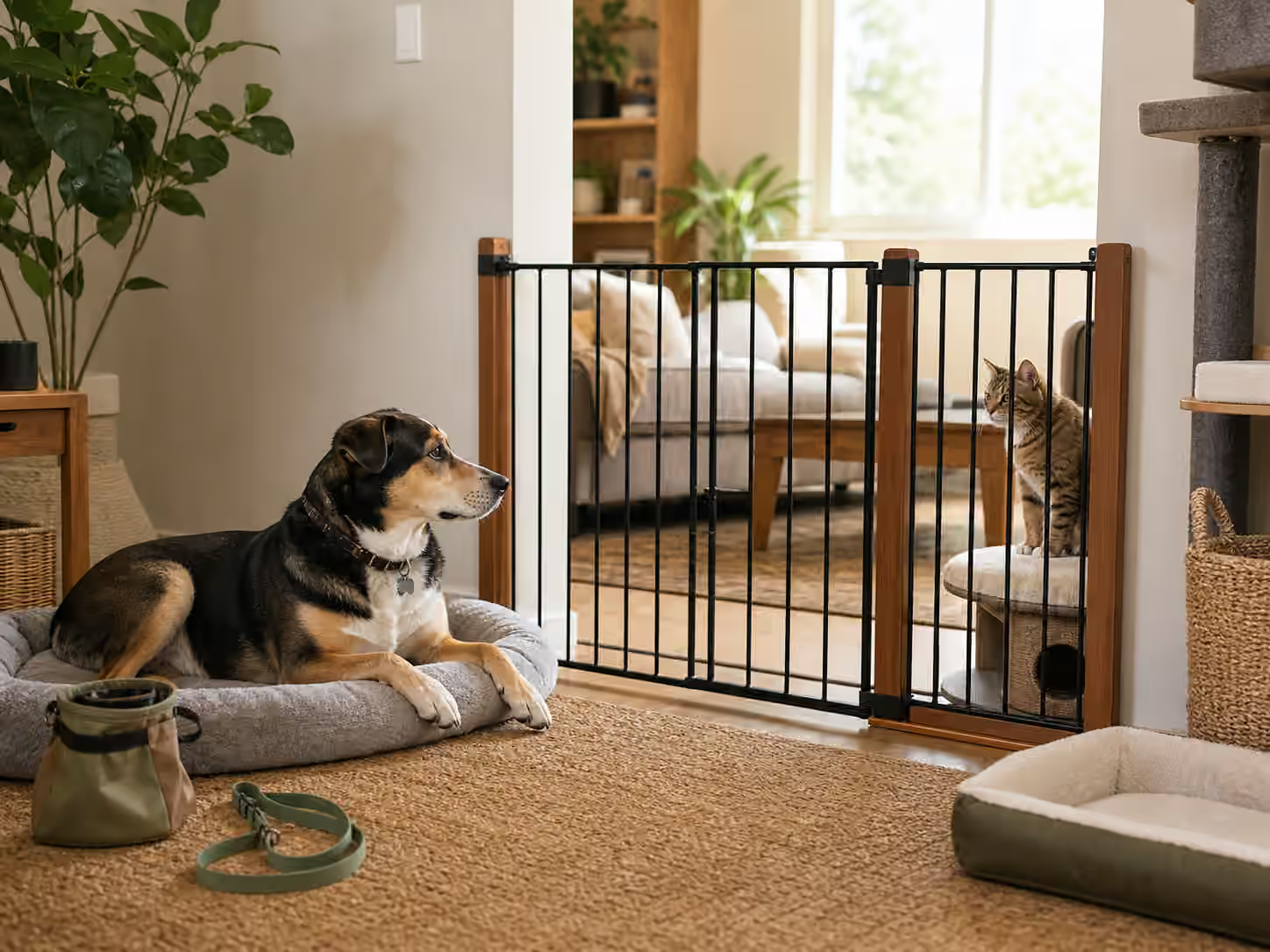
Introducing a dog and cat is not a single doorway moment. It is a home setup project, a reading-body-language project, and a patience project. The goal is not to prove that the pets can stand close together on the first day. The goal is to help each animal keep enough control of their own space that curiosity can replace alarm.
A good introduction usually looks boring from the outside. There is a closed door, a gate, a leash resting on the floor, a cat perch that gives height, a dog bed placed far enough back from the barrier, and a person rewarding calm glances instead of pushing for contact. That kind of setup may feel slow, but it prevents the first meeting from becoming a chase, a stare-down, or a memory both pets carry into the next attempt.
Start with two complete home bases
Before the pets meet, each one needs a place where they do not have to negotiate. For the cat, that usually means a room with litter, food, water, a hiding place, scratching, and height. For the dog, it may mean a crate, bed, gated area, or tethered resting spot that is comfortable rather than punitive. The important detail is completeness. A cat should not have to cross the dog’s path to use the litter box. A dog should not be dragged away from every resting spot because the cat needs the only quiet corner.
This is where the broader Pawstead setup guides connect. If the cat is new, build the room the way New Cat Setup describes, with the litter box and hiding options already in place. If the dog is a puppy, use the rhythm from New Puppy First Week Checklist so bathroom breaks, sleep, and supervision are not being improvised during introductions. A tired, frantic puppy and a cornered cat are not learning about each other. They are coping with a room that has asked too much.
Do not start by giving the new pet the whole house. Expansion should be earned by calm recovery. A cat who is eating, using the litter box, exploring, and returning to hiding without panic may be ready for more sound and scent. A dog who can settle after seeing a closed door, respond to their name, take food gently, and disengage from interesting smells may be ready for carefully managed visual contact. If those basics are not present yet, the first introduction task is not the other animal. It is stabilizing the home base.
Let scent and sound arrive before sight
People often rush to the first visual meeting because it feels like the real introduction. For many pets, sight is the most exciting or alarming part. Scent and sound can do quieter work first. A dog can smell the cat’s bedding near a resting area. A cat can investigate a towel that has been near the dog. The exchange should be casual, not a test. Put the item down, let the pet choose whether to approach, and remove it if they become tense or fixated.
Sound matters too. A cat hearing the dog walk past the door, drink water, or receive a treat can begin to build a map of the household. A dog hearing the cat move, scratch, or jump can learn that those sounds do not always mean action. Keep these moments short and ordinary. If the dog explodes at every sound behind the door, increase distance and work on calm attention before adding more. If the cat stops eating or hides harder whenever the dog passes, reduce traffic and give the cat longer quiet blocks.
This stage is also useful because it shows which animal needs more support. Some dogs are not hostile, but they are intensely interested in movement. Some cats are not aggressive, but they need high places and predictable exits before they can think. The setup should answer the pet in front of you, not the species stereotype in your head.
Use barriers as teaching tools
A pet gate is not only a wall. Used well, it is a teaching tool because it lets both pets gather information without full access. The first visual sessions should be short enough that everyone could have done more. Place the dog far enough from the gate that they can notice the cat without crowding it. Place the cat’s options so the cat can approach, perch, hide, or walk away without crossing a trap line.
The dog should have something to do besides stare. A bed cue, scattered treats, a stuffed food toy used under supervision, or a practiced name response can lower the pressure. If the dog cannot eat, cannot look away, or keeps loading forward toward the barrier, the setup is too hard. More leash tension is not the answer. Add distance, block part of the view, or return to sound and scent work.
The cat should also have choices. A cat sitting high with soft eyes and a loose body is different from a cat flattened on a shelf with no exit. Tail thrashing, hard staring, growling, repeated swatting at the gate, or refusing to leave a hiding place all mean the session needs to become easier. Easier may mean the dog is farther away, the session is shorter, the barrier has a visual cover, or the cat gets several days with only scent exchange.
Barriers are not a countdown to removing barriers. They are a way to collect evidence. When both pets can see each other, take food or play, look away, and recover quickly after a small surprise, the household has useful information. When each session ends with barking, lunging, chasing the gate, hiding, or a person physically blocking contact, the barrier is telling you the next step is not ready.
Reward calm without making a scene
The reward strategy should be quiet and precise. You are not trying to hype the dog into a training performance or lure the cat into a meeting they would not choose. You are marking small useful choices: looking at the other pet and then looking away, walking back to a bed, sniffing and relaxing, hearing movement behind a door without charging, or choosing height instead of conflict.
Food is helpful if the pet can take it calmly. A treat pouch keeps rewards available so the dog can be paid before arousal climbs. For cats, treats can work, but play, distance, and access to a safe perch may matter more. Some cats will not eat during early sessions, and that is information. Do not turn the cat’s refusal into pressure. Make the room easier and try again later.
The human tone matters. If every sighting is met with a sharp gasp, a tight leash, and a chorus of warnings, both pets may learn that the other animal predicts tension. Speak less. Move slowly. Keep sessions brief. End before anyone is over threshold. A two-minute session that ends with both pets settling is more valuable than a twenty-minute session that looks brave until it collapses.
Give the dog clear management
Many dog-cat introductions fail because the dog is allowed to rehearse the exact behavior the household wants to prevent. Chasing is self-rewarding for many dogs, even if they only meant to play. A single hallway sprint can teach the cat that the dog is dangerous and teach the dog that cat movement is thrilling. Management is not a lack of training. It is how training gets a fair chance.
Use doors, gates, crates, leashes, and closed-room routines while the relationship is forming. If crate training is part of the plan, revisit Crate Training Without Confusion so the crate remains a rest skill and not a punishment after the dog sees the cat. If the dog is on leash indoors, keep the leash loose and the distance generous. A tight leash near the cat can add frustration and make the dog feel trapped.
Practice dog skills away from the cat first. Name response, hand targeting, settling on a mat, leaving food alone, and returning to a person are all easier when the cat is not present. Once those skills exist, the cat can appear at a distance for very short sessions. If the dog cannot perform the skill without the cat, they will probably not perform it with the cat.
Protect cat resources and escape routes
The cat’s resources need special attention because they are often placed in corners that become dead ends. A litter box behind the dog bed, a food bowl beside the gate, or a cat tree with only one path down can create pressure. A cat who feels cornered may stop using resources, hide constantly, or defend space. That is not a personality flaw. It is a layout problem.
Keep litter, food, water, hiding, scratching, and resting areas away from dog traffic during the introduction period. The litter plan from Litter Box Setup That Actually Works becomes even more important in a mixed-pet home. A cat should be able to reach the box without being watched, blocked, or followed. If the dog is interested in the litter box, block access with a cat-sized entry, a gate, or a room arrangement that protects the box without trapping the cat.
Height is useful, but height alone is not enough. A cat shelf, tree, or perch should offer a real exit from dog attention. If the dog can stand underneath and bark, the perch may become a stage for stress rather than a refuge. Put vertical space near a route back to the cat’s room, and reward the dog for leaving the area before staring becomes a habit.
Move to shared space slowly
The first shared-space session should be almost disappointingly controlled. The dog is managed, the cat has exits, food and toys are not creating competition, and the room is arranged so no one is trapped. Start after both pets have had their normal needs met. A dog bursting with energy or a cat who has been hiding all day is not ready for a hard social task.
Shared space does not mean direct contact. It may mean the dog resting on a mat while the cat walks through a distant doorway. It may mean the cat eating on a perch while the dog works on calm attention across the room. It may mean the pets are in the same large room for thirty seconds and then separated again. The measure is recovery, not proximity. Can the dog look away? Can the cat leave without running? Can both pets return to normal behavior after the session?
Do not leave new dog-cat pairs unsupervised because one good session looked promising. Freedom should increase in layers: more distance first, longer duration later, fewer barriers only after many calm repetitions. Even then, some households keep gates, separate feeding areas, and night separation as permanent management. Peaceful cohabitation does not require the pets to share beds, groom each other, or become a social media photo. It requires safety, predictability, and enough space for each animal to live normally.
When progress stalls
Progress is not linear. A noisy delivery, a dropped pan, a visiting child, or a missed walk can make a previously easy session difficult. Treat setbacks as data. Reduce the challenge and return to the last version that worked. If the dog has started scanning for the cat constantly, add enrichment and decompression away from the cat. Pet Enrichment for Bored Dogs and Cats can help channel sniffing, chewing, stalking, and play into safer outlets. If the cat is hiding more, shrink the world again and make the home base more secure.
Some combinations need professional help early. Predatory fixation, repeated lunging, barrier fighting, redirected bites, intense fear, or any injury risk should move the plan out of casual home experimentation. The decision guide When to Call a Vet, Trainer, or Groomer is a useful next stop when the problem no longer looks like ordinary adjustment. A qualified trainer can see timing, distance, and body language that owners often miss when they are busy holding the leash.
The most useful question is not, “Are they friends yet?” Ask whether each pet is eating, sleeping, toileting, playing, and recovering normally. Ask whether the dog can disengage and whether the cat can move through the home without feeling hunted. If those answers are improving, the introduction is working even if the pets are still separated part of the day. If those answers are getting worse, the plan needs to slow down, simplify, or get professional support.


