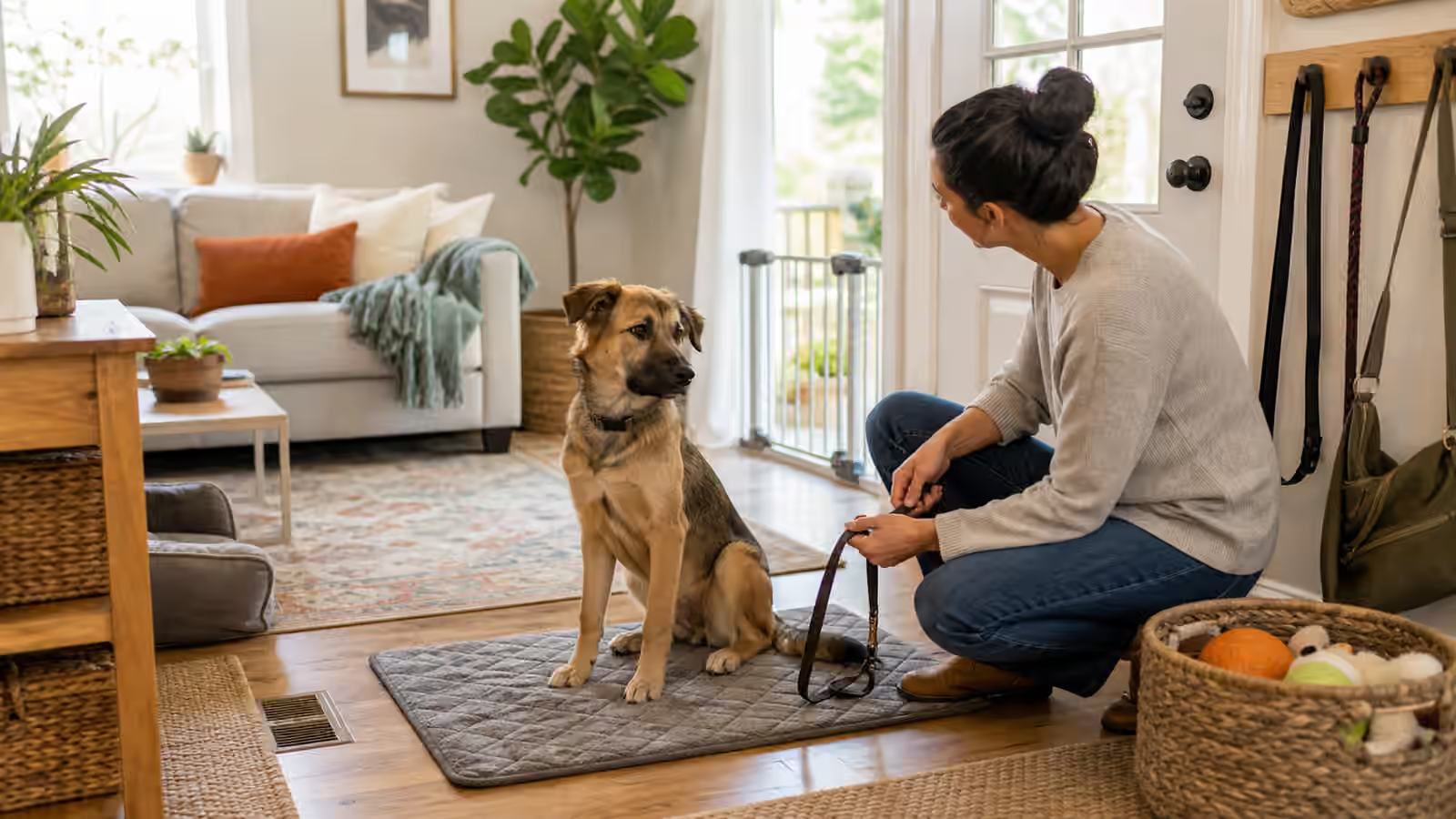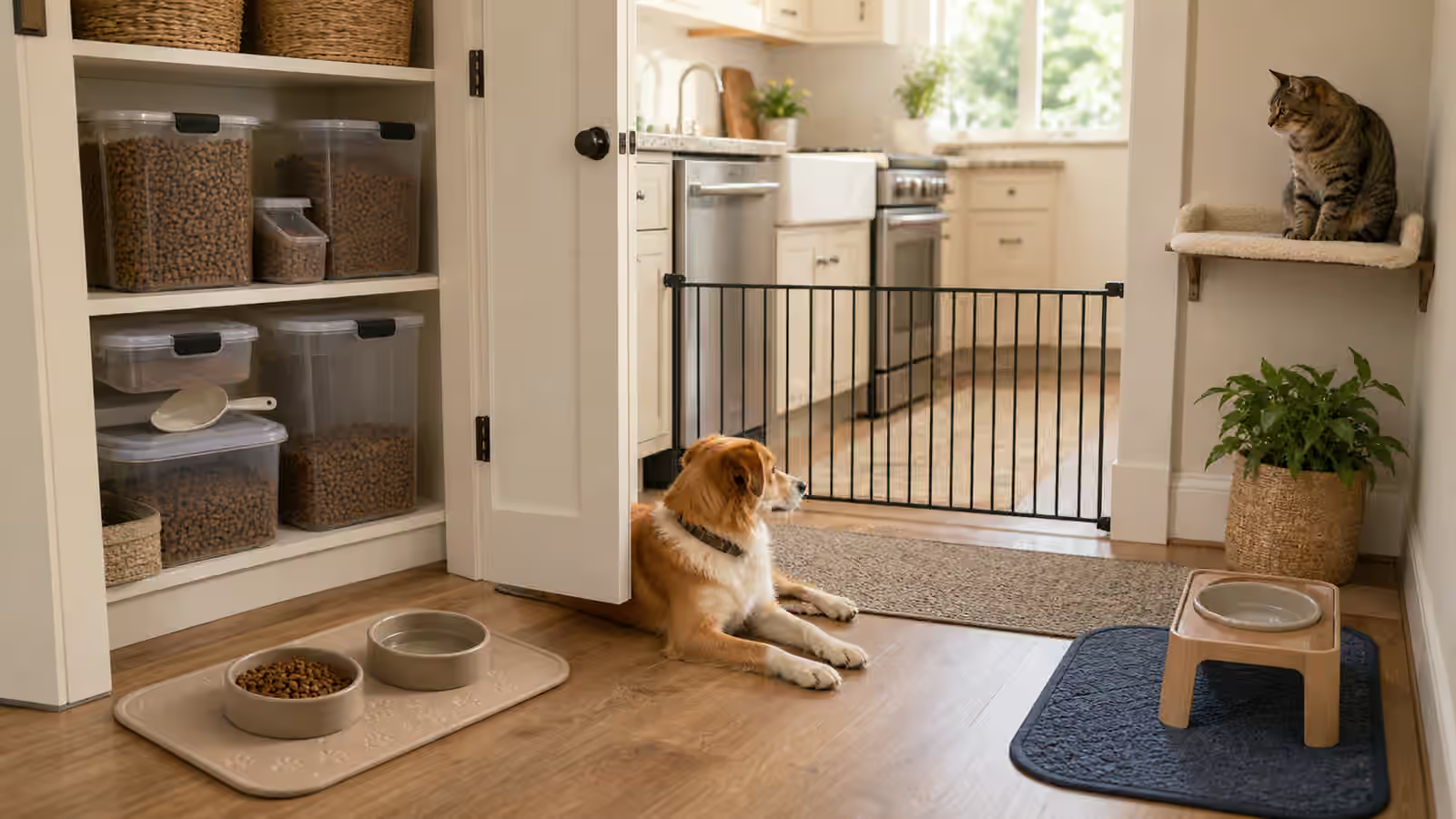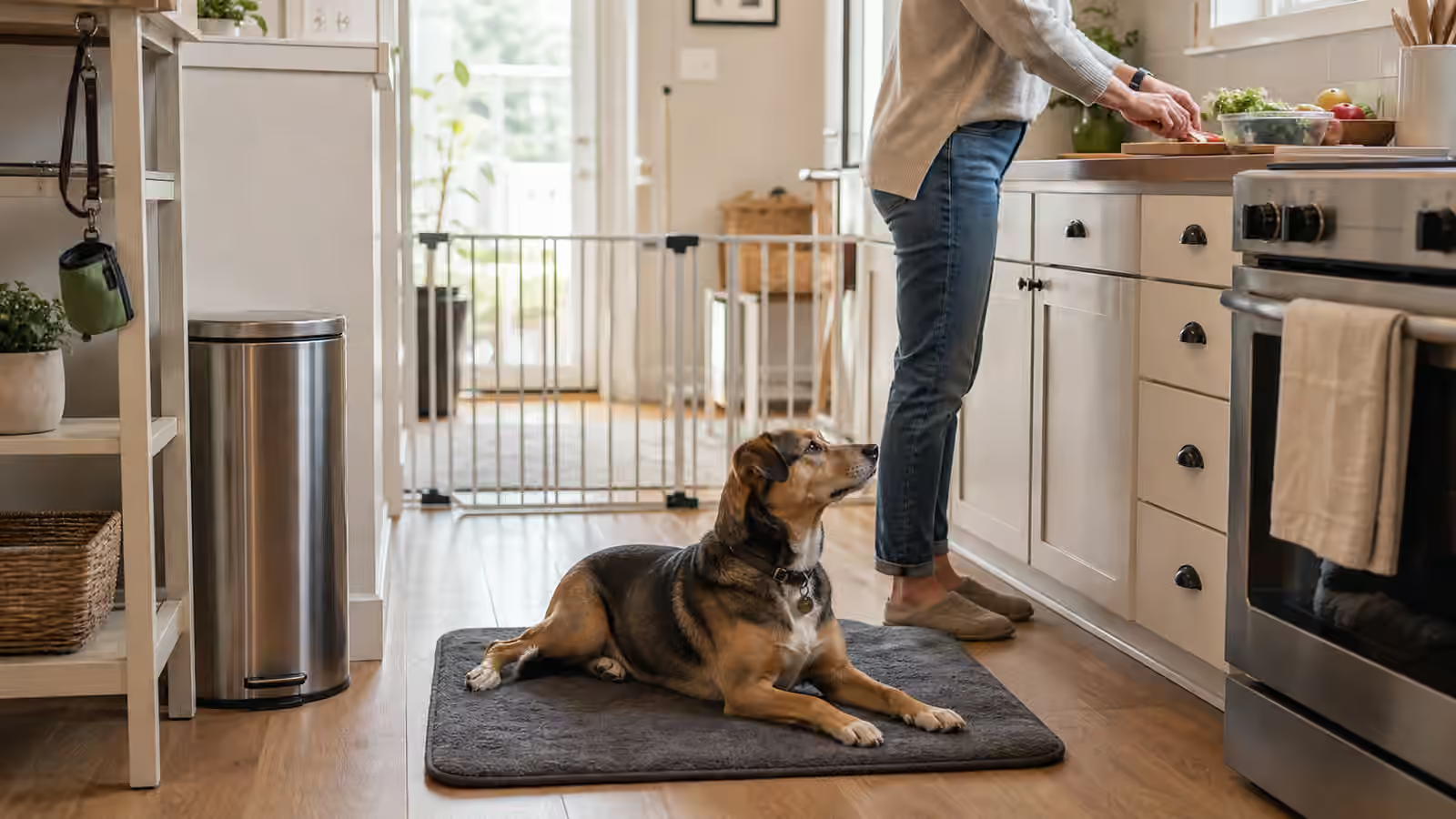
Counter-surfing usually begins as a simple discovery. The dog lifts their nose, finds a plate, a bread crust, a cooling pan, a spoon with sauce, or a grocery bag, and learns that the kitchen sometimes pays better than any toy in the house. After that, the behavior can look bold, sneaky, or stubborn, but the first lesson was straightforward: high surfaces are worth checking.
The answer is not one perfect command shouted at the right second. Kitchen boundaries are a setup routine. The counters need to stop being a slot machine, the dog needs somewhere else to be, people need a plan for dropped food and guests, and the household needs to notice how often it accidentally rewards the exact behavior it dislikes. Pet Food Storage and Kitchen Boundaries covers the broader food zone. This guide focuses on the dog who has already learned to investigate the counter.
Make the counter less interesting
The first practical step is removing the payoff. A dog cannot learn that the counter is boring if it regularly contains reachable rewards. Clear plates quickly. Push food well back if the dog is not present, and avoid leaving food out if the dog can access the room. Close pantry doors. Put groceries away before answering messages. Keep trash contained. Let cooling food sit behind a closed door or barrier when needed.
This can feel too simple to count as training, but it matters because counter-surfing is often rewarded on a variable schedule. The dog may check ten times and find nothing, then find one sandwich. That one success can keep the behavior alive for a long time. A reliable cleanup habit is not cosmetic. It changes what the dog is practicing.
Think about smell as well as sight. A clean-looking counter may still hold a cutting board, pan, wrapper, sponge, or towel that smells fascinating. Dogs are not checking only for a visible steak. They are reading the room through scent. Wiping surfaces, storing dishes, and moving food prep tools into the sink or dishwasher can reduce the invitation.
Teach a kitchen station outside the work lane
A dog who is told only to stop approaching the counter has no job. A kitchen station gives the dog a better answer. Place a mat, bed, or small rug outside the cooking lane, far enough from the counter that the dog cannot stretch from the mat to the food. The station should not block drawers, the oven, the sink, or the doorway. A mat that people step over all evening will not stay relaxing.
Teach the station when the kitchen is calm. Reward the dog for stepping onto the mat, then for standing, sitting, or lying there while you make tiny movements. Open a drawer. Pick up a bowl. Put it down. Walk to the sink and return. The early version should be easy enough that the dog can succeed without staring at the food. The mat routine in Calm Mat Routines for Dogs and Cats fits this work because kitchen calm is not only about location. It is about recovery while people move.
Do not introduce the mat for the first time while bacon is sizzling and guests are waiting. That version is too hard. Build the meaning during quiet food prep, then gradually add real meals, more movement, and longer duration. If the dog repeatedly leaves, the mat may be too close, the food too visible, the session too long, or the reward history too thin.
Manage meal prep like a routine
Meal prep has predictable pressure points. The dog hears packaging, smells food, watches hands move, sees people drop things, and notices when attention is divided. Build a sequence around those moments. Before prep begins, clear the counter, set the dog up on a mat or behind a gate, and put rewards where the person can reach them without fumbling. After prep, clean the surfaces before releasing the dog into the kitchen.
If the household is busy, use a gate instead of testing the dog. A barrier is not a failure. It is often the right tool when the stove is on, children are moving through the kitchen, or the person cooking cannot train and handle hot pans at the same time. Pet Gates and Room Transitions is useful here because the barrier should feel like part of the room, not a surprise punishment after the dog has already jumped.
For some dogs, a safe chew or food toy outside the kitchen helps. For others, food activities near cooking make them more frantic. Watch the dog you have. If the chew lowers pressure and the dog settles, keep it. If the dog finishes the chew and charges the kitchen harder, use distance, a gate, or a quieter rest area instead.
Stop rewarding surprise
People often reinforce counter-surfing without meaning to. The dog jumps, the person shouts, rushes over, grabs the collar, waves arms, and creates a burst of attention. If food is already gone, the dog got both the food and the chase. If food remains, the dog still learned that jumping makes the room explode with human movement.
Prevention is better than reaction. When you see the dog thinking about the counter, cue the mat, toss a reward away from the counter, or calmly guide the dog behind a gate before the jump. If the dog has already jumped and found nothing, interrupt with as little drama as possible and reset the room. If the dog has food, avoid turning the moment into a dangerous grab. Use trades that have been practiced away from crisis.
Toy Safety and Rotation Checks for Dogs and Cats talks about inspecting objects before they become hazards. Kitchen objects need the same mindset. Wrappers, skewers, foil, bones, strings, and broken containers can turn a counter success into a medical concern. Store them like the dog is clever, because many dogs are.
Handle guests, trash, and dropped food
Guests change kitchen boundaries because they do not know the dog’s habits. They leave plates on low tables, hold snacks at nose height, laugh when the dog begs, or push chairs back with food still reachable. Before guests arrive, decide where the dog will be during food setup and eating. A mat may work for a practiced dog. A gate, crate, or quiet room may be kinder for a dog who cannot handle the traffic.
Trash deserves its own plan. A dog who counter-surfs may also investigate bins, recycling, compost, and shopping bags. Use a closed can the dog cannot easily open, and do not leave tempting waste in a lightweight bag by the door. If the dog has a history of eating non-food items, be stricter. The issue is not only manners. It is access to objects that can hurt the dog.
Dropped food is predictable. Decide the response before dinner. The dog can be on a mat, behind a gate, or wearing a leash held calmly by an adult if that fits the situation. If the household has children, do not expect them to protect every plate and crumb. Change the setup so the dog is not practicing under the table while everyone pretends to supervise.
When the problem is not only food
Some counter-surfing is part of a larger pattern. A dog may be under-exercised, overtired, anxious around meal prep, guarding stolen objects, or seeking attention in a home where kitchen time is the most animated part of the day. Look at the whole routine. Does the dog have legal chewing? Does the dog rest? Are walks making the dog more settled or more frantic? Does the dog know how to be near people without inserting themselves into every task?
If counter-surfing is paired with growling over stolen items, hard mouthing, repeated ingestion, or unsafe climbing, get help early. A trainer can build trades, stationing, and management around the specific room. A veterinarian should be involved when ingestion, hunger changes, pain, or medical concerns may be part of the pattern.
A good kitchen boundary eventually feels uneventful. Food is stored, counters are clear, the dog has a place to be, and people are not sprinting across the room with every sandwich. That calm is built before the jump, not after it.