A home with children and pets works best when affection is not treated as proof of success. Many dogs and cats can enjoy family life while still needing distance, predictable exits, quiet rest, and adults who interrupt early. Children also need rooms that make the right behavior easy. A toddler cannot be expected to read every tail flick, and a pet should not be expected to absorb every hug, chase, dropped snack, toy swing, or doorway surprise.
The Pawstead approach is simple: design the room so nobody has to be heroic. A gate, a mat, a perch, a closed toy bin, and a habit of watching body language can prevent many of the moments that later get described as sudden. The bite, scratch, bolt, bark, or hiss may be sudden to the person who noticed it last. To the animal, it often follows a series of smaller signals that did not change the scene.
Start with the adult’s job
The adult’s job is not to make the child and pet love each other on schedule. It is to manage distance, timing, and choices. A dog resting on a mat should not have to decide what to do when a child climbs into the bed. A cat on a perch should not have to defend the route down. A child carrying a snack should not have to negotiate with a dog at nose height. The room should answer those questions first.
This means supervision is more than being physically nearby. It means noticing who is moving toward whom, where exits are blocked, what resource is present, and whether the pet is still choosing contact. A pet who turns away, stiffens, freezes, licks lips, yawns, hides, pins ears, flicks a tail, crouches, or leaves the room is giving information. Reading Pet Body Language at Home is the natural companion guide because boundary work depends on seeing those small changes before they become loud.
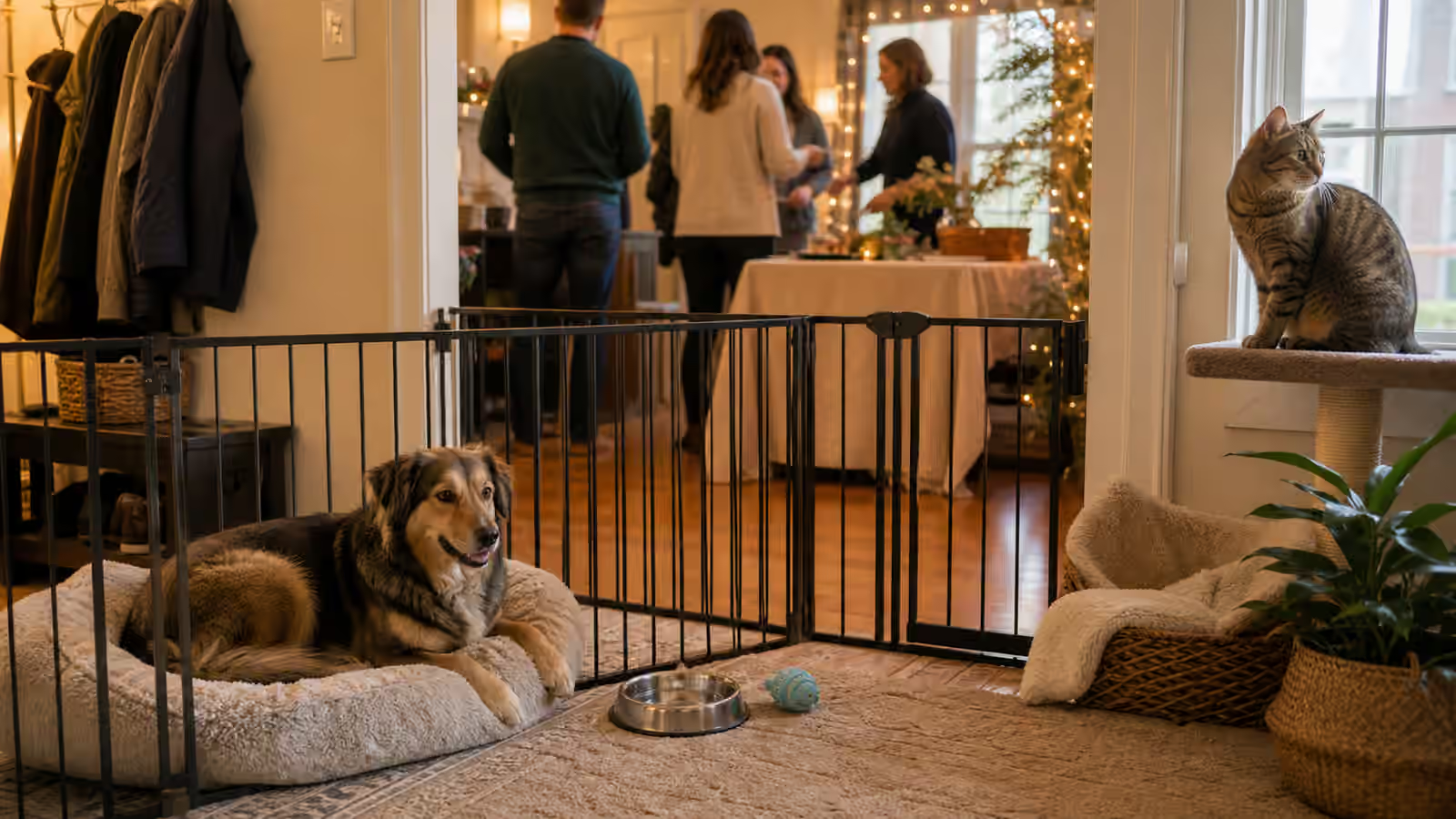
Adults also need permission to keep things boring. The best family pet routine may look uneventful from the outside. The child plays on the rug. The dog rests behind a gate with a chew or on a mat outside the play lane. The cat watches from a high place and leaves when finished. Nobody is forcing a photo. Nobody is turning tolerance into a test.
Give children and pets separate default places
A shared room still needs separate default places. For a dog, that may be a bed behind a gate, a crate the dog already likes, a mat beside an adult, or a quiet room with water and familiar bedding. For a cat, it may be a perch, shelf, covered bed, bedroom, or route to a room the child cannot enter. For the child, it may be a play rug, table, or toy area where pet toys, bowls, litter tools, and chews are not mixed into the same traffic.
The point is not to isolate everyone. The point is to make contact optional and supervised. A dog who can rest without being approached is more likely to stay relaxed near household activity. A cat who can watch without being grabbed can remain part of the room instead of disappearing for the day. A child who knows that the pet bed is not a play space gets a clearer rule than “be gentle,” which is too vague when excitement is high.
Gates are often useful because they let family life remain visible without requiring full access. The gate is not a punishment. It is a pause between worlds. Visitors and Doorway Routines for Pets uses the same idea for guests because doorways and greetings can overload everyone at once. With children, the same principle applies inside the home: create a visible buffer before bodies collide.
Separate food, chews, litter, and children’s toys
Food and toys are where many household rules become concrete. Dogs and cats should be able to eat without children reaching toward bowls, touching faces, stepping over bodies, or testing what the pet will tolerate. A calm feeding station is not only about clean floors. It is about letting the animal finish a vulnerable activity without social pressure. Feeding Stations and Mealtime Routines for Pets covers the room setup in more detail, but the child-boundary version is direct: meals need distance and adults need to enforce it.
Chews and special toys deserve the same care. A dog with a chew may settle beautifully until a child wants to take it, trade for it, or sit beside the dog. A cat chasing a wand toy may become overstimulated when a child waves it too fast or uses hands as part of play. Store pet toys and children’s toys in different places. If an object is valuable to the pet, it should not be used as a teaching experiment. If a child’s toy looks like a pet toy, put it away before the pet practices with it.
Litter boxes need privacy and access. A child should not be playing near the box, reaching into litter, blocking a cat’s route, or turning the area into a noisy corner. Cats may avoid the box if the path feels risky, and a litter problem can quickly become both a welfare and cleaning issue. Litter Box Setup That Actually Works is useful because child boundaries are not only about greetings. They also protect the ordinary resources that let a cat feel settled.
Teach contact as a short event, not a right
Children often want contact to last longer than pets do. A calmer standard is brief, adult-guided, and easy for the pet to leave. The child can stand or sit in a stable place. The adult can invite the pet rather than carry or corner the pet. The contact can stop after a few seconds while the animal still looks comfortable. If the pet moves away, the child learns that leaving ends the interaction.
That lesson matters because it protects subtle communication. A dog who walks away should not be followed from room to room. A cat who retreats under a chair should not be pulled out to prove friendliness. A pet who has to escalate to be heard is learning a dangerous lesson. The adult can narrate the rule plainly without making the pet the villain: the animal is finished, so the interaction is finished.
Hands need structure too. Many pets find pats over the head, hugs, face-to-face contact, tail touching, paw grabbing, and leaning bodies uncomfortable. Some tolerate those things until they do not. Encourage calm side contact only when the pet is choosing to stay, and keep faces away from animal faces. For pets with any history of guarding, snapping, biting, scratching, panic, or intense avoidance, skip casual contact practice and work with a qualified professional.
Make busy times easier before they happen
The hardest child and pet moments usually arrive during transitions. Mornings, meal prep, homework, bath time, bedtime, guests, deliveries, and playdates all add speed and noise. A pet who was relaxed during a quiet hour may struggle when children run down a hallway, snacks appear, doors open, or adults are distracted.
Prepare the pet before the busy time begins. Move the dog to a known resting place with an appropriate activity if that helps the dog settle. Give the cat access to a quiet room before visitors or loud play starts. Put children’s toys away before opening a pet gate. Close doors before carrying food through the room. The timing matters. If adults wait until the pet is already barking, chasing, hiding, or hovering, the routine becomes reaction instead of setup.
For noise-sensitive animals, child activity can be one layer among many. Running feet, dropped blocks, squeaky toys, and sudden shrieks may feel larger to a pet than adults expect. Noise-Sensitive Pets at Home can help families think in terms of distance and recovery rather than asking the animal to get used to everything at full volume.
Respect rest as a household rule
Rest is not empty time for pets. It is when puppies recover, adult dogs settle, cats reset, senior animals conserve energy, and anxious animals regain normal rhythm. A pet who is repeatedly woken, followed, hugged during sleep, or climbed over may become more reactive because the home no longer offers true rest.
Choose rest zones that are socially connected but protected. A dog bed directly in the middle of the play path is not a rest zone. A cat tree beside the only toy shelf may be too exposed. A crate or gated space can help only if the pet already feels comfortable there and adults prevent children from reaching into it. The rule should be visible in the room: when the pet is in that place, the child does not enter or touch.
Senior pets may need extra care here because discomfort can shrink tolerance. A dog with sore joints may dislike being leaned on. A cat who no longer jumps easily may feel trapped if the easy route is blocked. Senior Pet Home Setup for Dogs and Cats is worth reading in family homes even when the main concern looks social. Comfort changes behavior.
Keep reviewing the room as the child grows
Child and pet boundaries are not one setup forever. A crawling baby creates different pressure than a toddler with toys, a school-age child with friends, or a teenager hosting guests. Pets change too. A puppy becomes larger. A cat becomes bolder or more cautious. An older dog starts needing traction and quieter rest. A new pet joins the home and rewrites the traffic pattern.
Walk through the room whenever the household stage changes. Ask where food happens, where the child plays, where the pet rests, how the pet leaves, what happens when someone knocks, and which object is most likely to cause conflict. If the answers are fuzzy, the setup needs work before the next busy hour.
A good child and pet boundary plan does not make the home cold. It makes affection cleaner because it is chosen, shorter when needed, and backed by distance. The pet has places to go. The child has rules that do not depend on guessing an animal’s mood. Adults have a room that helps them supervise instead of chasing problems after they start.