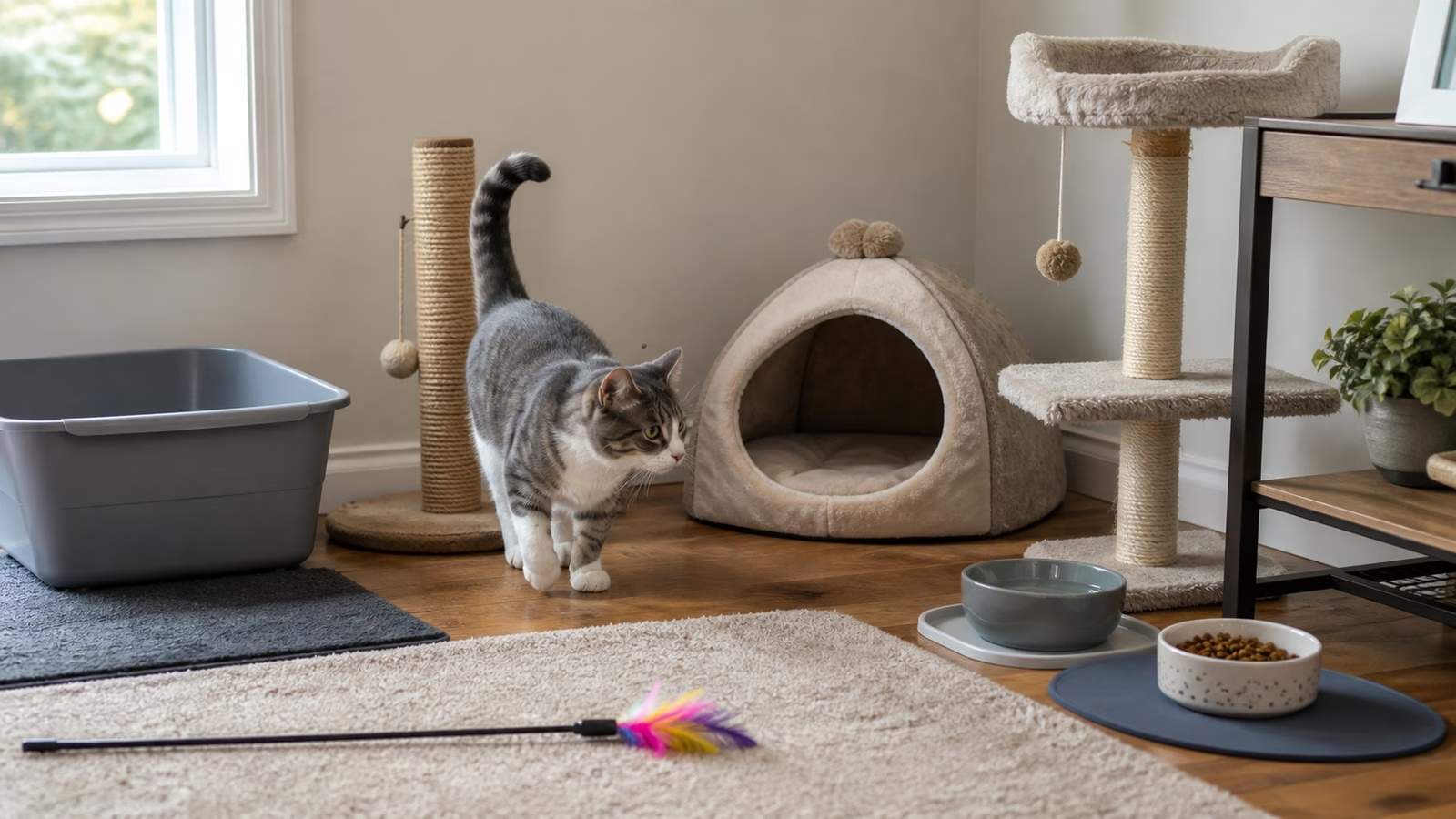
Vertical space is not a luxury tower in the corner. For many cats, height is part of how a room becomes readable. A perch lets the cat observe without being underfoot, pause without being cornered, and move through a busy home without crossing every path on the floor. The useful question is not how tall the tallest object is. It is whether the cat has safe routes between food, litter, rest, play, scratching, and social areas.
A home can have expensive cat furniture and still feel unsafe if the only perch is isolated, wobbly, or blocked by a dog, child, doorway, or loud appliance. A simpler home can work beautifully when a chair, shelf, window perch, scratcher, and open doorway form a route the cat understands. Think less like decorating and more like traffic planning from the cat’s height.
Build Routes, Not Islands
Many cat setups fail because each resource is treated as a separate object. A scratcher sits near the sofa, a tree sits by the window, food sits in the kitchen, and the litter box sits in a back room. The cat may use all of them, but the path between them may be stressful. If the dog sleeps in the hallway, a child plays near the litter route, or guests block the living room, the cat’s choices shrink.
Start by watching where the cat already pauses. Cats often reveal preferred routes before people notice them: the back of the sofa, the edge of a desk, a windowsill, the top of a low bookcase, the side of a bed, the arm of a chair. Those places may need safer footing, a scratcher nearby, or a clearer exit. You do not have to build a wall of shelves to improve the route. Sometimes moving a cat tree two feet, clearing a low shelf, or adding a sturdy step changes the whole room.
New Cat Setup covers the first home base. This guide begins after that, when the cat is using more of the home and the household needs to make movement easier. A good route lets the cat choose height without becoming trapped there.
Put Height Where the Cat Needs Information
Cats often want height near windows, social rooms, doorways, and places where other animals move. A perch near a window can offer observation and rest. A perch near a living room can let the cat be included without sitting in the middle of the floor. A shelf or cat tree near a doorway can help the cat decide whether to enter, leave, or wait.
Height should not force the cat into conflict. A perch directly beside the front door may increase door curiosity. A tree beside a dog’s bed may create staring or chase pressure. A shelf over a litter box may make the bathroom area feel exposed. Placement should answer a need, not just fill an empty wall.
The best perches have easy approaches and exits. A young athletic cat may leap from floor to shelf without concern, but a senior cat, cautious cat, or newly adopted adult may need intermediate steps. If the cat can climb up but hesitates to come down, the route is not finished. Senior Pet Home Setup for Dogs and Cats is useful when stiffness, vision changes, or age make jumps less reliable.
Make Scratching Part of the Route
Scratching belongs in travel lanes, not only in a remote corner. Cats scratch after waking, before play, near social areas, and near places where they want to mark presence. If the scratcher is hidden where the cat never pauses, the sofa may become the more logical surface. A vertical post near a doorway, a horizontal scratcher beside a favorite chair, or a tall stable scratcher near a window perch can make the route feel complete.
Stability matters more than style. A scratcher that tips, slides, or wobbles teaches the cat to choose furniture. A tall post should let the cat stretch fully. A horizontal surface should stay put while paws pull against it. Cat Scratching Stations That Protect Furniture goes deeper on material and placement, but the route principle is simple: put scratching where the cat already has a reason to stop.
Scratching also gives the cat a decompression point. After a noisy moment, a visitor, or a dog moving through the room, scratching can help the cat reset. If the only reset option is hiding under a bed, the room may need more acceptable pauses.
Protect Routes in Multi-Pet Homes
In a dog-and-cat home, vertical space should give the cat distance without turning the dog into a permanent audience. A dog who lies under the cat tree and stares may still be blocking the route. A cat who can climb but cannot come down calmly is not truly safe. Use gates, leashes, mats, and separate zones while the animals learn to share space. Dog and Cat Introductions at Home and Resource Zones for Multi-Pet Homes both depend on routes that let each animal disengage.
Children need route rules too. A perch is not a place to poke, lift, trap, or perform affection. If a cat goes up high, the household should treat that as a choice for distance. Calling the cat down for every visitor teaches the cat that height is not respected. A safer rule is plain: the cat can be watched, but not reached for, when they are on their route.
Other cats complicate the picture differently. One confident cat may occupy the best perch and quietly block another cat from food, litter, or a sunny window. More than one route can reduce tension. The goal is not identical furniture for every cat. It is enough access that one animal cannot control every valuable path.
Avoid Beautiful Traps
Some vertical setups look good in photographs and work poorly in real life. A shelf with no landing space, a slick surface, a narrow route above fragile objects, a perch beside a hot stove, or a tree that rocks when jumped on can create risk. So can routes that end in a dead corner. A cat who reaches the top should have a way down that does not require pushing past a person, dog, or another cat.
Windows need special caution. Screens are not always secure. Open windows, balconies, and high ledges should not be treated as enrichment without real barriers. If the cat is interested in outdoor edges, pair this guide with Balcony, Porch, and Yard Boundaries for Pets before assuming the route is safe.
Plants, cords, candles, and shelves of small objects also change meaning when a cat gets higher access. Pet-Proofing Rooms Before Giving More Freedom should be revisited after adding height because the cat’s reach has changed. What was out of reach yesterday may be part of the route tomorrow.
Let the Route Change With the Cat
Cat routes are not permanent architecture. A kitten may want speed and play. An adopted adult may want privacy first and observation later. A senior cat may need lower landings. A cat recovering from stress may need a simpler path for a while. Watch whether the route produces normal behavior: eating, litter use, scratching, play, rest, and social choice. If the cat uses height only to hide from the room, the room may still be too hard.
Small adjustments are often enough. Move the dog bed so the cat can descend. Add a rug under the landing. Place a scratcher at the base of the route. Clear the top of a sturdy bookcase. Shift the food station so the cat does not cross a busy doorway. The route should make good choices easy without demanding bravery.
When vertical space is working, the room becomes calmer for everyone. The cat can watch without being trapped, people can move without stepping over a nervous animal, and other pets get clearer signals. Height is not about making the cat superior to the household. It is about giving the cat a way to belong in the room while still having a route out.