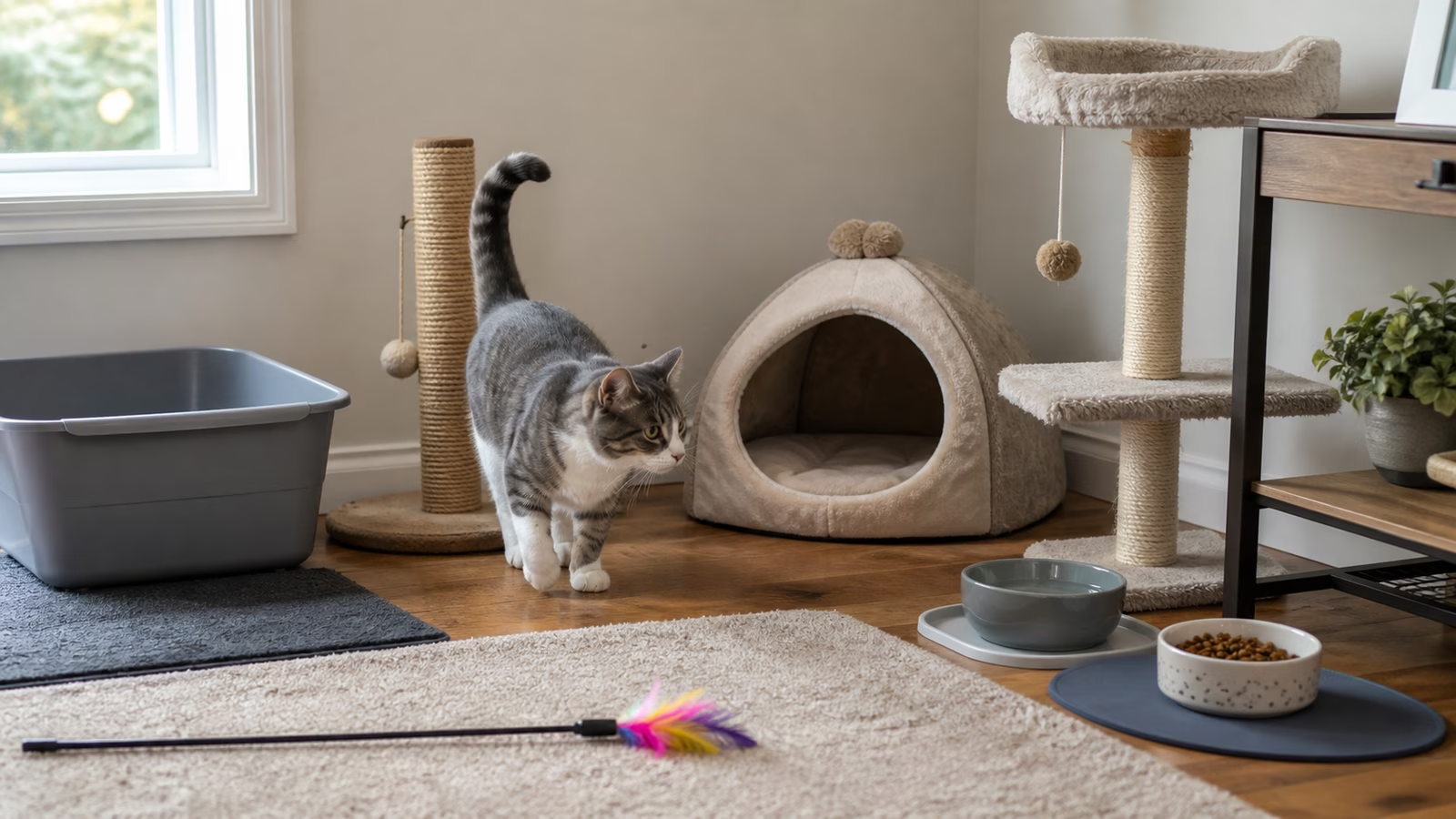
Scratching is one of the clearest examples of a normal cat behavior becoming a household problem only after the room gives the cat the wrong options. A cat scratches to stretch, shed the outer layer of claws, leave scent, mark routes, release energy, and reset after rest or excitement. None of that means the cat is trying to ruin the sofa. It means the sofa may be the best available scratching station from the cat’s point of view: tall, stable, textured, socially central, and right beside the place where people sit.
A good scratching setup does not depend on catching the cat in the act all day. It changes the room so the better choice is obvious before the mistake happens. That usually means placing scratching surfaces where the cat already stretches, choosing materials the cat actually uses, protecting furniture during the transition, and rewarding the new habit without turning every claw mark into a confrontation. The same logic shows up in New Cat Setup: Litter, Scratching, Hiding, and Play , but scratching deserves its own plan because it sits at the intersection of enrichment, furniture, scent, movement, and household patience.
Put the station where scratching already wants to happen
Many unused scratchers fail because they are treated like decor. The household buys a post, hides it in a corner, and then wonders why the cat still chooses the sofa arm. From the cat’s perspective, the corner may have no meaning. It is not near a resting place, not near a route, not near the people, and not connected to a moment when scratching feels useful.
Start by noticing when the cat scratches. Some cats stretch immediately after waking. Some scratch near doorways after a burst of excitement. Some scratch beside the sofa because that is where people gather and the room carries important scent. Some scratch near a window because outside movement raises their energy. The first station should be close to one of those real moments, not close to the place where a scratcher looks tidiest.
Beside the sofa is often the correct starting point. That can feel annoying because people want the solution to move the cat away from the furniture immediately. In practice, a sturdy post placed next to the favored sofa arm can intercept the habit better than a post placed across the room. Once the cat is reliably using the post, you may be able to shift it gradually, but early success usually comes from meeting the behavior where it already lives.
The same placement thinking helps bedrooms, home offices, and hallways. A cat who scratches a bed frame after waking may need a horizontal scratcher or low post near the bed. A cat who scratches a door frame when people close a room may need a better evening routine, a station just outside the door, and less drama around the closing itself. Pet-Proofing Rooms Before Giving More Freedom is useful here because scratching rarely happens in isolation. It often belongs to a route, a threshold, or a room that is asking the cat to guess.
Match the surface to the cat, not the product photo
Cats have preferences. A tall, heavy sisal post may be perfect for a cat who likes a full-body vertical stretch. A flat cardboard scratcher may suit a cat who stretches forward on the floor. A slanted ramp may work for a cat who wants an angle. Carpeted posts can attract some cats, but they can also blur the difference between legal scratching and household carpet if the textures are too similar. The point is not to buy every possible option. The point is to observe which direction, height, and texture the cat keeps asking for.
Stability is not optional. A post that wobbles, tips, or slides teaches the cat that the station is unreliable. Furniture feels stable because it is heavy. A scratcher has to compete with that. If the cat leans into a post and it rocks under their weight, the cat may return to the sofa with perfect logic. Choose a base that stays put or place the scratcher where it cannot skate across the floor. A mat underneath can help, but the station itself still needs to feel secure.
Height matters for vertical scratchers. A cat should be able to stretch without crouching halfway down the post. Many attractive small posts are too short for an adult cat’s real stretch. They may work for kittens briefly, then fail as the cat grows. For horizontal scratchers, length matters in the same way. The cat needs enough surface to plant paws, pull, and finish the motion comfortably.
Texture also affects cleanup and household tolerance. Cardboard scratchers shed flakes. Sisal collects fibers. Fabric posts may hold fur. That does not make them bad choices; it means the station needs a cleaning rhythm. If a scratcher becomes ragged but beloved, replacing it too abruptly can erase the cat’s scent history. Put the new one beside the old one for a while, let the cat transfer interest, and remove the worn one after the new station has meaning.
Make the right choice rewarding without making furniture exciting
Rewarding a cat for using the scratcher should feel quiet and immediate. A treat placed near the base, a short wand-toy catch that ends near the post, or calm attention after the cat stretches can all help. The reward should confirm the choice without turning the station into a noisy event. If every scratch creates a loud celebration, some cats become more excited than settled.
Avoid turning furniture into the center of attention. Yelling, chasing, spraying water, or grabbing paws can make the room more stressful and can teach the cat that human attention appears around the forbidden object. It also does not explain what the cat should do instead. A better response is usually to interrupt gently if you are close enough, guide the cat toward the station with a toy or movement, and then reward any contact with the legal surface. If you are not close enough, improve the setup rather than staging a debate after the fact.
Furniture protection can help while the new habit forms. A tightly fitted cover, temporary smooth barrier, or double-sided furniture-safe deterrent can make the old surface less satisfying. The goal is not to make the home look wrapped forever. The goal is to reduce rehearsal while the scratcher gains value. Use care with any adhesive or cover so it does not damage the furniture or create a hazard. If the protection annoys the household so much that it disappears after one day, choose a simpler version people will actually maintain.
The first few weeks are about consistency. Keep the station available, reward use, make the old target less interesting, and avoid punishing late. Scratching is self-rewarding, so the room has to answer quickly. A cat who practices the new pattern many times in a calm setting will need less correction than a cat who is only noticed when claws touch upholstery.
Connect scratching to play, sleep, and energy
Scratching stations work better when they are part of the cat’s daily rhythm. A cat often scratches after sleep, before play, after play, or during social movement through the home. If the scratching post is near those moments, it becomes useful instead of ornamental. Place one near a favored nap area, one near the social room if needed, and one near a window or play zone for cats who build energy there.
Interactive play can feed the habit in a useful way. Let the cat stalk, chase, and catch a wand toy, then guide the final movement near the scratcher. Many cats will grab, stretch, scratch, and shake off the excitement before settling. That is exactly the kind of sequence Pet Enrichment for Bored Dogs and Cats is trying to support: normal behavior with a safe outlet and a natural ending.
Sleep routines matter too. If a cat scratches bedroom furniture at night or early morning, the issue may not be only the scratcher. The cat may have slept all evening, missed their best play window, learned that scratching wakes people, or lack a satisfying station near the bedroom route. The broader rhythm in Pet Sleep and Overnight Routines pairs well with scratching setup because nighttime habits grow quickly when tired people respond differently every night.
Do not expect one post to carry the whole home. A small apartment may only need two good stations. A larger home, multi-level space, or home with multiple cats may need several. The stations do not have to be expensive or visually dominant. They do have to be where the cat’s body and routine already ask for them.
Think carefully in multi-pet homes
In a home with dogs, children, visitors, or several cats, a scratching station also needs social safety. A cat may avoid a perfect post if using it exposes them to a dog rushing in, a toddler grabbing, or another cat blocking the exit. Watch the cat’s body language around the station. A cat who glances over a shoulder, shortens the scratch, or leaves quickly may be telling you the placement is too exposed.
Give the cat an exit route. A vertical post beside a wall can be useful, but not if the cat is boxed between the wall, sofa, and dog bed. A horizontal scratcher in a hallway may invite use, but it can also create traffic pressure if everyone passes through the same strip of floor. Reading Pet Body Language at Home helps here because a scratcher can look successful while still carrying tension.
Multiple cats may not want to share every surface. Scratching leaves scent, and that scent can be reassuring or provocative depending on the household. If one cat controls the main post, add another station in a different route rather than forcing turns. In the same way, do not place the only good scratcher beside the only food station, litter path, or resting perch. Resource Zones for Multi-Pet Homes explains the bigger principle: resources should not require negotiation every time an animal uses them.
Dogs need management too. A dog who chews cardboard scratchers, steals cat toys, or crowds the cat after a scratch may make the station unusable. Gates, placement, and supervision can protect the cat’s routine without turning the dog into the villain. The question is practical: can the cat stretch, scratch, and leave without being followed or interrupted?
Maintain the station so it keeps working
Scratching stations are not finished the day they arrive. They collect fur, claw sheaths, cardboard crumbs, and scent. Keep the area clean enough that people do not resent it, but do not scrub away every familiar smell every day. A light vacuum, a nearby small bin for cardboard flakes, and a washable mat under messy scratchers can keep the setup sustainable. Pet Cleaning Setup for a Fresher Home is relevant because a station that creates constant mess will eventually be moved to a worse location, and then the behavior problem returns.
Inspect scratchers as they age. Loose staples, torn fabric, unstable bases, sharp broken pieces, and dangling strings can turn a useful object into a hazard. A worn scratching surface is not automatically a problem; many cats prefer the broken-in feel. The concern is whether the item still supports the cat safely and predictably. Replace or repair before the station collapses under the cat and teaches them not to trust it.
Revisit placement after household changes. A moved sofa, new baby gate, visiting dog, changed work schedule, or closed bedroom door can shift the cat’s routes. If scratching returns to furniture, do not treat it as betrayal. Ask what changed. The old station may no longer sit beside the meaningful path. The cat may need another option near a new resting place, a calmer evening play rhythm, or a protected route away from another animal.
The best scratching setup feels almost ordinary after a while. The cat wakes, stretches on the post, leaves scent where scent is allowed, and moves on. The sofa is no longer the most useful object in the room. The household no longer has to choose between ignoring damage and turning normal cat behavior into a fight. It has given scratching a place to belong, which is usually where a calmer cat home begins.