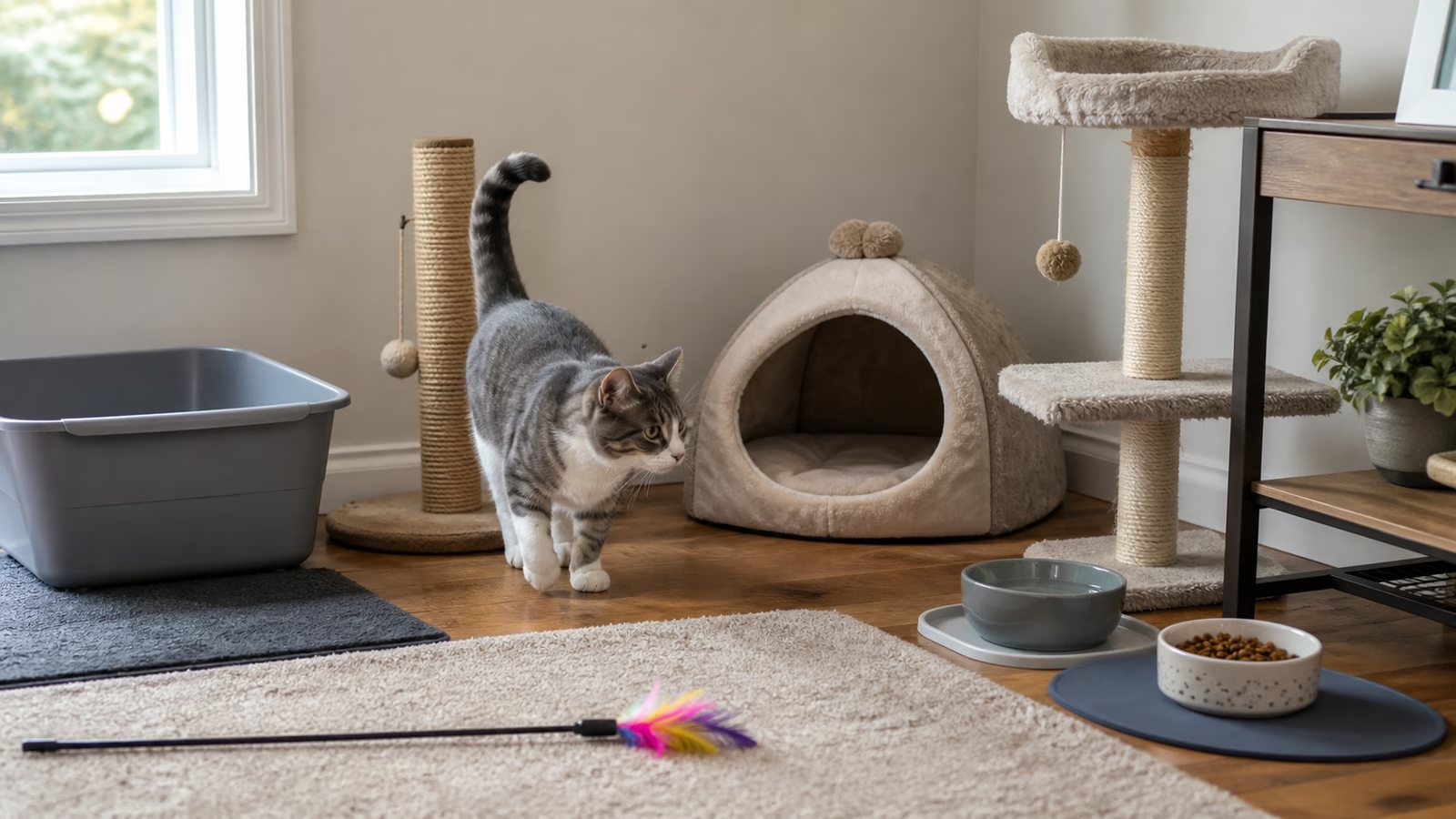
Cat play works better when it is treated as a routine instead of a random burst of motion. A cat does not need the living room filled with toys all day to have a satisfying play life. They need the right kind of movement, enough space to stalk and pounce, a chance to catch something, and a calm finish that lets the body come back down.
Many cat households have toys everywhere and still feel stuck with nighttime zooming, ankle attacks, furniture scratching, or a cat who seems bored but ignores the toy basket. The problem is often not a lack of objects. It is that the play does not look enough like the behavior the cat is built to perform. Better play has a beginning, a chase, a catch, and a landing.
Think In A Hunt Sequence
A useful cat play session often follows a loose hunt sequence: notice, stalk, chase, pounce, catch, and settle. The toy does not need to be realistic, and the person does not need to perform theater. The important part is that the toy behaves like something worth pursuing. It disappears behind a chair leg, pauses near a tunnel, skims along the floor, or moves away from the cat instead of poking the cat in the face.
Wand toys are helpful because they protect hands and let the person create distance. Move the toy like prey that wants to escape, not like a decoration being waved over the cat’s head. Some cats love high leaps, but many prefer low stalking along the floor. Kittens may play in explosive bursts. Older cats may prefer shorter sessions with more pauses. The cat’s body language should set the pace.
Let the cat catch the toy. A session that never allows a catch can build frustration, especially for cats who are already wound up. After a good pounce, pause and let the cat hold the toy for a moment if it is safe. Then restart or end. That catch is one reason a physical toy often works better than a light pointer by itself. A light can create chase without contact, which may leave some cats more agitated than satisfied.
Place Play Where The Cat Can Use It
The room matters. A slippery floor, narrow hallway, crowded furniture path, or dog sleeping in the middle of the route can make play awkward. Look for a place where the cat already watches, stretches, hides, or runs. The best play route may use a rug edge, tunnel, chair, cardboard box, scratcher, and open floor. The cat can stalk from cover, dash across a safe space, and retreat without feeling trapped.
This connects directly to New Cat Setup: Litter, Scratching, Hiding, and Play . Play does not sit apart from the home base. It interacts with litter placement, food, water, hiding, scratchers, and vertical space. A cat who has nowhere to retreat may avoid play. A cat whose only scratcher is far from the action may scratch furniture after play because the body still needs to stretch and mark.
Put a scratcher near common play zones. After chasing and pouncing, many cats want to dig claws into something stable. If the only stable object nearby is the sofa, the sofa becomes part of the routine. Cat Scratching Stations That Protect Furniture is the companion topic because scratching often follows excitement, not just boredom.
Match The Session To The Cat
Cats differ more than toy packaging admits. One cat may love a feather that flutters above a rug. Another may prefer a small fabric worm sliding under tissue paper. Another may want a crinkly tunnel, a tossed soft toy, or a treat rolled across the floor. The point is not to find the one best toy. It is to notice what kind of motion wakes up the cat without overwhelming them.
Start with short sessions. Two good minutes can be more useful than fifteen minutes of frantic waving. Stop while the cat is still interested or just after a satisfying catch. If the cat walks away, do not chase the cat with the toy. That turns play into pressure. If the cat watches but does not move, make the toy smaller, slower, lower, or more hidden. Watching is part of play for many cats, especially at the start.
For kittens, build in recovery. A kitten can go from full chase to overstimulated biting quickly. Use toys, not hands. If the kitten grabs skin, freeze the game, redirect to a toy, and make sure the day includes sleep. Kitten First Week Home Setup is useful because kitten play is tied to litter access, naps, food, and safe room boundaries.
Use Play To Shape Nights
Night noise is one of the most common reasons people start searching for cat play advice. The cat races across the bed, knocks objects down, paws at doors, or yowls when the household wants sleep. Play can help, but only if the rest of the evening makes sense. A wild session that ends with the cat more aroused may move the problem later rather than reduce it.
Try a predictable evening rhythm. The room gets a short active play session. The cat gets a chance to catch. Then a small meal or food puzzle may follow if it fits the cat’s diet and veterinary guidance. Then the house becomes less interesting. Lights dim, doors are set, fragile objects are put away, and people stop rewarding every noise with a new game. Pet Sleep and Overnight Routines covers the broader home pattern.
Do not expect one night to rewrite a habit that has been rehearsed for months. Watch for gradual changes: shorter bursts, faster settling, less door pawing, more predictable sleep windows. If nighttime vocalizing is new, intense, or paired with appetite, thirst, litter, weight, or behavior changes, involve a veterinarian. Play should not be used to explain away health concerns.
Handle Multi-Cat Play With Fairness
In multi-cat homes, one confident cat may own every wand session while another watches from under a chair. Watching can be participation, but it can also mean the quieter cat never gets a real turn. Separate sessions can help. Put one cat in a comfortable room with food or rest while the other gets five minutes of play, then switch. This is not favoritism. It is resource management.
Play can also reveal tension. If one cat ambushes the other after sessions, blocks exits, or waits beside a litter route, the issue is bigger than toy choice. Resource Zones for Multi-Pet Homes matters because play increases arousal, and arousal can spill into conflict when resources are poorly arranged.
For homes with dogs, protect the cat’s game. A dog who chases the wand, steals the toy, or stares at the cat can turn play into pressure. Use gates, separate rooms, leashes, or timing so the cat can move freely. The dog can have enrichment elsewhere while the cat gets a session that belongs to them.
Rotate Toys Without Making Clutter
Toy rotation helps because novelty matters, but rotation does not mean buying constantly. Keep a small group of toys visible and store the rest. Change them every few days or when interest fades. Repair or discard toys with loose strings, sharp pieces, or parts that could be swallowed. Wand toys should usually be put away after supervised play because strings can become hazards.
Food puzzles, scent games, window watching, and scratchers are part of the same enrichment picture. Pet Enrichment for Bored Dogs and Cats gives the broader view. This cat play routine simply narrows the question: what movement does this cat want, where can they perform it safely, and how does the session end?
A good play routine is not measured by exhaustion. It is measured by engagement and recovery. The cat notices, stalks, chases, catches, scratches, eats or rests, and returns to normal life. When that rhythm fits the room and the cat in front of you, play stops being random entertainment and becomes part of a calmer home.