
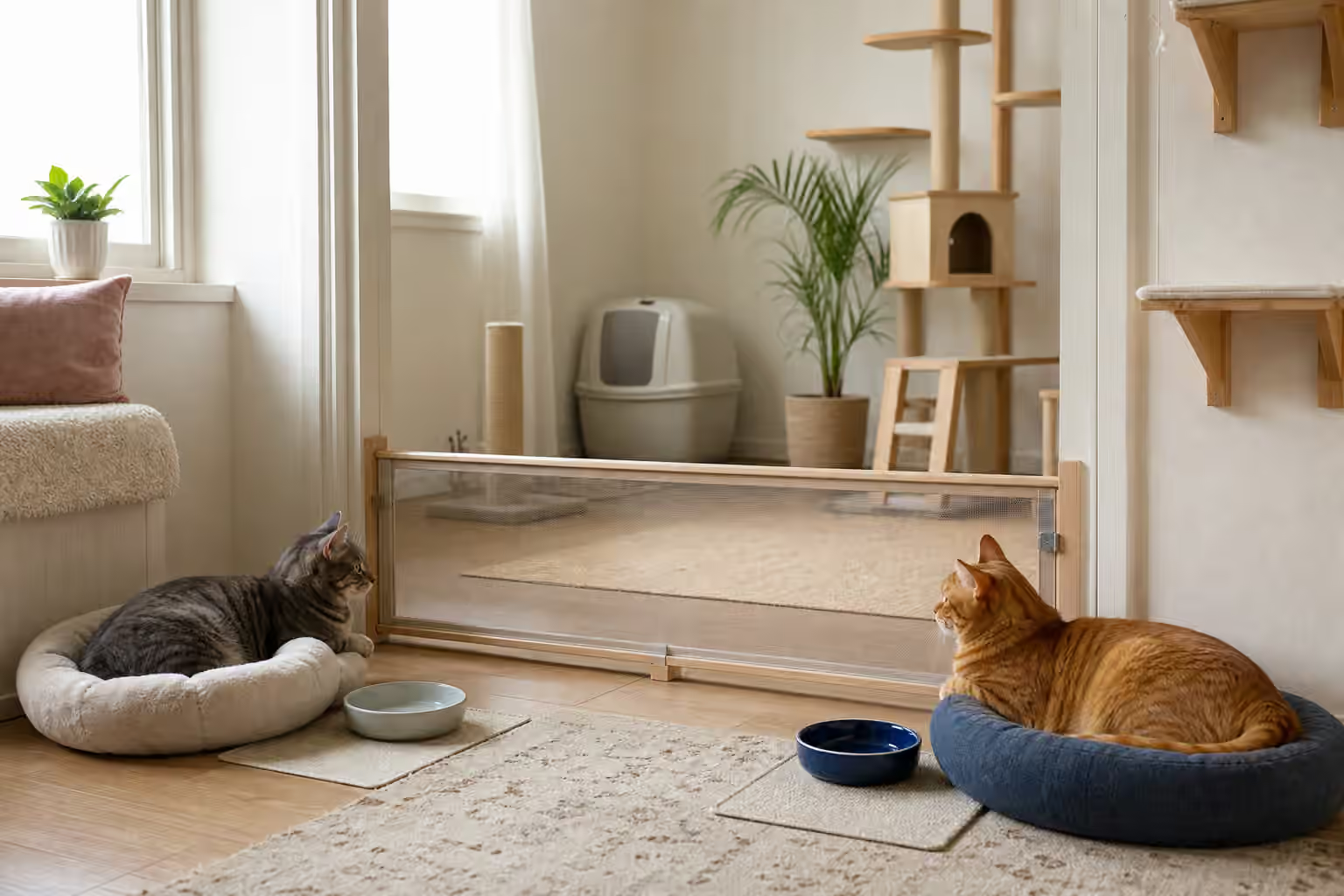
Introducing one cat to another is less about a dramatic first meeting and more about territory becoming understandable. Cats do not only meet each other as personalities. They meet each other through food stations, litter routes, resting places, doorways, hiding spots, windows, scent marks, and the ability to leave a room without being followed. A smooth introduction usually looks slow because the home is doing quiet work before the cats are asked to share space.
This guide sits beside Dog and Cat Introductions at Home , but cats need their own plan. A dog-cat introduction often focuses on predatory motion, leash management, and species differences. A cat-cat introduction often turns on territory, litter access, scent, and whether each cat can predict where the other one will be. The goal is not instant friendship. The goal is a household where both cats can eat, eliminate, rest, play, and move without feeling trapped.
Give the new cat a complete room
A new cat should begin with a complete room, not a corner of the resident cat’s main territory. The room should include litter, food, water, hiding, scratching, bedding, and a place to watch the door without being directly in its path. Completeness matters because a cat who must leave the room for an essential resource is already being pushed faster than the introduction requires.
The resident cat also needs protection from sudden loss. If the new cat arrives and immediately takes over the favorite window, feeding station, or hallway, the resident cat may experience the household as unstable. Keep the resident cat’s normal stations intact at first. If a favorite item must move, move it before the new cat arrives or after the cats are already coping well, not in the same hour as the introduction.
New Cat Setup: Litter, Scratching, Hiding, and Play is the foundation for the new cat’s room. In a cat-to-cat introduction, the same setup has an added purpose: it gives the new cat a place to decompress while the resident cat learns that the home still has predictable rules.
Let scent become ordinary before sight becomes important
People often rush to visual contact because it feels like proof that progress is happening. Scent can do quieter work first. Bedding, towels, or soft toys can move between rooms after each cat has used them calmly. The object should appear as a normal household item, not as a test placed under the cat’s nose. If a cat sniffs, walks away, rubs, or ignores it, that is useful information. If a cat hisses and cannot recover, reduce pressure and give more time.
Doorway scent also matters. A cat may sit near the closed door and smell the other cat without needing to see them. The resident cat may hear the new cat scratch, jump, or use the litter box. The new cat may hear normal household movement through the door. Keep those moments boring. Do not gather everyone around the door, speak in a tense voice, or turn every sound into a performance.
Feeding on opposite sides of a closed door can help some cats if both are relaxed enough to eat at a comfortable distance. The meal should never become a standoff. If either cat refuses food, crouches, growls, or fixates on the door, move the bowl farther away and make the session easier. Eating near the other cat’s scent is useful only when eating still feels safe.
Protect litter access from the beginning
Litter access is one of the first places a cat introduction can fail. A resident cat may avoid a box near the new cat’s room. A new cat may delay using the box if the room feels exposed. Later, one cat may block a hallway, stare from a doorway, or ambush near a box. People may not see the pressure because the cats are quiet, but the litter behavior changes anyway.
Use more than one litter location during the introduction, and place boxes so one cat cannot guard every route from a single position. A box in a dead-end closet may be tidy for people and uncomfortable for a cat who worries about being cornered. A box beside a noisy appliance may become even less appealing when another cat is nearby. Litter Box Setup That Actually Works covers the broader principles; cat introductions simply make those principles less negotiable.
Do not treat litter changes as defiance. A cat who urinates outside the box, defecates elsewhere, visits the box repeatedly, cries, strains, or suddenly changes bathroom habits needs careful attention, and veterinary guidance may be needed. From a setup standpoint, assume access and stress could be part of the picture, then make the route easier while getting help for medical concerns.
Use visual contact as a short observation, not a milestone
The first visual contact should be controlled enough to end well. A cracked door with a screen, a gate with a visual cover, or two rooms separated by distance can let the cats see each other without full access. The session should be short. If both cats can look, look away, eat, sniff, groom, or leave, the setup is giving them options. If either cat crouches, stalks, blocks, charges, swats repeatedly, or freezes, the setup is too hard.
Height helps when it creates choice, not when it creates a stage for staring. A cat tree near the gate may work if the cat can climb down and leave without passing the other cat. A high shelf that traps the cat above the meeting point may increase pressure. Cat Vertical Space and Safe Routes is useful here because vertical space should create routes, not just perches.
Do not mistake silence for success. Some cats are noisy when upset, but others become very still. Watch for the whole body: tail movement, pupils, ears, weight shift, whiskers, breathing, and recovery after the session. Reading Pet Body Language at Home helps because cat tension can be small until it suddenly is not.
Share rooms only after the map works
Shared space is not the first time the cats see each other. It is the stage where the room has enough exits, stations, and distance that neither cat has to negotiate every movement. Start with a larger room if possible. Keep high-value food, treats, and intense toys out of the first sessions unless they are being used with careful distance and both cats remain relaxed. Avoid narrow hallways, under-bed traps, and furniture layouts where one cat can corner the other.
Play can help some introductions, but it should not become a competition. Two cats chasing the same wand toy may be too much too soon. One cat playing while the other watches from a distance can be enough. Food can also be useful, but feeding cats close together before they are ready may create pressure around bowls. Use the resource-zone thinking from Resource Zones for Multi-Pet Homes and give each cat more than one way to succeed.
Many multi-cat homes keep some separation permanently. That can be normal. Separate meals, several litter locations, multiple water stations, and distinct resting routes do not mean the introduction failed. They mean the home respects that cats can share territory without sharing every resource.
Review the territory after the first calm week
Once the cats seem calmer, review the home as if you are one of the cats. Can each cat reach food, water, litter, scratching, rest, and a safe route without crossing the other cat’s favorite blocking spot? Does one cat own the only sunny perch, the only hallway, or the only bedroom doorway? Does play happen in a way that lets both cats participate or leave? The answers will tell you where to add stations, move furniture, or slow the next expansion.
A good cat-to-cat introduction is measured by ordinary life returning. The cats do not need to cuddle. They need to recover after seeing each other, use their resources, rest deeply, and move through the home without constant vigilance. When the territory is generous enough, the relationship has room to become whatever the cats can actually sustain.


