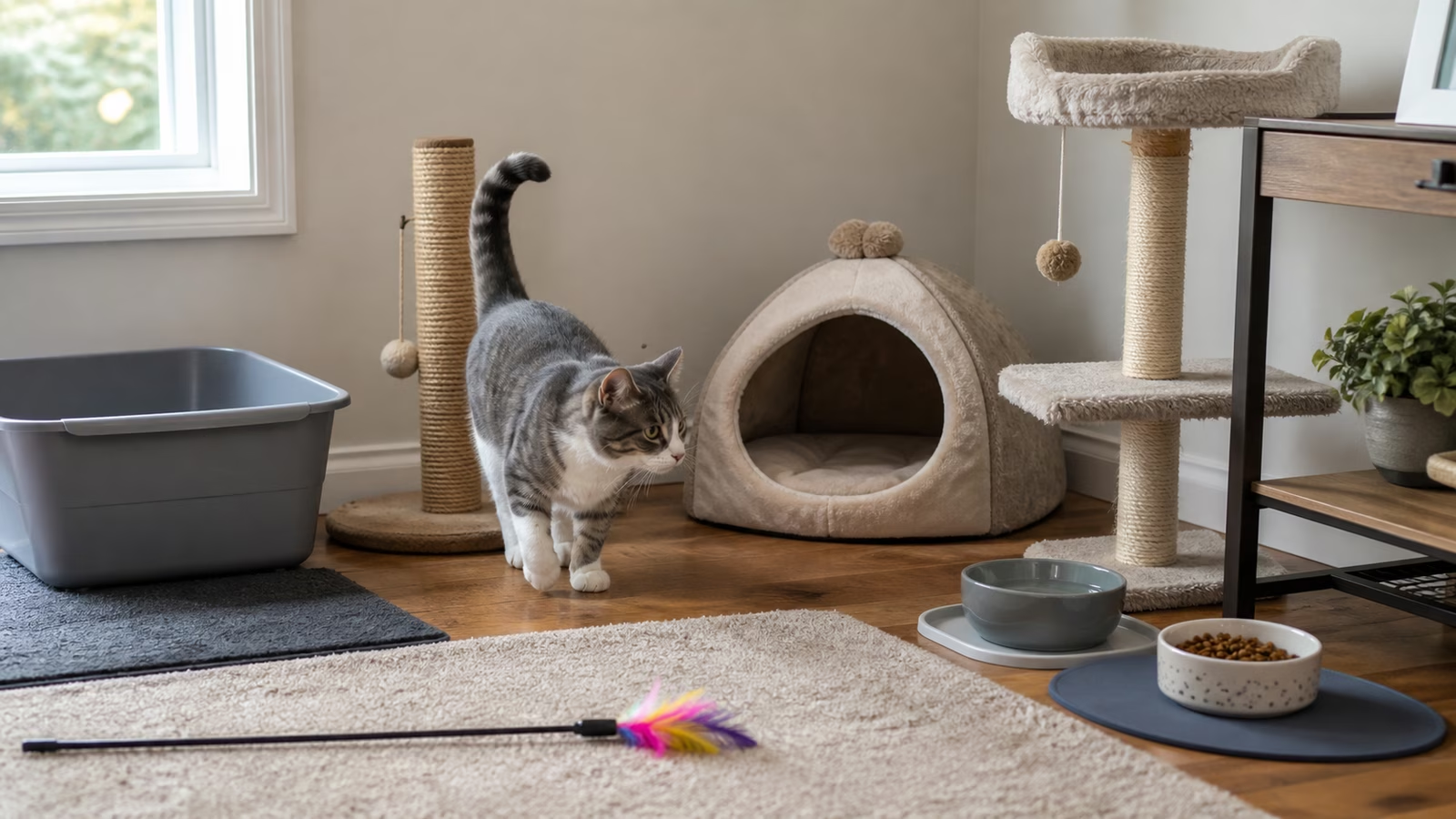
An adopted adult cat arrives with a history you may never fully know. That history might include good routines, confusing moves, other animals, shelters, foster homes, quiet apartments, children, dogs, or long stretches of being left alone. The first month should not ask the cat to explain all of that quickly. It should give the household enough structure to observe who this cat is when the room is safe, the resources are obvious, and people are not rushing closeness.
The practical goal is modest. The cat should be able to eat, drink, use the litter box, hide, scratch, sleep, and explore a small area without being chased by attention. Friendliness may come early, late, or in uneven waves. A cat who rubs against your legs on day one may still need a small room and predictable visits. A cat who hides for several days may still be settling normally if they are eating, drinking, eliminating, and slowly choosing more contact.
Start Smaller Than Your Enthusiasm
The home base matters even when the cat seems confident. One room gives the cat a map they can finish learning. It also gives you a baseline for appetite, litter habits, sleep, sound sensitivity, play interest, and social distance. A spare room, bedroom, or office usually works better than a hallway because the cat can retreat without being stepped over.
Set the room before the carrier opens. Put the litter box away from food and water, give the cat a hiding option that people can access if necessary without dragging the cat out, place a scratcher near the resting area, and leave the carrier open as ordinary furniture. The broader setup in New Cat Setup still applies, but adult adoption has one extra rule: assume the cat needs time to compare this home with every place that came before it.
Do not decorate the room so tightly that every resource crowds every other resource. A cat who has to pass the litter box to reach food, or eat beside a door that opens constantly, may look picky when the layout is the real problem. The room should feel legible from the cat’s height: bathroom there, food there, water there, hiding there, scratching there, exit there.
Let Eating and Litter Habits Set the Pace
People often want to measure progress by petting. In the first month, eating and litter habits are more useful. A cat who eats when the room is quiet, uses the box consistently, and begins to appear during calm visits is giving better news than a cat who accepts petting but refuses meals or hides after every interaction. Appetite and elimination are not personality details. They are welfare signals and routine anchors.
Keep meals predictable. Enter calmly, refresh food and water, scoop the box, sit for a short visit if the cat can handle it, and leave before the room feels pressured. Some cats eat while people are present. Others wait until the door closes. Either pattern can be workable at first if the cat is eating enough and the routine is stable. If appetite drops, litter behavior changes, or the cat strains, stop treating it as a settling issue and call a veterinarian.
The litter box deserves the same patience. Use an easy-entry box, keep the area clean, and avoid changing litter type immediately unless there is a clear reason. If the cat misses the box, look at placement, size, access, stress, and health before assuming defiance. Litter Box Setup That Actually Works is the next place to go when the bathroom routine is fragile.
Visit Without Making Every Visit a Test
A good visit does not have to produce contact. Sit sideways, speak softly if the cat likes voice, and let the cat decide whether to approach. If the cat comes forward, offer a small treat, a quiet hand near the floor, or a few seconds of cheek-level contact if the cat is clearly seeking it. Then pause. The pause is important because it gives the cat a way to ask for more or step away without being followed.
Avoid turning the hiding place into a stage. Do not reach into it, pull the cat out, or invite guests to peer inside. Hiding is a coping choice, not a failure of gratitude. You can make hiding healthier by offering a cave bed, covered box, or carrier with bedding that allows privacy but does not trap the cat behind appliances or under heavy furniture.
Adult cats often show mixed signals while settling. A cat may rub, then swat when touched too long. They may sit near you but dislike being picked up. They may play one evening and refuse the next. Read the whole pattern instead of one moment. Reading Pet Body Language at Home helps because the early signs usually arrive before the scratch or bite: tail speed, skin ripple, stillness, ears changing, head turning, or a sudden decision to leave.
Expand Territory by Recovery, Not by Calendar
There is no magic day when the whole home becomes appropriate. Expand when the cat is using the room reliably, recovering from ordinary sounds, and showing curiosity near the door without panic. Start with one additional space for a short supervised period. Keep the home-base door available so the cat can retreat. If the cat explores, sniffs, scratches the right surface, and returns to normal rest, repeat that version before adding more.
Expansion often fails when people open too many rooms and remove the old base at the same time. Keep the original room stable longer than you think. The litter box, water, hiding place, carrier, and scratcher can remain important even after the cat begins to sleep elsewhere. A familiar room gives the cat somewhere to go during visitors, cleaning, maintenance noise, or other pets moving around.
Watch the routes. A cat may cross the living room comfortably until a dog bed blocks the return path or a child sits between the cat and the doorway. Cat Vertical Space and Safe Routes is useful once the cat leaves the home base because adult cats often care less about having many objects and more about having routes that do not trap them.
Introduce People, Pets, and Handling Slowly
The first month is not the right time to prove the cat can handle everyone. One calm person is easier than a room of voices. Adults are easier than excited children. A quiet hallway is easier than a doorway with guests arriving. If the cat is joining a home with another cat, a dog, or children, treat introductions as a separate project, not as a side effect of opening doors.
For dogs and cats, begin with barriers, scent, distance, and recovery rather than face-to-face access. A dog who stares, whines, lunges, or blocks routes is telling you the setup is too hard. A cat who freezes, hides for long periods, refuses food, or cannot move away normally is saying the same thing. Dog and Cat Introductions at Home and Resource Zones for Multi-Pet Homes are better next steps than hoping repetition will make tension disappear.
Handling should be gentle and brief. Touch paws, ears, carrier doors, brushes, and collars only in tiny pieces if the cat can stay relaxed. Do not spend early trust on unnecessary restraint. If grooming, medication, or transport is needed, use Carrier Comfort for Dogs and Cats and professional guidance rather than turning the first month into a wrestling match.
Make the Month Legible
Plain notes help because settling is uneven. Write down where the cat sleeps, when they eat, how the litter box looks, which sounds cause hiding, which visitors are too much, which toy gets interest, and how long recovery takes after a disruption. These notes are not a laboratory project. They keep the household from relying on memory when everyone is eager to believe the cat is fine.
By the end of the first month, success may look quiet. The cat may have a few trusted rooms, a reliable box, a preferred scratcher, a regular mealtime rhythm, and one or two people they seek out. That is enough. The relationship can grow from there because the foundation is not built on pressure. It is built on a room that made sense, people who stopped before the cat had to escalate, and a household willing to let confidence arrive in the cat’s own order.