For six months, mechanical keyboards were a private obsession.
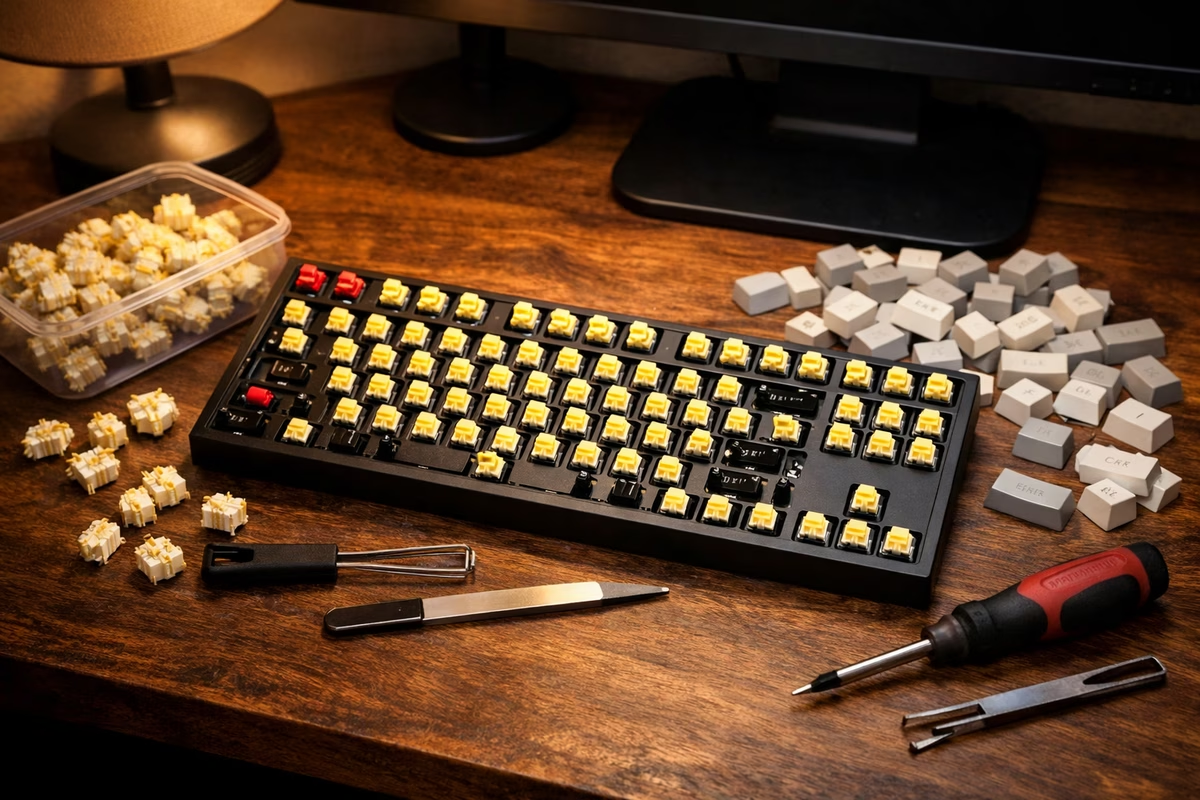
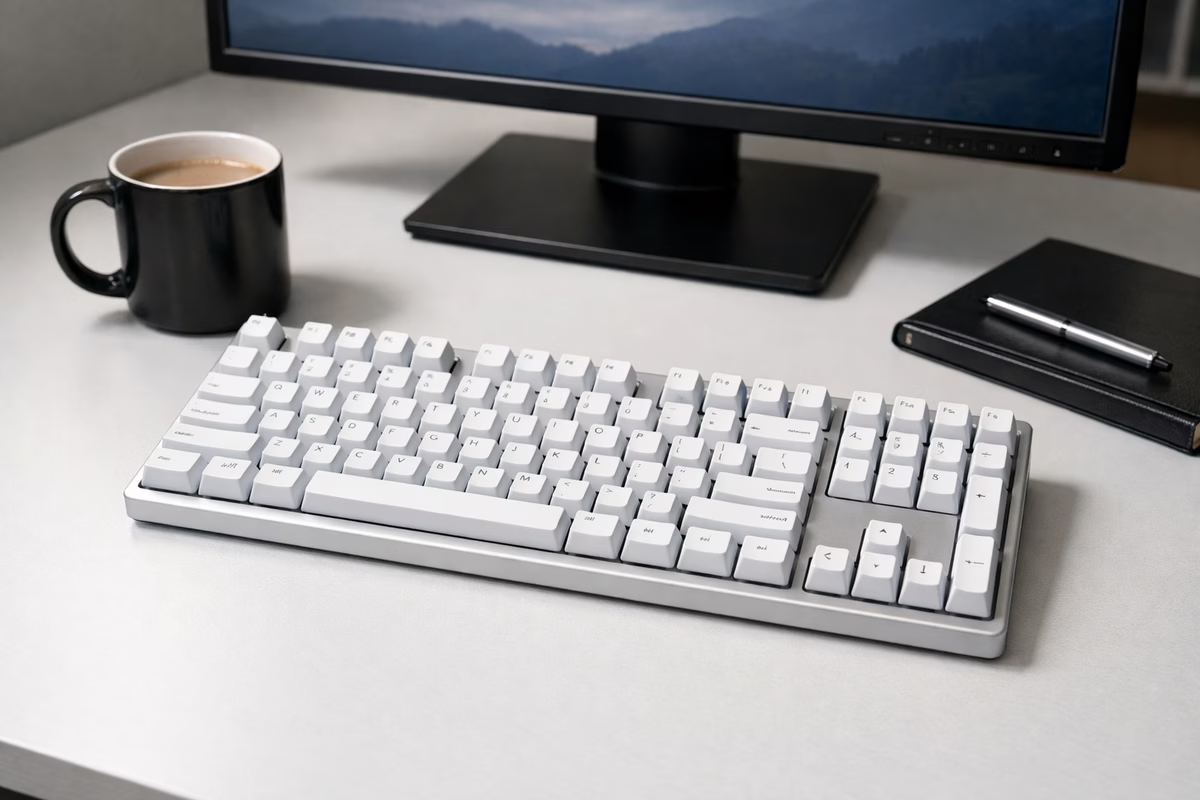
I’d built my first board—a 65% with tactile switches, a polycarbonate case, and stock keycaps that came with the kit. I lubed the switches one Sunday afternoon while watching tutorials, tuned the stabilizers until the spacebar stopped rattling, and typed on it every day with quiet satisfaction.
Nobody in my life understood why I’d spent a weekend putting tiny pieces of plastic into a circuit board. My partner tolerated the sound tests. My coworkers assumed it was a gaming thing. I tried explaining the difference between linear and tactile switches at a dinner party and watched two people’s eyes glaze at the same time.
Then I found a local keyboard meetup, and everything changed.
Not the keyboard. The experience of caring about keyboards.
Finding the meetup
The mechanical keyboard community exists in layers. The outermost layer is Reddit and Discord—millions of photos, sound tests, and opinions scrolling past at internet speed. That layer is useful for information but overwhelming for connection.
The next layer is group buys and vendor communities—people organizing around specific products, waiting months for keycap sets and custom boards to arrive. This is where patience becomes a shared experience.
The innermost layer is in-person meetups: people putting their boards on a table and inviting strangers to type on them.
I found mine through a Discord server for my city’s keyboard enthusiasts. Someone posted: “Meetup this Saturday, noon, back room of a café. Bring your boards if you want. Beginners welcome.”
I almost didn’t go. The phrase “bring your boards” made me imagine a room full of $800 customs and expert builders who would judge my stock keycaps and imperfect lube job.
I went anyway.
The table
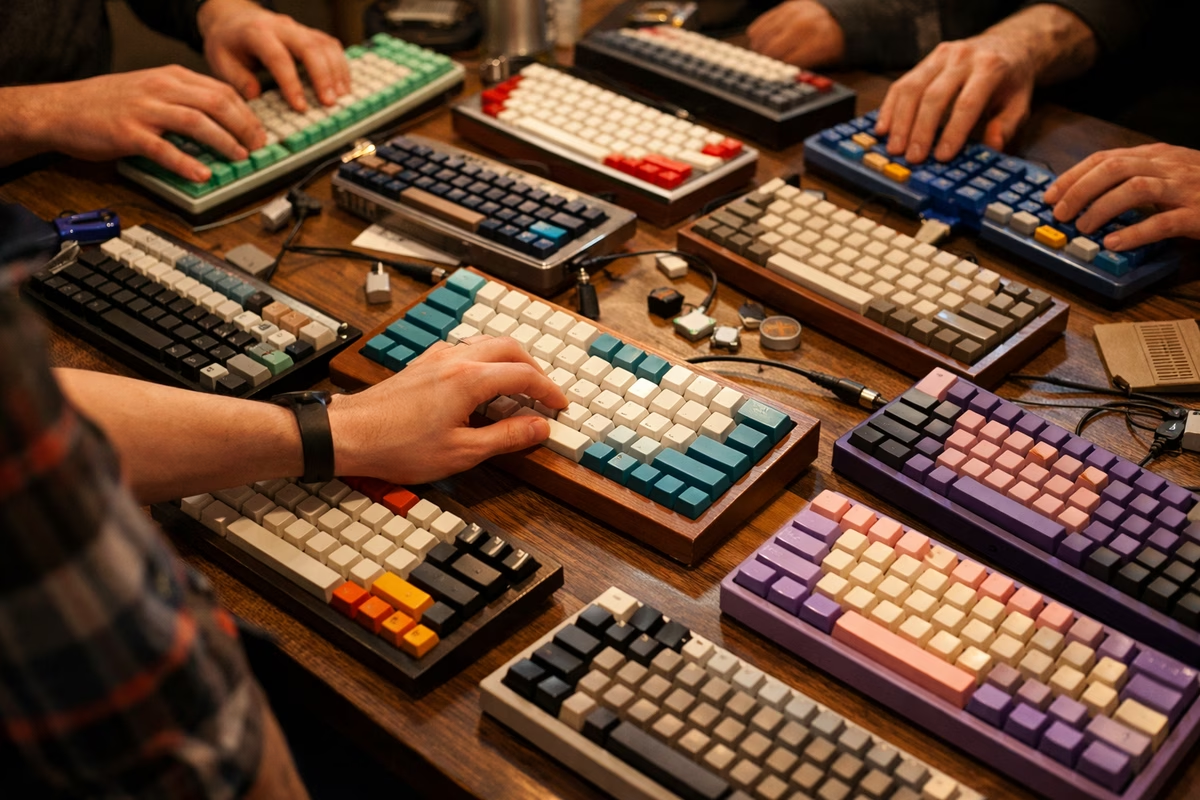
The back room of the café had three folding tables pushed together, and on those tables sat about twenty keyboards.
Every size. Every color. Every sound profile.
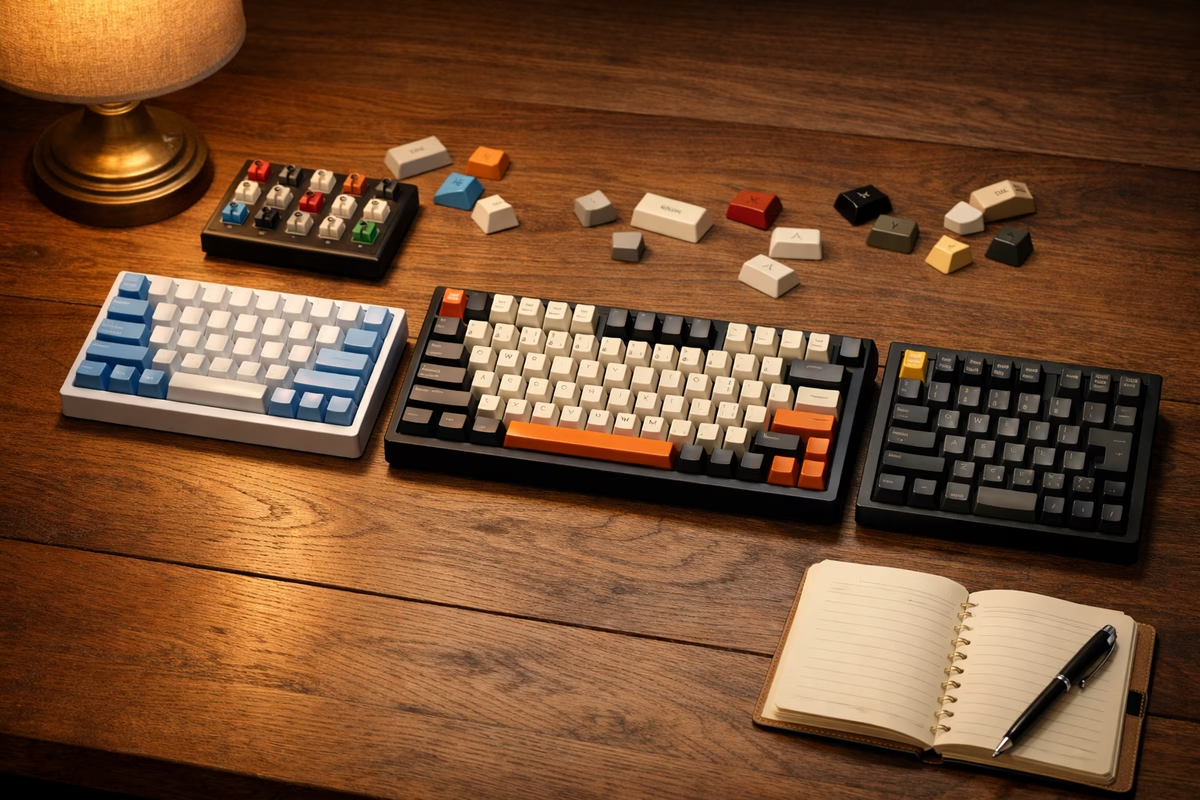
A 40% ortholinear board the size of a paperback novel. A full-size Model M from 1989, yellow with age and loud as a typewriter. A split ergonomic board with custom 3D-printed tenting legs. A sleek aluminum 75% with a knob and a weight that must have cost more than my first car.
And next to all of these—boards that looked like mine. Mid-range kits, stock keycaps, first builds. Boards from people who were exactly where I was: curious, early, and slightly nervous.
The unwritten rule of a keyboard meetup, I learned, is: you type on everything. That’s the point. Every board on the table is an invitation.
What typing on twenty boards teaches you
In six months of reading forums and watching videos, I’d formed opinions about switches, keycaps, and sound profiles based on other people’s descriptions and recordings.
Typing on twenty boards in one afternoon replaced all of that with direct experience.
Switches feel different than they sound
I’d watched dozens of sound tests for linear switches and decided I didn’t like them—too smooth, too quiet, no feedback. Then I typed on a board with lubed Gateron Oil Kings and realized the feel of a good linear is completely invisible on a sound test. The effortless, frictionless keystroke doesn’t translate to audio or video. It’s a tactile experience, and I had to touch it to understand it.
Sound tests are useful for sound. They tell you nothing about feel. A meetup is where feel lives.
Keycaps change everything
My stock keycaps were ABS—the kind that come in the box, thin and slightly shiny. They were fine. I had no complaints.
Then I typed on a set of thick PBT Cherry-profile keycaps, and my fingers understood something my brain hadn’t figured out from photos: keycap profile changes how your fingers find each key, and keycap material changes the sound and temperature of every stroke. PBT felt cooler, sounded deeper, and had a texture that my fingertips immediately preferred.
I went home that evening and ordered my first aftermarket keycap set. That’s the “changed my keycaps” part of this story—but it was really about discovering that a component I’d treated as cosmetic was, in fact, one of the most impactful parts of the typing experience.
For the full breakdown of keycap materials, profiles, and how they affect sound and feel, the Keycaps Guide covers everything I wish I’d known before the meetup.
Sound is physical
Sound tests through headphones compress the frequency range. In person, you hear the full acoustic signature of a board—the low thud of a dampened case, the high-pitched clack of an aluminum plate, the hollow pop of an empty plastic case.
You also hear sound in context. A thocky board sounds different in a quiet room versus a noisy café. A clicky board that seems charming in a YouTube video becomes genuinely loud when someone is typing at full speed three feet away.
The Sound Profiles Guide maps the vocabulary. The meetup maps the reality.
The conversations
The boards were the draw. The people were the surprise.
Nobody asked how much my keyboard cost. Nobody judged the stock keycaps. The first question from almost everyone was: “What switches are in this?” followed by “Can I try it?”
I talked to a software engineer who had been in the hobby for eight years and built over thirty boards. She brought a hand-wired 40% that she’d designed herself—no PCB, just wire soldered between switches. When I asked her about her favorite build, she pointed to a simple Keychron with aftermarket keycaps and said, “This one. I use it every day. The others are experiments.”
I talked to a college student who’d just finished his first build that morning and was so excited about it he kept picking it up and showing people the bottom. The case had a visible scratch from where his screwdriver slipped. He was proud of it.
I talked to someone who described herself as “not a builder” but a collector of vintage keyboards. She had a Topre board that sounded like rain on fabric and a decades-old ALPS keyboard that clicked like a machine from another era.
The common thread wasn’t expertise. It was enthusiasm. Everyone at that table was genuinely interested in what everyone else had brought—not to rank them, but to experience them.
Group buys: the shared waiting room
At the meetup, I heard the phrase “group buy” more times than I could count.
A group buy is how many enthusiast keyboard products reach the market. A designer creates a keycap set, a keyboard kit, or a custom component and opens orders for a limited time. Once the buy closes, the product is manufactured—often taking six to twelve months to deliver.
This sounds frustrating, and it is. But it’s also one of the hobby’s distinctive social experiences.
Why group buys create community
When you join a group buy, you join a waiting room full of people who want the same thing. Discord servers spring up around specific keycap sets. People share render mockups on their boards. They speculate about colorways. They celebrate when shipping notifications go out.
The delay transforms a purchase into a shared event. Getting your keycap set after eight months of waiting feels like a holiday—and you have a whole community to celebrate it with.
The risks
Group buys aren’t without downsides. Manufacturers can be delayed beyond estimates. Colors sometimes don’t perfectly match renders. Occasionally, a group buy runner disappears, though this is increasingly rare as the community matures and established vendors take on more projects.
The practical advice I got at the meetup: buy from established vendors first. Check community reviews. Don’t spend money you can’t afford to wait a year for. And if you want immediate gratification, the in-stock aftermarket is growing—many popular keycap profiles and colorways are now available off the shelf.
What the community taught me about the hobby
Before the meetup, keyboards were a technical interest. I read specifications, compared switch force curves, and optimized my build for measurable characteristics.
After the meetup, keyboards were a culture. A culture with shared vocabulary, inside jokes, aesthetic sensibilities, and a deep appreciation for craft that spans from $50 builds to $1,000 customs.
The most important thing the community taught me:
There is no correct keyboard. There is only your keyboard—the one that feels right under your fingers, sounds right in your room, and makes you want to type.
The person with the $1,200 custom board wasn’t having more fun than the college student with the scratched Keychron. They were having the same fun in different brackets.
Getting involved without getting overwhelmed
The keyboard community is large, opinionated, and constantly evolving. Here’s how to enter it without drowning:
Start with one community. Pick a Discord server or subreddit and lurk for a week. Read the questions other beginners ask. Read the answers. Absorb the vocabulary.
Go to one meetup. Even if you only have a stock board. Even if you have no board at all. People will let you type on theirs. That’s the whole point.
Ask questions about what you don’t understand. The community is, in my experience, remarkably patient with genuine curiosity. “What does thocky mean?” is a perfectly good question at a meetup.
Don’t compare budgets. Some people spend thousands. Some spend a hundred. The satisfaction doesn’t scale with price. The best board at the meetup I attended was a $60 build with thoughtful mods—and everyone agreed.
Next steps
- Read Switches for the full breakdown of switch types and how to choose
- See Keycaps Guide for materials, profiles, and what actually changes the typing feel
- Explore Sound Profiles to understand the vocabulary for keyboard acoustics
- Try Building Your First Custom Keyboard if the meetup inspired you to start a build
- Read The Board That Sounded Like Rain for another builder’s first-build experience