
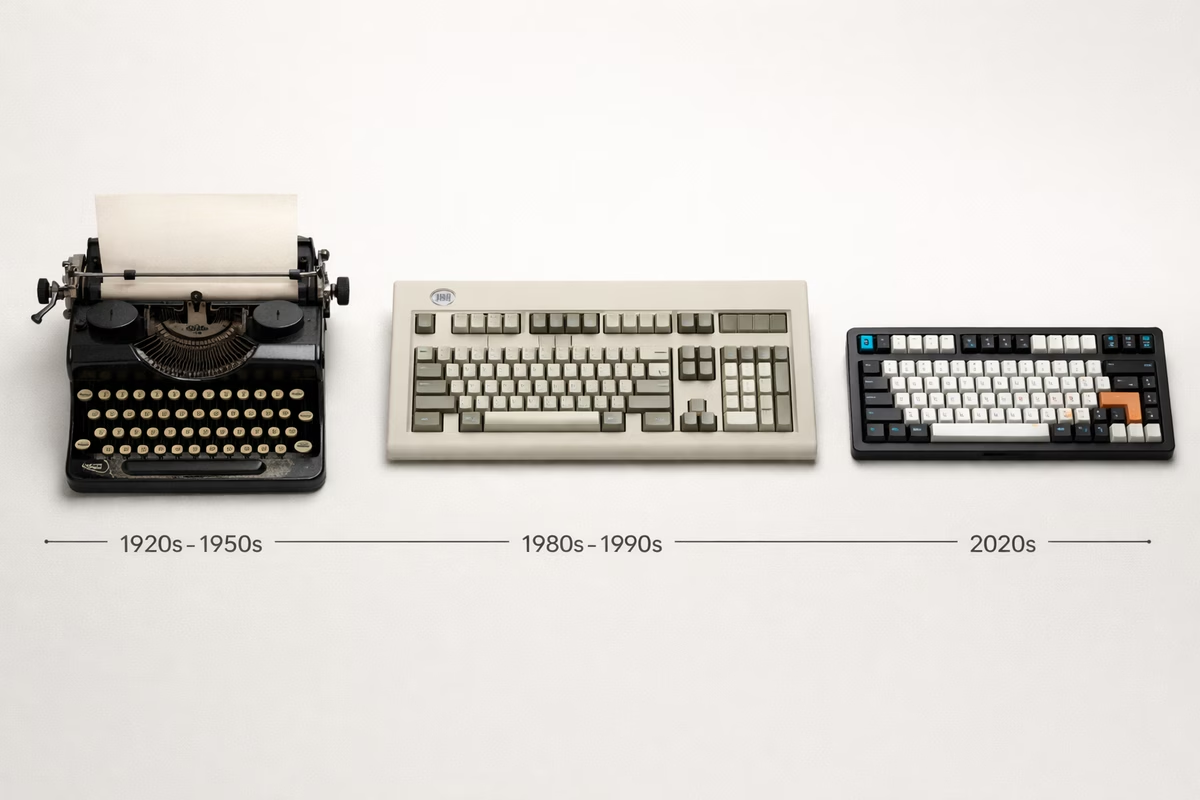
History of Mechanical Keyboards
Mechanical keyboards have a long history, from typewriters to customs. That history explains why they still matter.
The Typewriter Era (1868-1960s)
1868: The Sholes and Glidden Typewriter
Christopher Latham Sholes invented the first practical typewriter, and several ideas from it still shape keyboards today. Mechanical levers and springs, QWERTY, and clear feedback all came from that machine. It was not a computer peripheral, but it set the standard for how a keyboard should feel.
QWERTY Layout Origins
Early typewriters jammed when nearby keys were pressed too fast. Sholes spaced common letter pairs apart to help with that. QWERTY stayed because it became the standard, not because it is the best layout.
Dvorak (1936), Colemak (2006), and Workman (2010) all try to reduce finger travel or improve comfort and speed compared to QWERTY. They survive because the standard is not perfect; they remain niche because network effects are powerful. Once schools, offices, software, and muscle memory all centered on QWERTY, switching became socially expensive even when another layout made ergonomic sense.
Early Computing Era (1960s-1980s)
IBM Beam Spring (1960s-1970s)
IBM’s early beam spring keyboards used capacitive switches built for mainframes, not desks. They were tactile, expensive, and very heavy. That helped IBM build a reputation for serious keyboard hardware.
1970s: Hall Effect Keyboards
Hall effect keyboards used magnetic sensors instead of metal contacts. That makes them durable and useful for adjustable actuation. They started in aerospace and industry, then came back in gaming keyboards.
The Golden Age (1980s-1990s)
1984: IBM Model M - The Legend
The IBM Model M, released in 1984, is still the most famous mechanical keyboard. Its buckling spring switch makes a loud click and a strong tactile bump. The board is heavy, durable, and part of why the full-size layout became familiar.
The Model M became a shorthand for a good keyboard because it felt deliberate. Many still work after 40 years, and Unicomp still makes descendants. It is loud, bulky, and not for everyone, but it set the standard.
1983: Cherry MX Switches Invented
Cherry invented the Cherry MX switch and created the modern mechanical standard.
The design mattered because it was easy to build around. Housing, stem, spring, and a cross-shaped mount became the default pattern. Color names like Red, Blue, Brown, and Black gave buyers a simple way to talk about feel.
Cherry MX Color Codes (Original): Cherry’s color names became shorthand. Black was an early linear switch, Blue became a typing favorite, Brown became the all-purpose tactile option, and Red became popular for gaming.
MX won because it was reliable, consistent, and easy to build around. Once keycaps, PCBs, and plates aligned with it, the standard fed itself.
1990s: Keyboard Variety
The 1990s were unusually varied. Buckling spring boards, Cherry MX boards, Alps boards, Topre boards, and cheap membrane keyboards all lived side by side. Alps switches were a major alternative and are now collectible.
The Dark Ages (2000s)
The Membrane Takeover
By the 2000s, mechanical keyboards had mostly disappeared from consumer stores.
Membrane keyboards were cheaper, companies chased margins, and most buyers did not care. Mechanical boards survived in niche uses, including enthusiasts, industrial settings, and some gaming products. Cherry’s patents kept competition narrow until around 2014.
The Gaming Revival (2010-2014)
Gamers Rediscover Mechanical
Gamers helped bring mechanical keyboards back into view. Faster actuation, consistent feel, and durability were easy to sell to people who cared about input devices. Boards like the Razer BlackWidow, Corsair K70, and Logitech G710+ put mechanical switches back on shelves.
Gaming brands also made their own switches. Some were real experiments, and some were mostly branding. Either way, they brought mechanical feel to a wider audience.
The Enthusiast Renaissance (2014-Present)
2014: Cherry MX Patents Expire
Cherry’s MX patents expired around 2014, which opened the market. Gateron, Kailh, Greetech, Outemu, TTC, ZealPC, and others quickly expanded the MX-compatible world. The big change was not one switch. It was the chance to experiment.
Rise of Custom Keyboards
Around 2014 to 2016, enthusiasts started treating keyboards as things they could build, not just buy. Forums and subreddits gave people places to compare switches and share builds.
The custom scene grew from there. Group buys, artisan keycaps, custom PCBs, CNC cases, programmable layouts, switch lubing, and stabilizer work turned keyboards into projects.
2015-2020: Boutique Brands Emerge
Boutique makers pushed the hobby toward premium materials and limited runs. Aluminum, brass, polycarbonate, gasket mounts, and specific case designs became part of the language. High prices became normal.
The group buy model shaped the culture too. Designers would collect interest, open a preorder, build after the buy closed, and ship later. That made small-run keyboards possible, but it also meant waiting and scarcity.
2020-Present: Mainstream Adoption
Work-from-home life made more people care about their keyboards. Brands such as Keychron and Glorious brought enthusiast features into lower price ranges. Aluminum cases, gasket-style mounting, hot-swap sockets, QMK/VIA, and better keycaps became mainstream.
Modern Innovations (2020s)
Hot-Swap Sockets
Hot-swap sockets let people change switches without soldering. That made the hobby easier for beginners and faster for modders. Kailh and Gateron sockets are common, and Mill-Max sockets give some boards a solder-in option.
QMK & VIA Firmware
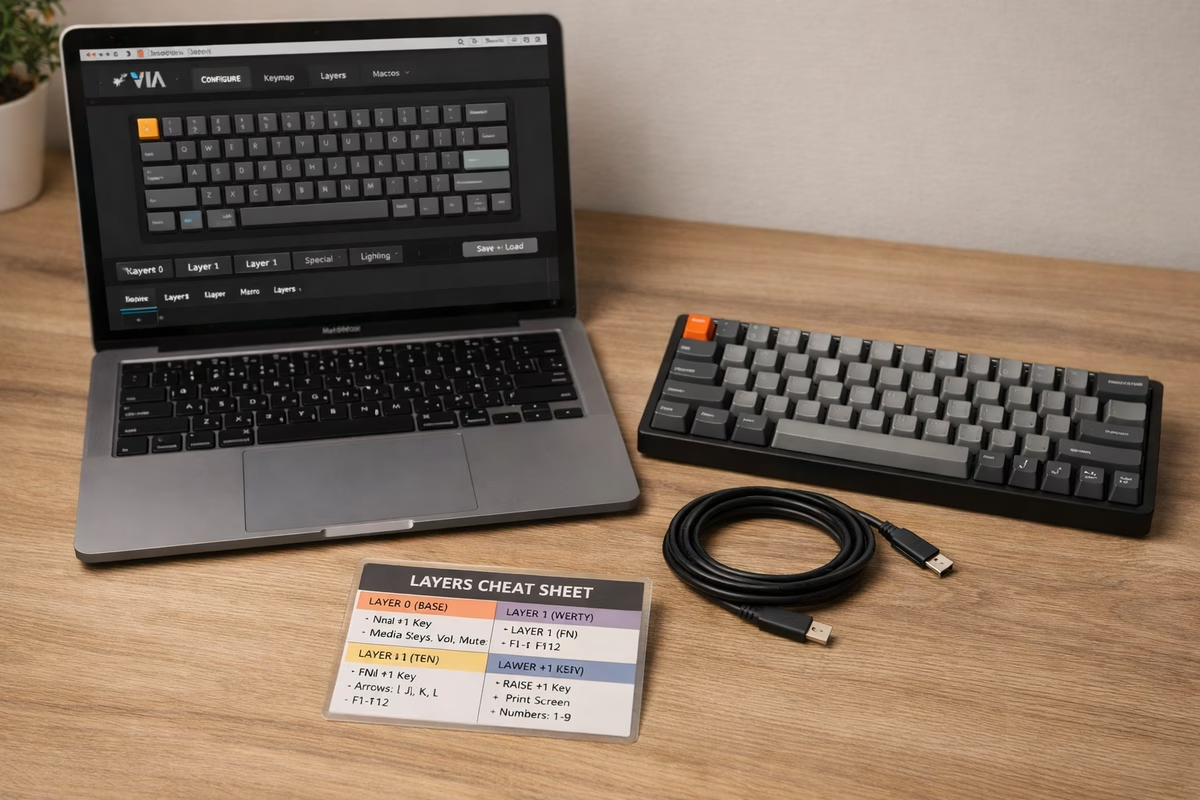
QMK gave custom keyboards powerful open-source firmware. It made remapping, layers, macros, and lighting control possible. VIA made much of that easier to use. Keyboards became editable tools.
Gasket Mount
Gasket mounting uses compressible material instead of a rigid mount. The goal is a softer feel and a calmer sound. Variants differ in detail, but the idea spread from premium boards to mainstream ones.
Wireless Technology
Wireless moved from shaky Bluetooth to fast 2.4GHz and better multi-device support. Modern wireless boards can be fast, last a long time, and support hot-swap. Wireless is no longer a tradeoff by default.
The State of Mechanical Keyboards Today
Market Size
Mechanical keyboards are now a huge category that reaches far beyond gaming. Office workers, programmers, writers, students, and collectors all buy them for different reasons, which is why the market supports both cheap entry boards and expensive customs.
Community
Reddit, YouTube sound tests, Discord servers, group buys, artisan keycap markets, and vendor newsletters keep the hobby moving. Some board designs raise huge amounts of money, and some artisan keycaps cost more than a budget board.
Price Ranges
The price ladder is wide. Budget boards around $50 to $100 include Keychron C-series, Royal Kludge, and Redragon. Mid-range boards around $100 to $200 include many Keychron Q, Ducky, and Leopold options. Premium boards move into GMMK Pro, Mode, KBDfans, Rama, TGR, Keycult, and others.
Innovation Trends
Current innovation is split between performance and flexibility. Hall effect and magnetic switches brought adjustable actuation back into focus. Other experiments point toward modular layouts, sustainable materials, recycled plastics, and better macro layers.
Key Milestones Timeline
- 1868: First typewriter (Sholes and Glidden)
- 1930s: QWERTY becomes standard
- 1960s: IBM Beam Spring keyboards
- 1984: IBM Model M (buckling spring)
- 1983: Cherry invents MX switches
- 1987: Apple Extended Keyboard (Alps switches)
- 2000s: Membrane keyboards dominate
- 2010: Razer BlackWidow (gaming revival)
- 2014: Cherry MX patents expire
- 2016: Custom keyboard community explodes
- 2021: Keychron Q-series (affordable enthusiast keyboards)
- 2024: Mainstream adoption, continued innovation
Cultural Impact
Why Mechanical Keyboards Matter
Mechanical keyboards matter because they turn a disposable office tool into something personal. The hobby mixes craftsmanship, customization, collecting, and community.
Sound became part of the culture too. Typing tests, ASMR videos, and switch comparisons made keyboard audio part of the appeal.
Takeaway
Mechanical keyboards started as typewriter tools, faded during the membrane era, came back through gaming, and then grew into a mainstream hobby. The lesson is simple. Input devices matter, and people notice when the tool they touch all day feels better.
Next Steps
- For the modern switch landscape, continue with the Switch Guide
- If the history makes you want to build one yourself, read the Building Guide
- To compare the companies shaping the current market, use the Brand Guide