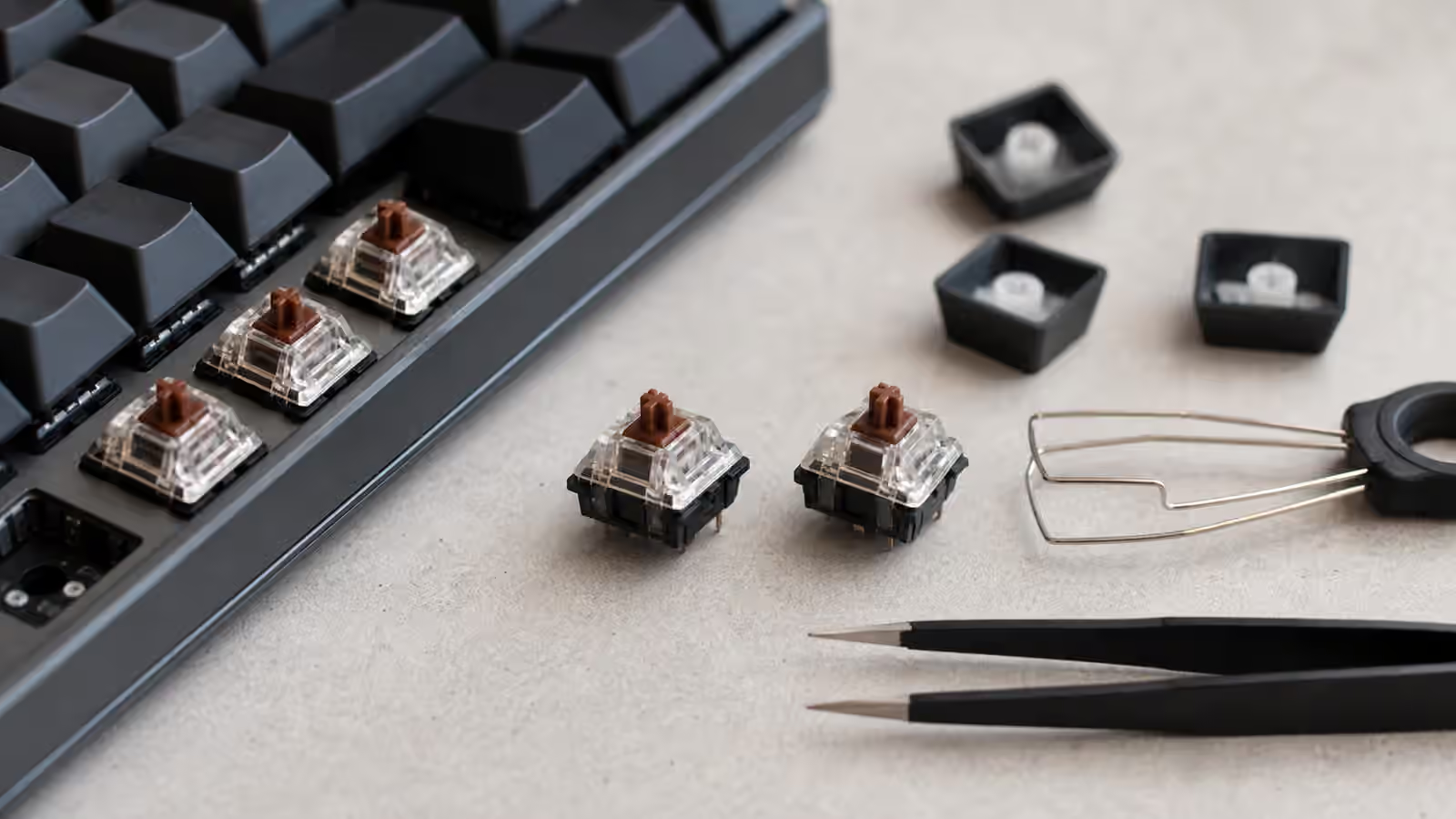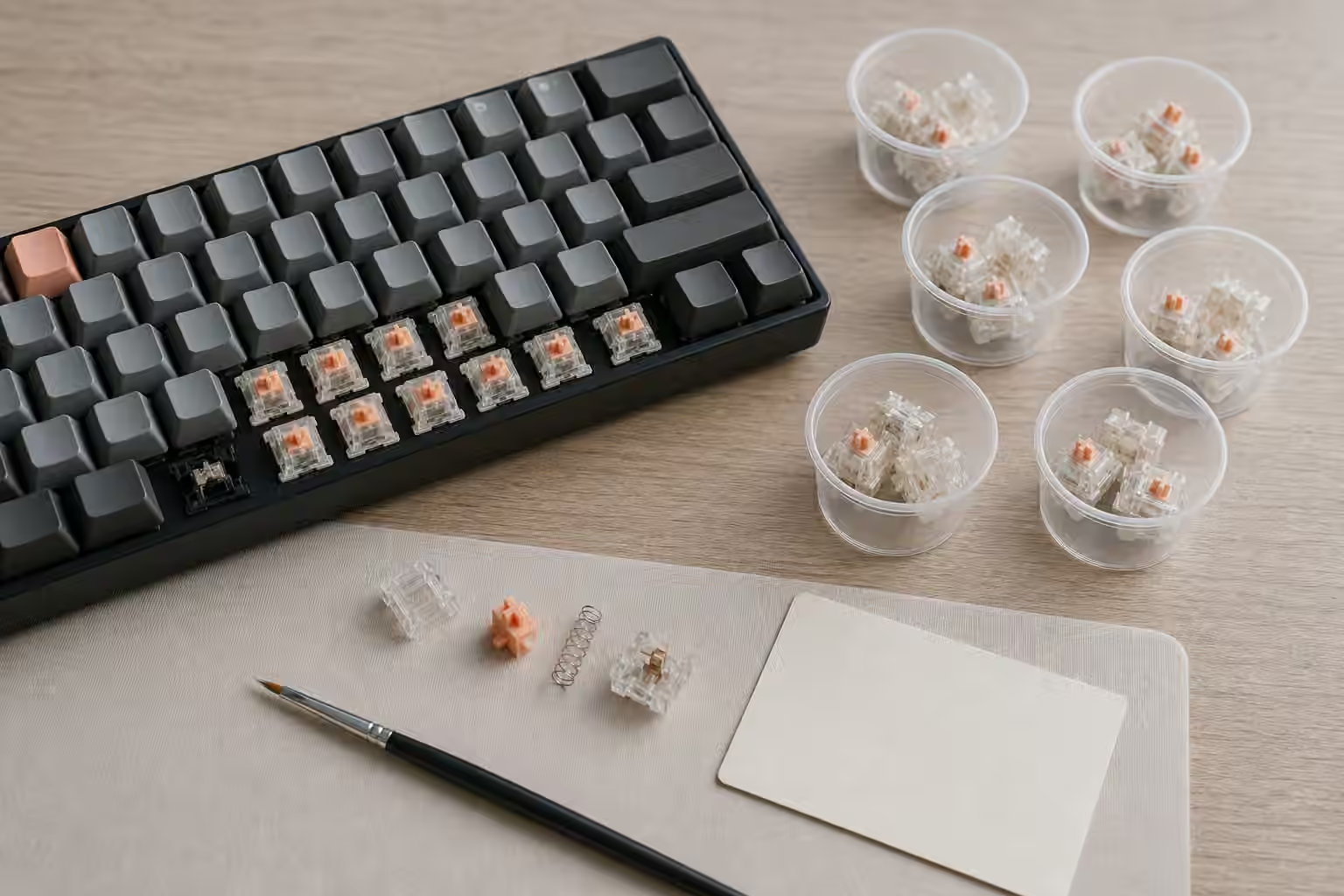
Factory-lubed switches have changed the first keyboard experience. A buyer can install a stock switch today and find it smooth, controlled, and quiet enough to leave alone. That was not always the assumption in enthusiast spaces, where hand lubing became a rite of passage for people chasing better sound and feel. The change is welcome, but it creates a new question: when is factory lube good enough, and when is it hiding inconsistency?
The answer depends on the switch, the batch, the keyboard, and your tolerance for variation. Factory lube can be excellent. It can also be uneven, overdone, too light, or applied in a way that suits one typing style and annoys another. Break-in can make some switches feel smoother after use, but it is not a spell that turns every scratchy switch into a refined one. Good judgement comes from testing switches as parts in a real board, not from trusting a single phrase on a product page.
If you are still learning the basic switch families, start with the Complete Switch Guide . If you plan to modify switches by hand, read Switch Lubing by Hand . This guide sits between buying and modding. It helps you decide when stock switches deserve to stay stock.
Factory lube is a production choice
Factory lubrication is applied during manufacturing, often to the stem rails, spring, leaf contact area, or other friction points depending on switch design. The goal is usually smoother travel, less spring noise, and a more refined sound out of the box. Because it happens at scale, the result depends on tooling, process control, lubricant choice, and quality checks. A well made factory-lubed switch can feel remarkably consistent. A poorly controlled one can feel like every key came from a different afternoon.
The word lubed by itself does not describe amount, placement, or style. A light application may preserve tactile character and simply reduce harshness. A heavy application may make a linear switch sound deeper but feel sluggish. On tactile switches, too much lubricant near the tactile event can dull the bump. On clicky switches, lubrication can interfere with the mechanism if applied carelessly, which is one reason many people avoid lubing clicky designs beyond specific spring or contact issues.
Factory lube also interacts with storage and shipping. Switches can sit for a while before use. Lubricant can migrate slightly. Temperature can change feel temporarily. None of this means the switch is bad, but it means the first few presses on a tester may not tell the full story. Install a few in a keyboard and type real text before forming a hard opinion.
Break-in is real but limited
Break-in means a switch changes slightly after repeated use. Plastic contact surfaces can polish. Springs can settle into their working behavior. Factory lube can distribute more evenly. The result may be a smoother feel, less scratch, or a more stable sound. Some enthusiasts use machines to actuate switches many thousands of times before building with them. Others simply type on the board and let use do the work.
The limit is important. Break-in cannot fix everything. A switch with poor housing fit, a weak leaf, a noisy spring, or an unpleasant tactile shape will still have those design traits. A scratchy switch may improve, but if the scratch comes from rough materials or inconsistent tooling, time may only soften the problem. Break-in is best understood as a small settling process, not a replacement for choosing a switch you already like.
For most owners, deliberate break-in machines are unnecessary. Install the switches, use the keyboard, and listen after a week or two. If the board becomes smoother and more coherent, good. If certain switches remain noisy or rough, replace those positions or set them aside for hand work. A hot-swap board makes this simple, which is one reason Keyboard PCBs and Hot-Swap Sockets matter so much for switch experimentation.
Consistency matters more than one perfect switch
A switch tester can make one switch feel amazing because the comparison is isolated. A full keyboard reveals consistency. The same switch under every letter should feel close enough that the hands stop noticing individual keys. A few rough or pingy switches may stand out more than a whole set of moderately smooth ones. Factory lube should be judged across a sample, not from the best switch in the bag.
Install ten to fifteen switches in a hot-swap board if possible. Put them under common letters, the spacebar area if compatible, and a few modifiers. Type normal sentences, then press slowly to listen for spring noise, leaf noise, scratch, and return sound. Compare the same switch in different rows because keycap profile and finger angle can change perception. The Switch Sample Testing guide is built around this kind of evidence.
Do not chase perfect silence from a normal switch. Some sound is switch character, and some is the board around it. Plate material, case design, foam, desk mat, and keycaps can make a switch seem better or worse. If a factory-lubed switch sounds harsh only in one keyboard, the switch may not be the main problem. Use a second board or a different surface when possible before blaming the entire set.
Hand lubing is still useful when it solves a specific problem
Hand lubing gives control. You can choose lubricant, amount, and placement. You can avoid the tactile legs on a tactile switch, oil or bag-lube springs separately, and correct uneven factory application. For a valued build, that control may be worth the hours. For a first board, it may be unnecessary labor that hides what the switch actually feels like.
The best reason to hand lube a factory-lubed switch is not that the internet says all switches need it. It is that your sample has a specific issue: spring ping that remains after testing, scratch that bothers you, inconsistent smoothness, or a sound you know can be improved without ruining feel. Open a few switches first. If the factory lube is already even and the switch feels good, leave it alone. Extra lubricant can make a good switch worse.
Switch films and spring swaps belong in the same restraint category. Films help only when housing fit needs them, which the Switch Films and Housing Fit guide explains. Spring swaps help when force is wrong, not when the product page failed to sound exciting. A thoughtful stock build often beats an overworked switch set.
Buy for the switch you can enjoy stock
Factory-lubed switches are strongest when they let you build sooner and modify later only if needed. That is especially valuable for prebuilt and barebones buyers who want a reliable daily board without turning every switch into an evening project. The Prebuilt, Barebones, or Kit guide is useful here because the right buying path depends on how much work you actually want.
When shopping, look for more than the phrase factory lubed. Read impressions for consistency, spring sound, return feel, and tactile clarity if relevant. Buy a small sample when possible. Test in a board, not only in the hand. Give the switches a little time, but do not wait for break-in to create a personality that is not there.
A good stock switch is not a compromise. It is a well chosen part doing its job. If factory lube gives you smooth travel, controlled sound, and consistent keys across the board, accept the gift and type. The hobby has plenty of deep projects waiting. You do not have to turn every switch into one.