In the mechanical keyboard community, “endgame” is the mythical destination: the one perfect keyboard that makes you stop looking. The board so precisely suited to your typing feel, your sound preference, your aesthetic taste, and your workflow that the urge to build or buy another one simply vanishes.
I’ve been chasing endgame for three years.
I’ve owned eleven keyboards. Built seven of them from parts. Tried over forty switch types. Spent more money than I’ll disclose in a public document and more hours than I’ll admit in private.
I still don’t have an endgame board.
But I have something better: an understanding of what I actually want, a respect for the limits of perfection, and three keyboards that make me happy for different reasons—none of which is perfect, all of which are right.
This is the story of the pursuit, and a guide to navigating the hobby without losing your mind, your budget, or your sense of perspective.
Board one: the gateway
My first mechanical keyboard was a Keychron Q1, a 75% aluminum board with Gateron Brown switches that I bought because a colleague used one and the typing sound made me curious.
The difference from my previous membrane keyboard was immediate and visceral. Every keypress had texture—a small tactile bump that told my fingers “yes, the key registered.” The sound was deeper, more deliberate. Typing felt less like pressing buttons and more like playing a quiet instrument.
I used the Q1 for two months before I started reading forums. That was the mistake.
Not because the forums are bad—they’re knowledgeable, passionate, and generous. But they introduced a vocabulary I didn’t have and desires I didn’t know I had:
- “Have you tried lubing your switches?”
- “Browns are scratchy. Try Boba U4Ts.”
- “The stock stabilizers are rattly. Holee mod them.”
- “That plate is too stiff. Try a POM plate.”
- “Nice board. Wait till you try a gasket mount.”
Each comment was helpful. Each one created a new dimension of dissatisfaction with what I had. The Q1 was still a good keyboard. But now I knew it could be better—and the distance between “good” and “better” became the gap my wallet was about to fall into.
Board two: the rabbit hole opens
I bought a bag of Boba U4T switches—a tactile switch with a pronounced bump and a deeper, thockier sound than the Browns. I pulled the Browns out of the Q1 (thank goodness for hot-swap sockets) and dropped in the Bobas.
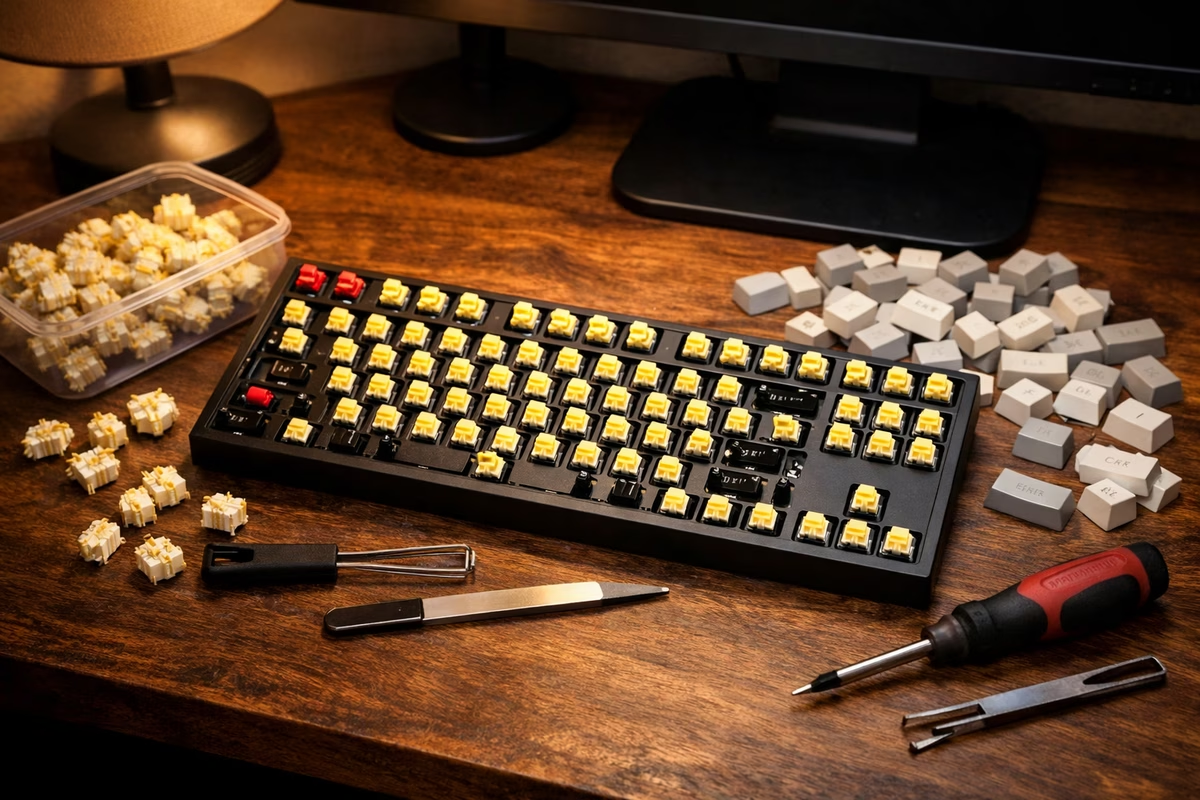
The difference was significant. The bump was more defined, the sound was rounder, and the typing feel went from “pleasant” to “satisfying.” I lubed the switches before installing them—a process that involves disassembling each switch, applying a thin layer of lubricant to the stem and housing, and reassembling it. This takes about one to two minutes per switch, and the Q1 has 82 switches.
I spent a Sunday afternoon lubing switches while listening to a podcast. It was meditative and slightly obsessive—the exact combination that hooks people into this hobby.
The lubed Bobas in the Q1 were a revelation. Smooth. Weighty. Each keypress felt intentional. The scratchiness was gone. The sound was more consistent.
For a week, I thought: This is it. This is endgame.
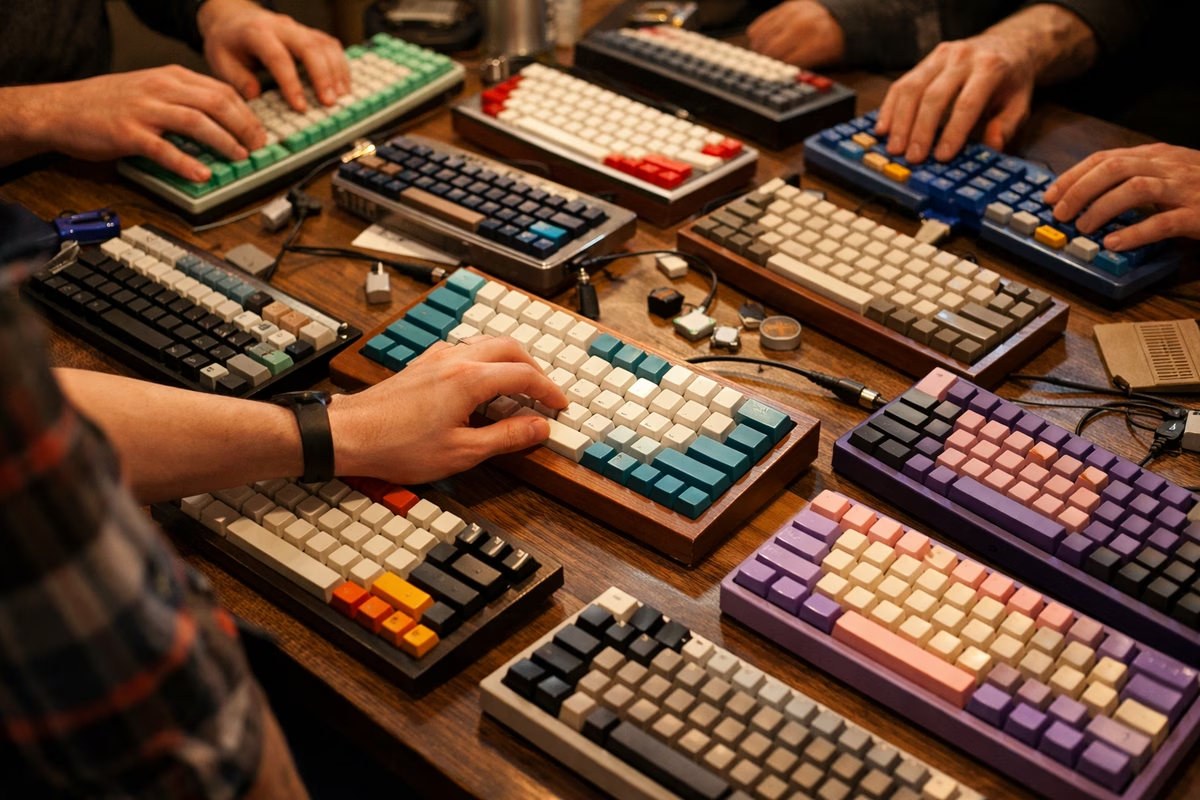
Then I went to a keyboard meetup and typed on a gasket-mounted board, and the Q1’s integrated plate mount suddenly felt rigid and unforgiving by comparison.
Board three: the custom build
I ordered a KBD67 Lite—a 65% layout, gasket-mounted, polycarbonate case. I chose it because the community consensus was that it punched above its price for typing feel, and because I wanted to try a smaller layout.
I built it with:
- Lubed Gateron Oil King switches (linear this time—I wanted to try the “thocky” sound signature the community loved)
- Cherry profile PBT keycaps
- A polycarbonate plate
- PE foam mod between the PCB and plate
- Tape mod on the back of the PCB (painter’s tape, which changes the acoustic cavity)
This was my first full custom build. For the process, see Building a Mechanical Keyboard.
The result was a keyboard that sounded like tapping on a soft, deep drum. Each keypress had a rounded, muted “thock” that was satisfying in a completely different way than the tactile Bobas. The gasket mount gave the typing a slight flex—a barely perceptible softness, like typing on a firm cushion rather than a hard table.
I used this board for three months. I loved it. And then I realized I missed the tactile bump.
The pattern: the cycle of desire
This is the mechanical keyboard hobby’s central tension: every improvement reveals the next one. Every time you solve one problem—scratchiness, rattly stabilizers, a harsh sound profile—you become aware of a new dimension you hadn’t previously noticed.
Sound led me to linears. Feel pulled me back to tactiles. Layout made me want to try 60%. Aesthetics introduced me to GMK keycap group buys (custom-designed keycap sets sold through limited runs that ship 12–18 months after purchase). Materials made me curious about aluminum vs. polycarbonate vs. brass plates.
Each board I built was better than the last in some dimension and different in others. Better is real. Endgame is a mirage.
Board seven: the one that taught me to stop
By board seven—a Zoom65 with Boba U4T switches (I’d come full circle on tactiles), a POM plate, and minimal dampening—I had enough experience to notice something:
The differences between board five, six, and seven were tiny.
Not nonexistent. Tiny. The Zoom65 had a marginally softer typing feel than the KBD67 Lite. The POM plate was slightly flextier than polycarbonate. The sound was slightly different. But these differences were audible only in a quiet room, noticeable only in direct comparison, and invisible to anyone who wasn’t me.
I had reached the point of diminishing returns—the region of the curve where each additional dollar and hour of effort produces a smaller and smaller improvement that only I can detect.
This realization was the most important lesson the hobby has taught me.
What the pursuit teaches you
1. Taste is real and personal
After forty switches, seven builds, and hundreds of hours of typing, I know what I like: a medium-weight tactile switch (Boba U4T at 62g), a flexible mounting system (gasket), a 65% layout, PBT keycaps in Cherry profile, and a slightly muted, deep sound signature.
I didn’t know any of this when I started. I couldn’t have known—taste in mechanical keyboards, like taste in food or music, develops through experience. You have to try things to discover what you prefer, and the process of trying is not a waste. It’s the education.
For the switch reference, see Switches: The Complete Guide.
2. Diminishing returns are the finish line
The gap between a $40 membrane keyboard and a $100 mechanical keyboard is enormous—anyone can feel it. The gap between a $100 mechanical keyboard and a $200 custom build is significant. The gap between a $200 build and a $400 build is real but smaller. The gap between $400 and $800 is audible only in a quiet room.
There is a point where additional spending stops producing improvements you can feel during normal use. Finding that point—your personal “good enough”—is the real endgame.
3. The community is the best part
The keyboards are the excuse. The community is the reason. Forum discussions, Discord channels, meetups, group buys, sound tests shared on Reddit, and the collective enthusiasm of people who care deeply about a niche object—that’s what sustains the hobby long after you’ve found your preferred switch.
4. Endgame is a practice, not a destination
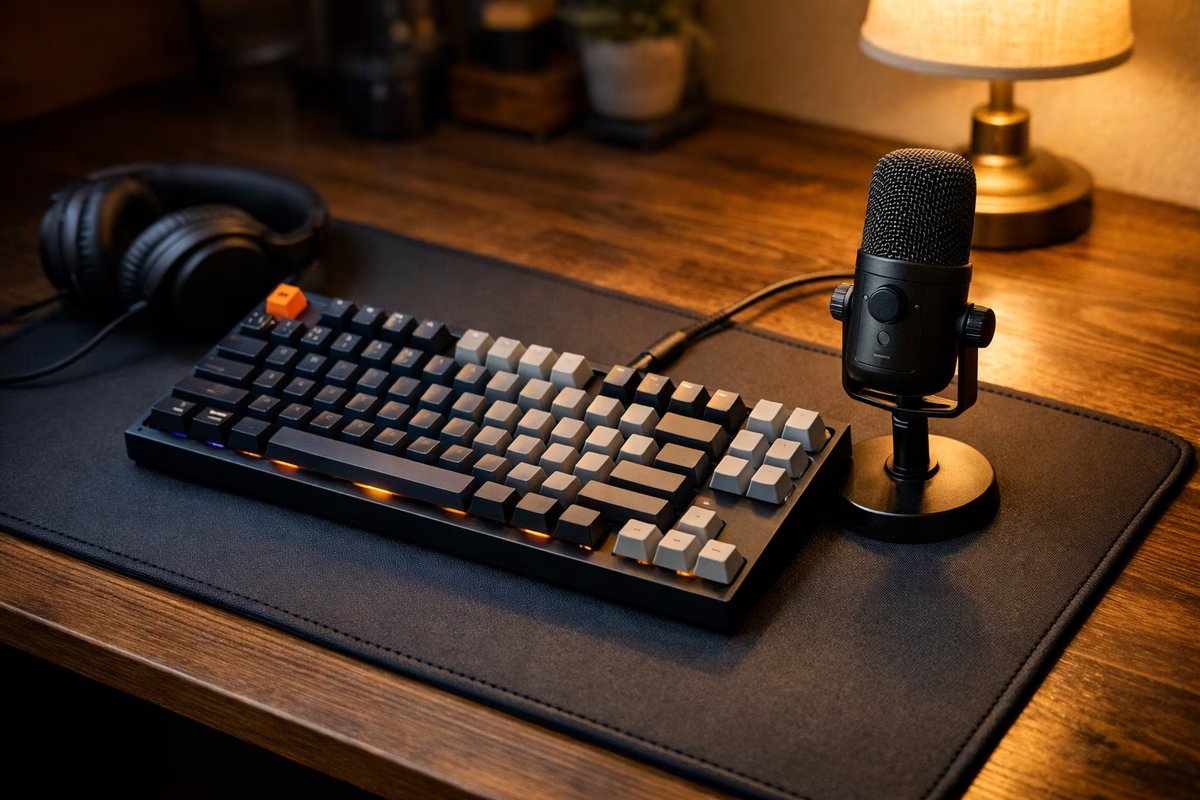
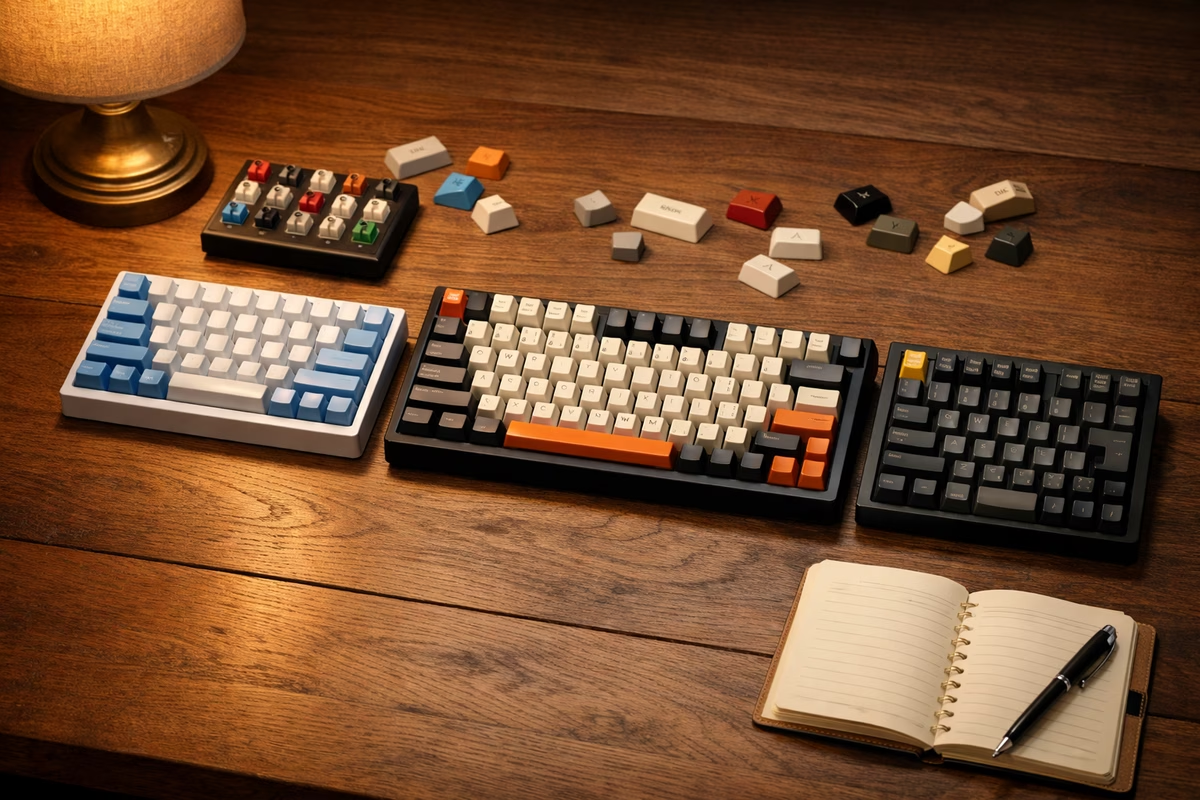
I don’t have one perfect keyboard. I have three that I rotate—a Zoom65 at home, a Q1 at work (still, after all this time), and a KBD67 Lite that I modded differently and keep as a “mood” board.
Each one is imperfect. Each one does something the others don’t. And the small act of choosing which one to type on today—based on mood, task, or which sound I want to hear—is its own quiet pleasure.
That’s what endgame actually is: not the perfect board, but the moment you stop searching and start enjoying.
A practical guide to not going broke
If this story resonated and you’re somewhere on the upgrade path, here’s the practical advice:
Set a budget before you start browsing. The hobby is designed to make you want the next thing. Decide what you’re willing to spend before you know what’s available.
Buy one thing at a time and live with it. Don’t buy new switches, keycaps, and a case simultaneously. Change one variable, type on it for a week, and then decide if you need to change another.
Sell what you don’t use. The mechanical keyboard resale market is active and healthy. Every board or switch set you’re not using is sitting value that could fund the next experiment.
The $100–$150 board is the sweet spot. For most people, a mid-range keyboard with good switches is genuinely excellent and doesn’t require modification. The Keyboard Buying Guide covers this range.
Try before you buy. Go to a meetup. Use a switch tester. Type on someone else’s board. The hobby’s greatest luxury is the community’s willingness to let you try their stuff.
Next steps
- Read Switches: The Complete Guide for understanding every switch type mentioned in this story
- Explore Building a Mechanical Keyboard for the step-by-step build process
- See Sound Profiles for understanding the “thock” vs. “clack” vocabulary
- Try Keyboard Modding for the foam, tape, and stabilizer modifications referenced here
- Check The Meetup That Changed My Keycaps for the social side of the hobby