
Fondsites Labs
Methodology
Water Filter Claim Audit Method
A cautious method for matching filter marketing to exact model, certification, and contaminant language.
Method goal
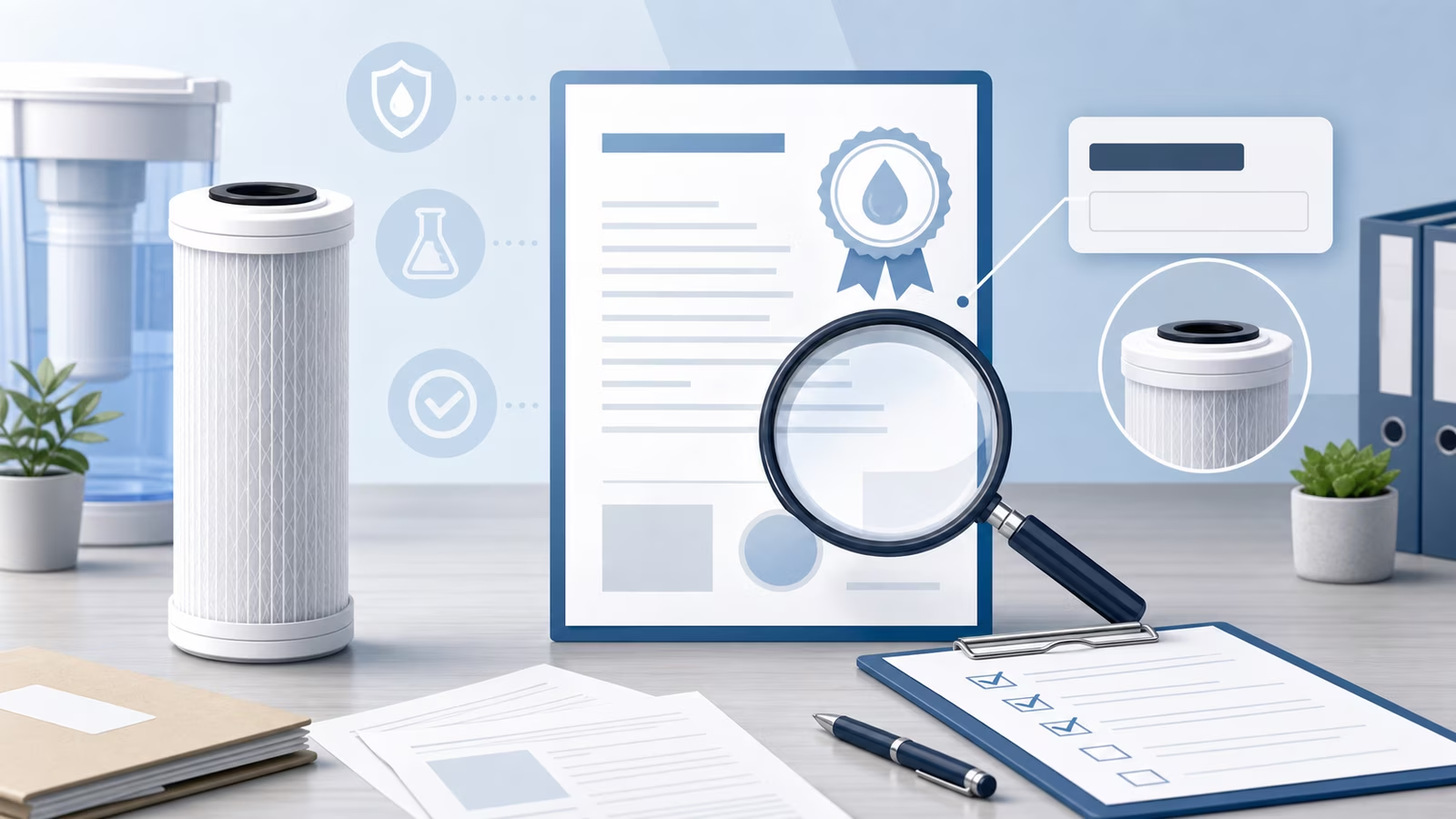
Separate a broad product promise from the exact claim that can be checked against official certification or product documentation.
This page describes a method. It does not claim test results unless results are actually present.
Why this method matters
Filter marketing is written to feel comprehensive while committing to very little. “Reduces up to 99% of contaminants” can legally describe a filter certified for chlorine taste and nothing else. The gap between the promise on the box and the claim in the certification listing is where most buying mistakes happen, and it can only be seen by writing both down side by side.
The audit matters most when the concern is health-related. A filter that improves taste is a comfort purchase; a filter bought to address lead, PFAS, or a well contaminant is a safety decision, and the exact model, cartridge, and standard number are the only things that connect the product to the protection you think you are buying.
What to measure or document
- Brand, exact model number, replacement cartridge, and product page URL.
- Named contaminant, standard number, reduction language, and capacity claim.
- Certification database result or official manual language.
Equipment needed
- Product label or manual.
- Manufacturer page and certification listing.
- Local water report or relevant lab test.
- Water filter check log.
Step-by-step method
- Copy the exact product model and cartridge model.
- Write the exact claim, including contaminant names and standard numbers.
- Check whether the exact model appears in a credible certification listing.
- Match the listed contaminant to the concern in the water report or test.
- Record replacement interval, flow limits, and any installation condition.
Data table template
| Filter model | Cartridge | Claim wording | Standard | Certifier listing | Concern | Replacement interval | Notes |
|---|---|---|---|---|---|---|---|
Reading your results
If the exact model appears in a credible certification listing for the exact contaminant and standard you care about, record the replacement interval and move on — that is a clean pass. If only a sibling product is listed, or the claim names a standard the certifier does not show for that model, treat the claim as unverified rather than false, and ask the manufacturer for the test documentation before relying on it.
A claim that survives the audit still has operating conditions: flow rate limits, temperature, capacity, and replacement schedule. A certified filter run twice as long as its rated capacity is no longer the product that was certified.
Common mistakes
- Treating one certified model as proof for a different cartridge or bundle.
- Confusing taste/odor claims with health-related contaminant reduction.
- Ignoring replacement interval, installation, and local water conditions.
Limitations
This method does not test water quality.
Private wells and health-related concerns need appropriate testing and professional interpretation.
This page describes a method. It does not claim test results unless results are actually present.