
Fondsites Labs
Methodology
Coffee Grind Visual Baseline Method
A repeatable photo method for documenting grind changes before changing recipe variables.
Method goal
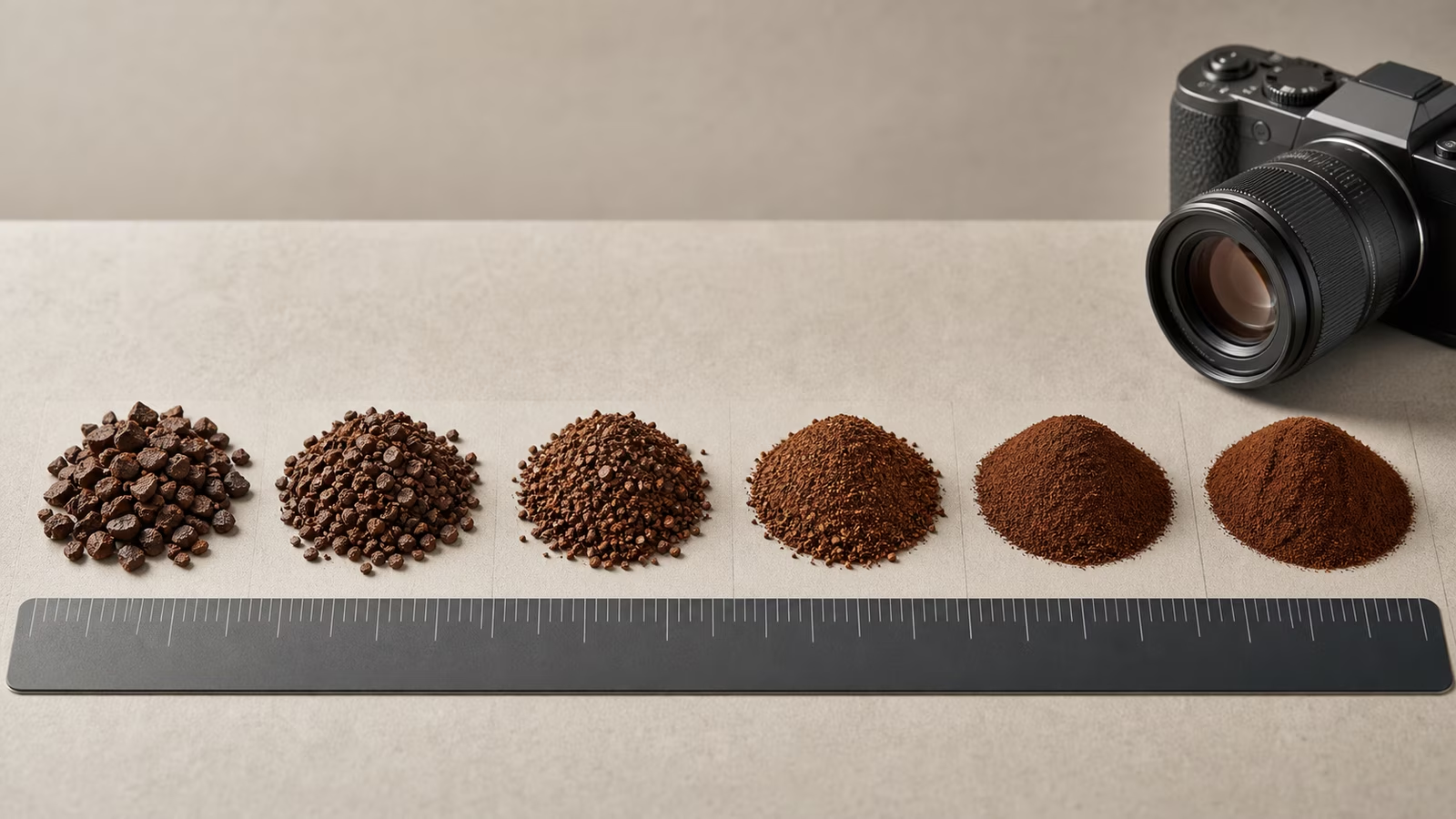
Create comparable grind photos so a recipe change can be tied to a visible adjustment instead of memory.
This page describes a method. It does not claim test results unless results are actually present.
Why this method matters
Grind size is the single most powerful variable in most home brewing setups, and it is also the one people adjust from memory. A week after a change, nobody remembers whether the setting moved one click or three, or whether the coffee also changed at the same time. A photo baseline turns “I think I ground finer” into a record you can actually compare.
The method also protects you from the most common dial-in trap: fixing a sour cup by changing grind, ratio, and temperature at once, getting a better result, and learning nothing. If the photo and log tie each cup to exactly one change, every brew teaches you something reusable about your grinder, not just about that bag.
What to measure or document
- Grinder model, setting, burr condition if known, and coffee roast date.
- Brew method, dose, water amount, brew time, and taste note.
- A same-light photo of a small grind sample on the same background.
Equipment needed
- Clean white or neutral card.
- Phone or camera held at the same distance each time.
- Small spoon or dosing cup.
- Notebook or coffee dial-in log.
Step-by-step method
- Place a small grind sample on the same background each time.
- Use the same lighting, camera distance, and angle.
- Photograph before brewing, then brew without changing another variable.
- Record taste and drawdown or shot time next to the photo.
- Compare only adjacent grind changes before making larger moves.
Data table template
| Date | Coffee | Method | Grinder setting | Photo ID | Brew time | Taste note | Next change |
|---|---|---|---|---|---|---|---|
Reading your results
Compare photos in pairs, not across the whole history. If two adjacent samples look identical but brew times moved meaningfully, suspect dose, tamp, or bean freshness before blaming the grinder. If the samples look different and the taste moved the direction the guides predict — finer toward bitterness and slower drawdown, coarser toward sourness and speed — your grinder is behaving, and the log becomes a map of its useful range.
Watch for rising fines or clumping at the same setting over weeks: that pattern usually points at burr wear or static, not at your recipe, and it is exactly the kind of slow drift the baseline exists to catch.
Common mistakes
- Changing grind and ratio together, then attributing the taste to grind alone.
- Photographing under different light or distance every time.
- Ignoring fines, clumps, and static when the visual sample changes.
Limitations
A photo does not measure particle distribution precisely.
Different grinders can look similar while extracting differently.
This page describes a method. It does not claim test results unless results are actually present.