
Fondsites Labs
Methodology
Battery Runtime Benchmark Method
A practical runtime method for measuring loads before trusting battery capacity claims.
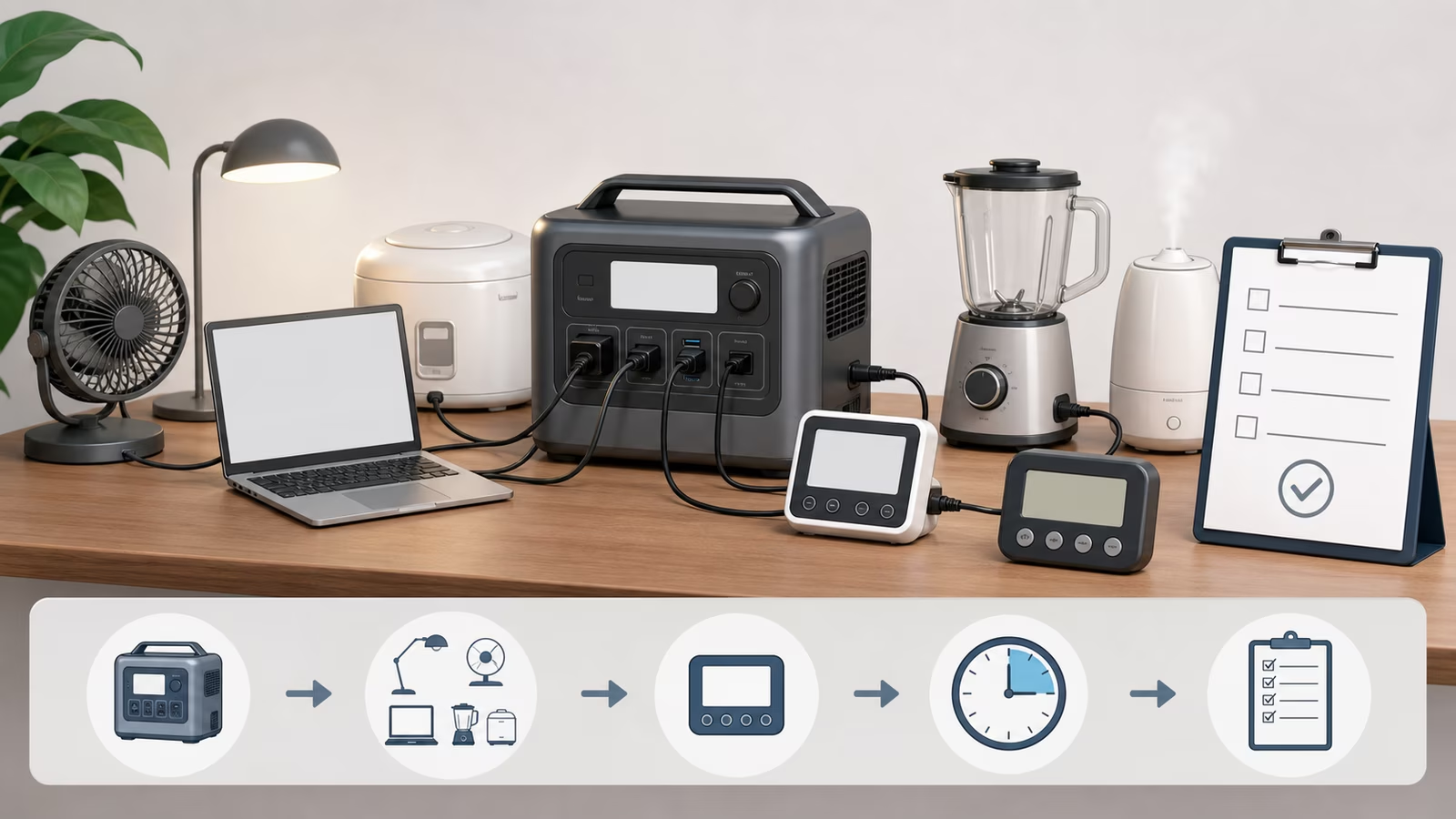
Method goal
Measure real load behavior and usable runtime under a controlled, safe, repeatable setup.
This page describes a method. It does not claim test results unless results are actually present.
Why this method matters
Battery capacity claims are stated in watt-hours under ideal conditions, but the number that matters in an outage is how many hours your refrigerator, router, and phone chargers actually run. Inverter losses, startup surges, reserve settings, and cold weather all take their share, and the only way to know your real margin is to measure your own loads before you need them.
The measurement also changes buying decisions. People routinely oversize backup power for peak wattage they never sustain, or undersize it because a cycling appliance looked small on the label. One afternoon with a watt meter usually rewrites the shopping list.
What to measure or document
- Battery model, rated capacity, starting charge, ending charge, and reserve setting.
- Device watts, surge behavior if observed, and hours connected.
- Temperature, inverter mode, and whether loads cycle on and off.
Equipment needed
- Portable power station or home battery display.
- Plug-in watt meter where appropriate.
- Timer or log sheet.
- Only loads that are safe to test under supervision.
Step-by-step method
- Charge the battery according to the manual.
- Connect one known load or a small essentials group.
- Record starting charge, watts, and time.
- Check at regular intervals without leaving unsafe loads unattended.
- Stop at the planned reserve and calculate usable watt-hours.
Data table template
| Battery | Start % | End % | Load | Watts | Hours | Estimated Wh | Notes |
|---|---|---|---|---|---|---|---|
Reading your results
Convert every test to usable watt-hours: battery percentage consumed times rated capacity, divided by hours, gives you the real draw including inverter overhead. If the usable number lands around 80–90% of the rating for steady loads, that is normal; a much bigger gap points at surge-heavy or cycling loads, a low reserve floor, or cold-temperature derating rather than a defective battery.
Test cycling appliances like refrigerators over several hours, not minutes — the duty cycle is the result. And treat any test where a load behaved unexpectedly as a finding about the load, worth its own row in the log.
Common mistakes
- Testing a cycling appliance once and assuming it represents every day.
- Ignoring inverter losses, startup surge, and battery reserve limits.
- Using unsafe wiring, extension cords, or generator connections.
Limitations
Runtime varies with temperature, load cycling, inverter efficiency, battery age, and reserve settings.
Electrical safety, medical-device suitability, and permanent wiring need qualified guidance.
This page describes a method. It does not claim test results unless results are actually present.