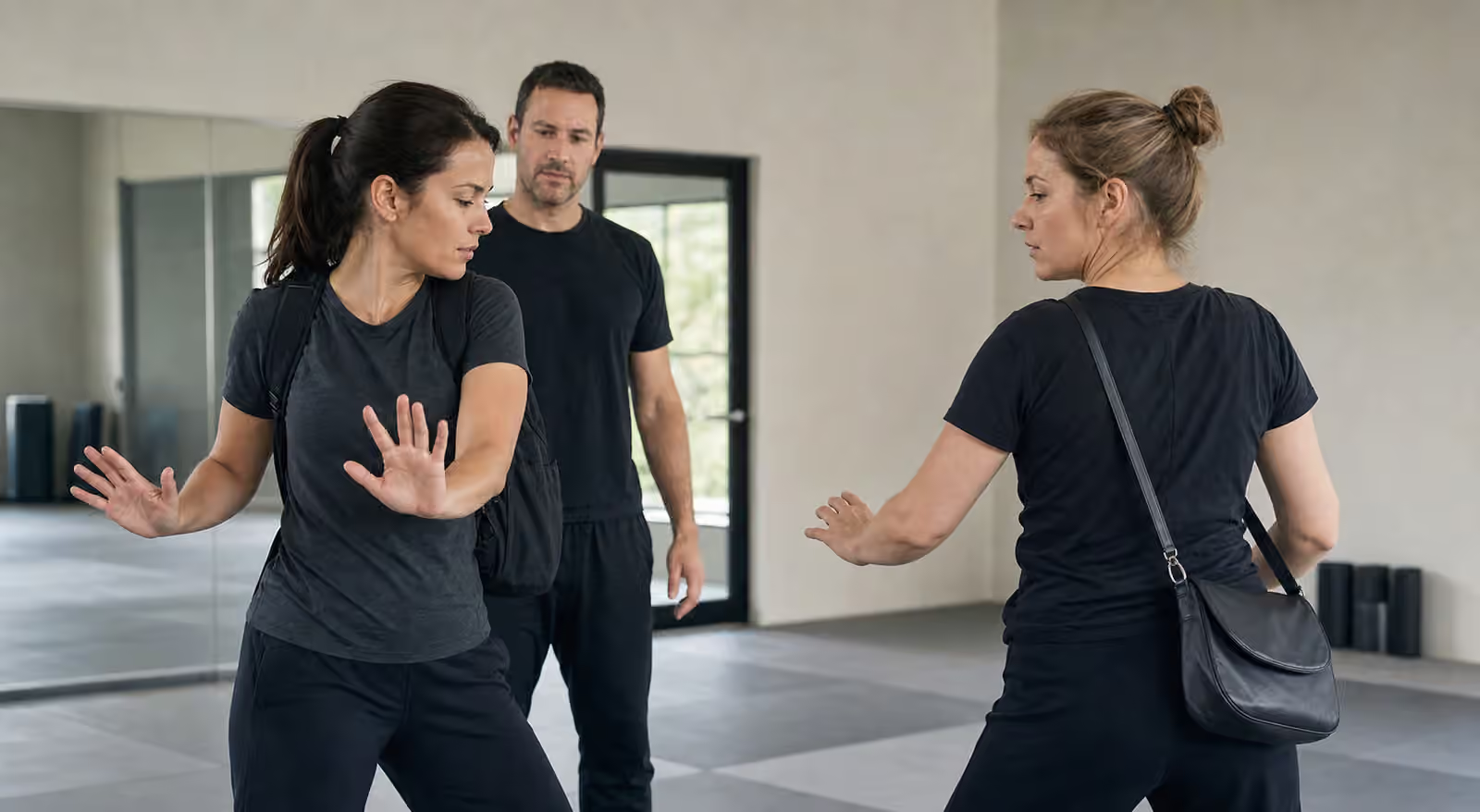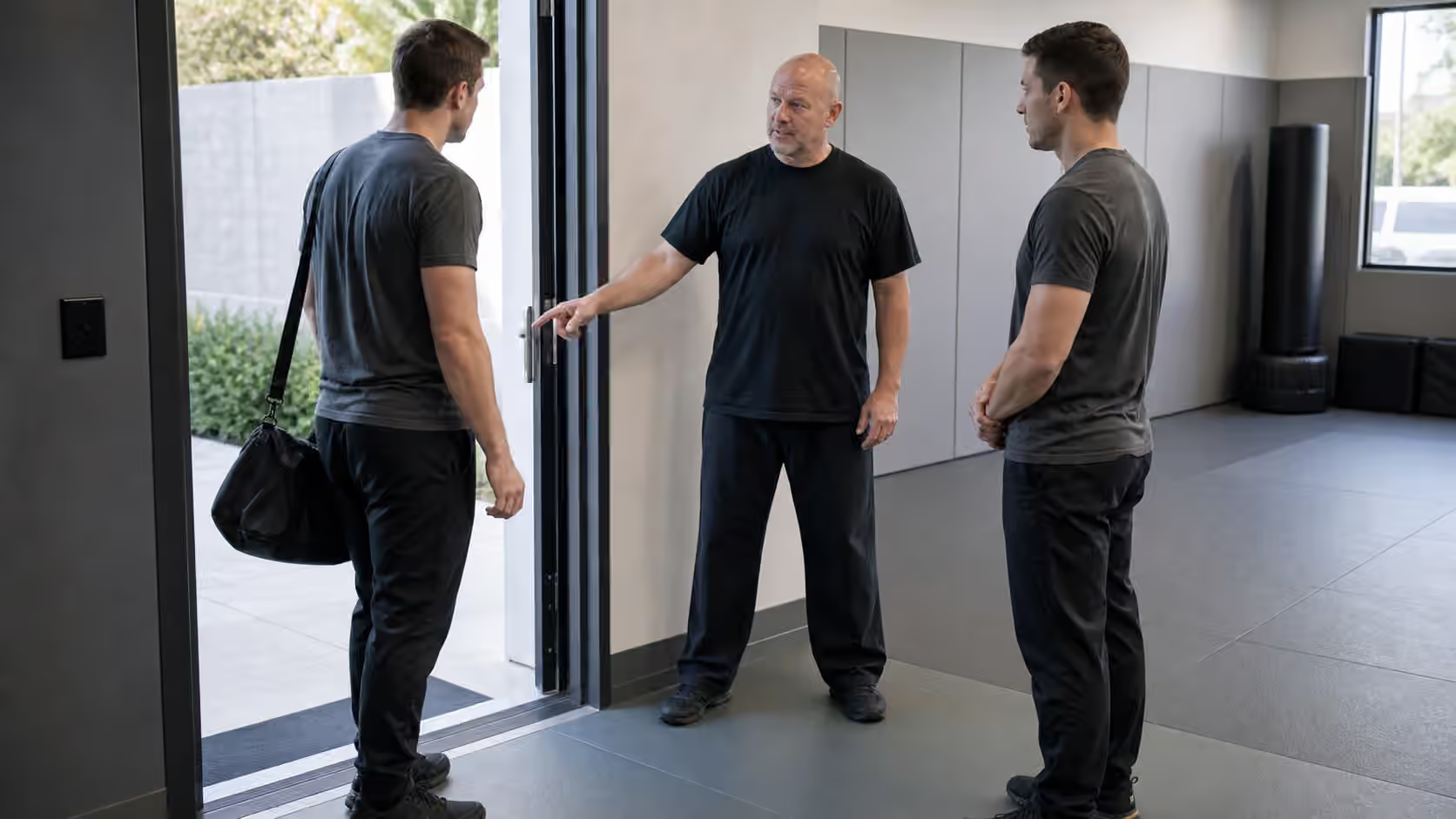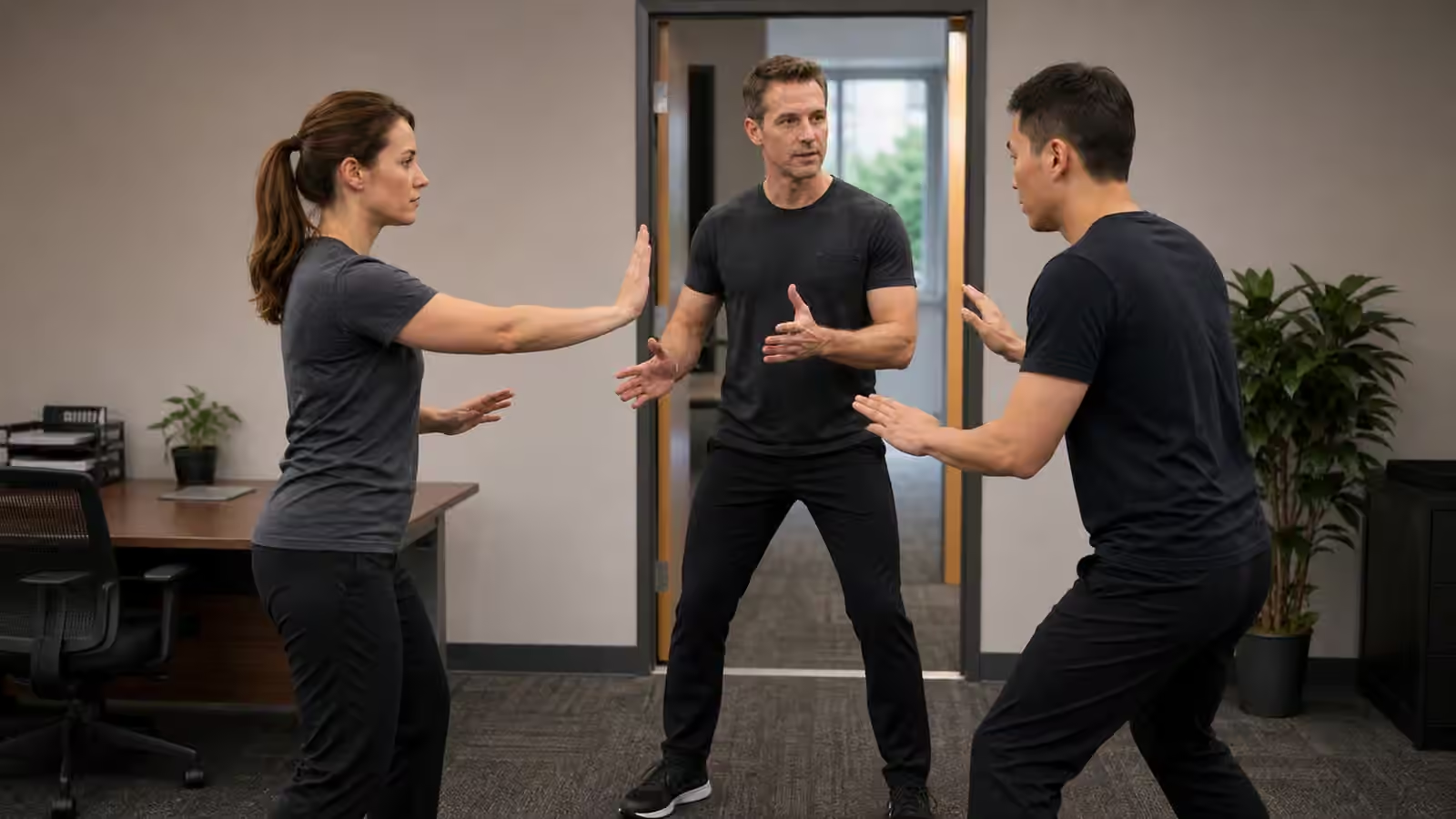
Workplaces create a particular kind of self-defense problem because they are familiar, social, and full of obligations. A person may know the hallway, the conference room, the stairwell, and the parking area better than almost any other public place, yet still feel slow to act when something feels wrong. The office has routines. People are expected to be polite. Arguments may be wrapped in professional language. A blocked doorway may be dismissed as awkward rather than threatening. Krav Maga awareness has to respect that reality instead of pretending every uncomfortable moment looks like a clear attack.
The workplace is not a training mat, and a guidebook cannot tell anyone how to handle a specific employment, security, or legal situation. Policies vary, laws vary, and every organization has its own reporting channels. What Krav Maga can offer is a calmer relationship to space, voice, movement, and exit. Those tools help a person notice earlier and avoid letting professional embarrassment freeze the body in a bad position.
Distance, Awareness, and Exit belongs at the center of this topic. In an office, distance is often negotiated through furniture and etiquette. A desk may create a useful buffer or trap someone in a chair. A conference table may make leaving feel socially obvious. A rolling chair may turn when the person needs a stable base. A doorway may become crowded by someone who wants to keep talking after the conversation should end. None of those details is dramatic, but they shape the first safe choice.
Familiar Rooms Can Hide Bad Positions
Familiarity can make people less honest about position. A student may know exactly where the exit is and still sit with a wall behind them, a laptop open, a bag underfoot, and both hands busy. That is normal office behavior, not a failure. The problem appears when a conversation changes and the body needs options that the setup quietly removed.
Krav Maga training can make this visible without turning the workplace into a threat map. A class can place a chair, desk, doorway marker, and soft bag on the mat, then ask students to stand, angle out, and leave without bumping into the props. The lesson is not that every meeting is dangerous. The lesson is that furniture decides a lot before the person does. If you cannot stand without pushing a chair backward into your own feet, that fact matters. If you cannot leave a desk area without stepping toward the person making you uncomfortable, that matters too.
This connects naturally to Environmental Movement . The environment is not background. It is part of the problem. An office can include rolling chairs, glass doors, narrow kitchenette corners, low tables, cords, bags, copy machines, reception counters, and hallway bends. The safest movement is often smaller and earlier than the beginner expects. Step around the chair before the conversation tightens. Move toward the open side of a desk while the tone is still manageable. Choose a seat that lets you stand without asking permission from the room.
Professional Voice Is Still Voice
Many people struggle to use direct boundaries at work because the language feels socially expensive. A simple “I need space” may feel too blunt. “I am leaving this conversation” may feel like escalation. The pressure to remain pleasant can become a physical problem when it keeps a person planted while the distance keeps closing.
De-escalation and Verbal Boundaries is useful here because workplace voice does not have to sound theatrical. It can be plain and professional. It can name the action rather than the person. “I am going to step out.” “We can continue this with someone else present.” “Please move away from the door.” “I am not discussing this in the hallway.” The exact words depend on context, but the training goal is the same: the voice gives the body permission to move.
Good practice does not turn coworkers into villains. A healthy drill might ask one partner to stand too close near a doorway while the defender uses calm language, angles to the open side, and leaves. The role player should stay disciplined. They should not improvise insults, corner the defender, or make the scene bigger than the instructor assigned. Workplace awareness is especially vulnerable to role-play excess because people bring real memories of bad meetings, tense supervisors, or unsafe customers into the room. The frame has to be careful.
Meetings, Counters, and Hallways
Different workplace spaces ask different questions. In a seated meeting, the first task may be standing without rushing, gathering hands, and leaving a chair path clear. At a reception counter, the issue may be keeping the counter between bodies while not leaning so far forward that balance disappears. In a hallway, the concern may be not letting a conversation walk you backward into a wall, stair door, or blind corner.
None of this requires constant suspicion. Most workplace movement is ordinary. Awareness should make the ordinary smoother, not colder. Look up before entering a hallway while reading a message. Do not keep both ears closed during late transitions through quiet areas. Notice whether the person continuing a difficult conversation is also blocking the exit. Keep a bag where it can be picked up without bending into someone else’s space. Use brighter, more public routes when the building is empty enough that privacy stops feeling useful.
Hands Full in Krav Maga also belongs in this conversation. Workplaces are full of objects people feel responsible for: laptops, phones, access cards, coffee, bags, folders, tools, keys, and personal items. Those objects can make someone hesitate. A person may keep defending a laptop bag with posture that makes leaving harder. Training should let students feel that hesitation and choose earlier. Sometimes the responsible act is not protecting the object. It is freeing a hand, creating space, and getting to a place with help.
Coworkers and Help-Seeking
Workplaces usually include bystanders, but bystanders are not automatically useful. People may be confused, embarrassed, worried about overreacting, or unsure whether they are allowed to step in. Krav Maga students should not assume the room will read the problem correctly. They may need to make the situation legible.
This is where Bystanders and Help-Seeking in Krav Maga fits well. A direct sentence can give others a job without asking them to interpret the whole scene. “Please get security.” “Please stay here while I leave.” “Please call the front desk.” “Please open that door.” The words should match the workplace and the actual need. The broader habit is to stop making safety a private puzzle when help is available.
There is also a reporting layer. A workplace incident may need to be documented through the organization’s process, and this page cannot replace that process. Still, After a Krav Maga Incident offers a useful mindset. After any serious conflict, the body may be loud and memory may feel messy. Breathing, checking immediate safety, writing down plain observations, and using appropriate reporting channels are not signs of weakness. They are part of responsible aftermath.
Training Without Office Fantasy
Office scenarios can become silly quickly if the room tries to reproduce every possible workplace story. A better drill is modest. One chair, one doorway, one desk edge, one partner, one exit. The student practices standing, using voice, keeping hands visible, moving around furniture, and leaving the lane. The coach watches for balance, breath, and whether the student becomes trapped by politeness.
This kind of practice should never promise certainty. A workplace may have security staff, locked doors, cameras, policies, power dynamics, customers, patients, students, visitors, or confidential spaces. The safe answer may be leaving, calling for help, following a protocol, or not entering a private space alone. Krav Maga supports those decisions when it teaches attention instead of fantasy.
The strongest workplace awareness is quiet enough to use on normal days. Choose seats that let you stand. Keep exits visible. Let professional voice be direct when directness is needed. Move before a desk, chair, or doorway removes the option. Ask for help early enough that the room can still help. Krav Maga does not need the office to become dramatic. It only needs the student to stay honest about space, boundaries, and the moment when leaving is the clearest answer.