A wall changes Krav Maga quickly because it removes the lie of endless space. On an open mat, a student can retreat several steps, reset, and imagine that the problem is still happening in front of them. Near a wall, one poor step can end the retreat. The shoulders touch padding or drywall, the feet narrow, the chin lifts, and suddenly the body feels late.
Wall pressure is worth studying because many real spaces have edges. Hallways, elevators, counters, parked cars, booths, stairwells, doorframes, and furniture all create boundaries that feel like walls once movement begins. A student does not need to become frightened of every surface. They need to learn that the room is not background. It is part of the problem and sometimes part of the answer.
Environmental Movement in Krav Maga introduces the larger idea that walls, doors, bags, chairs, and floors change self-defense choices. This guide narrows the lens to the wall itself: what it does to posture, why backing straight up fails, how frames and voice can create a moment, and why the exit should be found before the wall starts deciding for you.
The Wall Steals Time
Distance is time, but wall distance is also a countdown. If you are six steps from a wall and you keep moving backward, the problem may not feel urgent yet. If you are one step from the wall, the same backward movement becomes a trap. A beginner often discovers this only after contact. The partner advances, the student retreats, and the wall arrives as a surprise even though it was visible the whole time.
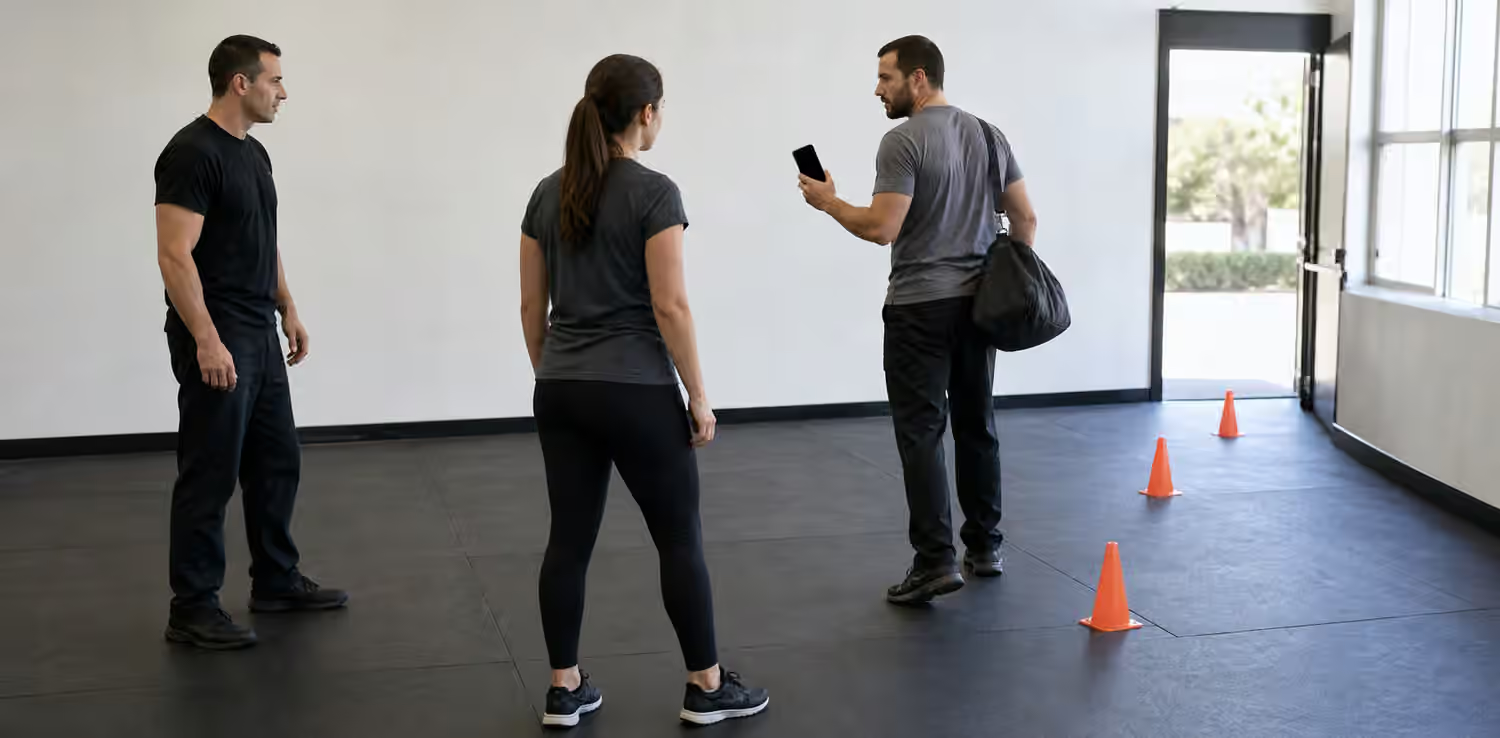
That surprise is the first training point. Wall drills should teach earlier noticing, not dramatic escape from a bad position every time. A coach may ask students to begin several steps from a padded wall and move through a light pressure drill. The defender’s job is not to wait until their back touches. The job is to feel the room closing and angle out while the exit still exists.
This connects directly to Distance, Awareness, and Exit . Distance is not only the space between two people. It is also the space between your back and the thing that will stop you. If you manage only the person in front of you, you may let the room quietly remove your choices.
Backing Up Is Not a Plan
Backing up feels natural under pressure. The body wants more room, and a backward step seems to give it. Sometimes it does. Often it simply delays the same problem until the wall makes it worse. The student who retreats straight back may keep the partner centered, surrender the angle, and arrive at the boundary with both feet under stress.
Angling is not decoration. It is how the defender stops feeding the same line. A small step to the open side can change the relationship more than three large steps backward. The partner has to turn. The defender sees a different lane. The wall becomes less direct. Voice can join the movement: “Back up,” “Stay there,” or another clear boundary that matches the drill. The words matter less as a script than as a way to keep the body from silently absorbing pressure.
Footwork and Balance is the quiet foundation here. A student cannot angle well if the feet cross, if the knees lock, or if the head drifts behind the hips. Wall pressure exaggerates every balance mistake. It also reveals whether footwork has become usable or remains a warmup shape that disappears when the room gets smaller.
Frames Buy a Breath
If the wall has already arrived, panic often tries to take over. The student may push with straight arms, turn away, grab at the partner, or slide down the wall because the feet have lost their job. A frame can help, but only if it is understood as a temporary structure rather than a pose.
Close Range in Krav Maga describes frames as a way to regain some space when bodies are too close. Near a wall, that space may be very small. A forearm, open hand, shoulder position, or pad contact in class may give the student enough room to breathe, see the angle, and move. The frame is not a final answer. It is a bridge back to movement.
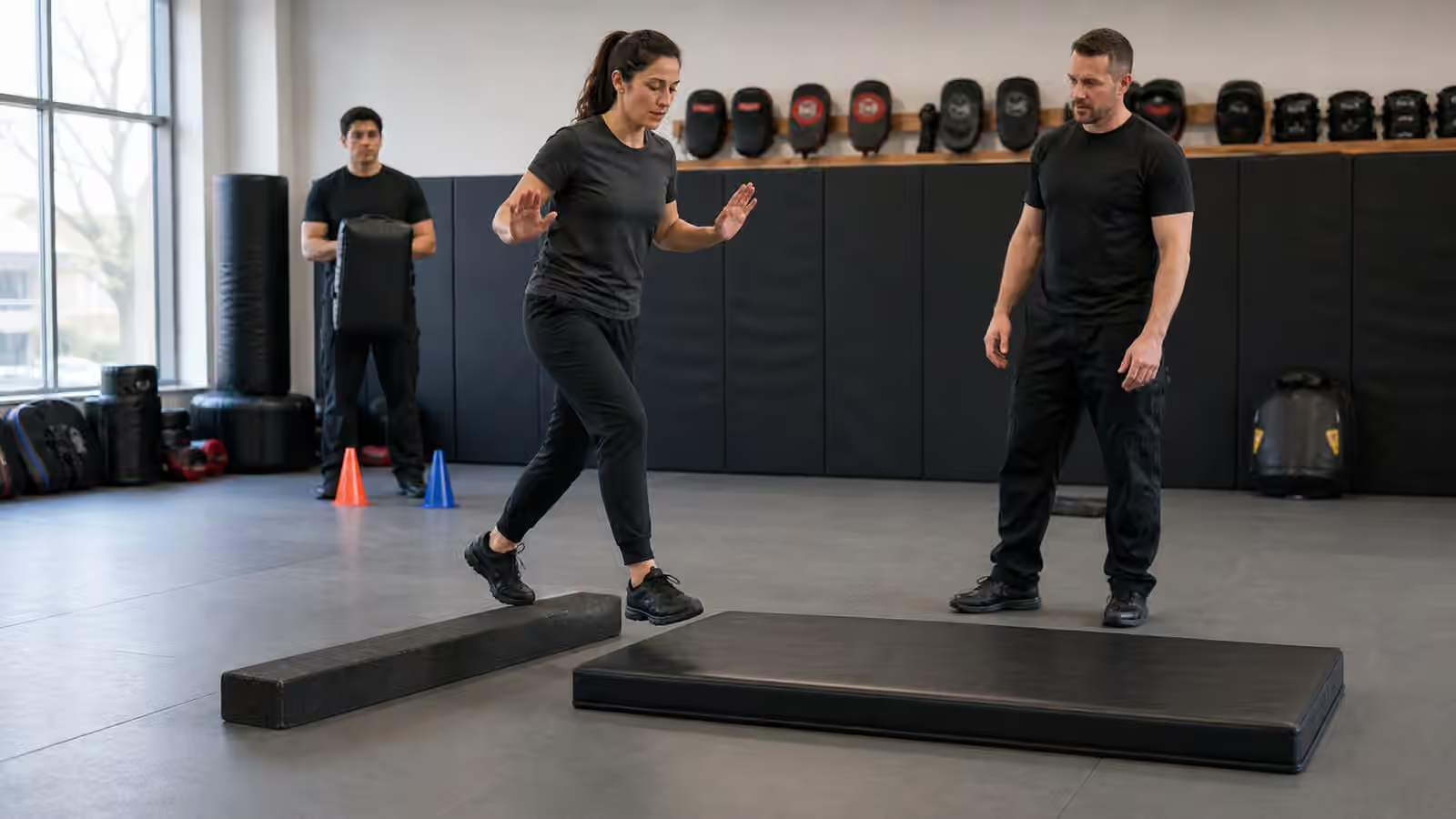
This is why wall drills should not begin at maximum intensity. Students need to learn what a usable frame feels like without being crushed into a surface. The instructor can start with a pad and slow forward pressure. The defender finds posture, frames, turns the shoulders enough to see the lane, and exits around a cone. Later, speed and resistance can increase. If the first version is chaos, the student learns only that walls are scary.
The Wall Can Help Orientation
A wall is not always bad. It can tell you where one boundary is. It can prevent someone from circling behind you on that side. It can give the body orientation when the room feels confusing. In some circumstances, moving along a wall toward an exit may be better than drifting into a crowd or open space where more variables appear. The point is not that the wall is friend or enemy. The point is that the wall gives and takes.
Training should preserve that nuance. A beginner who hears only “never let your back touch a wall” may miss the fact that real rooms do not always offer perfect options. A corner may be dangerous, but stepping blindly into a second person may be worse. A wall may limit movement, but it may also keep the situation from expanding behind you. Self-defense judgment often means choosing the less bad position early enough to improve it.
Good instructors use simple questions after a wall drill. Where was the exit? When did the defender first notice the wall? Did the frame create movement or just delay? Did the defender angle toward open space or turn into a worse lane? These questions keep wall training from becoming a stunt.
Partner Pressure Needs Restraint
Wall drills can become unsafe quickly when partners enjoy the feeling of crowding. The feeder may think more pressure makes the drill more realistic. They may drive the pad too hard, step through the defender, or refuse to stop when the defender finds the exit. The defender may respond by shoving, twisting, or striking without control. The wall then becomes a risk multiplier rather than a teaching tool.
Partner Work in Krav Maga applies with extra force near boundaries. The feeder’s job is to provide the assigned line and pressure, not to prove that the defender cannot move. The defender’s job is to solve the drill, not punish the feeder for making the moment uncomfortable. Both people need to know the stop signal before contact begins.
The instructor should also choose the surface carefully. A padded wall is different from concrete. A matted corner is different from a doorframe. Beginner training should not rely on hard surfaces to create seriousness. The seriousness comes from understanding that hard surfaces exist outside the room, not from using them carelessly inside it.
Voice Keeps the Moment Public
Wall pressure often creates a private feeling. The body feels trapped, the eyes narrow, and the student may stop speaking. Voice can interrupt that tunnel. It can draw attention, clarify the boundary, and remind the defender to keep acting instead of only enduring.
This does not mean shouting every time. De-escalation and Verbal Boundaries explains that words should match the purpose. Near a wall, the purpose may be simple: create space, stop the approach, or tell a companion to move. A calm but firm boundary can be more useful than theatrical aggression, especially if bystanders are present or the situation is still partly verbal.
In class, voice also helps the coach see whether the student is functioning. A defender who can speak, frame, and angle is usually more available for learning than a defender who freezes silently with locked shoulders. The voice is not proof of safety, but it is a useful signal that the nervous system has not disappeared inside the wall.
The Floor Still Matters
Wall pressure can lead to the ground. A student may trip over their own feet, slide down, or get turned while trying to exit. This is why Ground Recovery in Krav Maga belongs in the same training path. The wall changes falling and standing. A technical stand-up near a boundary is different from one in the center of a mat. The student may have less room for the legs and less time to look.
Responsible wall drills should leave space for that possibility without forcing it. The purpose is not to throw beginners into the wall or onto the floor. It is to teach them to preserve posture and recognize when balance is going. If a student does go down during a controlled drill, the room should slow down, check safety, and use the moment as information rather than entertainment.
Leaving Is the Finish
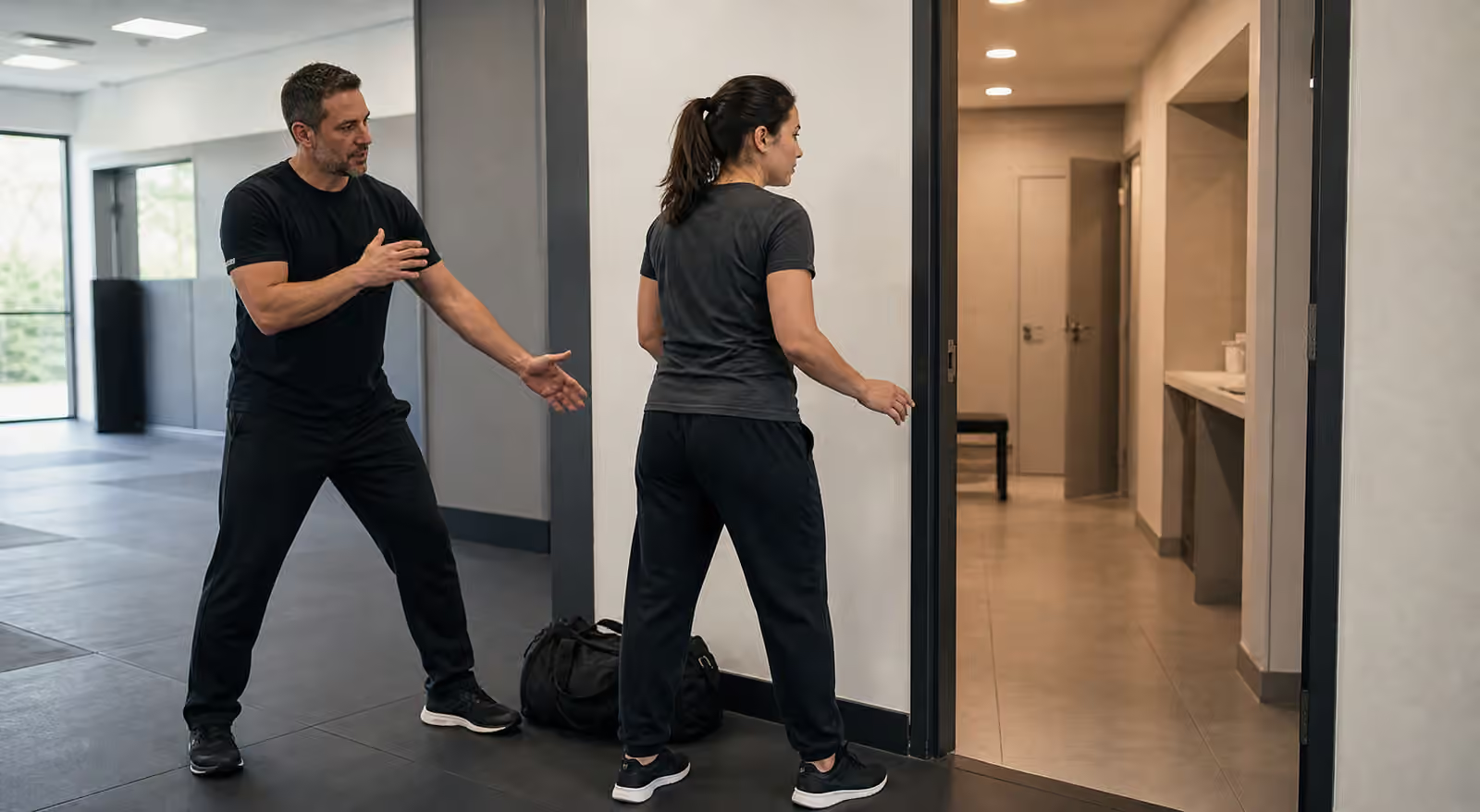
The most useful wall-pressure round does not end with the defender celebrating a technique against the wall. It ends with the defender no longer being there. They noticed the boundary, used voice if it helped, created enough structure to move, angled toward the open lane, and kept going. The exit is the finish, not an afterthought.
That can feel anticlimactic to students who want a dramatic answer. It is also the point. Self-defense training should reward the student who stops the wall from becoming a crisis. If the best repetition is a small angle taken early, the class should treat that as success. Waiting for the wall to become a problem just so the solution looks bigger teaches the wrong instinct.
Wall pressure teaches humility in a useful shape. The room is not infinite. Retreat has limits. Strength gets worse when posture collapses. A frame is only as good as the movement it permits. Voice matters more when the body wants silence. The sooner a student learns those lessons, the less they need the wall to teach them the hard way.