Most awareness practice happens on ordinary routes, not in dramatic places. A person walks from the car to the store, from the train to the office, from the gym to home, from one errand to the next. They pass doorways, parked cars, storefront windows, driveways, curb cuts, groups of people, dogs on long leashes, delivery carts, construction barriers, and crossings that change the rhythm of the walk. Nothing may be wrong. Still, the route is full of transitions.
Krav Maga is useful here because it keeps returning to early decisions. Move sooner. Keep space. Use voice. Leave when leaving is available. Those ideas can sound large in a classroom, but on a sidewalk they become small and practical. They show up when you choose the wider side of the path, stop reading a message before crossing a driveway, cross the street instead of squeezing through a tense group, or slow down to let a situation unfold in front of you rather than inside your personal space.
Crowded Space Awareness covers busy lobbies, platforms, and tight public areas. Walking route awareness is quieter. It focuses on the repeated paths that become familiar enough to make people stop seeing them. Familiarity is useful, but it can also make attention lazy. The same corner, alley mouth, parking entrance, or poorly lit stretch may deserve a fresh look each time because the people, light, and obstacles change.
The Route Has Rhythm
A walking route is not one continuous space. It is a sequence of transitions. You leave a building. You pass a doorway. You cross an open stretch. You step around a parked car. You wait at a curb. You enter a store. You return to the sidewalk with a bag in one hand. Each transition changes what your body can do and what your attention should notice.
This matters because people often relax at the wrong moments. They feel safe after leaving a crowded place and immediately look down at the phone. They reach the car and start searching for keys with their back to the lot. They step into a doorway while still carrying a conversation in their head. They cross a street because the walk signal appears, not because they have looked at the turning lane. Awareness is not constant tension. It is the timely return of attention at transitions.
Distance, Awareness, and Exit gives the core idea. Distance on a sidewalk is not only how many feet separate you from another person. It includes curb space, wall space, traffic, open businesses, light, people nearby, and whether your own hands are free. A wide sidewalk gives options. A narrow sidewalk beside a wall gives fewer. A construction barrier can turn a familiar route into a corridor. A parked van may block sightlines without being suspicious by itself.
Phones Are Useful And Expensive
Phones make walking routes easier and more vulnerable to inattention. They provide maps, ride details, messages, payment, music, and calls with people who may be waiting for you. They also pull the eyes down and make transitions disappear. A person who would never close their eyes while stepping through a doorway may do the practical equivalent by reading a screen at the exact moment the space changes.
The answer is not to treat the phone like an enemy. It is to give it a place in the rhythm. Stop where you have room before reading. Check the next turn, then move with the phone down. Put the earbuds low enough that the world is still available, or remove one when the environment asks for more attention. If a message is urgent, step to a position that does not block your own exit or another person’s path.
This small habit links naturally to Training Between Krav Maga Classes . Everyday awareness practice should not look theatrical. It can be as simple as noticing how often the phone steals your eyes at doorways, curbs, elevators, parking areas, or isolated stretches. The goal is not to become tense. The goal is to stop donating attention at the moments when it is most useful.
Sidewalk Space Is Shared Space
Sidewalks require social cooperation. People pass, drift, stop suddenly, check windows, walk dogs, carry packages, argue, laugh, smoke, and block each other without meaning harm. A self-defense mindset that treats every inconvenience as a threat will make the walk miserable and may create the conflict it claims to prevent. Krav Maga training should produce better judgment than that.
The practical question is whether space is still available. If a group is loud but there is a wide lane around them, use it early. If someone is walking erratically, slow down or cross before you are close enough to need an explanation. If a person asks for something while closing distance, use voice and keep moving when appropriate. If a familiar shortcut is blocked by people or equipment, choose the longer route without turning it into a moral drama.
De-escalation and Verbal Boundaries is relevant because many sidewalk problems are social before they are physical. A clear “No thanks” while continuing to move can be better than stopping to debate. A calm “I need space” can name the boundary without adding insult. The words are less important than the relationship between voice, distance, and movement. Voice should support the exit, not replace it.
Errands Change The Body
An empty-handed walk is not the same as a walk with groceries, a backpack, a coffee, a child, or a heavy package. Errands create awkward timing. You lock a door while holding a bag. You look for a receipt. You shift weight to one hip. You reach for keys. You balance a phone between shoulder and ear. The route may be familiar, but the body is different.
Hands Full in Krav Maga covers this from the training floor perspective. On a walking route, the lesson is often to simplify before the transition. Put the phone away before leaving the store. Move the bag to the side that lets you see and turn. Find keys before reaching the car, but do it somewhere with space rather than while pinned between vehicles. If a package is too awkward to carry safely, choose a route with fewer narrow squeezes.
Students sometimes want to know what to do with the object if something happens. That question can be valid, but it often arrives too late. The earlier question is whether the object can be managed so it does not create the problem. A shopping bag wrapped around the wrist, a backpack hanging from one shoulder, or a coffee held in the dominant hand may be fine for most of the route and annoying at exactly the wrong moment. Training should make those details visible.
Light, Weather, And Familiar Corners
The same route changes with light and weather. A sidewalk that feels open in daylight can feel compressed at night because sightlines shrink. Rain changes footing and makes people duck their heads. Heat makes people tired and impatient. Snow, leaves, loose gravel, or wet tile can turn a normal step into a balance problem. Low-Light Parking Lot Awareness treats darkness as a practical factor rather than a story device, and that frame works for walking too.
Good awareness adjusts without panic. If the weather makes footing uncertain, shorten the step and give yourself more time. If the light is poor, choose the brighter route when available. If a corner hides the next stretch, approach with enough space to change course. If an entrance is crowded, wait or use another door. These decisions are not signs of fear. They are ordinary route management.
Familiar corners deserve respect because routine can hide change. A new construction fence may remove the escape lane you usually rely on. A delivery truck may block the view. A closed store may remove the staffed place you would normally enter. A group gathered outside a doorway may make the path narrower. Seeing those changes early is more useful than having an impressive response late.
Class Can Practice Without Theater
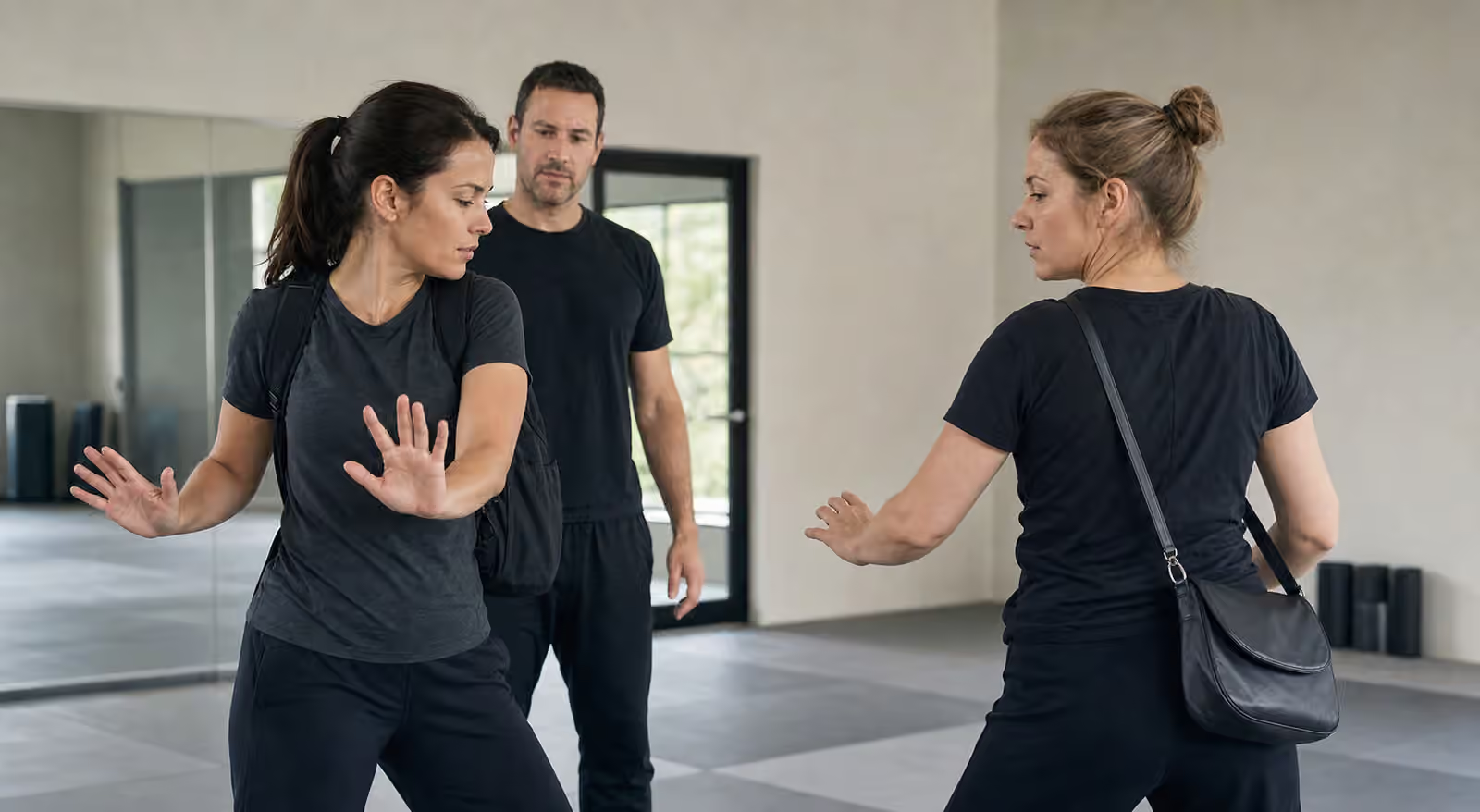
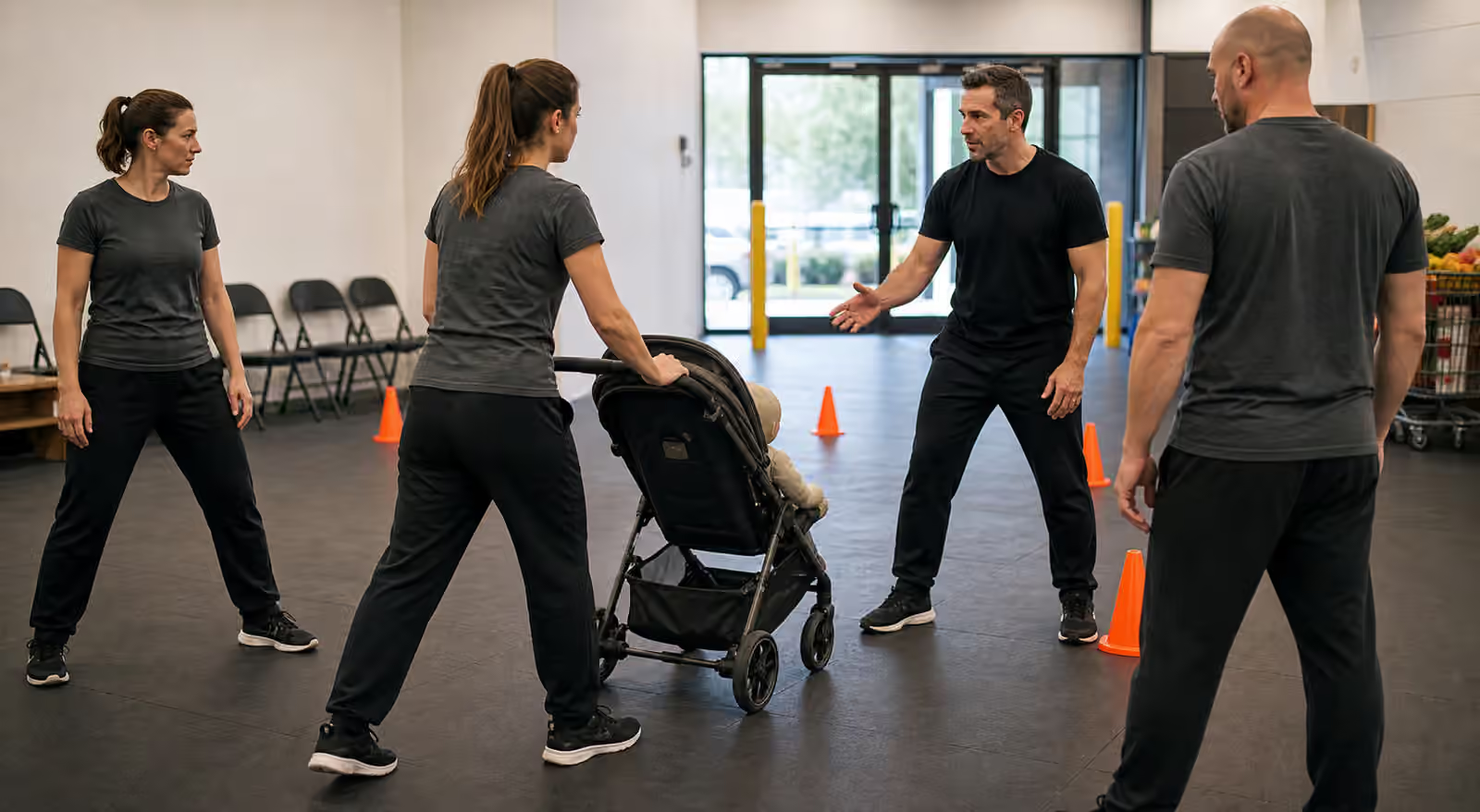
Walking route awareness can be trained without pretending the mat is a street. The instructor can mark a sidewalk with cones, add a doorway, place a soft obstacle near one side, and ask students to walk while managing a phone, bag, or simple verbal interruption. The task is to notice the transition, keep space, use voice if needed, and choose the lane. No one has to play a villain for the lesson to work.
This kind of drill also helps students discover personal habits. Some stare at the person and stop seeing the path. Some rush because they feel watched. Some apologize while giving away space. Some turn their back to the open exit because they are trying to be polite. The training room lets those habits appear at low speed, where they can be corrected without shame.
Scenario Training and Ethics matters if the school adds role play. The role player should stay within the assigned problem. The defender should not be ambushed with extra contact, insults, weapons, or surprise escalation. The point is not to create a street fantasy. The point is to rehearse the early choices that make many later choices unnecessary.
The best walking route awareness is almost invisible. It makes a person look up at transitions, choose space early, keep hands useful, manage the phone with rhythm, and leave a little sooner when the path changes. It does not make every stranger part of a threat story. It makes ordinary movement cleaner. For Krav Maga students, that is not a side lesson. It is the daily place where distance, voice, balance, and exit become habits instead of slogans.