Voice is one of the first tools Krav Maga students talk about and one of the last tools they practice honestly. It is easy to say that a person should set a boundary, call for help, or tell someone to stop. It is harder to make a clear sound while the chest is tight, the hands are busy, the room feels too close, and politeness is arguing with the need to move.
Training the voice does not mean becoming loud all the time. It means learning to connect breath, posture, words, and distance so the body can communicate before the only remaining options are physical.
Voice Starts in the Body
A useful boundary usually begins before the sentence. The feet organize. The hands become visible. The shoulders stop climbing toward the ears. The breath returns enough to carry words. If the student is folded, holding air, and staring at the floor, the voice may come out as apology, panic, or silence.
Breathing and Stress Recovery belongs beside voice training because speech is physical. A student who cannot exhale under pressure may not be able to speak clearly. A student who speaks while collapsing backward may give away the distance the words were meant to protect. The body and the voice need to support the same decision.
This is why beginner drills should not start with screaming. Screaming can hide poor structure. It can make a class feel intense while teaching very little about timing, tone, or choice. A quiet but clear boundary from stable posture may be more useful than a theatrical shout delivered while the student stumbles.
Boundaries Need Plain Language
Students sometimes search for perfect self-defense phrases, as if there is a sentence that works everywhere. Real situations are too varied for that. The better habit is plain language that matches the moment. A person closing distance may need to hear “Stop there.” A partner in class may need to hear “Lighter.” A bystander may need to hear “Please call someone.” A friend may need to hear “Move with me now.”
The words should be short enough to survive stress. Long explanations often arrive too late. A student who says too much may also bargain away the boundary. They begin with a clear line, then add reasons, apologies, and extra details until the other person has room to debate. Krav Maga training should help students feel the difference between explaining and directing.
De-escalation and Verbal Boundaries covers the larger ethical frame. Voice is not a license to dominate the room. It is a way to create clarity, reduce confusion, and give distance a chance to work. Sometimes the best sentence is firm and low. Sometimes it needs volume because the room is noisy or bystanders need to understand. The student learns to adjust without performing toughness.
Hands and Voice Should Agree
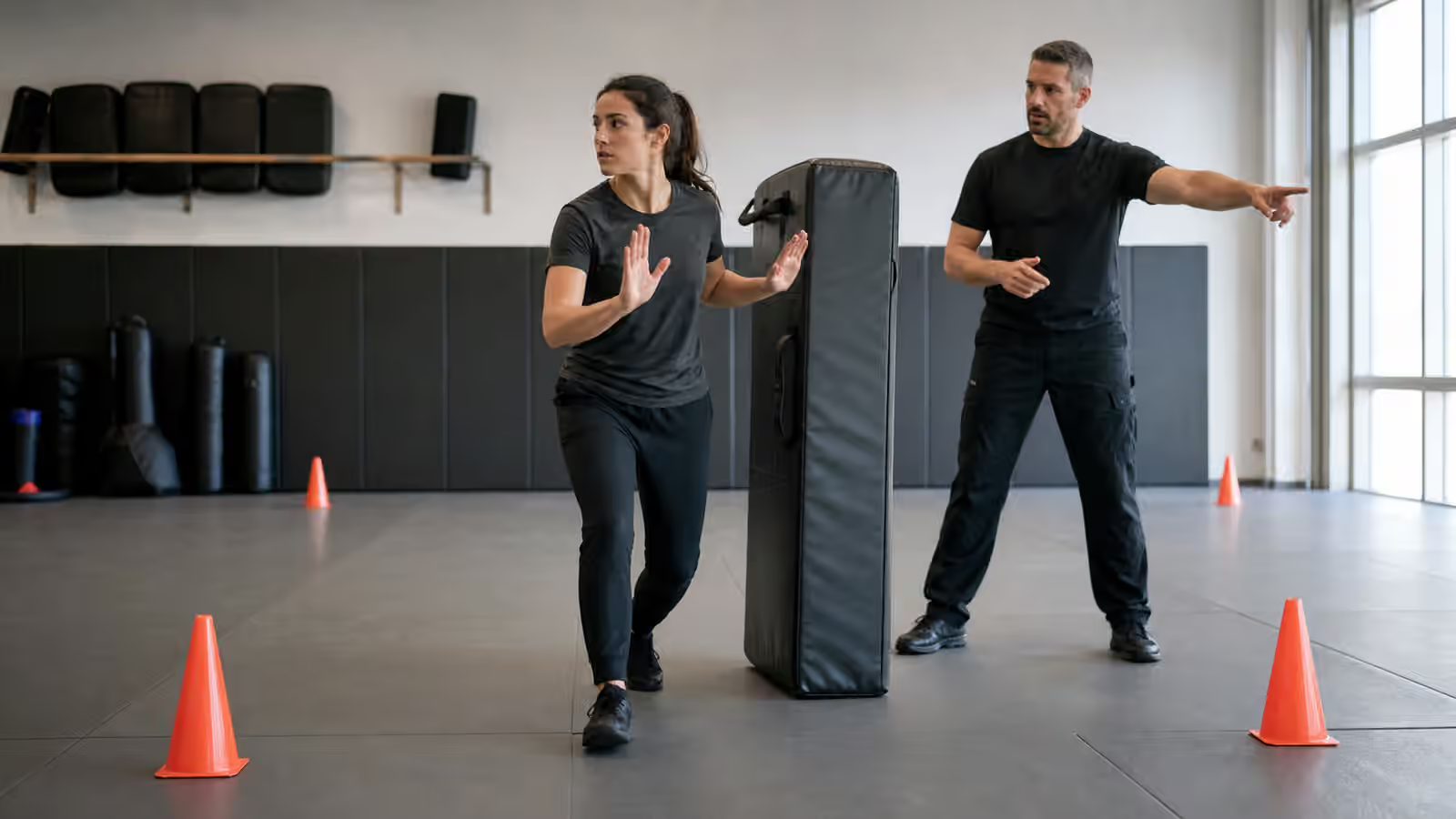
Open hands appear in many Krav Maga awareness drills because they do several jobs at once. They can protect space, show non-threatening intent, prepare the body to move, and make the boundary visible. If the hands are hidden, pointing aggressively, or swinging without control, the words may become harder for others to read.
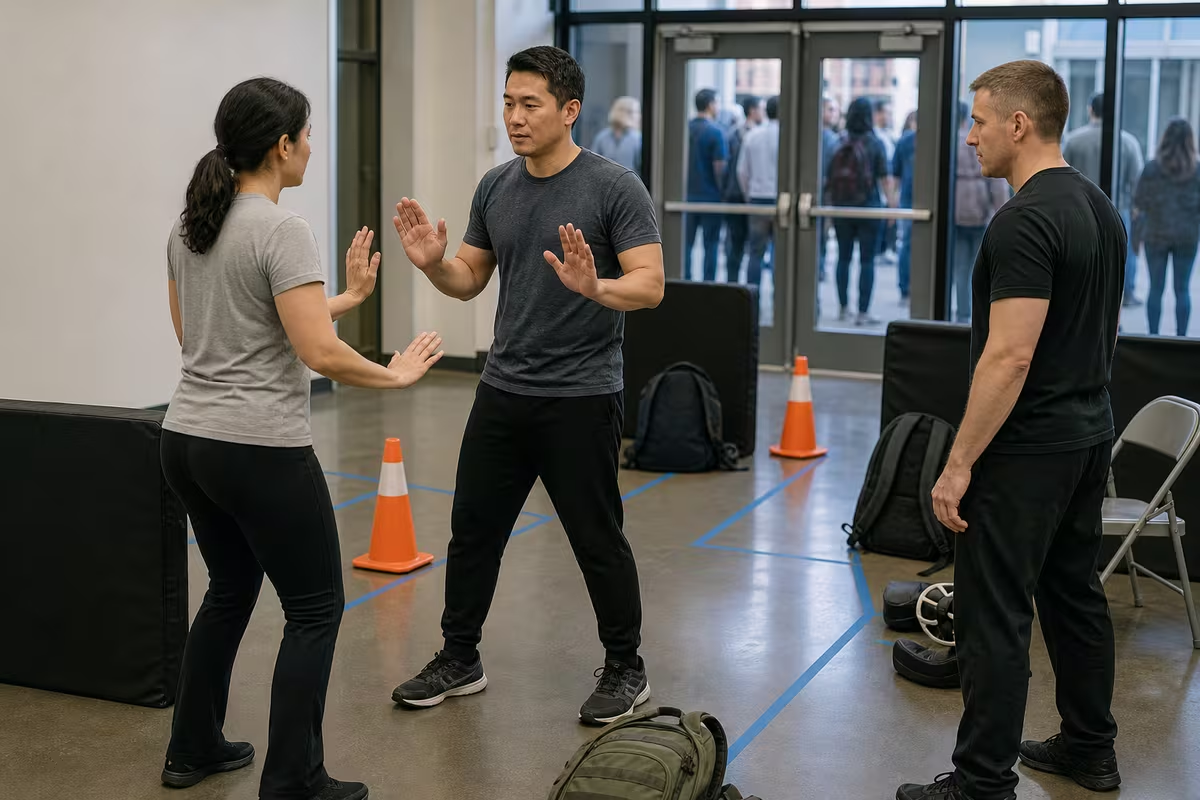
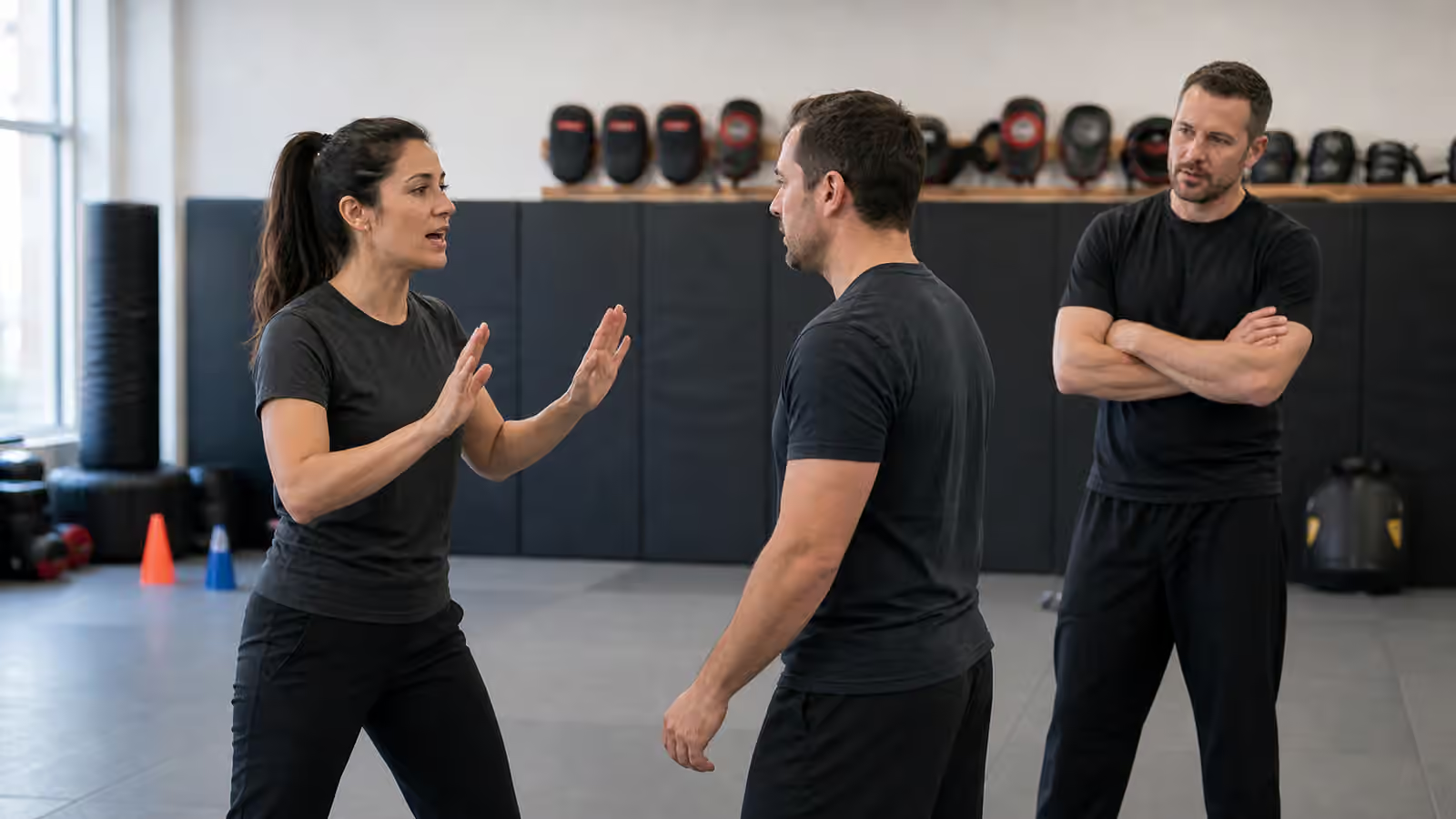
Open-Hand Protective Posture is useful here because posture can make language more credible. A student saying “Back up” with palms visible and feet balanced sends a different message than a student saying the same words while leaning into the other person’s space. The goal is not to win a dominance contest. The goal is to make the boundary understandable while keeping the body available.
Training partners should practice this connection slowly. One partner steps into conversational distance. The defender raises open hands, uses a simple boundary, and angles away. The feeder stops when the boundary works. The point is not to make the feeder obey forever. The point is to let the defender feel voice and movement working together before pressure rises.
The Voice Can Freeze Too
Some students discover that their voice disappears under stress. They know what to say after the round, but during the round nothing comes out. Others overcorrect and speak too much. They fill the space with words because silence feels dangerous. Both reactions are normal enough to train.
Freezing in Krav Maga explains that freezing is not a moral failure. Voice freeze deserves the same patience. A student may begin with a breath and one word. Later, they may add a phrase. Later still, they may speak while moving, while covering, or while guiding a companion. The progression matters. If the first version is too demanding, the student learns that their voice is unreliable. If the progression is honest, they learn that voice can return.
Instructors can help by keeping corrections specific. “Say it earlier” is more useful than “Be louder.” “Keep your feet under you while you speak” is more useful than “Sound mean.” “Use the same words again, but leave on the second step” gives the student a task they can repeat. Voice improves when it is treated as a trainable behavior, not a personality trait.
Bystanders Need Clarity
Voice is not only for the person creating pressure. It is also for the room. A clear boundary may alert staff, friends, or strangers that something is wrong. A specific help request can turn a bystander from background into action. A calm statement after the situation can help people understand what they saw without pretending certainty about details that are unclear.
Bystanders and Help-Seeking expands this idea. The student’s voice should sometimes point away from the confrontation and toward help. That can feel strange because stress pulls attention toward the person in front. Practice can make the wider room easier to use.
The voice should stay grounded. Shouting vague warnings into a crowd may create more confusion. Naming a task for a specific person may help more. The exact words depend on context, and laws or reporting requirements vary by place. Training can still build the broad habit of communicating clearly, leaving when possible, and seeking qualified help when needed.
Class Culture Shapes the Voice
A training room that mocks quiet students will not build useful voice. A room that rewards only the loudest boundary may produce students who perform confidence without understanding distance. A room that never practices voice may leave students with physical skills that arrive too late.
Good voice training begins with consent and role discipline. The feeder knows what kind of pressure is allowed. The defender knows what words they are practicing. The instructor sets the intensity and stops the round if it becomes sloppy. Safety Signals and Stopping Early applies here because voice drills can become emotionally intense even without heavy contact.
Students should also learn to use voice with partners. “Pause.” “Too close.” “I need lighter contact.” “Reset.” Those class sentences are not separate from self-defense. They teach the student to speak while the body is activated. They also keep the room honest. A person who cannot say “lighter” to a trusted partner may struggle to set a public boundary under pressure.
Voice under pressure is not magic. It will not make every person listen. It will not replace movement, judgment, or qualified instruction. But it can create a moment. It can make distance clearer, bring help into the room, organize breath, and remind the student that action does not always begin with impact. Sometimes the first useful action is a plain sentence delivered from a body that is ready to leave.