Krav Maga students are often told to keep their eyes up, but that instruction can sound simpler than it feels. Under pressure, the eyes do not behave like calm cameras. They lock onto the pad, the partner, the hand that moved first, the doorway that suddenly feels too far away, or the floor because the feet are unsure. The student may believe they are seeing the whole room while their attention has narrowed to one loud piece of it.
Visual scanning is not a decorative awareness habit. It is the skill of returning to the room after the first shock. A student who can see again can choose distance, find an exit, avoid a wall, notice a companion, and stop pouring all attention into the person directly in front of them.
Tunnel Vision Is Not Weakness
The body narrows attention when stress rises. That narrowing can be useful for short moments because it gives the nervous system a clear target. The problem is that self-defense problems rarely stay inside one target. A person may be close, but the exit may be to the side. A pad may be touching the cover, but the wall may be behind the student. A partner may be feeding pressure, but another student may be crossing the lane during a drill.
Good training does not shame tunnel vision. It expects it, then teaches recovery. Startle Response in Krav Maga describes the first second as messy because it often is. Visual scanning belongs immediately after that moment. The student feels the startle, protects posture, breathes enough to move, and begins collecting information again.
This recovery has to be trained at usable intensity. If the drill is too quiet, the student scans easily because nothing is pulling attention inward. If the drill is too chaotic, the student may only survive the round and learn very little. The useful middle is controlled pressure with one clear visual task added at a time.
Scanning Is Not Whipping the Head Around
Beginners sometimes respond to scanning instructions by snapping their head left and right after every action. That can look alert, but it may not produce useful seeing. Fast head movement can break balance, hide the partner’s next motion, and turn awareness into theater. The question is not whether the student performed a visible scan. The question is whether they understood the room better afterward.
A better scan begins with posture. The chin does not need to jut forward. The shoulders do not need to rise. The hands stay available. The feet keep enough base to move if new pressure appears. From that structure, the student widens attention without abandoning the immediate problem.
This connects directly to Covering While Moving . A cover that closes the eyes or points the head at the floor may feel protective, but it can also make the student late to the next choice. The best cover work leaves enough vision for the feet to find space. The scan is not a separate flourish after the technique. It is part of how the technique becomes useful.
The Exit Should Become Visible Early
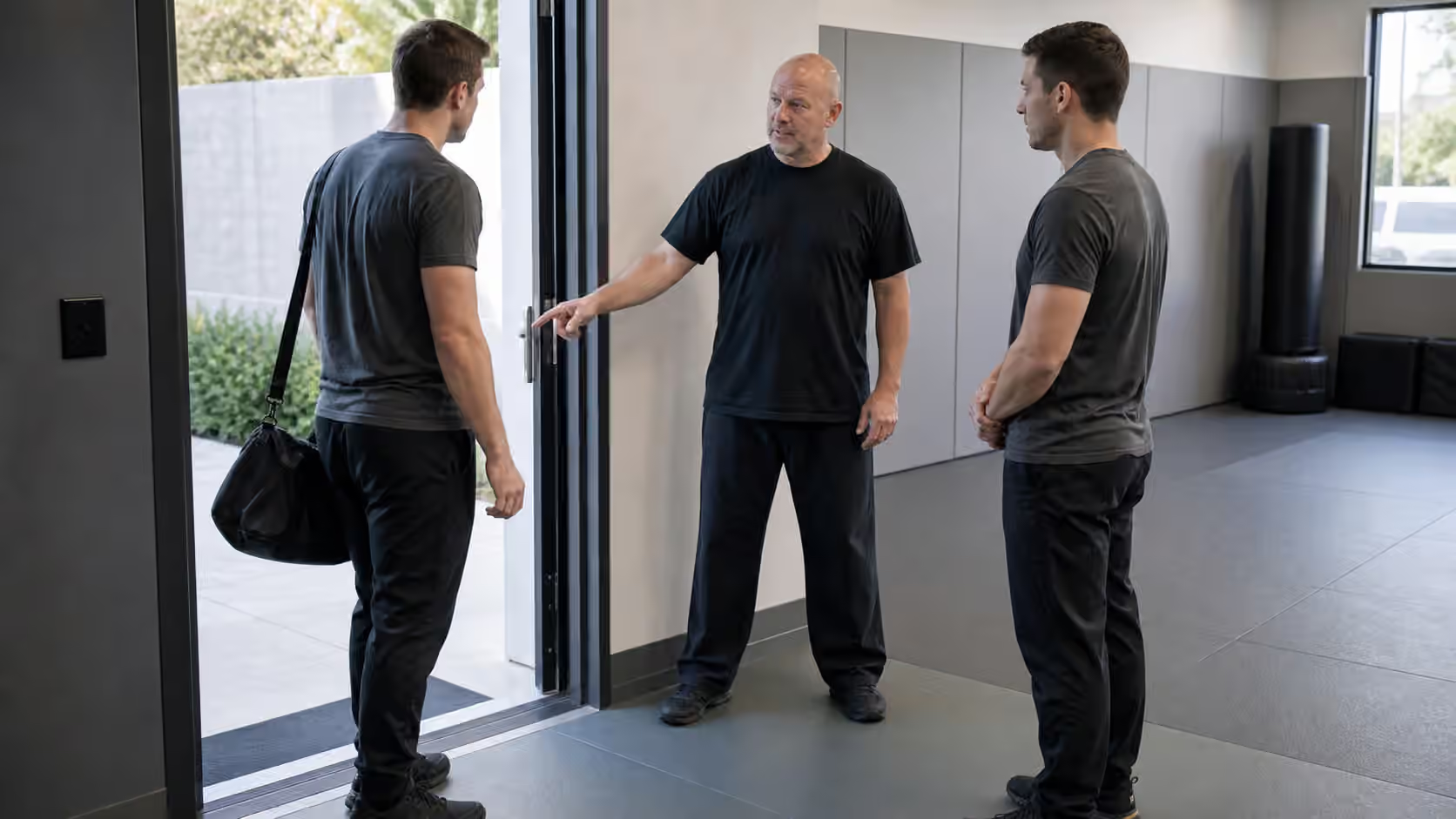
The most important thing to see is often not the person creating pressure. It is the path out. Distance, Awareness, and Exit treats exit as the quiet core of the practice for this reason. A student who sees only the pad or partner may solve the wrong problem with impressive effort. They may strike a pad cleanly while moving deeper into a corner. They may argue well while standing in a doorway. They may cover correctly while backing into a wall.
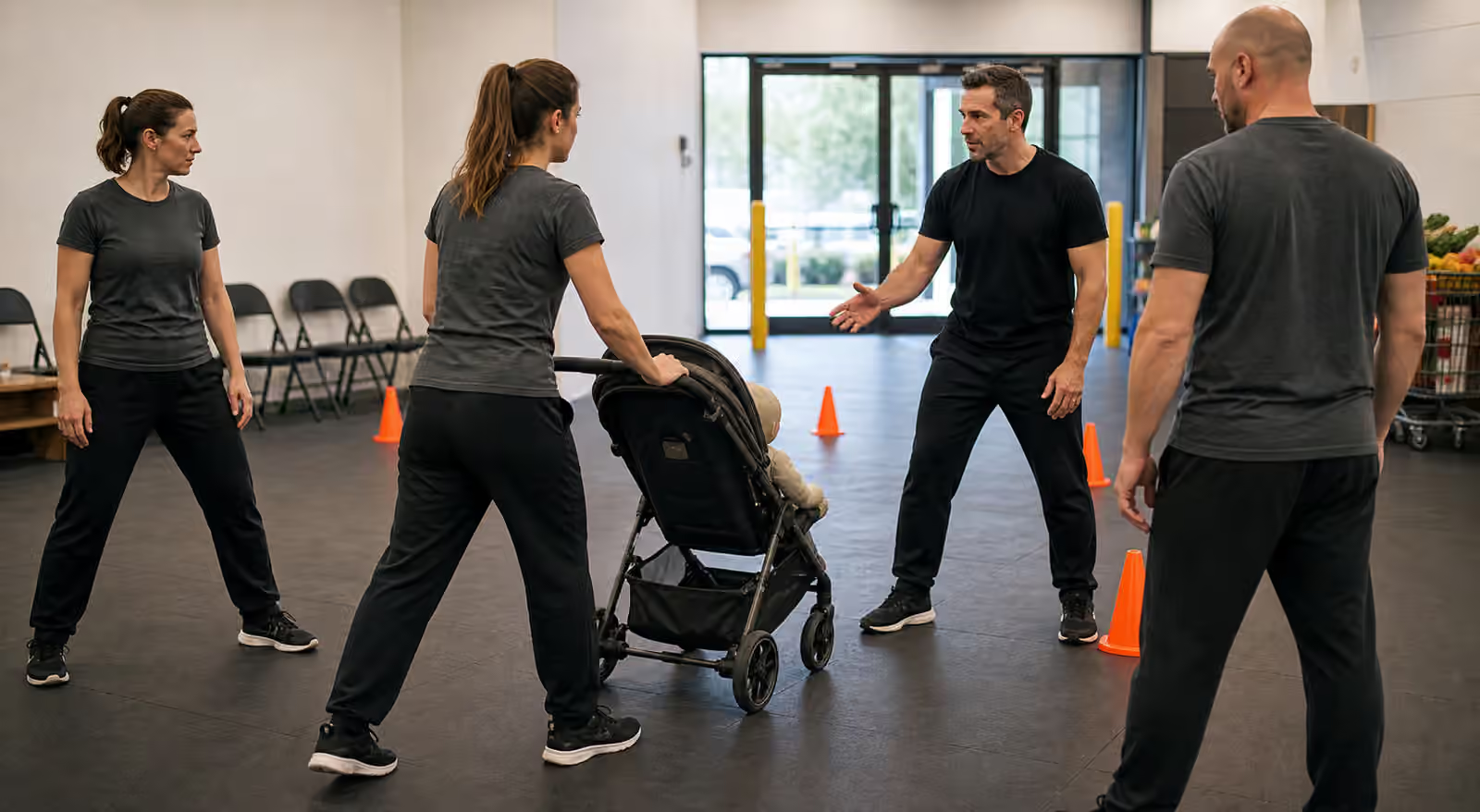
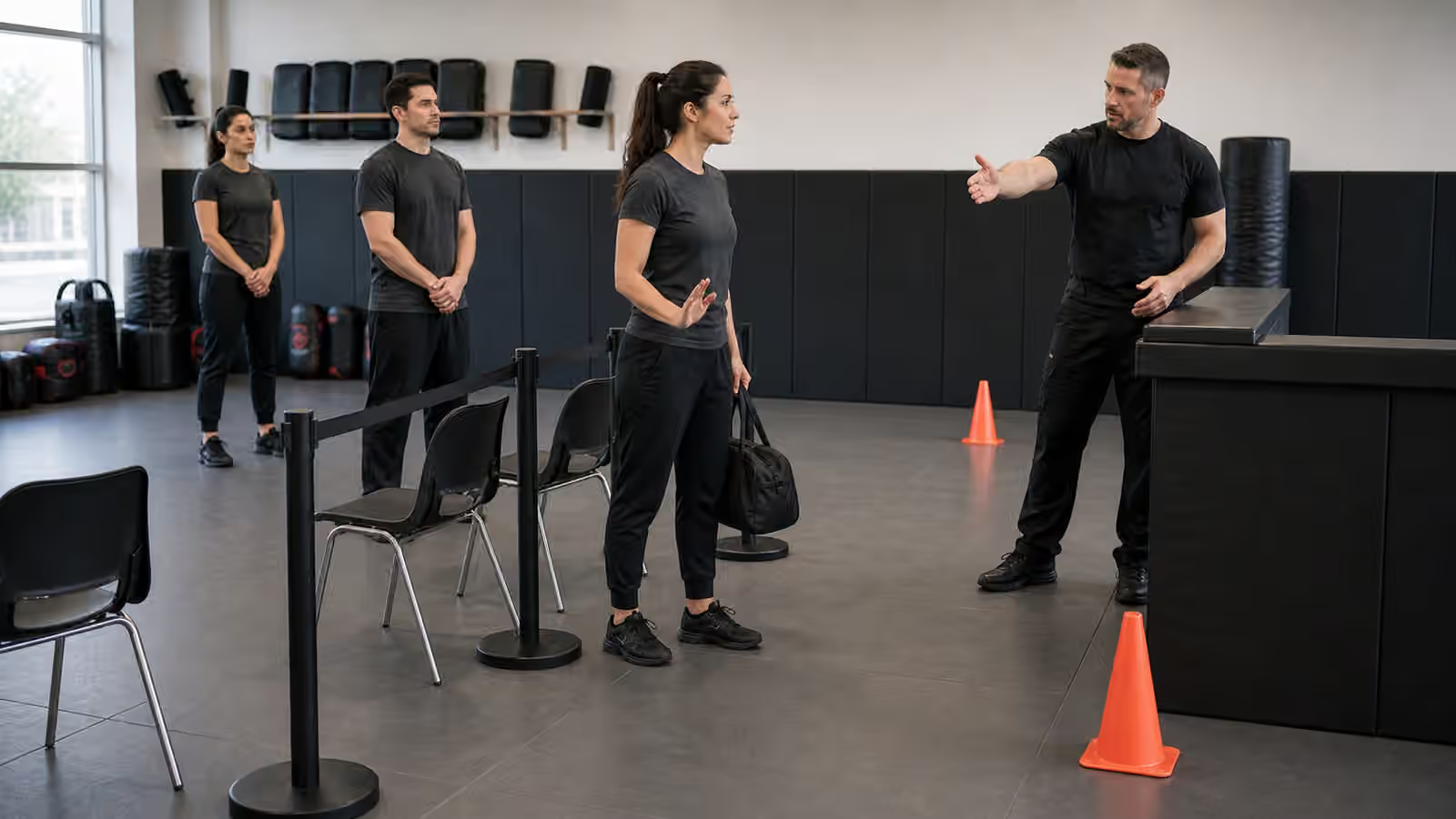
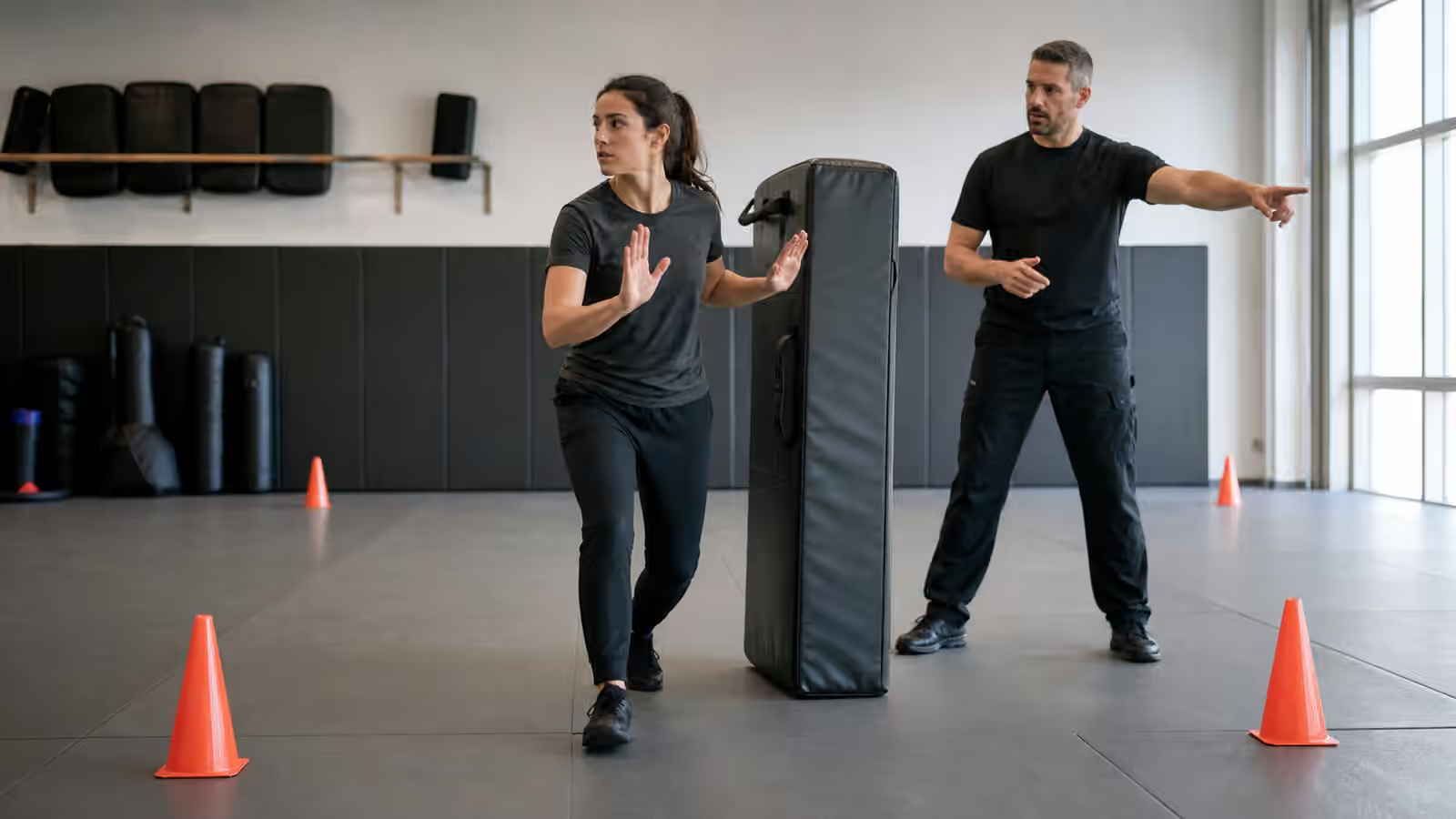
Exit scanning does not mean staring at the door and ignoring the person in front of you. It means keeping enough attention available to notice where space is opening. In class, that can be as simple as placing two cones in different directions and asking the defender to move toward the one the instructor names after contact begins. Later, the defender can identify the open lane themselves.
The drill should stay honest. If the exit is always in the same place, the student learns choreography. If the exit changes too often, the student may chase markers instead of learning orientation. A good instructor can vary the room just enough that the student has to see, not guess.
Companions Change the Scan
A student who trains alone may scan only for exits and obstacles. A student with another person has a wider job. A friend may be behind them. A child may be near a bench. A training partner may be playing the role of a companion who freezes instead of moving. In that setting, visual scanning includes responsibility for someone else’s position.
Krav Maga When You Are Not Alone is the natural companion to this skill. The defender may need to look long enough to know where the companion is without turning their back on pressure. They may need to use voice while glancing toward the exit. They may need to guide movement with one hand while keeping posture available with the other.
This is where overdramatic scanning becomes especially unhelpful. A frantic head turn can make the student lose the person in front of them and still fail to see the companion. A calmer scan, tied to breath and footwork, is more useful. It gathers one piece of information and returns the student to action.
Pads Can Teach the Eyes
Pads are useful because they create pressure without requiring real danger. A holder can feed light contact toward a cover while the defender moves to an angle and names the exit cone. Another round can require the defender to notice whether the holder stepped forward or stayed still. Later, a second pad holder can stand far enough away that the defender has to avoid moving into them.
This should not become a memory test disguised as self-defense. The instructor is not trying to embarrass the student for missing the blue cone. The point is to show how stress narrows attention and how training can widen it again. A student who misses the first cue can reset, breathe, and try again at lower speed. That correction is more valuable than pretending every round was sharp.
Pad Holding in Krav Maga matters here because visual drills depend on disciplined partners. A pad holder who chases the defender, changes the drill without permission, or adds surprise contact can steal the lesson. Clean pressure makes clean seeing possible.
Debrief What Was Actually Seen
After a round, instructors often ask students what they did. For visual scanning, it may be better to ask what they saw. Did they notice the wall before touching it? Did they see the exit or only remember it after the coach pointed? Did they know where the partner’s hands were? Did they notice the second person, the chair, the bag, or the open lane?
Those questions belong in a calm debrief, not a cross-examination. Class Debriefs and Training Journals can help students track what pressure does to attention over time. One week, the student may write that they stared at the pad. Another week, they may remember seeing the exit after the first step. That is progress worth naming.
Visual scanning is humble because it reveals how much the student misses. It also offers a practical path forward. See a little sooner. Keep the hands useful. Let the feet move. Find the exit before the wall chooses for you. Notice the room without losing the person in front of you. The skill is not having perfect awareness. The skill is returning to awareness after stress has tried to shrink the world.