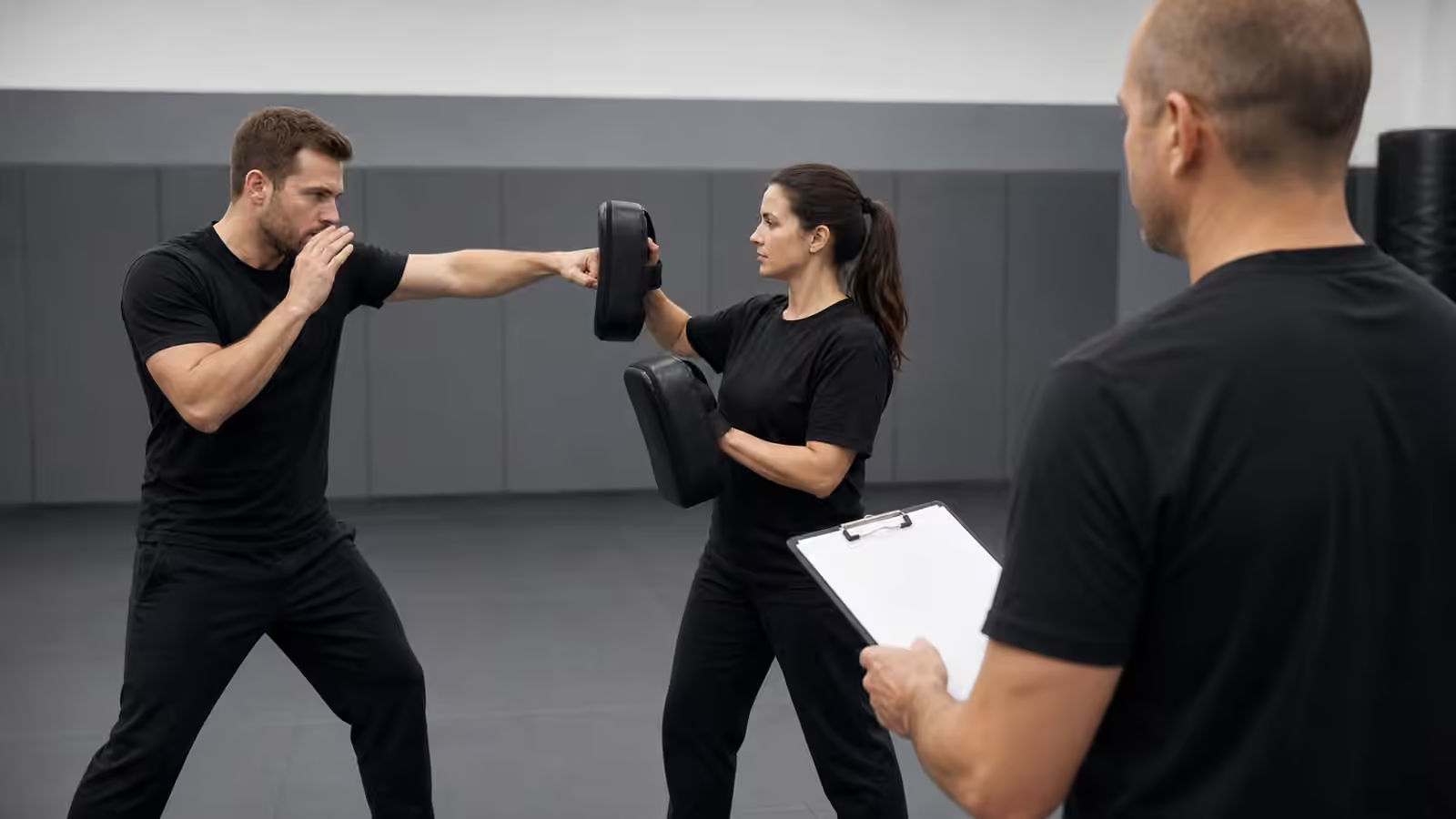
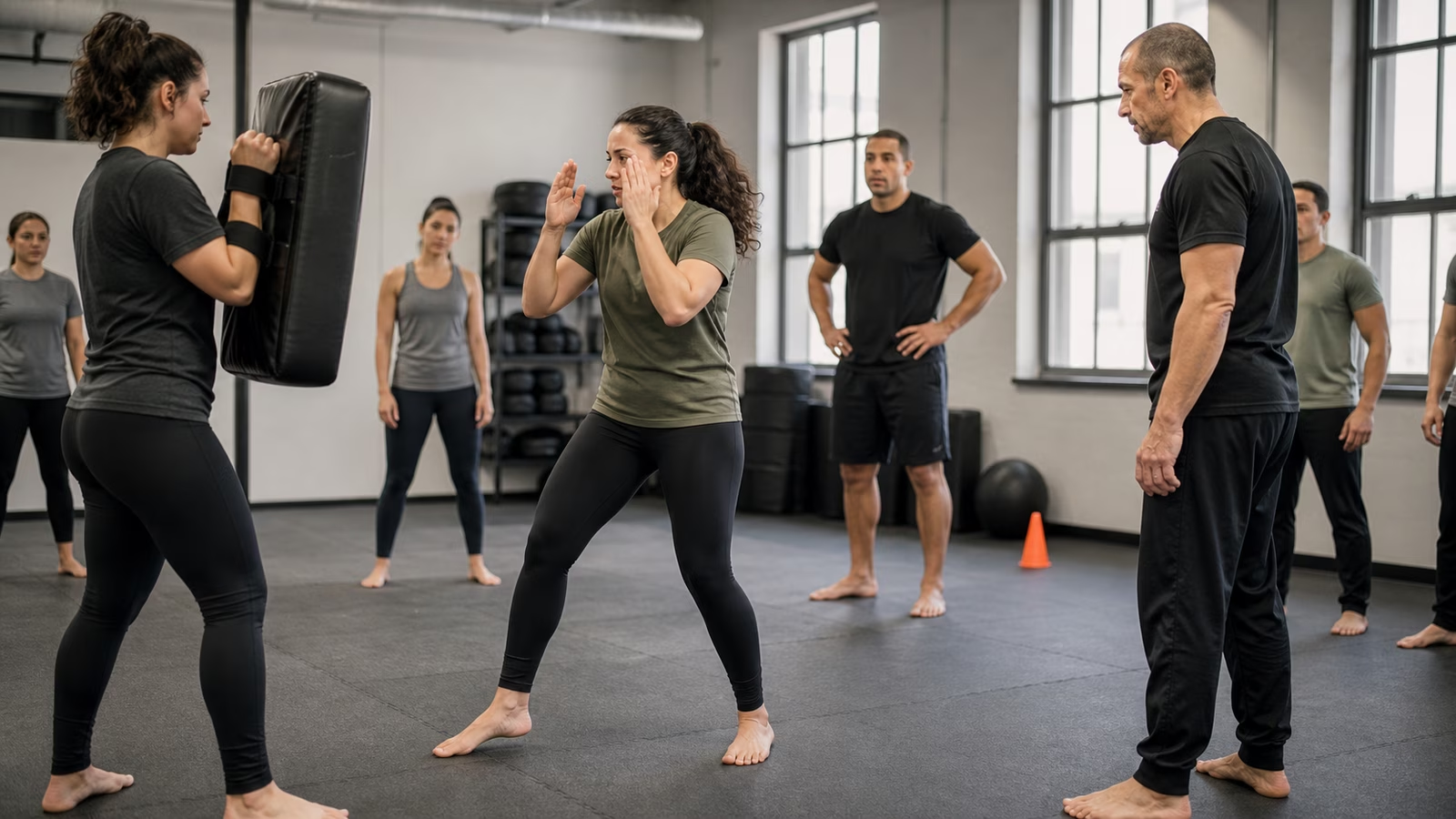
Correction is one of the main ways Krav Maga training becomes real. The instructor sees a foot turn, a shoulder rise, a hand drop, a stance narrow, a partner get crowded, or a student rush past the point of the drill. Then a sentence arrives. Shorter step. Breathe. Hands back. Do not chase. Give your partner space. Stop before the wall. Try the angle again.
That sentence can feel larger than it is. A beginner may hear it as embarrassment, proof that they are behind, or a public announcement that everyone else understands the room better. Another student may hear it as a challenge and immediately try to prove the correction unnecessary. Both reactions are normal, and both make learning harder. In a practical training room, correction is not a verdict. It is the mechanism that keeps effort connected to reality.
Krav Maga can attract people who want certainty. They want to know the answer, perform it with confidence, and feel that the problem has been handled. Good coaching interrupts that fantasy. It shows that a movement that looked fine in your head was too late, too wide, too tense, too close, or too hard on a partner. That interruption is not a failure of the practice. It is the practice doing its job.
A Correction Is A Small Piece Of Attention
Most corrections are smaller than beginners think. An instructor is usually not rewriting your whole body. They are choosing one visible thing that matters enough to change now. That choice is an act of attention. The coach could say ten things, but ten things would leave a new student frozen. A useful correction gives the body one handle.
If the instructor says your stance is too narrow, the lesson is not that you are bad at Krav Maga. The lesson is that the current drill needs a base that can move. If the instructor says your hands dropped after a pad strike, the lesson is not that you lack toughness. The lesson is that impact is not finished until you recover. If the instructor tells you to slow down, they may be protecting the quality of the repetition, the safety of the partner, or the specific purpose of the drill.
This is why corrections belong beside Krav Maga Progress Without Chasing Intensity . Progress is often the ability to receive a smaller cue and use it earlier. The dramatic student waits for a big correction because the room has become messy. The careful student begins to feel the problem before the instructor has to say much.
Do Not Argue With The First Version
There are moments when a correction needs clarification. Maybe you genuinely did not hear it. Maybe the instructor used a term you do not know. Maybe an old injury or current limitation changes what your body can safely do. Those are real reasons to ask. But many beginners use questions to avoid being changed by the first sentence.
The pattern is familiar. The coach says, “Step back before you strike.” The student answers, “But what if the person follows?” The coach says, “Keep the pad lower.” The student answers, “I was trying to make it more realistic.” The coach says, “Use less force on the grab.” The student answers, “But on the street someone would grab harder.” Sometimes those questions contain a useful concern. Often they are a way to defend the movement that just got corrected.
The better first response is to try the correction exactly as given, at the pace the instructor wants. Let your body test it before your theory does. If it still does not make sense after a few honest repetitions, then ask a sharper question. “Should I feel the weight shift before or after the step?” is useful. “Do you want this grip lighter for the drill or lighter because I am using the wrong angle?” is useful. “My knee does not like that position. Can you give me a modification?” is useful.
The classroom is not a debate club with pads. It is a place where physical information appears through supervised repetition. A question that protects learning belongs there. A question that protects ego usually slows the whole pair down.
Corrections Protect Partners Too
Students often think corrections are about their own skill, but many corrections are about the person in front of them. In Krav Maga, your movement has consequences for another body. If you crowd a pad holder, yank a wrist, ignore a stop signal, or add speed during a cooperative drill, the instructor may correct you because your partner needs the room to stay trustworthy.
Partner Work in Krav Maga explains that contact depends on accuracy, consent, and control. Corrections are how those ideas become visible. A coach may ask you to give a cleaner feed, hold the pad at a safer angle, stop turning a role into a performance, or reduce resistance so the other student can feel the lesson. None of that means the training is soft. It means the drill has a purpose.
This kind of correction can sting because it touches identity. Many adults are comfortable being told their foot is in the wrong place. They are less comfortable being told they are too rough, too careless, or too eager to prove a point. The mature response is the same: hear it, change it, and watch what happens to the drill. Often the partner learns faster the moment your ego leaves the center of the room.
The same principle applies when you are the person being corrected for stopping. If an instructor tells you to use the stop signal earlier, step out, or lower the pace, that is also training. Safety Signals and Stopping Early treats stopping as a skill because it is one. A student who can pause honestly is easier to coach and safer to train with.
The Body Needs Time To Believe Feedback
Some corrections make intellectual sense immediately and still take weeks to appear under pressure. You may understand that your feet should not cross during an exit and still cross them when tired. You may understand that breath matters and still hold it during padwork. You may understand that distance is better than chasing contact and still step too close when the drill feels urgent.
That gap is not hypocrisy. It is learning. The body keeps old habits because they are familiar, not because they are wise. Under fatigue or stress, familiar movement returns quickly. A good correction becomes useful when it is repeated in enough ordinary moments that it remains available in less ordinary ones.
This is where patience matters. Do not collect corrections as if they were insults, and do not discard them because they did not solve the problem in one class. Carry one or two of them into the next warmup. Notice the moment before the old habit appears. Ask a partner for one simple observation if the instructor has made that appropriate. Write the correction down after class before it becomes a vague feeling that you were doing something wrong.
Training Between Krav Maga Classes recommends recall before sweat for this reason. The correction you remember clearly can become a quiet home check. The correction you only remember as embarrassment becomes useless.
Good Feedback Has A Shape
A healthy correction usually has a visible target, a reason inside the drill, and a change you can attempt now. The instructor may not explain all of that every time, especially in a busy class, but over time the pattern should be there. “Hands back” connects to protection and recovery. “Angle out” connects to distance and exit. “Less grip” connects to partner safety and the purpose of a beginner repetition. “Breathe” connects to remaining teachable after pressure.
When feedback has no shape, training becomes murkier. A coach who only says “harder,” “faster,” “more aggressive,” or “realistic” without explaining the drill can leave beginners guessing. Some students respond by adding force. Others become anxious and stiff. Neither response is a reliable path to skill.
That is one reason Choosing a Krav Maga School pays attention to how instructors speak. A good school does not need to explain every biomechanical detail to every beginner, but its corrections should make practice clearer over time. You should gradually understand what the instructor is trying to preserve: balance, distance, partner safety, recovery, decision-making, and the ability to leave.
If you never understand why a correction matters, ask calmly after the round or after class. The timing matters. Interrupting every repetition can break the room’s rhythm. Waiting for a natural pause often produces a better answer and shows that you respect the shared training space.
Make One Correction Portable
The most useful correction is the one you can carry. A student may receive five comments in a night, but one of them usually explains the rest. Maybe the shoulders keep rising under stress. Maybe the back foot keeps turning away from the exit. Maybe the student keeps holding the breath during the first contact. Maybe every partner problem begins because the student starts too close.
Choose the portable correction and give it a plain phrase. “Hands recover.” “Step before reaching.” “Leave space for the holder.” “Breathe after the burst.” The phrase does not need to sound impressive. It needs to return at the right moment. Bring it into the warmup, the pad round, the partner drill, and the notes afterward. Over time, one portable correction can clean several related problems.
This does not mean coaching yourself instead of listening. It means making the instructor’s feedback easier to find again when the room gets loud. Krav Maga training often asks a beginner to manage movement, contact, voice, fatigue, and emotion at the same time. A short cue can keep the mind from scattering.
Corrections Should Make You More Trainable
The point of receiving feedback is not to become dependent on correction. It is to become more trainable. A trainable student listens without collapsing, tries without arguing, speaks up about real limits, changes pace when asked, and returns with better questions. That student does not need to be naturally athletic or fearless. They need to keep letting information in.
Over time, corrections should make you less dramatic about being corrected. The first few may feel exposed. Later, they become part of the room’s normal language. You begin to hear them as care, precision, and boundaries. You notice that experienced students still receive feedback. You notice that good instructors correct people they respect. You notice that the quietest progress often begins with the sentence you least wanted to hear.
Krav Maga without correction becomes performance. People move hard, tell convincing stories, and repeat habits that no one is interrupting. Krav Maga with useful correction becomes a slower and more honest practice. The feet learn. The hands recover. The breath returns. The partner trusts you more. The questions get better.
Let correction do its ordinary work. Hear the cue, try it cleanly, ask when needed, write down what matters, and bring it back next time. A practical system depends on contact with reality. Feedback is one of the safest ways to get it.