The training floor is generous. It is flat, predictable, padded, and usually clean. Students learn stance, movement, padwork, covering, and ground recovery on a surface designed to forgive mistakes. That generosity is useful. Beginners need a place where repetition is possible and falling does not always mean injury.
The trouble begins when students quietly assume that the world will feel like the mat. Sidewalk edges, parking-lot cracks, wet entries, gravel, curbs, stairs, soft grass, thick carpet, and crowded thresholds all change balance. Krav Maga movement that only works on perfect flooring is not finished.
The Floor Is Part of the Drill
Footwork and Balance explains that movement sits under every louder skill. Uneven surfaces make that truth obvious. A student who can strike hard from a stable stance may lose structure when one foot lands on a curb. A student who can angle cleanly on mats may cross their feet when stepping around a low obstacle. A student who can cover and move in class may look down too long when the floor changes.
This does not mean students should train recklessly on hazardous surfaces. The goal is not to turn every parking lot into a gym. The goal is to respect how much the surface changes the decision. Sometimes the best self-defense choice is slowing down before the curb, freeing a hand before the stairs, or choosing a flatter route rather than trying to perform a technique on bad footing.
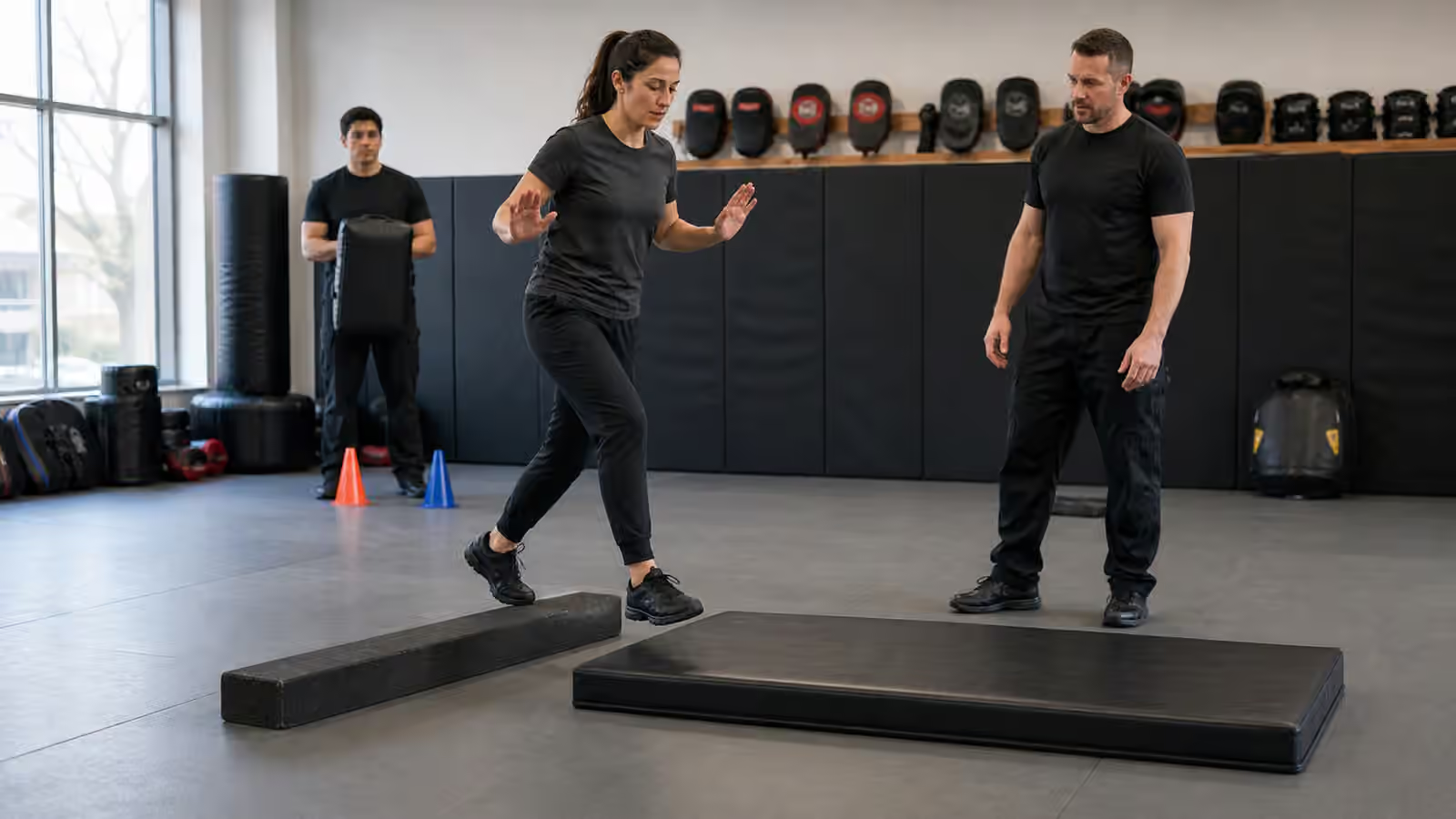
In class, the floor can be varied safely. A low foam block, a folded mat, a taped line, or a curb-height prop can make the student notice foot placement without creating real danger. The instructor should keep the intensity low at first. Balance problems become unsafe quickly when speed and contact are added too early.
Looking Down Has a Cost
When the surface changes, many students stare at their feet. That is understandable. The body wants to know where to step. But looking down can steal awareness from the person, exit, or obstacle ahead. The skill is not refusing to look down. It is learning to gather enough ground information without surrendering the whole room.
Visual Scanning Under Pressure belongs beside this topic because the eyes have to divide work. A student may glance at the curb, step with care, and return attention to space. They do not need to freeze their head toward the floor. They also do not need to pretend the curb is not there. Both extremes are unhelpful.
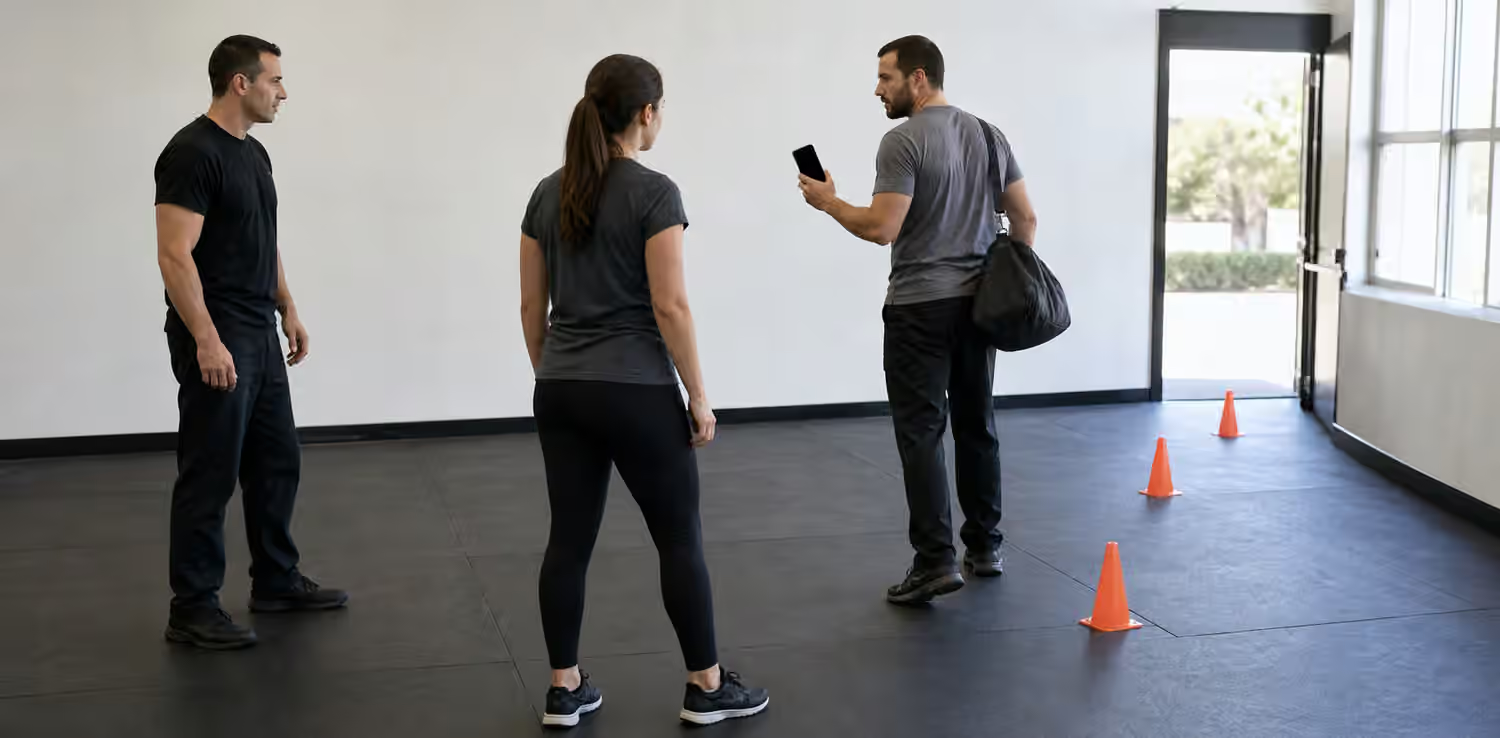
Coaches can build this slowly. A student walks toward a low prop, names the exit cone, steps over the prop, and returns to open-hand posture. Later, a partner can hold a pad at safe distance. The defender does not strike while stepping over the prop at first. They simply manage posture, eyes, and space. That modest drill may teach more than a fast drill that turns the obstacle into a tripping hazard.
Footwear Changes the Answer
Training shoes, work shoes, sandals, boots, slick soles, and tired feet all change movement. A student who practices only barefoot or only in ideal gym shoes may be surprised by how much ordinary footwear influences balance. The answer is not to train in unsafe shoes or ignore the school’s rules. The answer is to understand that footwear is part of awareness.
Everyday Clothing and Footwear already frames this as movement before appearances. Uneven surfaces make that frame practical. A shoe that feels fine while standing may slide during a lateral step. A heavy boot may slow a pivot. A loose sandal may make running a poor choice. A wet sole may change whether a person can stop quickly.
Students can notice these realities without becoming obsessive. On the way into class, they can pay attention to how their everyday shoes behave on stairs or pavement. In approved drills, they can discuss with the instructor how footwear would affect a movement rather than improvising dangerous tests. The mature habit is honest imagination, not reckless experimentation.
Fatigue Makes the Ground Louder
Uneven surfaces become more demanding when the body is tired. A student who manages a low step well during warmup may clip the same prop at the end of class. The foot drags. The knee collapses inward. The eyes drop. The hands widen for balance and stop protecting space. Fatigue does not only reduce power. It changes attention and coordination.
Fatigue and Pacing in Krav Maga is relevant because tired students often mistake effort for usefulness. A drill that combines fatigue, uneven surfaces, pads, and speed may look realistic, but it can become noise if the student is no longer learning. The instructor’s job is to add layers one at a time and remove them when balance stops being recoverable.
Students should also learn to self-report. If a knee, ankle, or lower back feels unstable, that information matters. Training Around Injuries and Limits gives students language for modifications. Uneven-surface drills are not the place to prove toughness. They are the place to learn what the body can currently manage with control.
Curbs, Stairs, and Entries Are Decisions
Many ordinary places ask for a movement decision before they ask for a self-defense decision. A curb at the edge of a parking lot may require slowing. A stairwell may require keeping one hand available. A wet lobby entry may make turning quickly unwise. A thick rug in a hallway may catch the foot. These details are not dramatic, but they influence what is available.
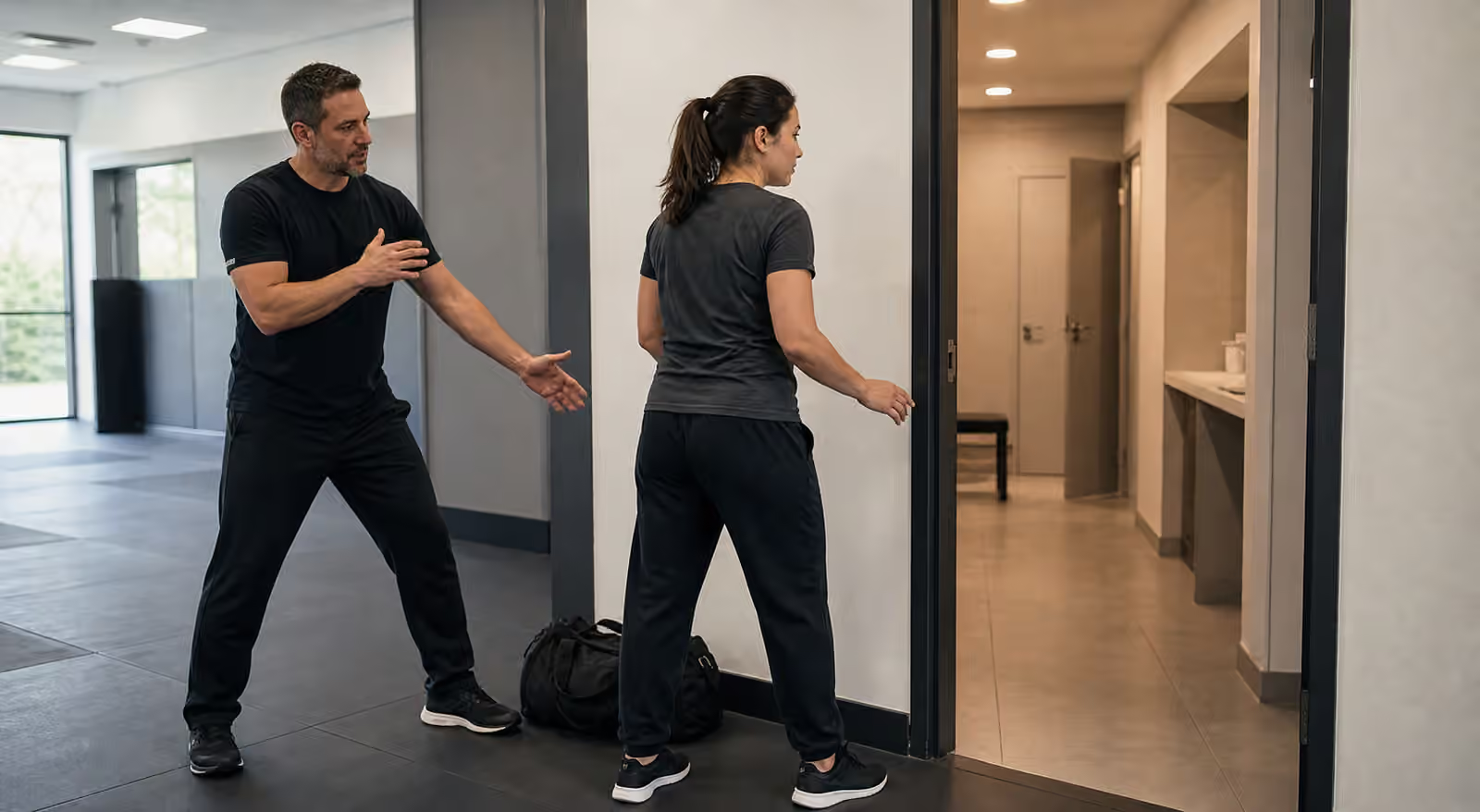
Threshold and Doorway Awareness and Elevator and Stairwell Awareness both touch this problem. The moment before entering or descending is a useful moment to organize the body. Students do not need to move like guards. They can simply stop drifting. Look up, notice the floor, free a hand if practical, and choose the pace.
This is also why Walking Route Awareness should not be reduced to looking for people. The route itself matters. A well-lit path with clear footing may be a better choice than a shortcut over uneven ground. Awareness includes choosing surfaces that keep simple movement simple.
Training Should Stay Boring Enough to Work
Uneven-surface practice can tempt instructors into obstacle courses. A little variation is useful. Too much variation turns the class into a stunt. Students need to feel how one changed surface affects posture, then how it affects vision, then how it affects a boundary, then how it affects a controlled pad action. That progression is slower than a dramatic course, but it teaches more.
The best rounds often look plain. Step over the low prop. Keep the hands available. Do not stare at the floor. Angle toward space. Reset. Add a pad. Remove the pad if the feet collapse. Add voice. Remove speed if the voice disappears. The instructor is not chasing spectacle. They are teaching the body to keep choices alive when the surface stops helping.
Krav Maga is often described through techniques, but the floor can decide whether those techniques have anywhere to live. A student who respects the surface is not timid. They are honest. They understand that balance is a self-defense skill, that a careful step may be wiser than a fast one, and that the best movement is the movement the ground will actually allow.