Transit spaces are full of small decisions that happen while the mind is busy with something else. A person checks a route, watches for a bus, waits near a platform edge, looks for a ride pickup, steps into an elevator, answers a message, holds a bag, or tries to keep a companion moving. Most of the time nothing is wrong. The setting is ordinary, which is exactly why it belongs in Krav Maga awareness training.
The practical question is not how to turn every station, bus stop, elevator lobby, or pickup zone into a threat map. That would make daily life worse and training less useful. The question is how to keep movement available when public space becomes crowded, confusing, poorly lit, or socially uncomfortable. Can you notice the lane before it closes? Can you use the phone without surrendering the whole room to the screen? Can you choose a pickup spot that gives you light, people, and an exit? Can you leave a conversation without waiting for permission from the person making it uncomfortable?
This guide sits near Crowded Space Awareness and Low-Light Parking Lot Awareness . Transit and pickup spaces borrow from both. They have crowds, thresholds, waiting, vehicles, phones, bags, companions, and moments where the safest choice may be leaving one spot for a better one before anything dramatic happens.
Waiting Changes Attention
Waiting feels passive, but the body is still making choices. Where you stand, what you face, how close you are to an edge, how available your hands are, and whether your path is blocked all affect your options. A person waiting with their back to a wall may feel secure until the only open lane is across a crowd. A person standing in the middle of a doorway may have people pressing from both sides. A person waiting at the curb with eyes locked on a phone may not notice that the pickup point has become crowded or poorly lit.
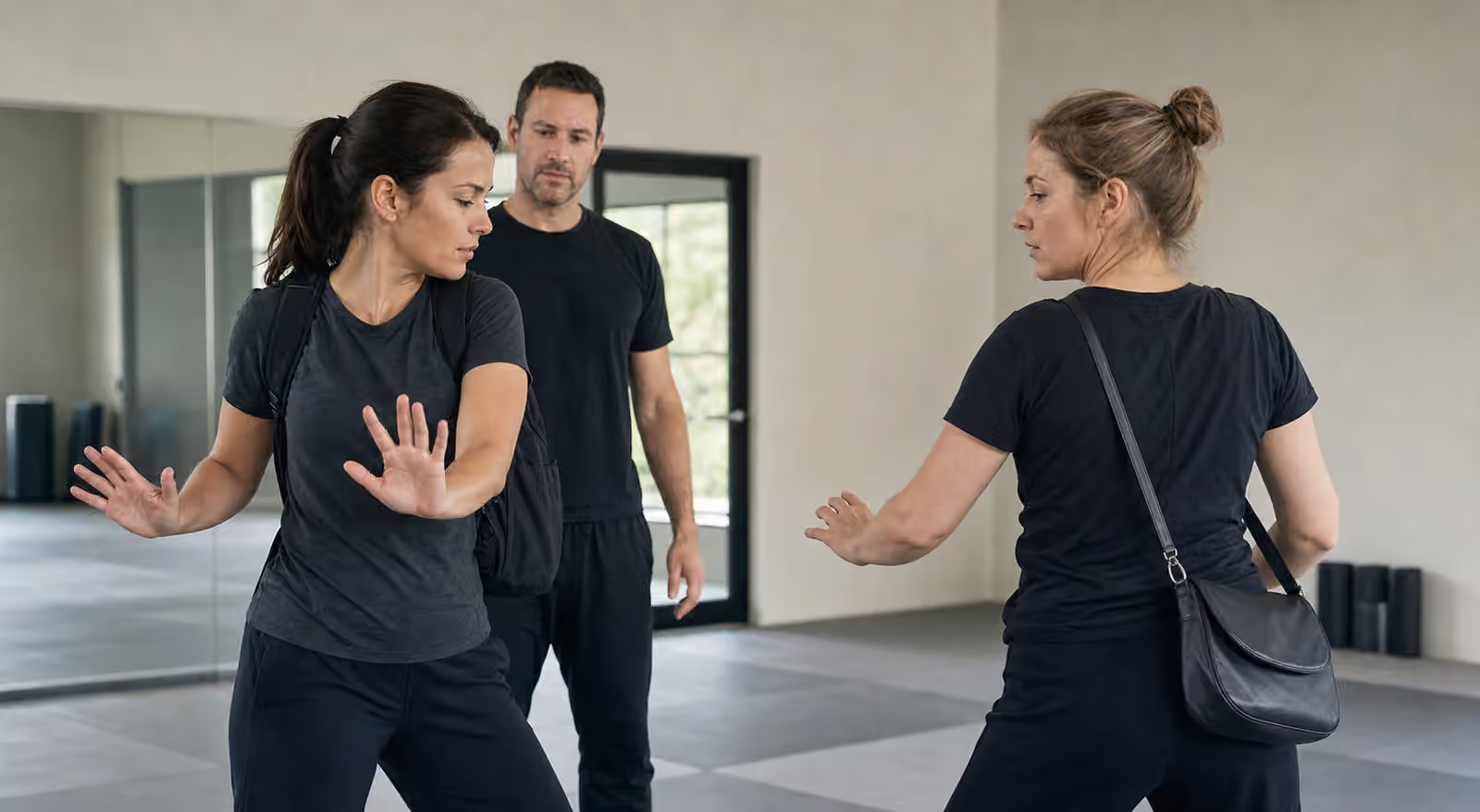
Krav Maga training can make waiting more active without making it tense. In class, a simple drill can mark a platform lane with cones, place a bench or bag as an obstacle, and ask students to wait, notice, move, and exit when a cue appears. The cue does not need to be frightening. A partner can simply step too close, block a lane, or ask a distracting question. The defender practices moving before the space disappears.
Distance, Awareness, and Exit explains that distance is time. In transit settings, time is often hidden inside ordinary waiting. If you choose a place where you can see, move, and leave, you have more time. If you let the crowd, bench, wall, curb, or screen decide for you, you may discover the problem later than you needed to.
Platforms And Curbs Need Edges In The Mind
Platforms, curbs, loading zones, and station entrances all have edges. Some edges are physical, like a drop, road, stair, rail, or curb. Others are social, like the line where people gather, the lane where passengers rush through, or the spot where drivers stop. Edges matter because a small backward step can become a larger problem when there is no room behind it.
Training should treat edges with respect. A beginner does not need a dramatic platform scenario. They need to learn that backing straight up near an edge is a poor habit, that angling toward open space is usually better than retreating blindly, and that the shortest route through a crowd is not always the safest route. Environmental Movement in Krav Maga teaches the same principle with walls, doorways, chairs, and bags. Transit spaces add motion and impatience.
This also affects how students use voice. A calm “give me space” or “I am moving through” may be useful when paired with movement. The words alone are weaker if the body remains pinned near the curb or trapped between a bench and a crowd. De-escalation and Verbal Boundaries belongs here because transit conflict is often still verbal when the earliest choice appears. The goal is not to win an argument in public. The goal is to keep enough space to leave.
Phones Are Useful And Costly
Transit and pickup zones make phones feel essential. The phone may show the route, ticket, ride details, address, contact, payment, or emergency call. It can help. It can also narrow the room. A student who says they are aware while staring at a screen is asking the ears and peripheral vision to carry too much.
Hands Full in Krav Maga explains that objects are already making choices for the body. The phone is one of the strongest examples because it captures both a hand and the eyes. In a station or pickup zone, the practical habit is to choose phone moments deliberately. Step aside before typing. Stop outside the moving lane. Look up before crossing a curb or entering an elevator. Pocket the phone when the setting asks for both hands and a wider field of view.
This does not mean the phone is bad. In some situations, keeping a phone available may matter. The better question is whether the phone is serving the decision or stealing it. If the screen helps you call a friend while you walk toward a staffed place, it is supporting movement. If the screen keeps you still beside someone who is crowding you, it is becoming part of the problem.
Training can make this visible with a blank phone prop. Students quickly notice that their shoulders turn, one hand disappears, and their eyes drop. Then the instructor can ask them to repeat the same movement with the phone away. The lesson is physical, not moral. The object changes the body.
Elevators And Narrow Doors Compress Choices
Elevators, station doors, turnstile areas, and narrow bus entrances create compression. People stop, step around each other, apologize, hesitate, push through, or hold doors. A person who wants space may feel rude taking it. A person who feels uneasy may talk themselves into staying because leaving seems socially awkward.
Krav Maga should make leaving a narrow space feel legitimate before the body has to justify it. Let the elevator go. Step out of the doorway. Move to a wider lane. Wait for the next car, bus, or ride if the immediate option feels wrong enough. These are ordinary choices, not heroic ones. The value is that they happen early.
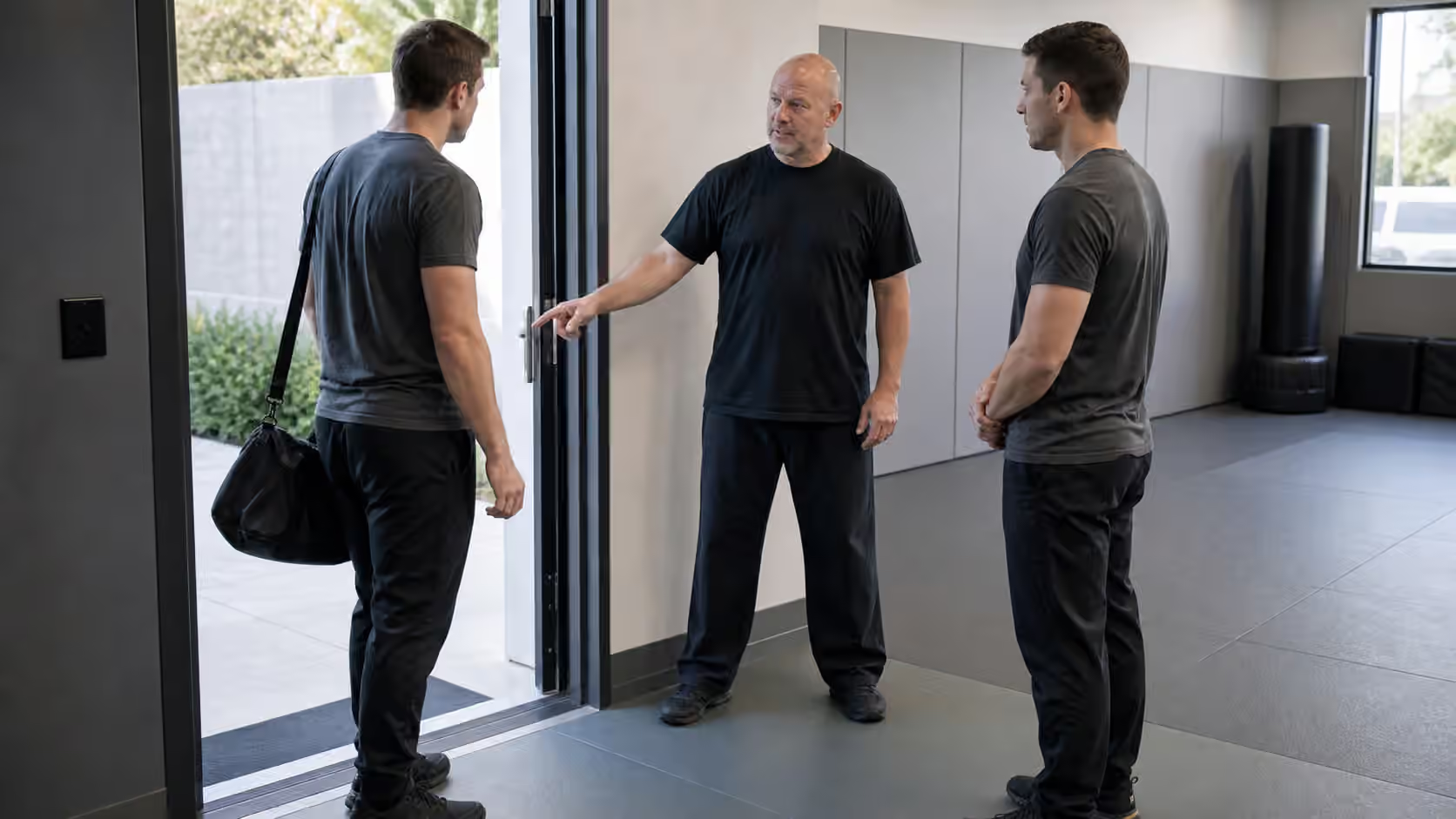
Inside a training room, a doorway drill can teach the physical part. Students practice not stopping halfway through a threshold, not letting a bag catch behind them, and not turning their back to the whole room while negotiating a narrow passage. This connects naturally to Wall Pressure in Krav Maga because doorways and elevators can become walls with a schedule. Space runs out quickly when the body keeps backing up or waiting for a cleaner moment.
The social part needs practice too. Saying “I will take the next one” can feel awkward. So can stepping away from a conversation at a pickup point, changing cars, or walking back inside a station or business. A good school treats that awkwardness as part of the drill. Many safer choices require disappointing a stranger, confusing a bystander, or looking briefly impolite.
Pickup Zones Blend Convenience And Uncertainty
Ride pickups, taxi lines, shuttle stops, and informal curbside meetings create a particular kind of uncertainty. You may be looking for a vehicle or person. Someone else may be looking for you. You may be checking details on a phone while scanning traffic, faces, and landmarks. The task asks for attention in several directions at once.
The practical habit is to choose a pickup place that gives more options rather than fewer. Better lighting, visible people, staffed areas, open lanes, and the ability to return inside all matter. A spot that is convenient but isolated may ask too much of your attention. A spot that pins you between parked cars may make a simple conversation feel crowded. This is the same transition logic described in Low-Light Parking Lot Awareness , but the pickup task adds the pressure of waiting for someone specific.
Training should avoid fragile advice about particular apps, local rules, or current procedures. Those change and vary. The evergreen skill is route choice. Where can you wait while seeing the approach? Where can you leave without crossing through the person making you uncomfortable? Where can a companion stand without being trapped behind luggage or a bench? Where can you ask for help if the situation stops feeling ordinary?
Companions Slow And Clarify The Plan
Transit often happens with other people. A friend is reading a map. A child wants to sit. An older parent moves carefully. A training partner is carrying gear. A companion is tired, distracted, embarrassed, or stubborn. The group no longer moves at the speed of the most prepared person.
Krav Maga When You Are Not Alone gives the broader frame. In transit spaces, the lesson becomes very concrete. If you decide to move, can the other person actually follow? If the exit is up stairs, does that help or hurt the group? If a bag is between the companion and the route, did you notice before pulling them into motion? If the companion wants to argue with someone, can your voice give them a simpler task?
Useful phrases should be plain. “We are moving.” “Stay with me.” “Go inside.” “Stand on this side.” The exact words depend on the people and setting, but the function is steady. Reduce debate, give direction, and keep moving toward the safer lane. Long explanations usually belong after the group is no longer in the tight space.
Train The Setting Without Performing Fear
Transit drills can become theatrical if the room chases excitement. A responsible beginner drill does not need surprise attacks between benches or dark-room ambushes. It needs a clear spatial problem. A narrow lane. A bench. A bag. A phone prop. A partner who closes distance too much. An exit that changes. A companion who needs one simple instruction. Those details are enough to reveal useful habits.
Scenario Training and Ethics should guide this work. Role players need boundaries. Contact should be named. The problem should be narrow enough to debrief. If the drill is about noticing an exit, do not add a grab. If the drill is about moving with a bag, do not add insults. If the drill is about voice, do not turn it into a chase. More chaos can feel more realistic while teaching less.
The goal is not a student who sees danger in every public ride. The goal is a student who waits in a better place, keeps one hand more available, checks the route without disappearing into the phone, notices edges, uses brief language, and leaves earlier when the setting starts taking away choices. That kind of awareness is quiet enough to live with.
Krav Maga is often practiced in rooms where the floor is clear and the people are there for the same reason. Transit spaces are not like that. They are shared, impatient, distracted, and full of transitions. Training should help students keep their judgment inside that ordinary mess. Look up before the lane narrows. Move before the crowd pins the route. Let the next ride, elevator, bus, or conversation pass if taking this one would cost too much space. The best answer may be so ordinary that nobody notices it, and that is often the point.