Krav Maga often begins with one body solving one problem. The student learns to stand, move, use voice, protect the head, strike a pad, recover balance, and leave. That starting point is useful because beginners need a clean frame before the room becomes messy. But ordinary life is not always one body moving alone. You may be walking with a friend who freezes, a child who pulls in the wrong direction, an older parent who moves slowly, a partner who wants to argue, or a coworker who does not understand that the situation has changed.
Training when you are not alone asks a different question. It is no longer only, “Can I get away?” It becomes, “Can we get away without creating more danger?” That shift changes distance, timing, voice, body position, and pride. It also changes the emotional weight of the moment, because responsibility can make people hesitate. A person who would leave quickly alone may stay too long when someone else needs an explanation, a hand, or a decision.
The first lesson is still the same lesson that appears in Distance, Awareness, and Exit : leaving early is not failure. With another person beside you, leaving early becomes even more important. The slower person sets the real pace. The distracted person increases the need for space. The person who is embarrassed, intoxicated, angry, frightened, or protective may pull the situation in a direction you would not choose alone. Waiting until a problem becomes physical often means asking the least prepared person in the group to perform under the worst conditions.
The Group Moves at the Speed of the Slowest Person
A solo student can angle off and leave through a narrow lane. A group may not fit. A student can drop a bag, step around a chair, and move. A parent with a child, a person using a cane, or a friend in high heels may need more time. This is not a side detail. It is the central fact. If your plan only works for your own athletic body on an open mat, it is not yet a plan for the people actually with you.
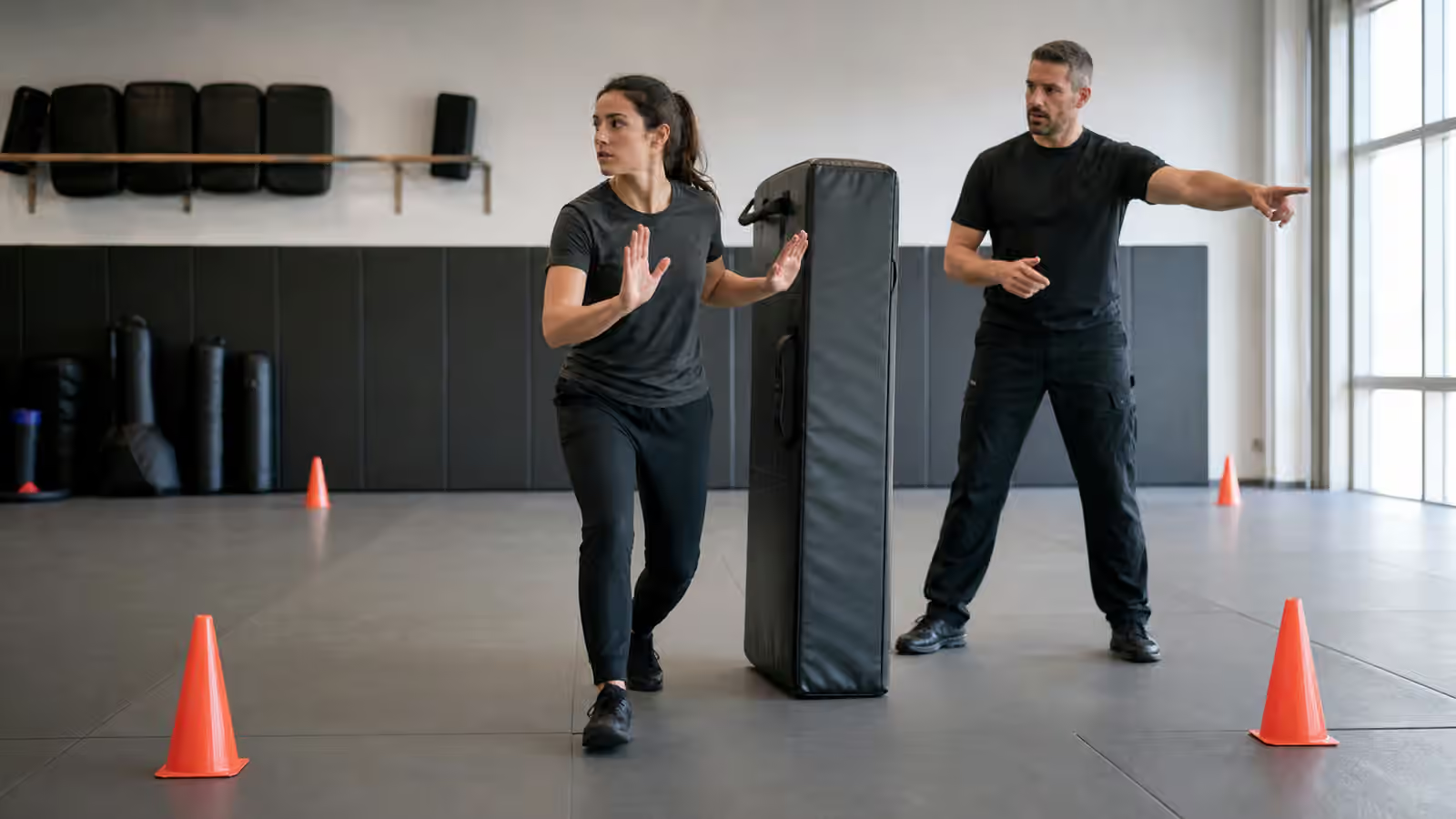
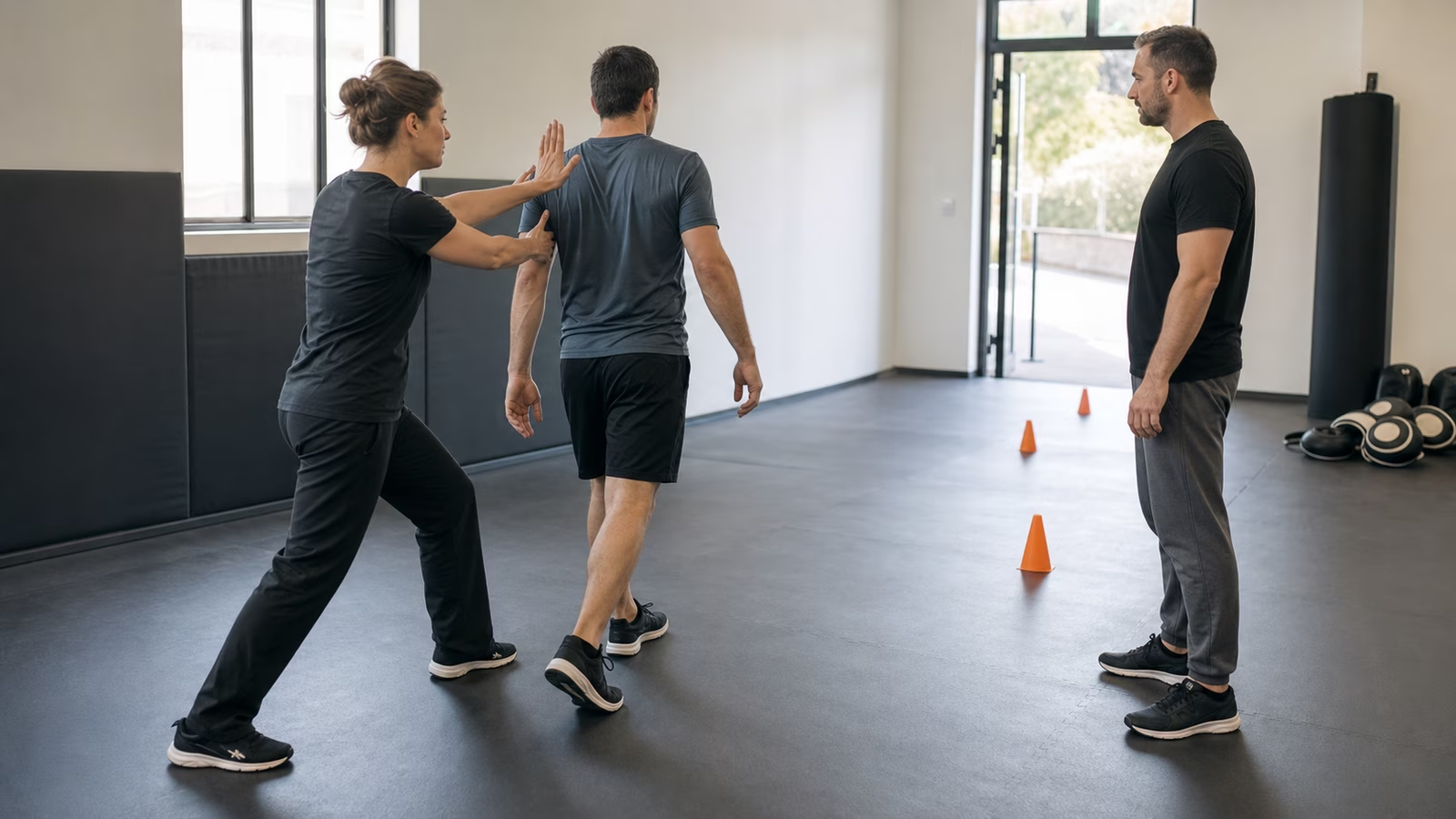
Good training can make this visible without turning the class into theater. One student plays the defender. Another plays the companion. A third student gives light pressure with a pad or simply occupies space near a marked exit. The defender has to communicate, choose the wider path, avoid pulling the companion off balance, and leave the line. The drill is quiet, but it reveals a lot. Many people move too fast for the companion. Some grip too hard. Some forget to look behind them. Some try to shield the other person and accidentally trap them against a wall.
Those mistakes are useful when they happen slowly. They show that responsibility is physical. It is not enough to care about the companion. The body has to make room for them. The feet have to choose a path they can use. The voice has to be simple enough to understand under stress. The hands have to guide without becoming a leash.
Voice Has to Serve the Other Person
Voice work changes when another person is present. In a solo drill, the student’s voice may be aimed at the person closing distance: “Back up,” “Stop,” or “Stay there.” Those boundaries still matter, and De-escalation and Verbal Boundaries is the natural companion to this topic. But when someone is with you, part of your voice must also serve them.
That voice should be ordinary enough to use. “We’re leaving.” “Stand behind me.” “Go to the door.” “Call from there.” “Keep walking.” The exact words matter less than the function. They reduce debate. They give the companion a job. They prevent the frozen pause where two people look at each other while distance closes. A long explanation usually arrives too late. Under pressure, clear verbs are kinder than detailed arguments.
The tone matters too. Panic can spread through a group faster than useful information. A calm, firm voice does not guarantee compliance, and it does not make a bad situation safe. It simply gives the other person the best chance to understand that the plan has changed. In class, this can feel awkward because nobody wants to sound bossy. That awkwardness is worth practicing. Many real exits fail because people are socially reluctant to be direct before the danger becomes obvious to everyone.
Guiding Is Not Dragging
People often imagine protecting a companion as stepping in front of them. Sometimes that is useful. Sometimes it blocks their view, narrows their options, or turns both bodies into one larger target. A better beginner habit is to think in terms of lanes. Where is the open lane? Can the companion see it? Are you helping them enter it, or are you standing between them and the path?
Guiding should be trained with care. A light hand on the upper back, shoulder line, forearm, or elbow can help a person orient without being yanked. The details depend on the person, the relationship, the setting, and the instruction in the room, so a written guide should not pretend to give a universal grip. The principle is simpler: guide the direction, preserve balance, and release when the other person is moving.
Dragging is different. Dragging steals balance and often creates resistance. A frightened person may pull back. A child may twist. An adult may think you are overreacting. A person who has been drinking may stumble. If your protection begins by making the companion fall, the problem has changed for the worse. Controlled partner drills can teach students to feel this difference early. The companion should be allowed to say when the contact is too forceful, too confusing, or too late.
This is one reason Partner Work in Krav Maga matters beyond ordinary class etiquette. The habits that keep a partner safe on the mat are the same habits that keep companion drills honest. Control is not softness. Control is how the class studies pressure without turning the companion into equipment.
The Environment Decides More Than Ego Wants to Admit
Companion movement is environmental movement with consequences. A doorway that feels easy alone may become a bottleneck with another person. A chair that you could step around may catch the companion’s foot. A bag strap may tangle both of you. A narrow sidewalk may force a decision between turning back, crossing the street, entering a business, or waiting for space.
Environmental Movement in Krav Maga explains how walls, doorways, chairs, bags, and floors change self-defense training. With a companion, those details become louder. You are not only asking, “Can I move there?” You are asking whether the other person can follow without losing balance, whether the exit stays open long enough, and whether your own body is blocking the route you want them to use.
A useful classroom version is almost plain enough to be boring. Put two cones near a doorway. Add a soft obstacle near the feet. Let the defender begin beside a companion. The pressure cue appears from one side, and the defender must use voice, choose the wider lane, avoid the obstacle, and exit with the companion. The drill does not need speed at first. It needs honesty. Did the defender leave the companion behind? Did they overprotect and stop moving? Did they stare at the pressure instead of reading the room? Did they turn the companion into a shield without meaning to?
That last question deserves attention. A person under stress may unconsciously place someone else between themselves and the problem. This can happen through panic, not malice. Training should make students aware of it before pride edits the memory. Responsibility means noticing where the other body is, not merely announcing that you care about it.
Not Everyone Will Cooperate
The hardest companion is sometimes the person you are trying to help. A friend may be angry and want the last word. A partner may be embarrassed and resist leaving. A child may freeze or reach for a dropped toy. A coworker may think you are being dramatic. A family member may move slowly because they cannot move faster. Krav Maga training should not pretend that everyone you care about becomes perfectly compliant when danger appears.
This is where scenario work can be helpful if it is handled responsibly. Scenario Training and Ethics gives the larger frame: scenarios need boundaries, roles, consent, and a debrief. A companion drill should have the same discipline. If the companion role includes hesitation, confusion, or mild resistance, it should be agreed in advance. The role player is not there to sabotage the defender. They are there to create one specific problem so the defender can practice one specific kind of communication.
The defender also has to accept limits. You cannot make every adult choose wisely. You may be able to create space, use voice, call attention, move toward help, or refuse to stay in the argument. You may not be able to physically solve another person’s pride. That is a hard truth, but it keeps training honest. Responsible self-defense includes recognizing what belongs to you and what does not.
With children or dependent people, the responsibility is different and heavier. The training still should avoid fantasy. A child may not understand directions. A child may cling, cry, run toward a familiar object, or freeze. The practical lesson is to leave earlier, keep routes simple, avoid unnecessary arguments, and practice ordinary family communication in safe contexts long before anything is wrong. This guide is not advice for any specific emergency. It is a reminder that the person least able to improvise should influence your earliest decisions.
The Protective Instinct Can Become a Trap
Protectiveness feels noble, but it can become a trap when it turns into confrontation. Someone insults your friend. Someone crowds your partner. Someone bumps into your family member. The body heats up quickly because the situation is no longer only about you. Pride disguises itself as duty. The mind starts writing a story in which staying is proof of loyalty.
Good Krav Maga training should interrupt that story. Loyalty may look like leaving before the insult becomes a fight. It may look like giving up the better seat, changing train cars, ending the night early, or letting someone think they won a pointless argument. If the companion is safer because you swallowed pride, then the training worked.
This does not mean abandoning the companion. It means protecting the outcome rather than the image of protection. A person who turns every slight into a stand may be dramatic, but they are not necessarily useful. A person who creates space, moves the group, calls for help when needed, and stays calm enough to make the next decision is doing the quieter work.
After the Exit, Keep Thinking
Many drills end too soon. The defender moves the companion through the lane, the coach calls reset, and everyone relaxes. In real life, leaving one spot may only create the next decision. Do you keep walking? Enter a staffed place? Call someone? Check whether the companion is injured or shaken? Change the route home? Stop talking because the other person is following? A good class can add a short after-exit moment without pretending to simulate everything.
That after-exit moment teaches students not to freeze at the first success. It also teaches care. The companion may be embarrassed, angry, quiet, or confused. They may not have seen what you saw. They may need one calm sentence, not a lecture. “We’re okay, keep walking” may be more useful than replaying the whole event while you are still near it.
The training room can practice this gently. After the movement, the defender checks distance, turns attention back to the companion, and gives one clear next instruction. The instructor debriefs what happened. The class discusses whether the exit was actually open, whether the voice was useful, and whether the companion was moved safely. Nothing needs to become cinematic. The value is in making responsibility repeatable.
A Wider Definition of Skill
Training with companions broadens the definition of Krav Maga skill. Skill is not only how hard you can hit a pad or how quickly you can solve a grab. It is whether you can notice that your friend is behind you on the wrong side. It is whether you can choose the route a slower person can use. It is whether you can use a voice that moves people instead of inflaming them. It is whether you can leave before pride recruits everyone into a worse problem.
This kind of training can make students more patient. It removes the fantasy that self-defense is a private performance. Real safety often depends on ordinary coordination: a hand that guides without yanking, a sentence that cuts through confusion, a step that preserves space for someone else, a decision made early because another person needs more time.
Krav Maga is at its best when it teaches people to protect life rather than perform toughness. When you are not alone, that purpose becomes clearer. The goal is not to win the scene. The goal is to bring people out of it with as much safety, dignity, and judgment as the moment still allows.