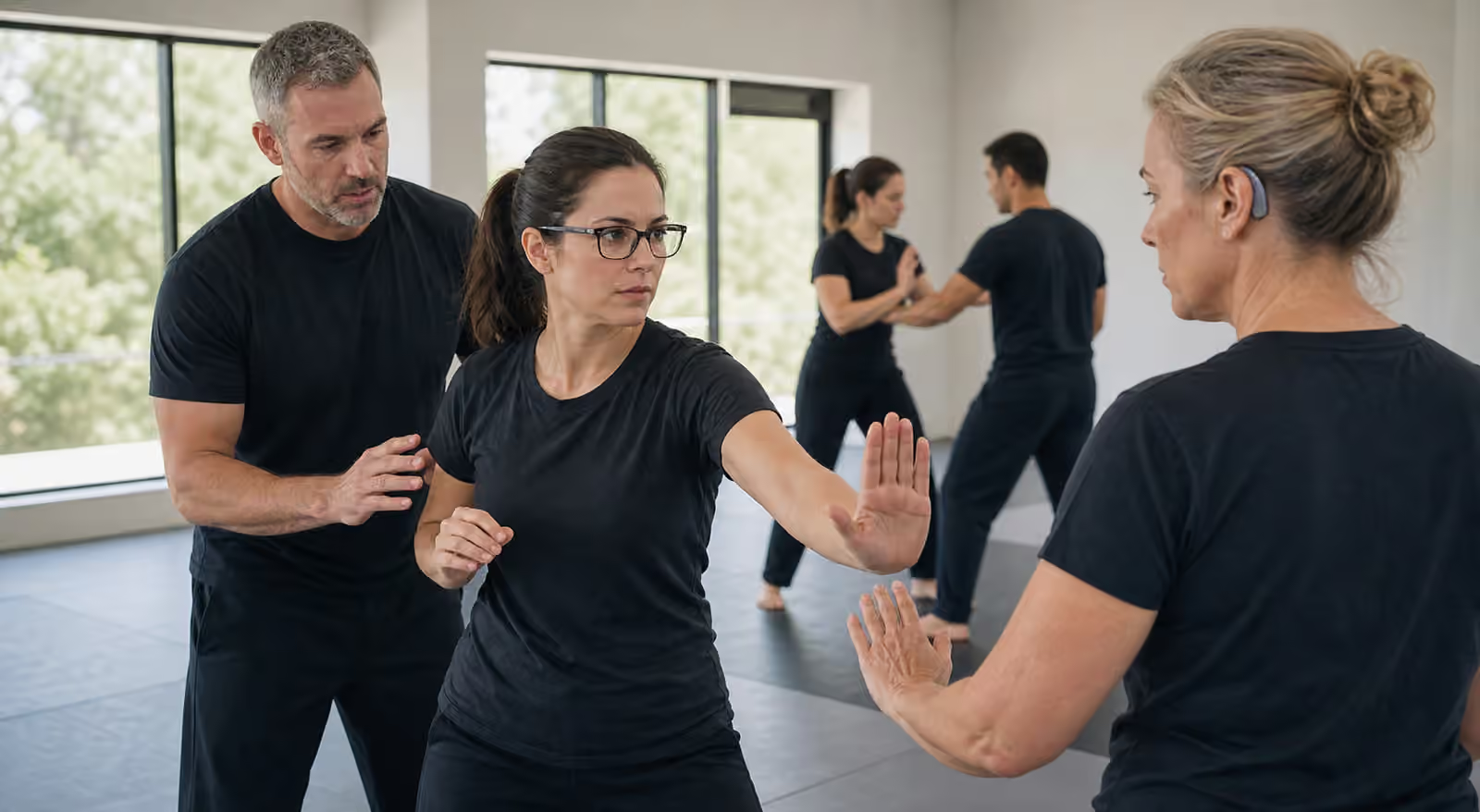
Krav Maga students often think of a drill as belonging to the defender. One person is grabbed, crowded, fed a pad, surprised by a cue, or asked to leave a marked space. That person appears to be doing the main work. The rest of the room seems secondary. In a healthy class, that is not true. Every role is training something, and the quality of the drill depends on whether each person understands their job.
The feeder, defender, observer, pad holder, and coach are not interchangeable background figures. They shape timing, safety, pressure, and feedback. A poor feeder can make a good defense look bad or a bad defense look good. A careless observer can stand in the exit lane. A pad holder can teach structure or invite injury. A coach can clarify the lesson or let the room drift into noise. Role literacy is one of the quiet skills that makes Krav Maga training mature.
Partner Work in Krav Maga covers consent, contact, and control between students. Training roles build on that foundation. They answer a more specific question: what am I responsible for in this repetition, even if I am not the person being tested? Once students understand that, drills become safer and more useful without needing to become louder.
The Feeder Sets The Problem
The feeder gives the defender the agreed problem. That may mean holding a pad at the correct angle, stepping into a boundary drill, placing a hand on a wrist, crowding slowly, presenting a focus mitt, or giving a verbal cue. The feeder’s job is not to win. It is not to surprise the defender with private inventions. It is not to prove that the technique can fail if the starting point is changed enough. The feeder serves the lesson.
This can be harder than it sounds. New feeders often overhelp. They release too soon, move where the defender expects, or freeze in a way that makes the drill neat but dishonest. Others overcomplicate. They add speed, resistance, extra grips, insults, or angles that the instructor did not assign. Both mistakes weaken the drill. The defender either learns a false success or faces a problem they were not supposed to solve yet.
A good feeder listens for the purpose. If the drill is about distance, the feeder should give a clear distance problem. If it is about voice, the feeder should leave room for voice. If it is about a wrist grab, the feeder should use the grip the instructor described, not a stronger private version. If intensity is supposed to rise, it should rise under the coach’s direction. Feeding is disciplined because learning depends on repeatable problems.
The Defender Trains Decisions, Not Performance
The defender receives the problem, but receiving is not passive. The defender has to notice, organize, move, use voice, protect balance, and decide when the repetition is finished. Beginners sometimes perform the visible answer and then stop thinking. They clear the grip and admire the release. They hit the pad and drop the hands. They angle away and forget the exit. The role is larger than the move.
Distance, Awareness, and Exit helps define the defender’s job. The defender is not trying to win the drill as a little contest. The defender is trying to practice a safer relationship to the situation. That may include leaving early, using less force, stopping when the role partner is off balance, or asking to reset because the starting position was wrong.
The defender also owes honesty to the partner. If contact was too hard, say so. If the drill is unclear, ask. If an injury or limit matters, name it before the repetition becomes awkward. If the role partner gives a useful feed, respect it by working the assigned lesson rather than improvising a favorite answer. A defender who treats every repetition as a performance makes the room less trustworthy.
The Observer Is Not Waiting
The observer may be the most underused role in beginner classes. A student stands outside the pair, waiting for their turn, and mentally leaves the drill. Done well, observing is active training. The observer watches distance, exits, posture, safety, timing, and whether the drill purpose is being met. They learn without the pressure of being inside the repetition.
This does not mean the observer becomes a second coach. Uninvited commentary can clutter the room and undermine the instructor. The observer’s first responsibility is position. Stand where you can see without blocking the exit. Do not drift into the pair’s movement. Do not hold a phone or water bottle where someone may step. Keep enough attention that if the instructor rotates roles, the drill does not need to be explained again from the beginning.
When the coach asks for feedback, the observer should describe what they saw, not perform expertise. “The exit lane was blocked by the chair.” “The hands dropped after the pad strike.” “The feeder changed grips halfway through.” These observations are more useful than speeches. They also train the observer to read real movement, which is different from guessing what should have happened.
Pad Holders Are Teachers
Pad holding is a role with its own safety demands. Pad Holding in Krav Maga explains the details, but the larger point belongs here too: the holder teaches the striker what impact means. A stable pad at the right height, angle, and distance lets the striker learn structure. A sloppy pad lies. It may absorb force in a way that hides poor alignment, or it may create wrist and shoulder problems for both people.
The holder should not act like furniture. They manage distance, brace intelligently, communicate, and stop when something feels wrong. They also control the emotional tone of the round. A holder who shouts for more power without watching structure may push the striker into bad habits. A holder who flinches, drifts, or jokes through the round makes feedback muddy. Holding pads is partner care under impact.
The striker should respect that role. Do not blast a pad before the holder is ready. Do not chase power after the holder asks for lighter contact. Do not treat the holder’s body as if it disappears behind the equipment. The pad is a tool, but a person is attached to it. That sentence should shape every impact drill.
The Coach Guards The Lesson
The coach or instructor does more than demonstrate the answer. They guard the lesson. They decide what the drill is training, what intensity belongs there, what safety signals are active, what roles are assigned, and when the room is ready for more complexity. A good coach narrows the problem enough that students can learn from it.
This is especially important in Krav Maga because the subject matter can tempt people toward drama. A simple boundary drill can become a shouting contest. A grab release can become a wrestling match. A pad round can become a fitness test. A scenario can become theater. The coach’s job is to keep the room attached to purpose.
Scenario Training and Ethics is the strongest example. In a scenario, roles must be explicit. Who is the defender? Who is the role player? What is the role player allowed to do? Who calls stop? What happens after the defender creates space? Without that clarity, students may confuse chaos with realism. With clarity, the scenario can become alive enough to teach and bounded enough to trust.
Role Changes Should Be Clean
Rotating roles seems simple until a class gets tired. Students forget who is feeding. Pads are turned the wrong way. Observers stand in the lane. The new defender starts before understanding the cue. The old defender gives advice while the coach is talking. These small breakdowns waste time and can create preventable risk.
Clean role changes are a training habit. Pause. Listen. Confirm the role. Set the space. Check the partner. Begin only when both people understand the intensity. Safety Signals and Stopping Early should be part of that rhythm. The stop signal is not an emergency-only secret. It is part of the operating system that lets roles change without confusion.
Role clarity also helps with humility. A strong defender may discover they are a poor feeder. A powerful striker may discover they hold pads badly. A confident speaker may discover they block the exit while observing. Those discoveries are not insults. They are evidence that Krav Maga is a shared practice, not a solo display.
Better Roles Make Better Pressure
Pressure training depends on role discipline. Controlled Sparring in Krav Maga shows how timing and ego can be trained without turning the room into a fight. The same principle applies to every role. Pressure is useful when it tests the assigned skill. It is wasteful when it rewards improvisation, embarrassment, or dominance.
A feeder can increase pressure by becoming more realistic within the assignment, not by changing the assignment. A defender can handle pressure by returning to breath, structure, voice, and exit instead of trying to look impressive. An observer can notice whether pressure changed the lesson. A coach can stop the drill before fatigue turns learning into survival.
This is how a room becomes serious without becoming reckless. Students stop asking only, “Did I do the move?” They start asking, “Did I serve the drill?” That question applies to every person on the floor. It asks the feeder for honesty, the defender for judgment, the observer for attention, the pad holder for care, and the coach for clarity.
Krav Maga training improves when roles are treated as skills. The defender still matters, but so does the person who creates the problem, watches the lane, holds the pad, and protects the purpose. A class with clear roles can train harder because it trusts more. It can slow down without feeling soft. It can add pressure without losing the lesson. That is not administrative detail. It is the structure that lets practical self-defense training stay practical.