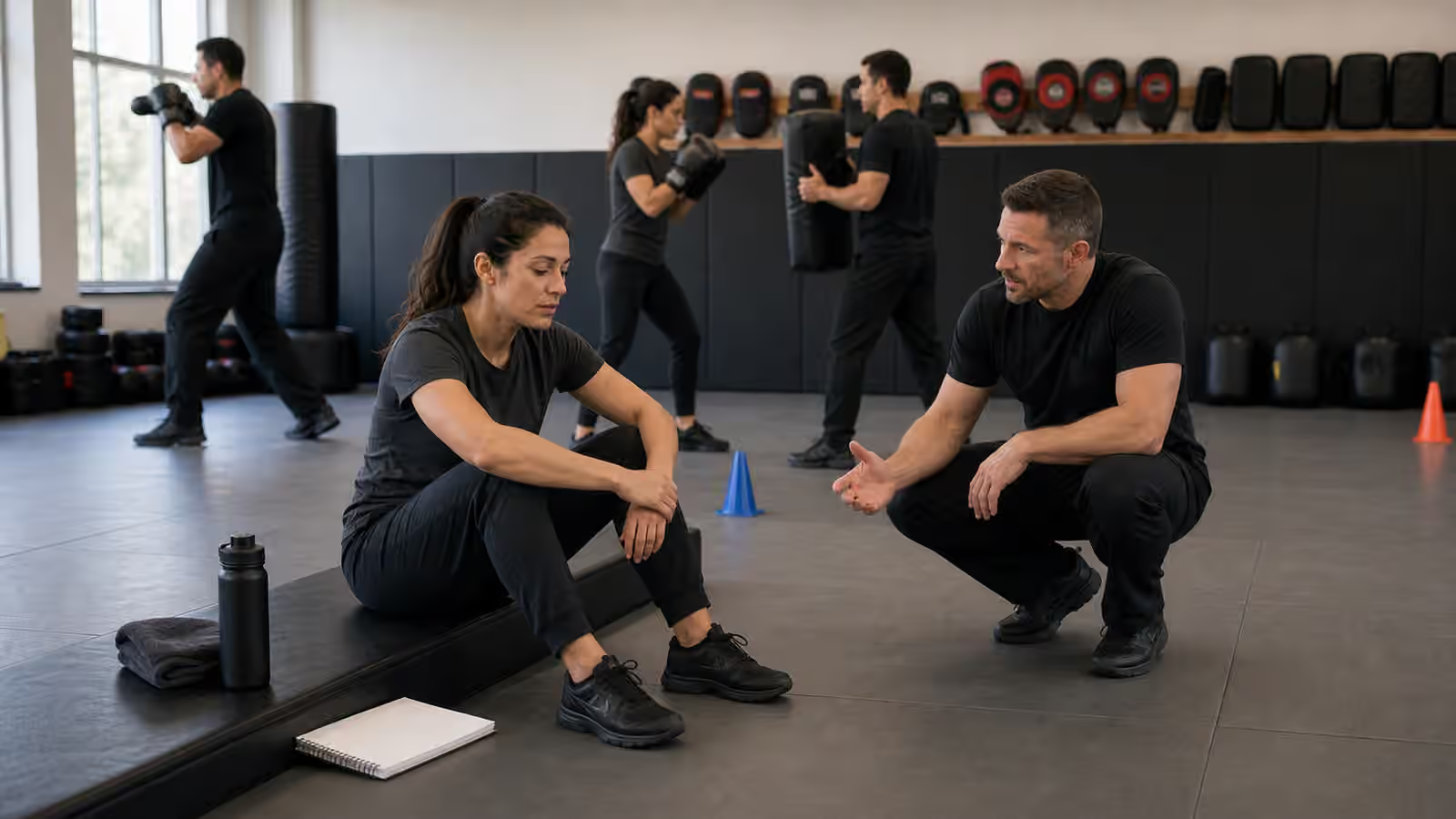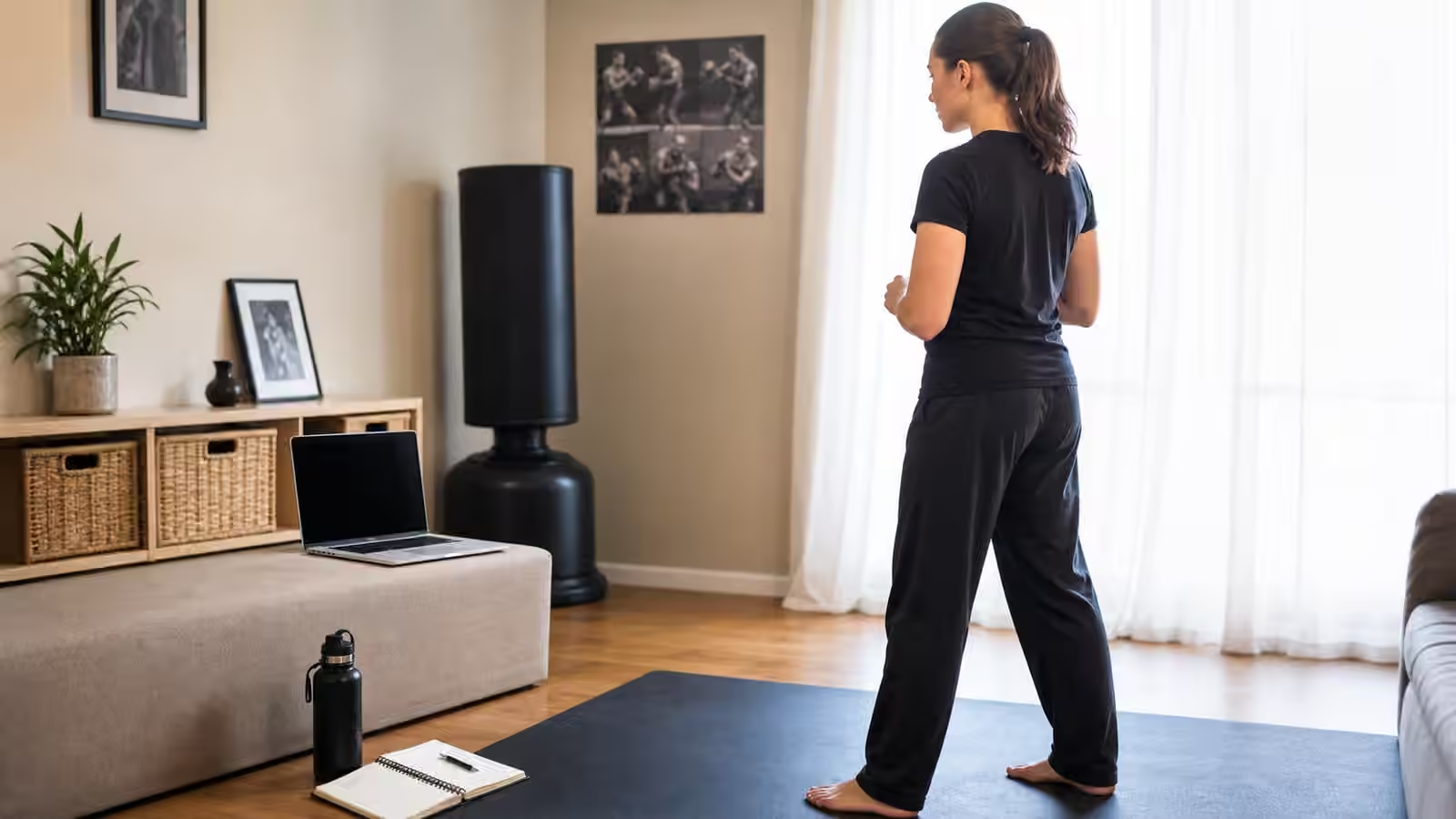
Between-class practice is where many Krav Maga beginners accidentally make training worse. They leave class excited, remember half a technique, clear space in the living room, and try to recreate a drill that was never meant to be done alone. The movement becomes larger, faster, and less accurate. The missing partner is replaced by imagination. The missing instructor is replaced by certainty.
That is not useful practice. It is rehearsal without feedback.
The better goal between classes is modest: remember what the instructor actually taught, keep the body available for the next session, and sharpen the habits that do not require a partner. You are not trying to become your own coach. You are trying to arrive at the next class with better recall, cleaner posture, calmer breathing, and fewer preventable aches.
This distinction matters because Krav Maga is full of paired skills. Distance, timing, pad feedback, pressure, verbal boundaries, and exits are hard to judge alone. If a school showed you a defense against a grab, a pad combination, or a scenario drill, the valuable part was not only the shape of your arms. It was the relationship between bodies, distance, timing, resistance, and instruction.
At home, you can support that learning. You cannot fully replace it.
Start With Recall, Not Sweat
The first useful practice happens soon after class, before the details blur. Sit down with a notebook and reconstruct the session. What was the theme? What did the warmup prepare? What correction did you receive? Which drill confused you? Which partner helped? What did the instructor repeat more than once?
Writing this down may feel less satisfying than hitting something, but it often does more for progress. Beginners forget the actual lesson and remember only the feeling of effort. A note restores shape. It turns “we did punches” into “the coach kept correcting my shoulder and told me to recover the hand faster.” That is something you can carry back into class.
Your notes do not need to be elegant. They should be honest enough that future you can read them. If you cannot remember the name of a movement, describe the problem it solved. If you cannot remember a sequence, write down the first cue. If the class raised a question, write the question instead of inventing an answer.
This is also a good place to notice the larger training map. Krav Maga Quickstart explains that the first month is about posture, attention, distance, and permission to leave. Your notebook should keep returning to those basics. If every note is about collecting techniques, you may be missing what the instructor is actually trying to build.
Practice the Habits That Do Not Need a Partner
Some habits are safe and useful to repeat alone because they are about your own body. Stance is one. You can stand in front of a mirror, soften the knees, relax the shoulders, keep the hands available, and notice whether your chin floats forward. You can step forward, back, and at an angle without crossing your feet. You can practice stopping with balance instead of drifting.
This sounds small because it is small. It is also where many larger problems begin. A person who loses balance during simple stepping will not become more balanced because the drill becomes more dramatic. A person who holds their breath during shadow movement will probably hold it during padwork too. A person who drops their hands after every imaginary strike will likely drop them after a real pad shot.
Shadow practice can be useful when it stays humble. Move slowly. Imagine an exit, not an enemy. Use the movement to check posture, breathing, and recovery. If you feel yourself adding fantasy, speed, or anger, stop. The point is not to win a private movie. The point is to make ordinary movement less clumsy.
Breathing is another between-class skill. Many students only notice breath when they are already tired. Practice returning to a quiet inhale and steady exhale after short effort. Stand, move, pause, breathe, and let your shoulders fall. This is not mystical. It is a way to teach the body that work and recovery belong together.
Leave Partner Drills for Partners
The most tempting home practice is also the riskiest: recreating partner drills with someone who was not in class. A friend or roommate may be willing to help, but willingness is not the same as training literacy. They may grab wrong, resist wrong, fall wrong, hold pads wrong, or escalate because the whole thing feels playful until it does not.
If you want to practice with another person outside class, keep it to what your instructor has explicitly cleared for low-intensity repetition. Even then, the practice should be slow, cooperative, and easy to stop. Do not surprise people. Do not add weapons. Do not add speed because the first few repetitions felt fine. Do not use a person in your house to test whether a technique “really works.”
The classroom has supervision, space, mats, rules, and people who know the drill. Your kitchen does not.
This is especially true for pressure work. Scenario Training and Ethics explains why responsible pressure needs boundaries, roles, and debriefing. At home, pressure tends to become either too theatrical or too careless. Practice the supporting habits instead. Use voice alone. Practice leaving a room without backing into furniture. Notice doorways, lighting, and distance in daily life without becoming paranoid.
Build the Body That Can Keep Training
Between classes, your most important job may be recovery. Krav Maga can expose weak links quickly: stiff hips, tight calves, tender wrists, sore shoulders, poor sleep, and the general shock of asking an adult body to move urgently after years of chairs and screens.
A useful home routine can be quiet. Walk. Stretch the calves and hips. Rotate shoulders gently. Practice getting down to the floor and back up slowly if your instructor has shown safe mechanics. Strengthen the ordinary patterns that make training less punishing: squatting, hinging, bracing, carrying, and breathing under light effort.
None of this has to look like self-defense. That is why it works. A better conditioned, better recovered body learns faster. It also gives the instructor fewer avoidable problems to work around. If your knees ache every time you step because you are always stiff and under-slept, the technical correction has to compete with basic maintenance.
Pain deserves honesty. Normal soreness can follow training, especially early. Sharp pain, joint pain, dizziness, numbness, and symptoms that change how you walk or use a limb are not badges. Talk to qualified medical help when needed, and tell your instructor about limitations before class. Training around reality is better than pretending reality will be impressed.
Use Daily Life as Awareness Practice
The safest between-class practice often happens without looking like practice. When you enter a cafe, notice exits. When you stand in an elevator, notice distance and where your hands are. When someone walks too close on a sidewalk, notice how early you can create space without drama. When you carry groceries, notice how occupied hands change your options.
This should make you calmer, not more suspicious. Awareness is not scanning the world for enemies. It is paying enough attention that ordinary choices arrive earlier. Cross the street. Let the group pass. Choose the brighter route. Stand where you can leave. Keep the phone from swallowing the whole room.
These habits connect directly to Distance, Awareness, and Exit . They are also easier to practice safely than physical defenses. Nobody gets hurt because you noticed a door.
Return to Class With Questions
The best between-class practice ends with a better question for the next instructor-led session. Maybe you noticed that your stance narrows when you step backward. Maybe you cannot remember where your hands should recover after a pad strike. Maybe a verbal boundary drill made you feel embarrassed. Maybe your notes show that you keep confusing speed with pressure.
Bring that question back. Good instructors like specific questions because they reveal attention. “Can you watch my footwork on the exit?” is more useful than “What should I practice?” It gives the instructor something concrete to see.
Training between classes should make the next class better, not replace it. If home practice makes you more rigid, more certain, more secretive, or more likely to argue with corrections, it is taking you in the wrong direction. If it makes you more observant, more prepared, more patient with basics, and more honest about your body, it is doing its job.
The mature beginner learns to practice without pretending. Some things belong in class, with partners, pads, coaching, and rules. Some things belong at home, in quiet repetition and careful notes. Knowing the difference is part of becoming safer.