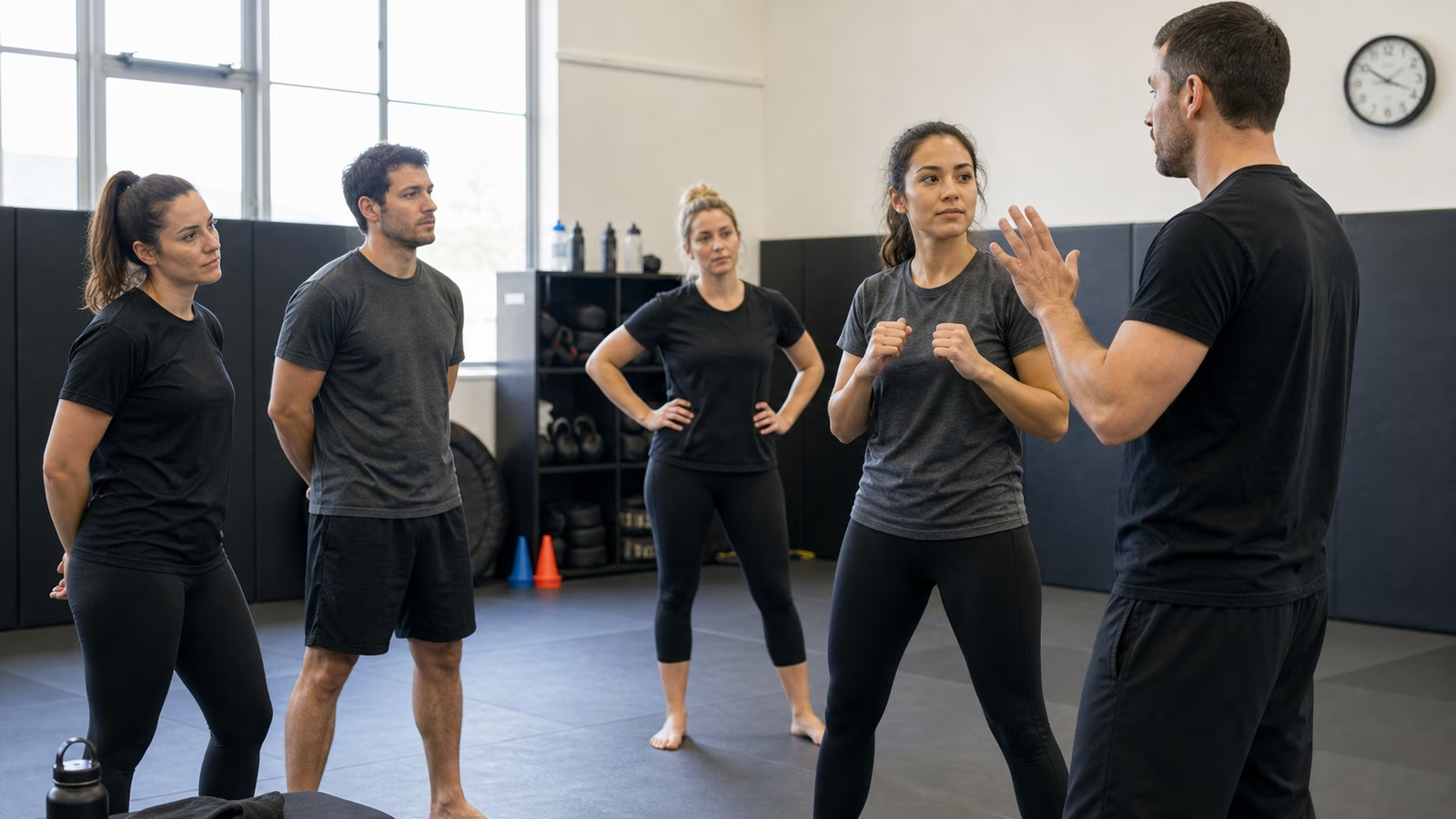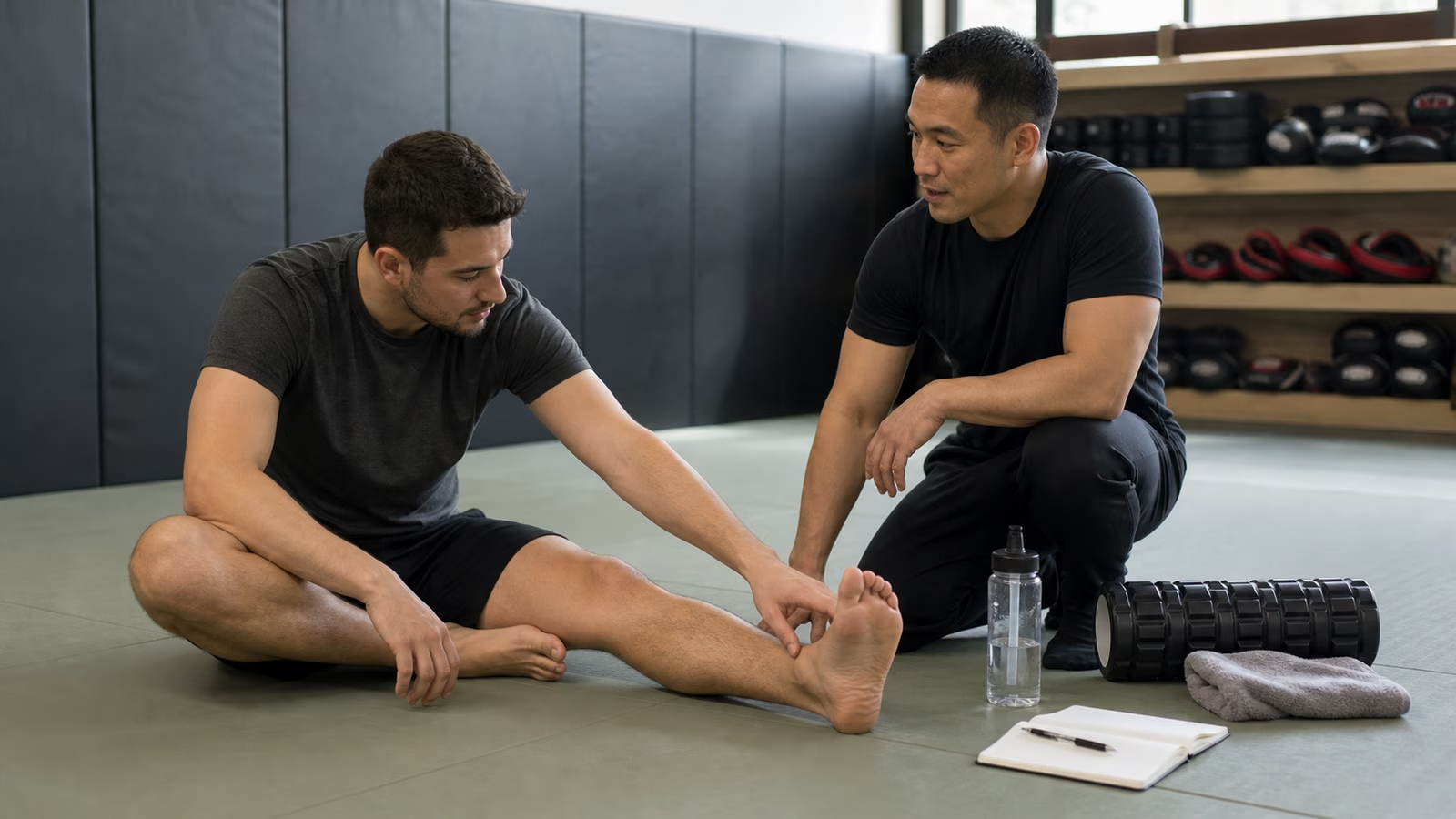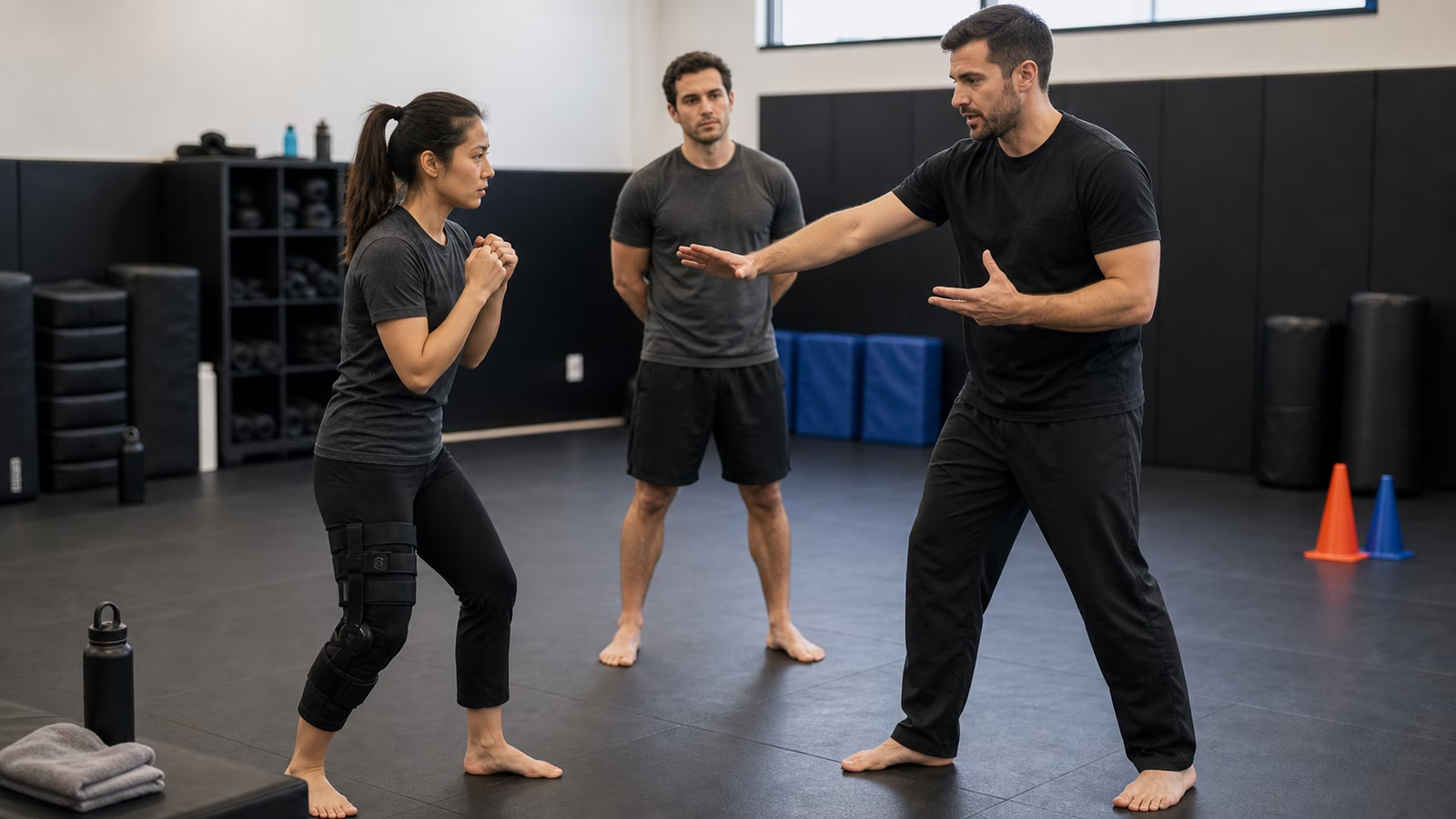
Training around injuries and limits is not a side topic in Krav Maga. It is part of the practice from the beginning. A self-defense class that only works for fresh, uninjured, well-rested bodies is teaching a fantasy version of readiness. Real people arrive with old knees, sore backs, anxious shoulders, uneven sleep, limited mobility, stress, medical histories, and days when the body does not feel the way it did last week.
The point is not to turn class into therapy or to ask an instructor to replace medical advice. If you are injured, in pain, recovering from surgery, managing a medical condition, or uncertain about training, you should get appropriate professional guidance before pushing through. The training room can adapt many things, but it should not pretend that willpower is a treatment plan.
Still, most students will eventually need to modify something. They may need to avoid impact for a week, skip kneeling, reduce speed, change a drill, hold pads differently, stand out of a round, or leave before exhaustion turns learning into sloppy survival. A mature training culture treats those choices as normal. The student who learns to communicate limits clearly is not less serious. They are safer, more coachable, and more likely to keep training long enough to improve.
Limits Are Information
Beginners often treat limits as embarrassment. They think a sore shoulder means they are weak, a modified drill means they failed, or sitting out means everyone is judging them. That fear can push people into bad decisions. They hide pain, keep moving poorly, take contact they should decline, and leave class with an injury that could have been avoided.
Limits are information. They tell you what the body can do today, what needs attention, what should be avoided, and what can be trained in another way. A limit is not automatically a wall. Sometimes it is a signpost.
If your knee does not like twisting, class can still teach awareness, distance, voice, balance within a smaller range, pad holding, observation, breath recovery, and decision-making. If your shoulder needs rest, you may still work footwork, stance, movement, verbal boundaries, and non-impact drills. If you are mentally overloaded, you may train at a slower pace and focus on listening. The class does not disappear because one version of a drill is wrong for you.
The challenge is honesty. A student needs to distinguish between ordinary effort and unsafe pain, between mild fatigue and a warning sign, between discomfort that belongs to learning and a signal that the body is being pushed in the wrong direction. That distinction takes time, and it becomes easier in a room where instructors do not shame people for speaking up.
Tell the Instructor Before the Drill
The best time to mention a limit is before it becomes a problem. A quiet word before class can save confusion later. You do not need to share private medical details with the whole room. You can say that your shoulder is limited today, your knee does not tolerate kneeling, your back needs low-impact work, or you are cleared for light training but not contact. A qualified instructor can then decide how to modify, redirect, or ask you to sit out a section.
This protects partners too. A partner cannot respect a boundary they do not know exists. If a drill involves movement you should avoid, say so before the round begins. If contact needs to stay light, say so plainly. If you feel something change during the drill, stop and reset. The earlier the communication happens, the less dramatic it becomes.
Good communication is brief and specific. Long explanations in the middle of class can be hard to process, but a clear limit helps everyone. You are not asking the room to revolve around you. You are giving the instructor and partner the information needed to keep the training useful.
Modification Is Not Avoidance
There is a difference between avoiding all challenge and modifying intelligently. A modified drill should preserve the learning goal when possible. If the goal is distance, you can often work distance without speed. If the goal is balance, you can reduce range. If the goal is verbal boundary setting, you can train without impact. If the goal is pressure recovery, you can lower the physical intensity while still practicing the reset.
This is where a good instructor matters. They can identify the actual lesson under the visible movement. A beginner may think the drill is about one loud action. The instructor may know it is really about noticing sooner, keeping structure, managing space, or returning to calm after stress. Once the real lesson is clear, modification becomes easier.
Students should also resist the urge to self-modify in ways that make a drill unsafe or incoherent. If you cannot perform the assigned movement, ask for an alternative. Do not invent a faster or more aggressive version because you want to compensate for the part you are skipping. The goal is useful training, not proving that the modification did not make you softer.
Fatigue Changes Judgment
Injuries are not the only limits. Fatigue is one of the most common. A tired student may lose balance, stop listening, hold their breath, hit pads with poor structure, forget spacing, or become careless with a partner. The body may still be moving, but the quality of attention is gone.
Krav Maga training often includes stress, and that is part of the value. But stress without recovery becomes noise. A student who learns to notice fatigue early can make better choices. They can slow down, ask for a lower pace, step out briefly, drink water, or focus on clean movement instead of chasing one more hard round.
There is no virtue in turning every class into a collapse. If you leave unable to remember what you learned, unable to drive safely, or unable to train again for a week, the intensity may not be serving you. Long-term progress depends on repeatable training. Repeatable training depends on respecting the body’s capacity enough to return.
Partners Need Permission to Be Careful
Partner culture is where limits become real. A room can have good policies and still feel unsafe if partners treat every boundary as an inconvenience. The opposite is also true. A room with simple drills can feel strong when partners check in, adjust pressure, stop quickly, and treat safety as part of skill.
Beginners should learn to give and receive boundaries without making them personal. If a partner asks for lighter contact, that is not an insult. If a partner needs more space, give it. If a partner stops, stop. If a drill is not working for one of you, call the instructor over rather than improvising through confusion.
This kind of care does not make training unrealistic. It makes training possible. Realistic training is not uncontrolled training. The room is a place to learn, not a place to collect avoidable injuries.
Returning Is a Phase of Training
Coming back after injury, illness, burnout, or a long break should be treated as its own phase. The body may remember more than it can safely do. The mind may want to resume at the old pace. The ego may dislike being careful. That is exactly when patience matters.
A good return begins smaller than the student’s memory. Fewer rounds, lower intensity, more attention to mechanics, and clear communication with instructors and partners. The goal is not to prove that nothing changed. The goal is to rebuild trust with the body and the room.
Progress after a limit may look quiet. You complete class without aggravation. You stop earlier than you wanted. You notice a warning sign sooner. You choose the modified version and still learn. These are not consolation prizes. They are signs that training is becoming more intelligent.
Krav Maga often talks about survival, but training itself has to survive ordinary life. People age, recover, adapt, and carry histories into the room. A serious practice makes space for that reality. It teaches students to protect themselves in class as well as outside it.
The strongest beginner is not the one who ignores every limit. It is the one who can train honestly, communicate clearly, respect partners, and keep returning with enough health to learn.