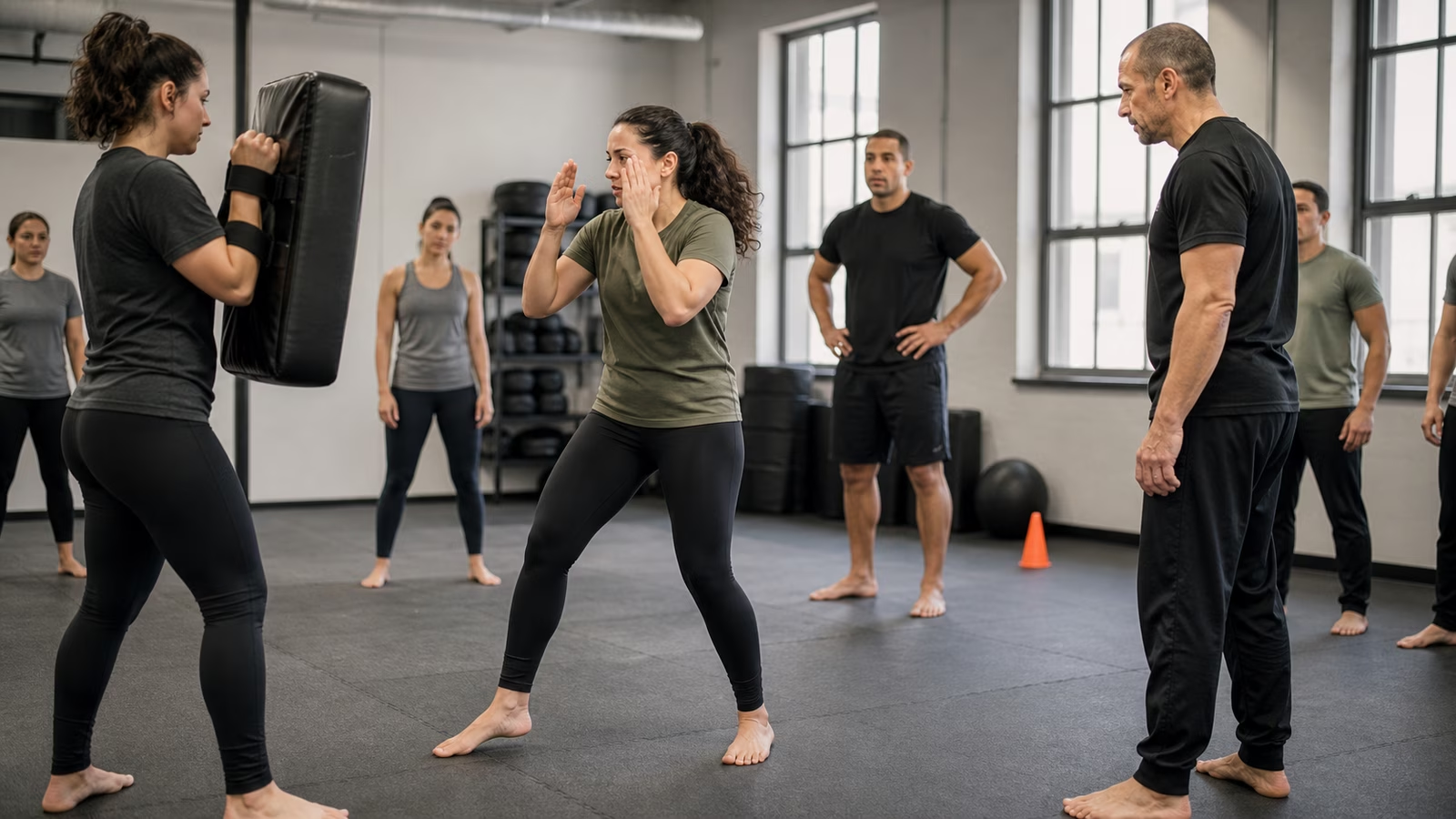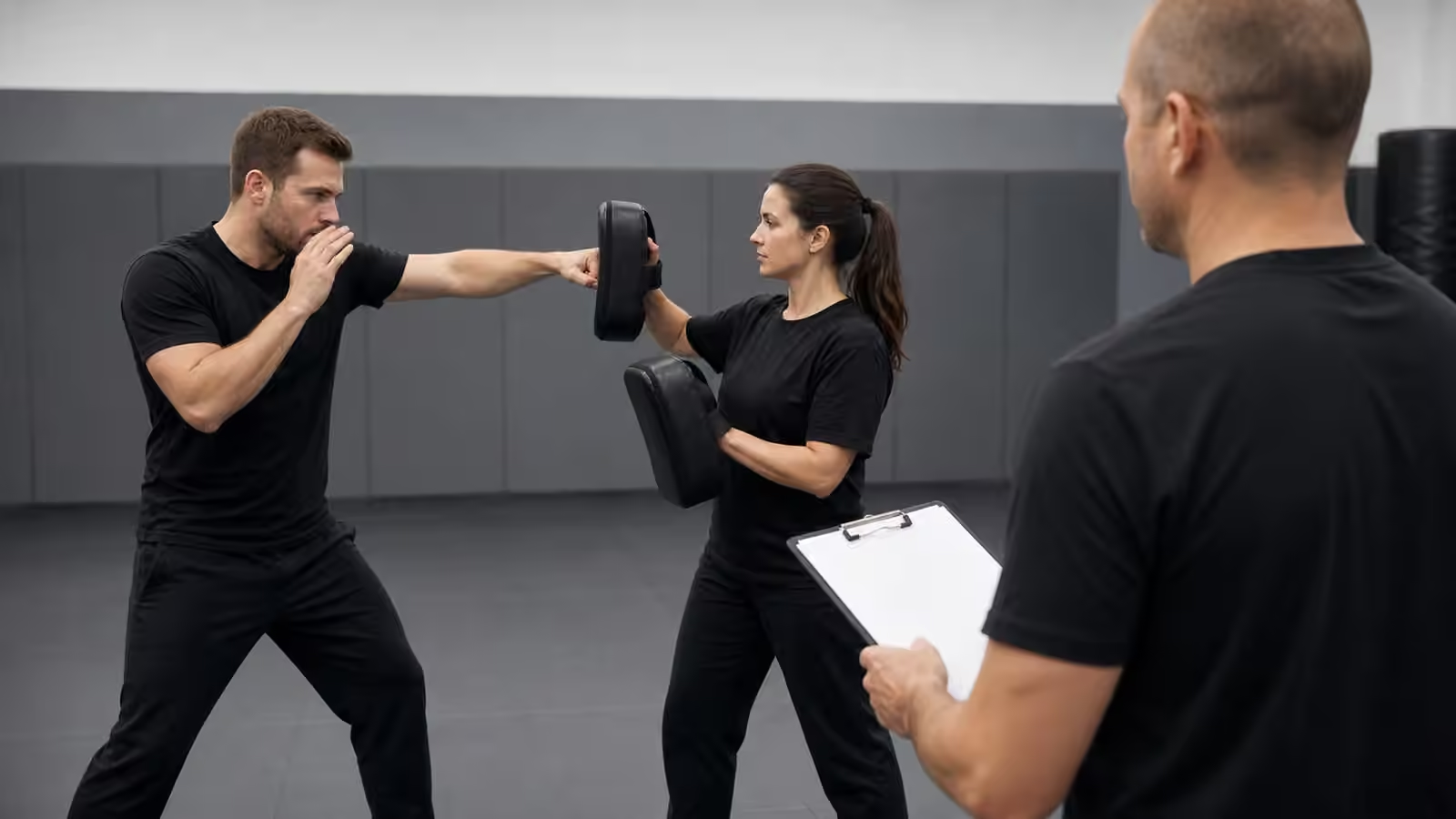
Krav Maga schools often use levels, patches, belts, certificates, or internal evaluations to organize training. The details vary widely. One school may test every few months. Another may promote through class observation. Another may use a curriculum map without much public rank language at all. A beginner can easily become confused by the symbols and miss the better question: does the testing process make training safer, clearer, and more honest?
Testing can be useful. It gives students a reason to review foundations, show consistency under mild pressure, receive feedback, and understand what the school expects at the next stage. It can also become a distraction if rank turns into the reason for training. Krav Maga is not made better by a student who chases the next label while ignoring distance, restraint, partner care, recovery, and judgment.
Progress Without Chasing Intensity is the best companion for this topic. A test should not reward only loud effort. Better progress often looks quieter: cleaner footwork, safer pad holding, steadier breath, better listening, faster recovery after mistakes, and more responsible decisions about when not to use force.
Rank Is a Map, Not the Territory
Levels help a school organize material. Beginners need structure, and a level system can tell them which skills deserve attention first. Stance, movement, falling, padwork, releases, protective posture, verbal boundaries, and pressure recovery all need time. A curriculum can keep students from collecting random techniques without understanding what supports them.
The problem begins when rank becomes identity. A student may feel that passing proves they are safe now, or that failing proves they do not belong. Both readings are too heavy. A rank test is a snapshot inside a controlled room. It can show preparation, but it cannot guarantee behavior in the messy conditions outside class. Surprise, size, weapons, numbers, surfaces, exhaustion, legal consequences, and plain bad luck do not ask what patch someone earned.
This is why a mature instructor talks about limits. Choosing a Krav Maga School is relevant because testing culture reveals the school. Does the instructor explain what the test measures? Are students encouraged to prepare gradually? Are injuries and modifications handled seriously? Are people humiliated for mistakes? Does the school sell rank as proof of invincibility? The answers tell you whether testing supports training or feeds fantasy.
Preparation Should Look Like Better Practice
Good test preparation should not feel like panic cramming. If a student is suddenly trying to learn months of material in the final week, the process has already become distorted. A better preparation cycle begins in ordinary class. The student listens to corrections, keeps notes, asks useful questions, works safely with partners, and practices the foundation between classes without pretending the living room is a battlefield.
Training Between Krav Maga Classes fits here. Between-class work can help a student remember vocabulary, rehearse stance, review footwork, breathe through stress, and write down corrections. It should not turn into unsupervised high-speed technique drilling. If a movement depends on timing, pressure, impact, falling, or another person’s body, it belongs under qualified supervision.
A test can reveal whether preparation was honest. The student may know a movement by name but lose balance when tired. They may strike pads with effort but forget to recover their hands. They may complete a grab release but stand still afterward. They may know the answer in a static line but freeze when the feed changes slightly. None of that means the student is hopeless. It means the test has shown where training should continue.
The healthiest students treat those discoveries as information. They do not argue with every correction or collapse into shame. Using Corrections in Krav Maga is part of testing because evaluation is feedback under a brighter light. The student who can receive a correction during test preparation without ego is already practicing a skill more important than any label.
Pressure Must Have Guardrails
Many Krav Maga tests include fatigue, pad rounds, scenario elements, partner work, or controlled pressure. That can be useful because self-defense skills need to survive more than calm explanation. But pressure is not automatically meaningful. A test that exhausts students until form disappears may show endurance, not competence. A test that surprises students without clear safety rules may show startle, not skill. A test that rewards reckless intensity may train the wrong character.
Padwork and Pressure gives the right standard. Pressure should have a purpose, a boundary, and a recovery path. Students should know the stop signal. Partners should know their roles. Contact should match the assignment. The instructor should be able to explain what the pressure is measuring. If no one can explain the purpose beyond toughness, the test may be loud rather than useful.
Testing also exposes partner culture. A feeder who grabs too hard to make a point, a pad holder who is careless with angle, or a role player who adds private resistance can distort the evaluation. Partner Work in Krav Maga matters because a test is not a license for classmates to become unpredictable. The room should be serious enough to stay controlled.
Students have responsibilities too. They should not hide injuries to pass. They should not increase contact because adrenaline is high. They should not treat a tired partner as a prop. They should not keep going through dizziness, sharp pain, or confusion because rank feels close. Safety Signals and Stopping Early applies during testing as much as ordinary class. A rank earned by ignoring basic safety is teaching the wrong lesson.
Passing and Failing Both Need Interpretation
Passing a test can feel good, and that is fine. Effort deserves acknowledgment. The danger is letting the certificate rewrite reality. A student who passes still needs to return to class, review foundations, hold pads safely, move with humility, and keep learning. Rank does not remove the need for caution. If anything, it should increase responsibility because newer students may now watch and copy.
Failing or being deferred can hurt, especially for adults who are not used to public evaluation. But a failed test may be a useful act of care if the student was not ready for the next training demands. The question is whether the school explains the gap. “Come back when your footwork, pad control, and recovery are more consistent” is useful. Vague humiliation is not. A student should leave knowing what to work on and how to train safely until the next opportunity.
This is where Class Debriefs and Training Journals can turn the test into better practice. After an evaluation, write down what actually happened while the memory is still fresh. Which corrections repeated? Where did fatigue change movement? Which partner role felt unclear? Where did voice disappear? Which drill made judgment narrow? The point is not to obsess over the test. The point is to let the test feed the next month of training.
Keeping the Point
The point of Krav Maga testing should be better self-defense education, not status. A student who rises through levels but becomes more reckless has misunderstood the curriculum. A student who remains at the same level while becoming calmer, safer, more aware, and more honest may be making real progress that rank has not yet caught.
Good tests remind students that foundations remain active. Notice distance. Use voice. Protect the head. Move off line. Hold pads with care. Stop when safety requires it. Recover breath. Leave the scene of the drill instead of posing. Ask for help. Think before force. Those habits should appear at every level because the real world does not separate beginner ethics from advanced movement.
Testing can be a useful milestone when it is treated lightly enough to serve training and seriously enough to protect students. The level is a marker. The practice is the work. If the evaluation sends a student back to class with clearer attention, better questions, and less need to prove themselves, it has done something worthwhile.