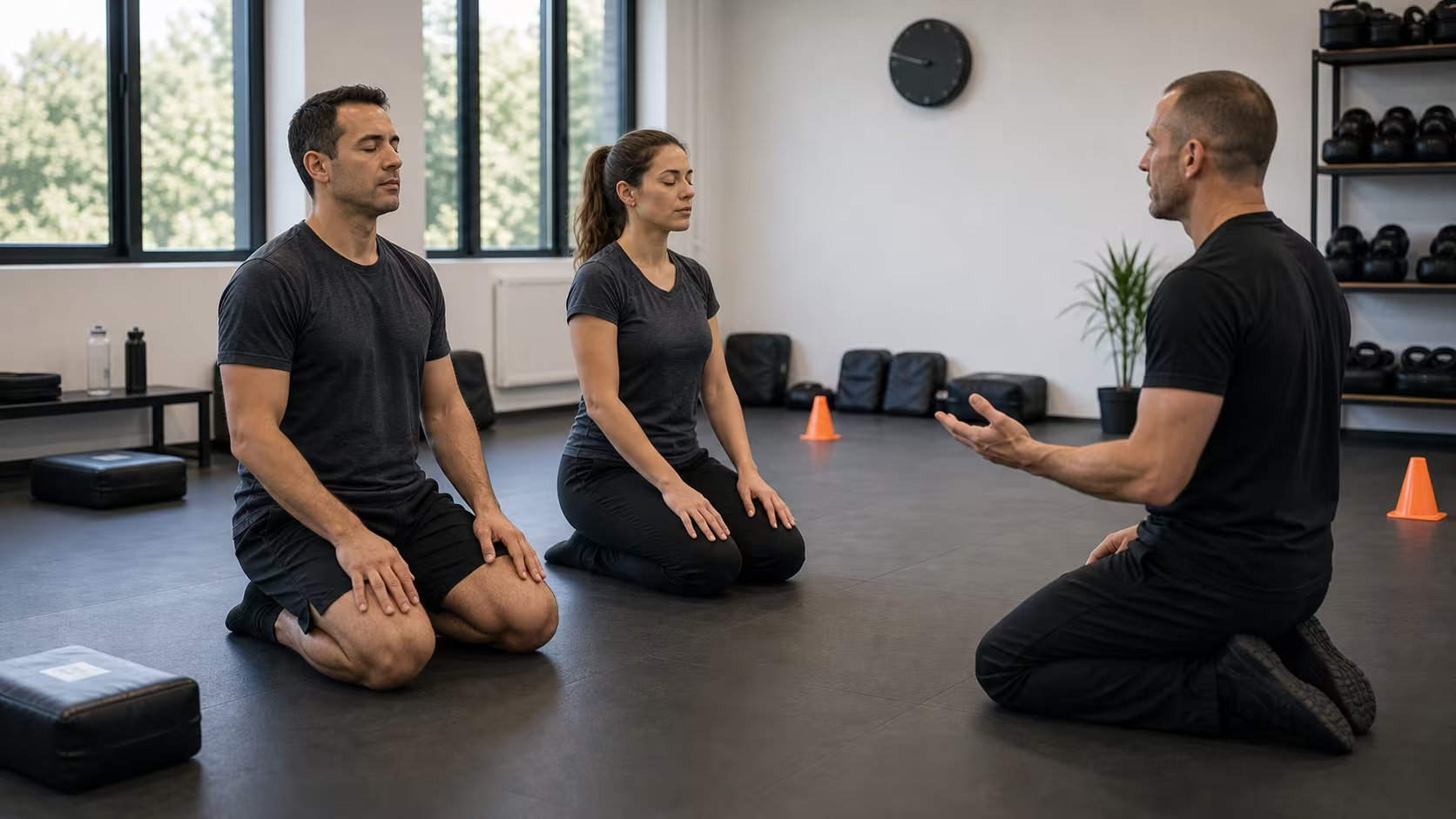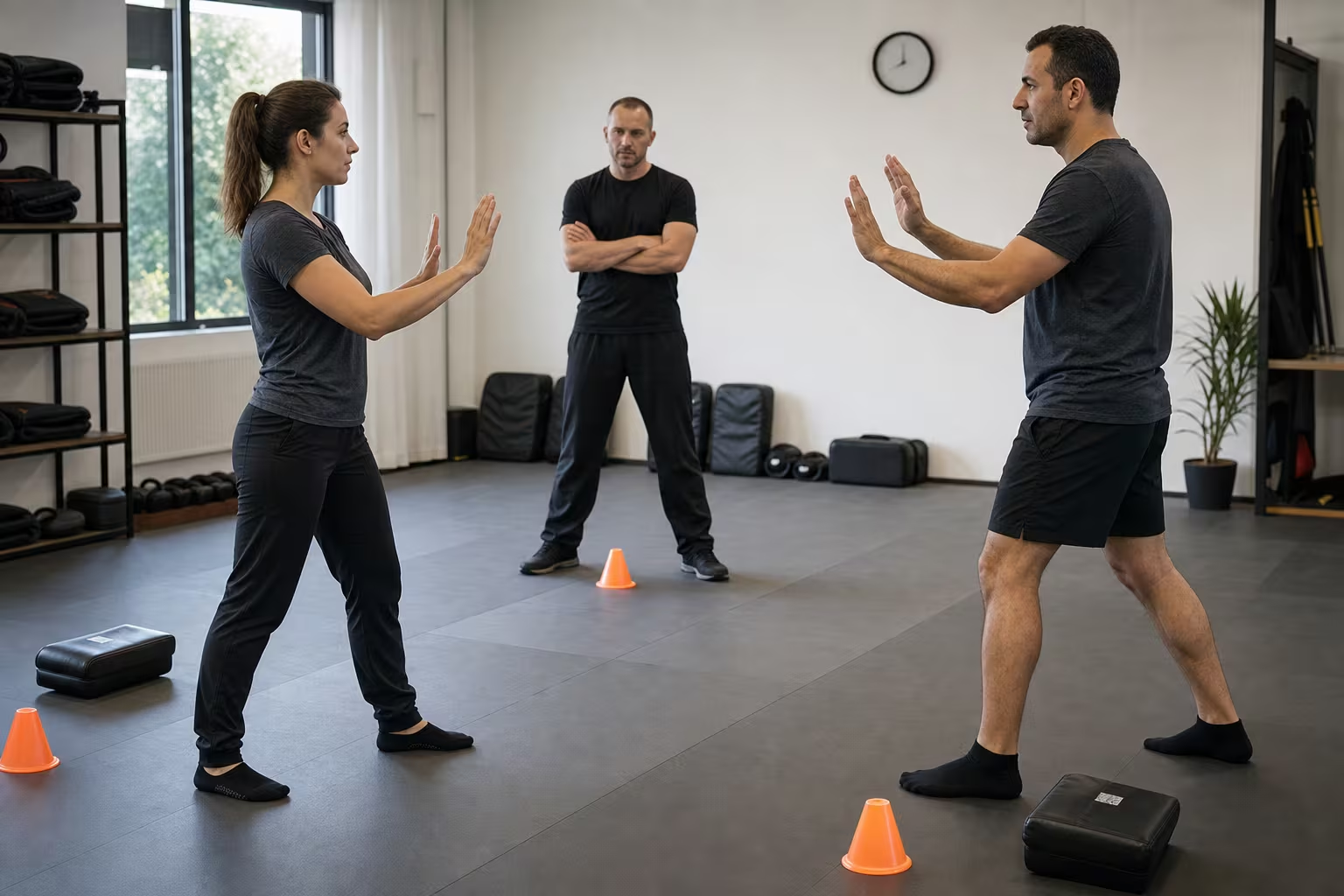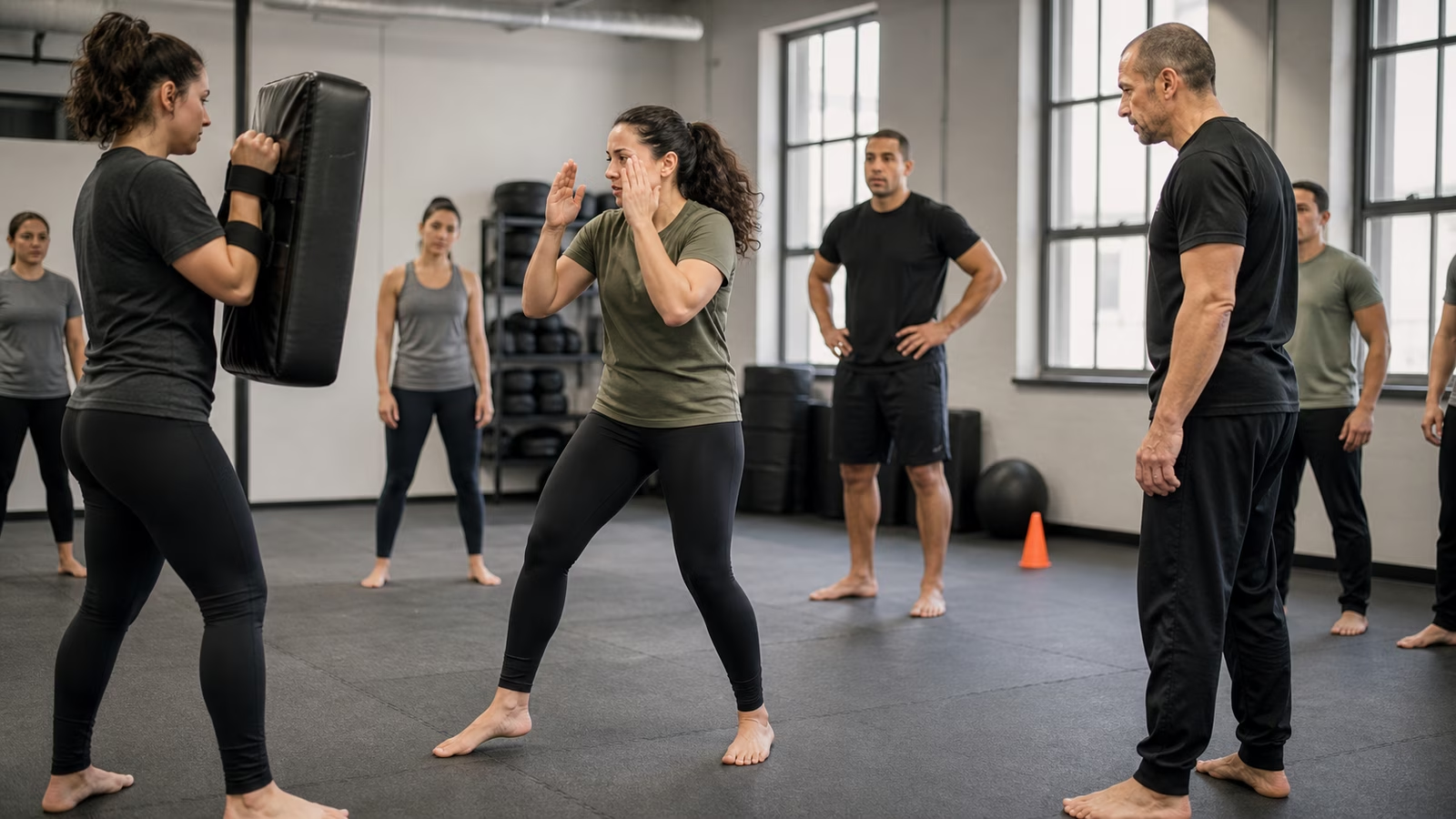
The first second is rarely elegant. A student can know the drill, understand the instruction, and still jump when the pad appears sooner than expected. The hands may fly up unevenly. The breath may vanish. The feet may pause as if they need permission from the floor. The eyes may lock on the nearest movement and forget the rest of the room.
That moment is not failure. It is one of the main reasons to train.
Krav Maga often talks about simple actions under stress, but the word simple can mislead beginners. Simple does not mean calm, pretty, or automatic from the first class. It means the action has fewer moving parts when the body is already busy. Surprise still has a cost. A good training room does not pretend the cost disappears. It teaches the student to pay less of it, recover sooner, and return to useful choices before the situation gets larger.
Startle response belongs beside Distance, Awareness, and Exit , not in place of it. The best answer is still to notice earlier, move sooner, and leave when leaving is available. But training also has to respect the late moment. People do get distracted. Conversations do change tone quickly. A doorway, a crowd, a car, or a narrow hallway can reduce the time available for neat decision-making. The first second is where a person discovers whether a surprise turns into freezing, flailing, or a messy but organized reset.
Startle Is Information
Many beginners are embarrassed by a visible flinch. They treat it as proof that they are not tough enough. That is a poor reading of the body. A startle response says that something arrived suddenly enough to interrupt ordinary control. The question is not whether the body reacts. The question is what the student does after the reaction begins.
In class, a controlled startle drill might begin with a student standing in a neutral position while a partner presents a pad from a known range. At first the cue is predictable. Later it becomes a little less predictable, but still bounded by the rules of the drill. The student is not being ambushed for entertainment. They are learning the shape of the first interruption: hands rise, posture organizes, feet recover, eyes return, breath comes back, and movement continues.
That order matters. A student who tries to skip recovery may turn the first second into frantic output. They hit before they are balanced, step before they know where the exit is, or stare at the pad as if the pad were the entire problem. A student who treats startle as information can ask better questions. Did my hands protect or chase? Did my chin lift? Did my feet narrow? Did I stop breathing? Did I hear the next instruction? Did I return to the room?
The answers will change over time. Early repetitions may reveal tension more than skill. That is useful. The class is showing the student what surprise already does, not inventing a weakness that was not there.
The Hands Should Protect Without Freezing
When startled, many people bring the hands up. That is a useful instinct if training shapes it carefully. Hands near the face and chest can protect space, help manage distance, and prepare the body to move. The problem begins when the hands become stiff decorations. A student may raise them and then freeze, palms hovering near the face, elbows floating, shoulders tight, breath stuck high in the chest.
Good Krav Maga coaching turns that raw motion into a practical frame. The hands should not be theatrical. They should be available. They can communicate, shield, create a moment of space, return to guard, touch a pad, or help the body angle away. The exact mechanics belong with an instructor who can see the student’s posture and partner distance. The larger lesson is easier to name: the startle should become a bridge back to movement, not a pose.
This connects naturally to Close Range in Krav Maga . A frame at close range is often born from the same need as a startle response: something has entered space faster than the student wanted. The frame is useful only if it buys breath, posture, and a chance to leave or reset. If it becomes a contest of stiff arms, the student may feel busy while the situation keeps deciding for them.
Feet Decide How Long Surprise Lasts
The feet often tell the truth before the hands do. A startled student may hop backward, cross one foot behind the other, rise onto the toes, or plant so hard that the next step becomes impossible. None of this is strange. The body is trying to get away from a sudden cue. The problem is that a bad step can keep the student inside the surprise.
Footwork and Balance is therefore part of startle training. The first useful movement may be small: the knees soften, the base widens just enough, the weight comes back under the hips, and the student angles instead of drifting straight backward. The goal is not fancy footwork. The goal is to prevent the first reaction from stealing every later option.
In a beginner drill, the instructor may ask for less speed and more recovery. That can feel backwards to a student who wants realism. But realism without a base teaches panic. If every surprise sends the student into a stumble, they are not learning to handle surprise. They are rehearsing the same stumble louder. Slowing the drill enough to find the feet is often the most honest version of training.
Once the feet are available, the rest of the room becomes available. The student can see the wall, the open lane, the partner, the instructor, and the space behind the pad. They can make a better decision because the body is no longer trapped inside the first jolt.
Breath Brings the Student Back
Startle often steals breath. The student inhales sharply, holds it, and then tries to move through a locked torso. The shoulders climb. The jaw tightens. The next instruction sounds far away. This is why Breathing and Stress Recovery matters so much in pressure work. Breath is not a decoration added after the physical skill. It is part of the physical skill.
The useful breath after surprise is usually ordinary. It may be one honest exhale as the hands organize and the feet return. It may be the breath that lets the student say a clear boundary instead of making a noise. It may be the breath that helps the eyes leave the pad and find the exit. No breath guarantees safety, and no breathing cue replaces judgment, but a student who can recover breath sooner has a better chance of staying teachable.
This is also why startle drills should not be stacked endlessly without reset. If the room keeps startling students until they are only laughing, gasping, or bracing for the next trick, the drill has lost its point. The reset is the lesson. Surprise, organize, breathe, move, look, listen. Then repeat with enough control that the student can compare one repetition to the next.
Surprise Needs Rules
Startle work can go wrong when it becomes a game of catching people. A partner who changes the drill without consent, adds contact that was not agreed, or tries to scare a newer student is not making training more realistic. They are weakening trust. Krav Maga needs pressure, but pressure has to be shaped well enough that people can return next week and keep learning.
The best surprise drills have visible guardrails. The cue is clear even if the timing varies. The target is appropriate. The distance is managed. The intensity is matched to the student. The stop signal matters. The instructor can explain what the drill is training and what it is not training. Those habits echo Partner Work in Krav Maga and Krav Maga Safety Signals and Stopping Early , because the first second becomes useful only inside a room where people respect boundaries.
For beginners, the most valuable surprise is often mild. A pad appears from a slightly different angle. A verbal cue comes a moment later than expected. The student begins with eyes closed only if the room is controlled and the instructor has a reason for it. An obstacle changes the exit lane. A partner steps in and then stops on command. None of this needs to become theater. The body is sensitive enough. Small changes can teach plenty.
As students improve, the drill can include more decision-making. Maybe the right answer is to move and leave. Maybe it is to use voice. Maybe it is to strike a pad and angle out. Maybe it is to do nothing physical because the cue was not actually a threat. That last option matters. If every cue becomes an attack in the student’s mind, the drill may teach overreaction. Good self-defense training should sharpen judgment, not replace it with a hair trigger.
The First Second Should End Somewhere Useful
A startle drill is incomplete if it ends with the student frozen in a protective shape. The useful ending is not a dramatic finish. It is the return of choice. The student protects, regains balance, breathes, sees the room, and moves toward a better position. Sometimes that means leaving the line. Sometimes it means creating distance and using voice, as described in De-escalation and Verbal Boundaries . Sometimes it means striking a pad in a controlled training context and then not staying attached to the pad as if the pad were the whole world.
This is where Padwork and Pressure can either help or confuse the lesson. If padwork is only about louder impact, the startled student may rush to hit before they are organized. If padwork is taught as structure under stress, it can give the student feedback without turning every repetition into panic. The pad tells the truth about posture, distance, and breath. It also gives the drill a safe object for impact, which matters when the subject is surprise.
The first second also needs humility. A written guide can name principles, but it cannot safely teach surprise training by itself. Timing, distance, partner pressure, injury history, and emotional readiness all matter. A qualified instructor can scale the drill and stop it when the lesson has been reached. Private experiments with surprise can easily become careless, especially when one person thinks the point is to shock the other person.
A Calmer Relationship With Being Late
No one wants to be late to a problem. Much of Krav Maga is designed to help people arrive earlier: notice the distance, use the exit, set the boundary, avoid the hallway, decline the argument. Still, training should prepare students for the uncomfortable truth that late moments happen. The first second may be clumsy. The body may jump before the mind has a sentence. The hands may rise imperfectly. The breath may need to be found again.
Progress is not the disappearance of startle. It is a shorter path back from startle. The student notices the flinch without shame. The hands protect without locking. The feet recover before the room disappears. The breath returns soon enough to hear instruction. The eyes widen back to the environment. The student moves toward space instead of staying inside the shock.
That is a practical kind of confidence. It does not require pretending to be fearless. It comes from meeting the first second honestly, in a room with rules, partners who can be trusted, and instructors who care more about usable recovery than dramatic reactions. The goal is not to become impossible to surprise. The goal is to become less owned by surprise when it arrives.