Social settings create self-defense pressure before anything looks physical. A person may be at a restaurant, party, wedding, club, reception, backyard gathering, game night, or community event when the tone changes. The room may be loud. Friends may want to stay. Someone may be embarrassed to leave early. A table, booth, bar stool, or crowded doorway may make movement awkward. The danger is not only another person. It is the social gravity that tells people to keep smiling while their instincts are asking for space.
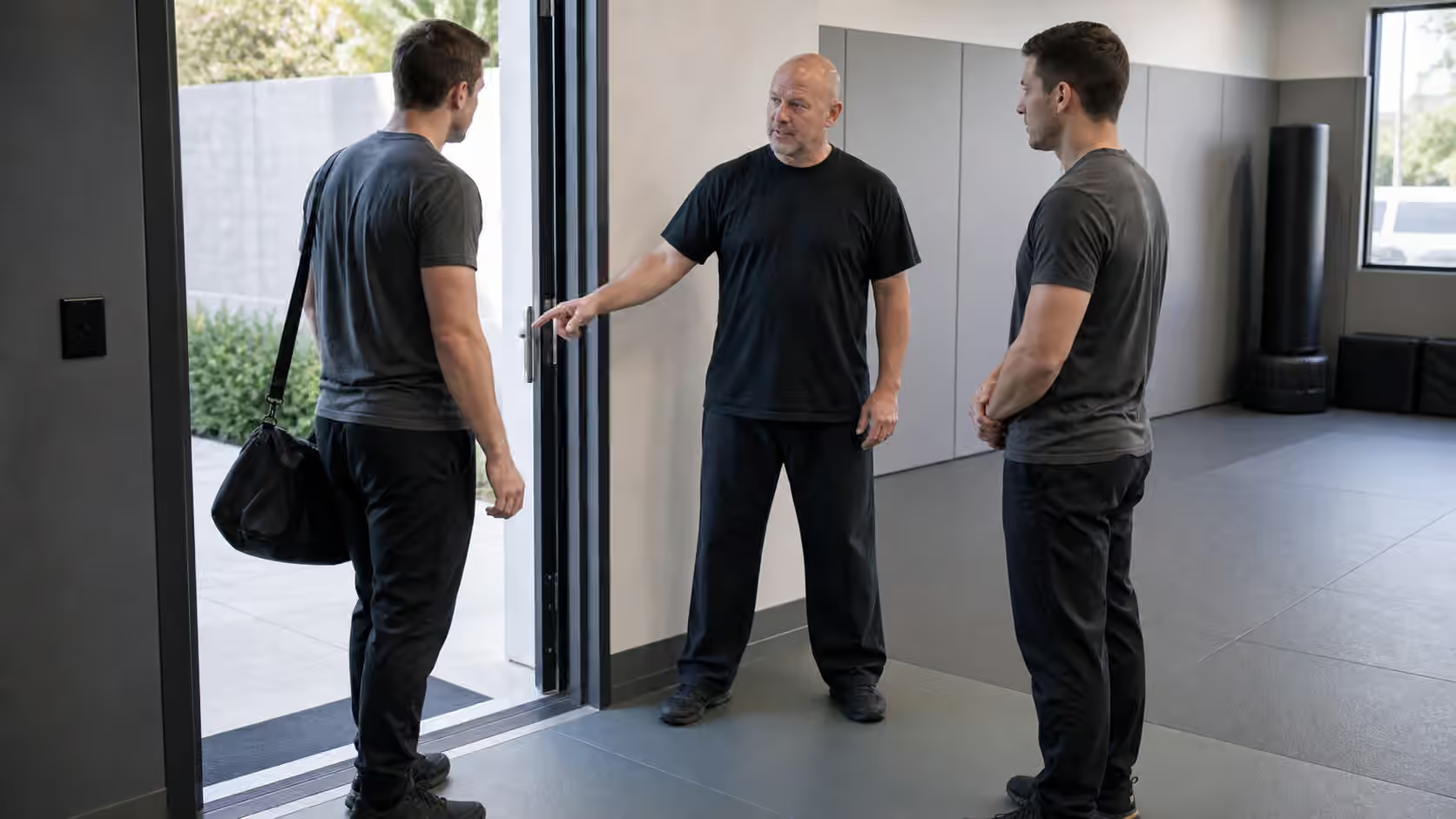
Krav Maga is useful here when it remembers that leaving is a skill. The goal is not to turn social life into surveillance or to treat every stranger as a problem. The goal is to notice when a normal interaction stops behaving normally, then create space before pride, politeness, group pressure, or furniture makes the decision harder.
Crowded Space Awareness covers movement through busy public places. Social events add another layer because the crowd may include people you know, people you half know, and people whose approval you care about in the moment. That social layer changes timing. Many people do not leave when their body first asks to leave. They wait for a better excuse. They explain too much. They stay because a friend says the person is probably harmless. They stay because they do not want to make a scene.
The Table Changes the Exit
Restaurants and parties are full of small obstacles that feel invisible until movement matters. A booth can trap the inside person. A chair can hook the back of a knee. A bag under the table can steal the first step. A crowded aisle can turn a clean exit into a negotiation. A drink in the hand can make the body cautious, even when the cup is the least important thing in the room.
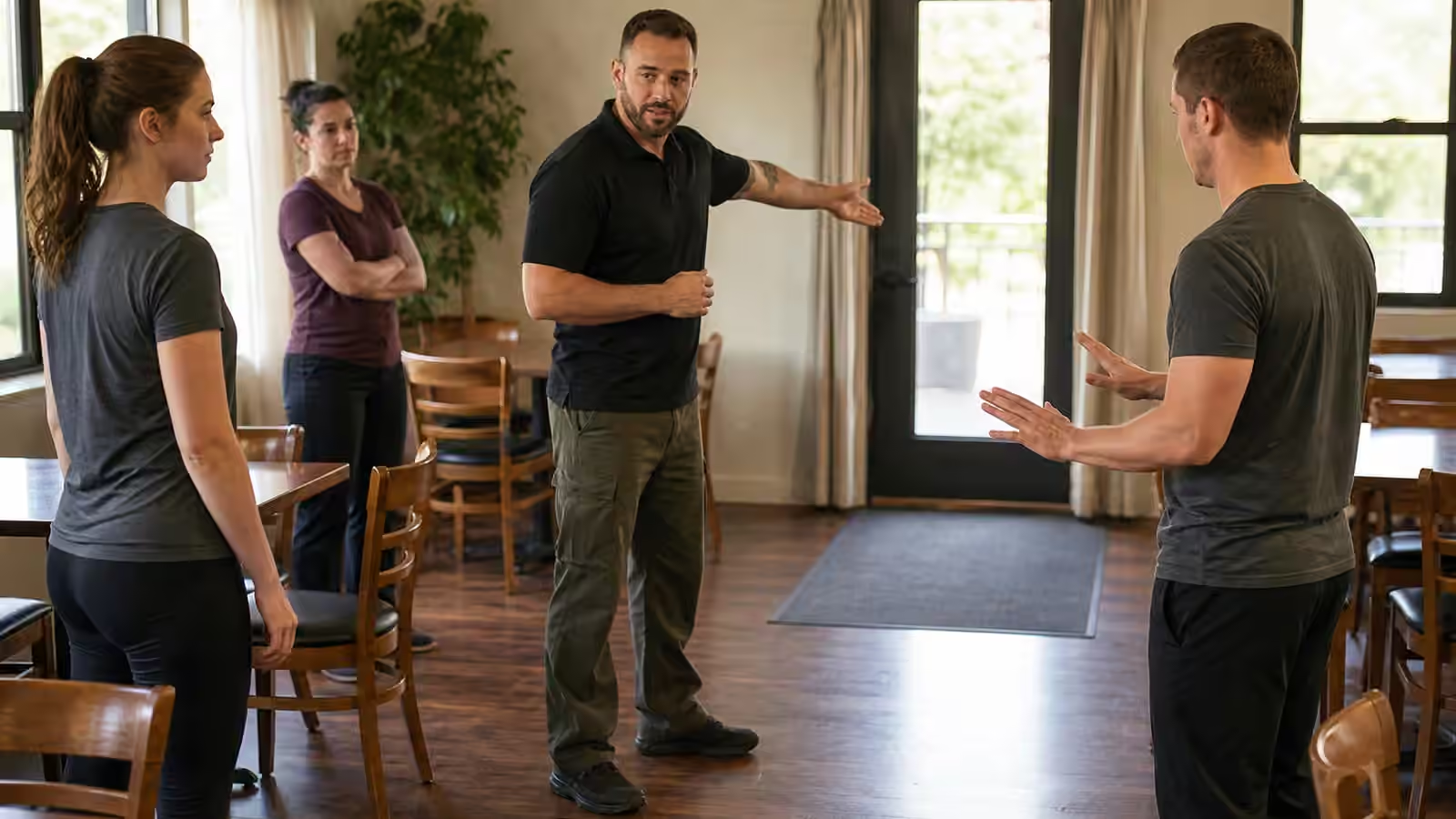
Training can study those details without pretending to recreate a night out. A coach can place chairs and a table shape on the mat, then ask students to stand, use a boundary, and leave without crossing feet or backing blindly. The drill should be plain. It does not need shouting or theatrical role-play. The useful discovery is how much the body changes when it starts seated, angled toward a table, or boxed in by chairs.
Seated Position Awareness belongs beside this page because many social problems begin while someone is sitting. Standing up safely is not as simple as rising fast. A student needs to make space for the feet, keep the head from pitching forward, avoid pushing the chair into the exit lane, and notice where the other person is moving. If the first standing motion is clumsy, every later choice is late.
The best social-event position is not always the most defensive-looking one. You do not need to sit with your back to a wall like a caricature. You can simply avoid wedging yourself where leaving requires everyone else to move first. You can keep a bag reachable without placing it under your own feet. You can choose the outside seat when you already feel uneasy. Small choices matter because they preserve ordinary exits.
Friends Can Help or Anchor You
Social events often include companions, and companions change everything. A friend may notice a problem before you do. A friend may also dismiss it, freeze, keep arguing, or try to rescue the mood by staying. A group can make leaving easier if the plan is clear, or harder if every person waits for someone else to admit the moment has changed.
Krav Maga When You Are Not Alone gives a useful frame for this. Responsibility includes communication before the situation is urgent. A simple agreement can matter: if one person wants to leave, the group leaves first and discusses it later. That agreement is not dramatic. It prevents a long hallway debate while the situation is still nearby.
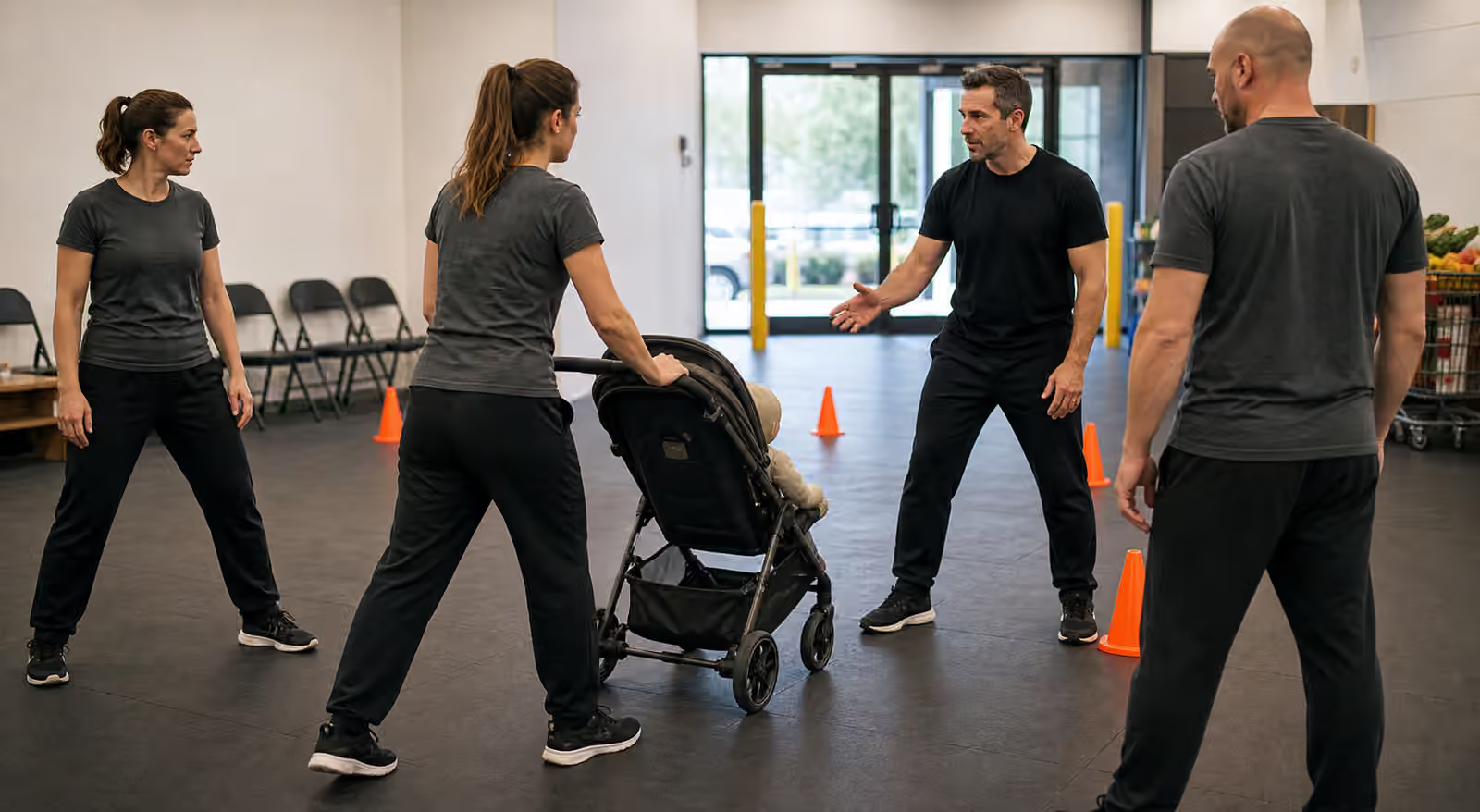
In training, companion drills should stay modest. One student decides to leave. Another is distracted or reluctant. The task is not to drag the companion or create a comedy scene. The task is to use clear words, choose the open lane, and avoid turning the decision into a public argument. “We are going now” can be safer than a detailed explanation to someone who is already escalating. “I will tell you outside” can be enough when the room is no longer the place for analysis.
There is also humility in letting a friend be right. People sometimes resist leaving because they did not personally see the problem. Krav Maga should train students to respect a companion’s discomfort, especially when the cost of leaving is low. The drink, table, conversation, performance, game, or argument can wait. Safety decisions do not need perfect courtroom evidence before they are allowed to begin.
Alcohol, Noise, and Ego
Social settings may include alcohol, loud music, fatigue, flirtation, status, and people trying to impress each other. This page is not medical advice, legal advice, or a rulebook for drinking. The practical Krav Maga point is simpler: anything that lowers attention or raises ego makes early exit more valuable.
Arguments in social settings often have an audience, and audiences can make people foolish. A person may keep talking because others are watching. They may answer an insult because silence feels like losing. They may step closer because the group is loud and close distance feels normal. They may mistake embarrassment for danger or danger for embarrassment. A good student learns to separate pride from safety as early as possible.
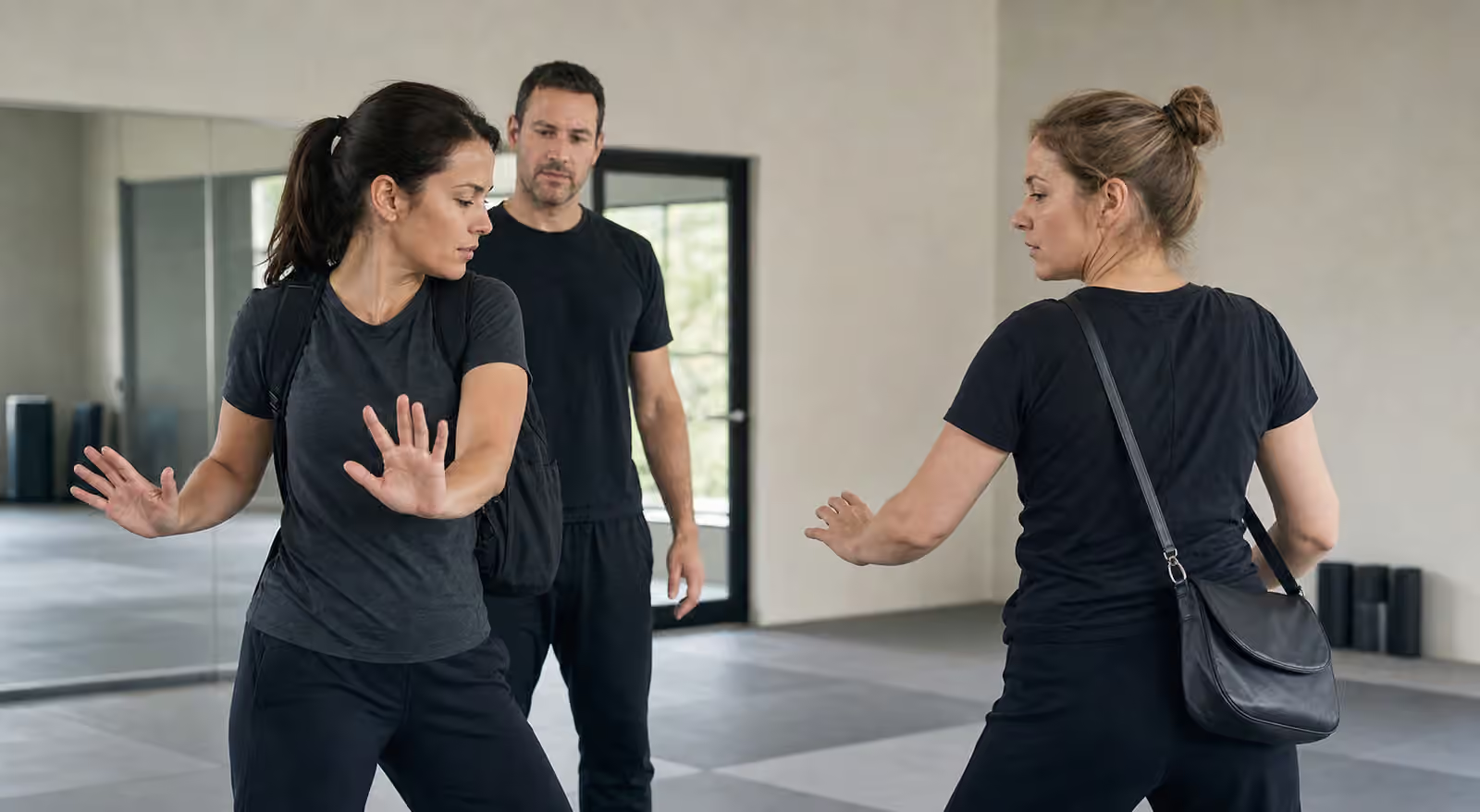
De-escalation and Verbal Boundaries helps here. A boundary at a social event should be brief enough to survive noise. “No.” “Back up.” “Do not touch me.” “We are leaving.” “I am not discussing this.” The words are not magic, and they do not need to win an argument. They need to mark the change and support movement.
The body should match the words. If the sentence says “I am leaving” while the feet stay planted, the message becomes weaker and the student stays available for more pressure. A better pattern is voice, angle, exit. The angle may be tiny. It may mean stepping around a chair, turning toward a brighter path, moving toward staff, or joining a companion. The point is to stop treating the argument as the center of the room.
Staff, Bystanders, and Public Help
Restaurants, venues, and gatherings often include staff, hosts, security, or other adults who can help. Many people delay asking because they do not want to seem dramatic. That delay can make a small problem larger. Asking for help is not the same as making an accusation. It can be a practical request for space, escort, lighting, a cab, a different table, or another person to stand nearby.
Bystanders and Help-Seeking in Krav Maga treats the room as part of self-defense. A student should practice making help specific. “Please walk with us to the door.” “Please call staff.” “Please stay here while my friend gets their bag.” “Please do not let that person follow us into the hallway.” The words should match the situation, but the habit matters. Do not make yourself solve a social-event problem alone when the environment includes safer resources.
Training should also teach restraint around force. A crowded social setting is full of people who are not part of the conflict. A shove, stumble, or wild strike can hit the wrong person or start a chain the student cannot control. Scenario Training and Ethics is essential background because social settings punish fantasy. The responsible goal is often to leave with less drama, not to prove physical ability in a room full of fragile surfaces and confused witnesses.
The Quiet Win
The quiet win at a social event may look like nothing. You step away from a conversation before it becomes a confrontation. You let a rude comment pass because the exit is worth more than the comeback. You ask staff for help early. You move a friend toward the door while they are still arguing. You give up a seat, a drink, or a planned evening because the room changed.
That can feel unsatisfying to a beginner who imagines self-defense as the moment action becomes visible. Krav Maga should correct that imagination. The best action may be invisible to everyone except the person who made it. You noticed the blocked path. You read the group pressure. You used a sentence. You moved around the chair. You left before the room demanded a louder answer.
Social-event awareness does not ask people to stop enjoying public life. It asks them to keep their exits available and their pride light. Tables, friends, noise, drinks, crowded doorways, and embarrassment all pull on attention. Krav Maga gives the student a simpler question to carry through the room: can I still speak, move, and leave before this becomes harder than it needs to be?