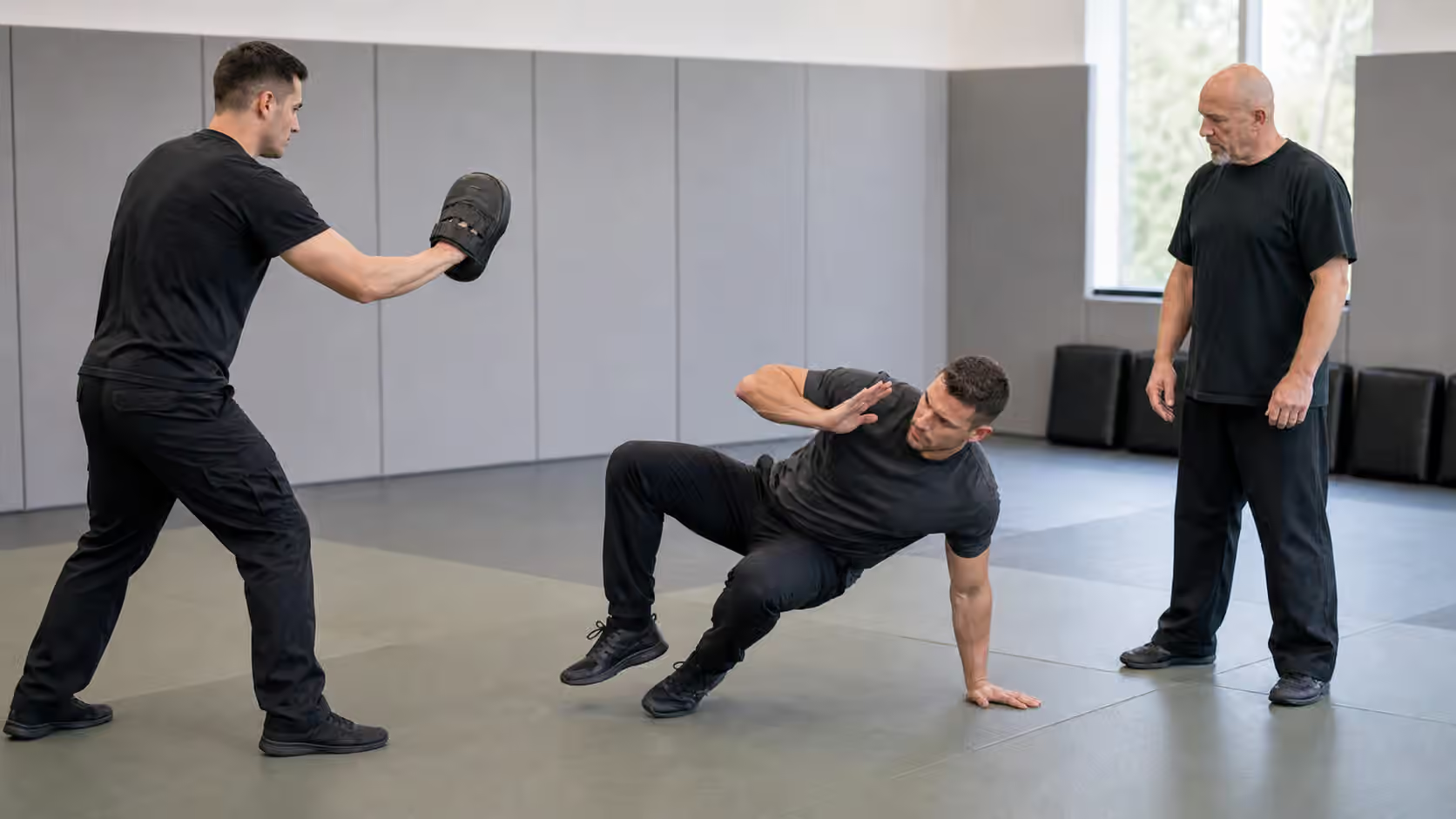
Size differences are one of the first truths a Krav Maga room has to respect. Adults do not arrive in matching bodies. One student is tall and heavy. Another is short and quick. One has long arms, another has a strong grip, another has an old shoulder injury, another is returning to exercise after years away, and another is powerful enough to change a drill without meaning to. If training pretends those differences disappear because a technique has a name, the room is not becoming more realistic. It is becoming less honest.
Good Krav Maga training does not tell smaller students that mechanics erase every disadvantage, and it does not tell larger students that strength is the whole answer. It asks both people to notice what size changes. Reach changes distance. Weight changes pressure. Strength changes grips, frames, pad holding, and fear. Height changes the line of the head and hands. Confidence changes how early people speak. The lesson is not that one body is good and another body is bad. The lesson is that bodies create conditions, and responsible training learns from those conditions without turning every repetition into a strength contest.
This topic belongs beside Partner Work in Krav Maga because size differences become visible through another person. It also belongs beside Distance, Awareness, and Exit because the cleanest answer to a larger or stronger person is often not a better struggle. It is earlier distance, clearer voice, better angles, and permission to leave before the body is forced into a late problem.
Size Is Information, Not Destiny
Beginners often swing between two bad stories. The first story says size does not matter if the technique is correct. That story is comforting, but it is not serious. Size matters. A larger person may reach sooner, crowd harder, absorb awkward contact differently, and make a grip feel more final. The second story says size is everything. That story is also incomplete. Timing, awareness, posture, angle, voice, training culture, and emotional control matter too.
A useful class lives in the space between those stories. It admits that a smaller student may have less margin for late decisions. It admits that a larger student may rely on weight without developing timing. It admits that strength can solve some gym problems and create other practical ones. It teaches people to use what they have without lying about what they lack.
The phrase “realistic training” should include this honesty. Realistic does not mean the larger partner clamps down at maximum pressure every round. It means the drill is built so both people can learn the actual lesson. If the lesson is wrist position, a full-power grip may hide it. If the lesson is pressure recovery, a limp feed may hide it too. The instructor’s job is to set the pressure where information appears without burying the student under it.
Distance Matters More When Reach Is Uneven
Reach changes the conversation before contact. A taller partner can touch from farther away. A student with long arms may seem close even when their feet are not. A shorter student may need more footwork to reach a pad and more discipline not to lean. These differences show up in simple drills before they show up in dramatic ones.
That is why distance work should not be treated as a beginner topic you graduate from. A student who is smaller, slower, tired, carrying a bag, or training with a much stronger partner often needs distance earlier, not later. Voice and footwork can buy time before a grip becomes a problem. An angle can make a long reach less direct. A small step off line can matter more than a large backward retreat that keeps the larger person centered.
The same idea appears in Footwork and Balance . Balance is not decorative. A smaller student who leans backward while trying to keep someone away may give up the base they need to move. A larger student who steps heavily through every drill may become late when the line changes. Both students need feet that can adjust without panic.
Distance also protects the training relationship. If the larger student begins too close, every repetition becomes compressed before the smaller student has a chance to read the feed. If the smaller student rushes in because they feel out-reached, they may collide, overstrike, or turn a controlled round into a scramble. A good coach will often reset the starting distance again and again because distance decides whether the drill is teachable.
Strength Can Hide Bad Mechanics
Strong students can accidentally skip lessons. A strong grip may make a grab drill feel successful even when the angle is poor. A strong shove may move a partner while the student’s feet are narrow. A hard pad strike may sound impressive while the wrist bends or the shoulder lifts. Strength is useful, but it can cover sloppy structure long enough for bad habits to feel like confidence.
This is one reason larger or stronger students need precise coaching. They should learn to feed the drill at the assigned intensity, not at the intensity their body can easily produce. They should know how to hold pads safely without turning the holder role into a test of toughness. They should learn to reduce pressure without becoming limp, and increase pressure without making the drill about domination.
Smaller students have their own trap. When overmatched, they may become sudden. They snap movements, rush exits, strike pads too sharply, or use speed to avoid feeling controlled. That reaction is understandable. It can also make the room less safe and the learning less clear. A smaller student needs permission to ask for a cleaner feed, a slower round, or an instructor’s eye before compensating with surprise.
The shared goal is clean pressure. Padwork and Pressure explains that pressure should build capacity rather than panic. Size differences make that principle more important. The drill should reveal how the body behaves under pressure, not simply prove that the larger person can be larger or the smaller person can be faster.
Close Range Narrows The Choices
When bodies are far enough apart, size difference is mostly about reach, timing, and space. At close range, it becomes about weight, posture, breath, and frames. A taller or heavier partner can make the room feel smaller just by leaning. A shorter student may find that the head line, shoulder line, and hips are crowded before their hands know what to do. This is where beginners often try to solve everything with arms.
Close Range in Krav Maga gives the larger frame for this problem. A frame is not magic. It is a way to recover a little structure when space has collapsed. Against a larger body, a frame that buys one breath may be valuable even if it does not move the partner very far. That breath can let the student turn, speak, step, or find the exit lane. The frame is not the finish. It is the bridge back to movement.
The larger partner also has responsibility in close-range work. They should not dump weight into beginners because the drill includes crowding. They should not treat a smaller partner’s difficulty as proof that the technique failed. They should give the agreed pressure and let the coach decide when to increase it. If the role is to help a partner learn, then control is part of the assignment.
Close-range size work should include walls and exits only after the class has enough control. Wall Pressure in Krav Maga shows how quickly a boundary changes posture. Add a size difference near a wall, and the consequences of poor pacing multiply. That does not mean avoiding the subject. It means building it carefully enough that students can feel the lesson instead of only feeling trapped.
Ground Work Needs More Humility
The ground can magnify size difference brutally. A heavier person above you, even in a controlled class, changes breathing and choices. A lighter person below may rush because they feel pinned. A larger student on the ground may struggle with hip movement, mobility, or embarrassment in ways that are not visible while standing. None of this should be treated casually.
Ground Recovery in Krav Maga keeps the goal clear: protect, orient, create space, and get back to a position where leaving is possible. Size differences do not change that goal, but they change the route. A smaller student may need to create distance earlier and avoid turning the drill into a prolonged contest. A larger student may need to learn that getting up safely is not the same as muscling upward. Both need a partner who understands that ground pressure is not a place for ego.
Instructors should offer modifications without making them feel like exceptions. A student with a knee issue may need a different stand-up progression. A student with a large body may need more time to build safe floor mobility. A smaller student may need lighter contact at first so they can feel angles instead of only feeling weight. Honest training adjusts the route without pretending the destination is unimportant.
Speaking Early Is A Skill
Size differences can silence people. A smaller student may not want to seem difficult by asking for less pressure. A larger student may not want to admit that a drill feels clumsy. A strong student may feel embarrassed when told to go lighter. A less strong student may feel embarrassed when told to stop rushing. The result is a room where people perform confidence instead of learning.
Safety Signals and Stopping Early belongs here because communication is part of the safety system. “Lighter,” “same grip but slower,” “my shoulder does not like that angle,” and “can the coach check this?” are training phrases, not apologies. The ability to name pressure accurately is one of the best signs that a student is becoming more useful to partners.
This is also a school culture test. Choosing a Krav Maga School advises beginners to watch what the room rewards. If the room rewards larger students for overpowering partners, it will teach smaller students to hide. If it rewards smaller students for reckless speed, it will teach larger students to protect themselves instead of feeding cleanly. If it rewards clear communication, size becomes something the class can study rather than something everyone privately manages.
A Better Measure Of Progress
Progress across size differences is not measured by pretending disadvantages vanished. It is measured by better decisions. The smaller student notices distance earlier, keeps their base under pressure, speaks before overload, uses angles instead of tugging, and leaves the drill when the lane opens. The larger student controls pressure, feeds accurately, learns timing instead of only weight, holds pads safely, and becomes trusted by partners who are not built like them.
That kind of progress is quiet. It may not produce the loudest round in class. It may look like a larger partner softening a grip to the correct level, then increasing it only when the coach asks. It may look like a smaller student asking for one slower repetition, then moving with cleaner posture. It may look like both people laughing after a clumsy moment, resetting, and doing the drill again with more honesty.
Krav Maga is practical only when it respects the bodies in front of it. Size matters. Strength matters. So do timing, distance, humility, communication, and the discipline to keep the person across from you human. A good room does not erase differences. It teaches students to train through them carefully enough that everyone learns something real and can return next week.