Shared equipment is part of the social contract of a Krav Maga room. Focus mitts, kick shields, tombstone pads, mats, gloves, loaner gear, spray bottles, towels, benches, bins, and floor space all pass through many hands. They are not glamorous. They do not appear in dramatic descriptions of self-defense. But they decide whether people can train hard, trust each other, and return next week without unnecessary friction.
Hygiene in this context is not about moral purity or making beginners anxious about germs. It is about respect. Sweat, scent, skin contact, loose gear, clutter, and neglected pads can make partners reluctant, distracted, or unsafe. A room that ignores those details often ignores other details too.
Clean Gear Supports Harder Training
Hard training depends on repeatability. A class cannot build good padwork if students are avoiding equipment because it smells bad, feels slippery, or looks neglected. A partner cannot focus on timing if they are wondering what is on the pad. A beginner cannot relax into a drill if the floor is cluttered with damp towels and abandoned gear.
Pad Holding in Krav Maga explains that the holder is an active training partner, not a target stand. Shared equipment hygiene adds another layer. The holder should receive equipment that is reasonably clean, intact, and placed where it can be used safely. The striker should treat the pad as something another human must hold, store, and clean after impact.
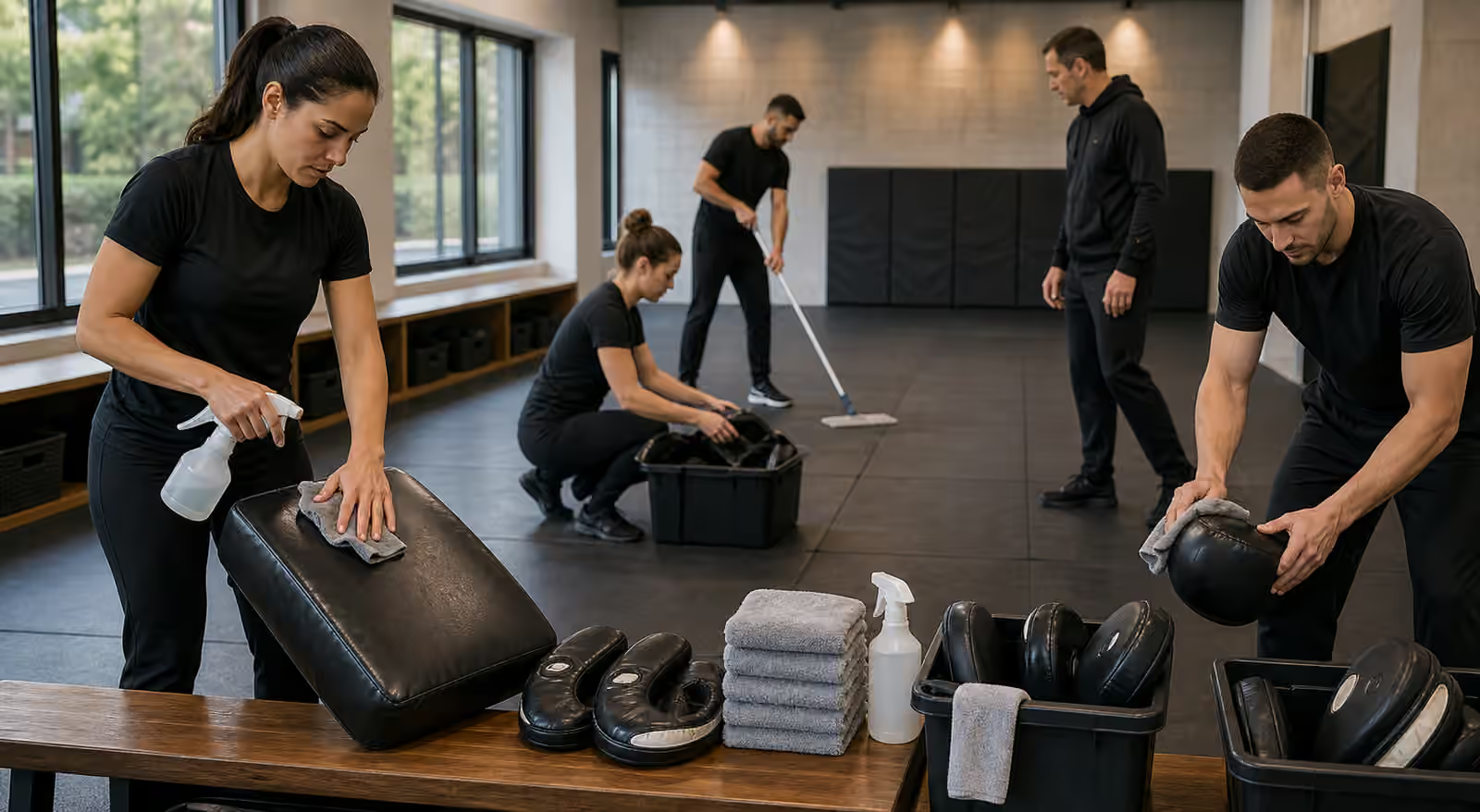
This does not mean every school will have the same system. Some rooms ask students to wipe pads after each round. Others clean at the end of class. Some use personal gloves but shared shields. Some require towels. The exact policy can vary. The important part is that the policy exists, is explained, and is followed without making cleanup feel like a punishment for caring.
Sweat Is Information, Not Shame
Krav Maga classes can be sweaty. Padwork, warmups, sparring, stress drills, and crowded rooms make that normal. Shame does not help. Neither does pretending sweat has no effect on partners. A slippery forearm changes a grab. A wet pad changes holding. A soaked shirt changes close-range contact. Heavy scent can make breathing harder for someone nearby. A towel left on the floor can become a trip point.
Partner Work in Krav Maga is relevant because partner care includes ordinary bodily awareness. A student can bring a towel, change shirts when needed, wipe equipment as the school expects, and avoid heavy fragrance before class. These are not elite habits. They are ways of making the room easier for other people to share.
The instructor’s tone matters. If hygiene is discussed only through embarrassment, students may hide problems or feel singled out. If it is discussed as part of training quality, the room can handle it plainly. “Wipe the shield before you return it” is no more personal than “Keep your elbow down” or “Move the bag off the mat.” It is a correction that protects the work.
Mats Are Training Surfaces, Not Storage
Mats and open floor need to stay readable. Bags, bottles, phones, wraps, pads, shoes, and towels can quickly turn the edge of the training area into an obstacle course. A class may use props deliberately, but accidental clutter is different. It teaches the body to accept hazards that nobody meant to include.
Environmental Movement in Krav Maga covers how objects shape movement. Shared equipment hygiene brings that principle back to the room itself. A pad left behind a student can become the reason a simple step turns into a fall. A water bottle near a wall can catch a foot during an exit drill. A phone on the floor can pull a student’s attention right when they should be listening.
Good schools usually have gear zones for a reason. Put pads where they belong. Keep bags off the active floor unless the instructor makes them part of the drill. Return equipment before the next round starts. If a strap breaks, a glove tears, or a mat seam lifts, tell the instructor instead of quietly working around it. Small reports prevent boring injuries.
Shared Gloves And Loaner Gear Need Boundaries
Loaner gear can make training accessible. A beginner may not own gloves, wraps, shin guards, or a mouthguard on the first day. A school may keep spare items for trial classes or occasional drills. That kindness works best when the boundaries are clear. Some items should not be shared casually. Some need cleaning between uses. Some should be borrowed only with the instructor’s permission.
Krav Maga Training Gear gives the broader gear conversation. The hygiene version asks what happens after the item touches a body. Does it go back in the bin wet? Does the next student know it was used? Is there a wipe-down process? Are students encouraged to buy personal gear when contact becomes regular? These questions are not glamorous, but they are part of safety culture.
Students should also avoid treating loaner gear as anonymous property. If a glove does not fit, say so. If a strap fails, report it. If a pad feels slippery, pause and fix it. If gear smells unusable, tell the instructor privately rather than turning the moment into a public joke. Respect for shared equipment includes respect for the people who maintain it.
Hygiene Affects Consent
Consent in partner training is often discussed around contact level, drill roles, and stop signals. Hygiene belongs in the same family because it affects willingness to train. A partner may be uncomfortable with heavy fragrance, visible skin irritation, unclean gear, long nails, jewelry, or a wet shirt during close contact. The answer is not to make students diagnose each other or police bodies harshly. The answer is to let ordinary concerns be spoken early and handled with dignity.
Safety Signals and Stopping Early applies here. A student can pause because a pad is slick, a glove strap is cutting, a nail scratched, or a mat area is unsafe. The room should treat that pause as useful information. If students are mocked for stopping over “small” things, they may stay silent over larger things.
Instructors can help by normalizing cleanup before it becomes personal. A quick equipment reset after sweaty rounds, a reminder about nails and jewelry, or a clear place for used pads can reduce awkward one-on-one corrections. The goal is not sterility. It is trust.
Cleanup Is Part Of The Class
Some students mentally leave when the final round ends. They drop pads, grab bags, and disappear. That habit misses a small but important part of training. Cleanup teaches attention after pressure. The body is tired, but the student still notices the room, the partner, and the shared tools. That is not separate from Krav Maga. It is an after-action habit.
After a Krav Maga Incident discusses reset and responsibility after pressure. Class cleanup is the everyday version. Check whether the pad is where it belongs. Notice if a partner is shaken. Wipe what needs wiping. Put gear away so the next group does not inherit clutter. Take the towel home. Close the bag. Leave the space better organized than it was a minute ago.
This can feel minor until it is absent. A room where everyone cleans up with basic competence feels calmer. A room where equipment is dumped, pads are wet, and bags block exits feels less trustworthy even before the next drill begins.
The Room Teaches What It Tolerates
Students read the room constantly. If advanced students ignore cleanup, beginners learn that cleanup is beneath them. If instructors walk past broken straps, students learn that small hazards are normal. If people joke about hygiene instead of handling it plainly, students learn to stay quiet. If the room treats shared equipment with care, students learn that care and intensity can live together.
This is why hygiene belongs in a Krav Maga guidebook rather than only in a posted rule. It is not an administrative detail. It is one expression of the same safety culture that governs pad holding, controlled sparring, scenario boundaries, and stopping early. A school that can manage ordinary cleanup is more likely to manage harder pressure honestly.
Shared equipment will never be the most exciting part of training, and it should not need to be. Its value is in the absence of distraction. Clean pads, clear mats, simple towels, managed scent, reported damage, and respectful loaner gear let the class focus on distance, movement, voice, and partner trust. The quieter the system works, the more room students have to train well.