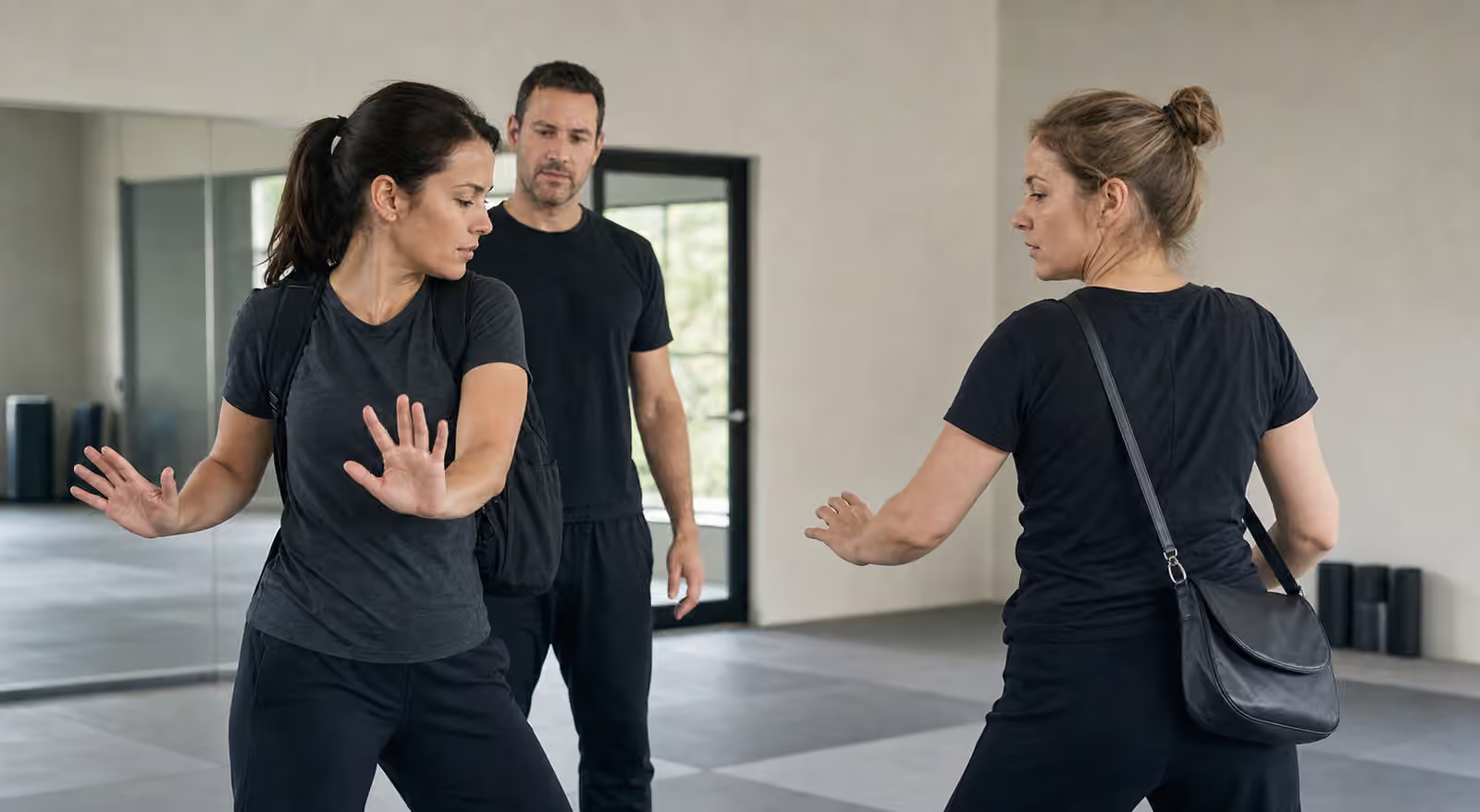
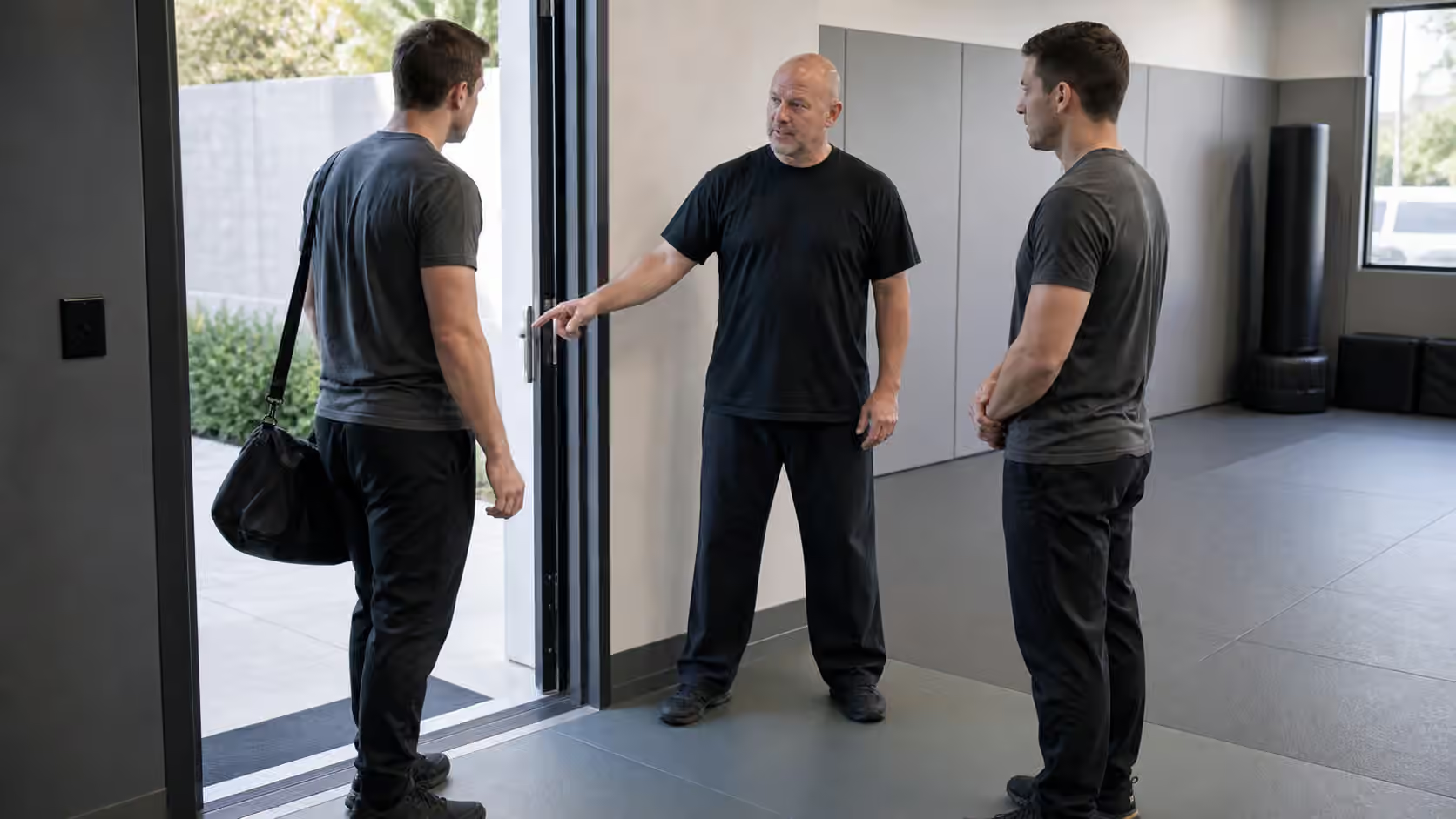
Seated positions make self-defense feel slower than people expect. On the training floor, a student can stand in a balanced stance, see the room, move the feet, and keep the hands available. In daily life, that same student may be sitting in a cafe booth, waiting on a bench, riding in a lobby chair, leaning over a bag, or turning sideways to let someone pass. The body is folded, the feet are under furniture, and the first movement has to be standing up without handing balance away.
Krav Maga does not need to make seated life frightening. Most chairs are just chairs. Most benches are not part of a problem. The useful lesson is more modest: sitting changes time, distance, voice, and exits. A person who notices that change can make calmer decisions. A person who ignores it may discover too late that the table, armrest, bag strap, or wall has become part of the situation.
Ground Recovery in Krav Maga already explains why the floor matters. Seated-position awareness sits just above that lesson. You are not fully down, but you are not fully mobile either. You may have one foot tucked back, a knee trapped under a table, a backpack hooked on the chair, or a phone in the hand that should be free. Before any technique, there is the plain question of whether you can stand without stumbling.
The Chair Changes Distance
Distance feels different from a chair because the person standing near you controls more of the vertical space. A conversation that would feel ordinary while standing can feel crowded when you are seated and looking up. A hand resting on the back of your chair may be socially ambiguous but physically important. A person leaning over the table may have crossed a boundary before you can step away.
This is where Distance, Awareness, and Exit becomes practical rather than abstract. Distance is not only the gap between two bodies. It is the time required to get your feet under you, clear the chair, turn the hips, and find the lane out. A student who understands that will leave more space around the chair when possible. They may sit where one side is open, keep the bag off the ankle path, or stand earlier when a conversation starts to feel wrong.
Standing earlier is not the same as escalating. It can be as ordinary as pushing the chair back, setting both feet down, and saying, “I need a little space.” It can be moving to the end of a bench because the middle has become crowded. It can be choosing not to sit in the deepest booth when a table near the aisle gives better options. The movement can look boring, and that is often the point. Many useful self-defense decisions are almost invisible.
Furniture Is Not Neutral
Furniture quietly shapes movement. A chair with arms changes how the hips rise. A bench without a back may let you turn more easily but may also invite people to sit too close. A cafe table blocks the knees. A high stool changes balance. A soft couch can swallow posture. A chair beside a wall may feel protected until you need to leave around someone standing in front of you.
Environmental Movement in Krav Maga teaches that walls, doorways, bags, and floors decide what movement is available. Chairs belong in that same family. They are ordinary objects that can become useful references or awkward traps. In class, a chair drill should not turn into a movie scene. It can simply ask students to sit, notice where their feet are, use voice, stand, angle, and leave without kicking the chair into their own path.
The first version should be slow. The instructor can place a chair near an open lane and ask the student to stand while keeping eyes available. That sounds easy until the student realizes they look down at their feet, push the chair into the lane, or rise so narrowly that one gentle touch would put them back down. Slow practice exposes those habits without panic.
Hands, Bags, and Phones
Seated people often fill their hands. They hold a phone, coffee, keys, a child, a coat, a shopping bag, or the strap of a backpack. The body then treats standing as a negotiation. Do I put the object down? Do I keep it? Do I reach for the bag before I leave? Do I apologize for the chair moving? Those tiny delays matter when a situation is changing.
Hands Full in Krav Maga is the natural companion to seated awareness. The goal is not to turn every object into a tool. The goal is to keep objects from stealing the first useful movement. If a bag is wrapped around the chair leg, you have accidentally tethered yourself. If the phone is in both hands, your voice and eyes may be late. If a drink must be placed carefully before you can move, it has become part of the timing.
Training can make this honest. A student can sit with a training bag beside the chair and practice standing without stepping through the strap. Another can hold a soft prop and decide whether to set it down, keep it close, or leave it behind. The instructor should keep the lesson simple: protect balance, free the feet, keep the eyes up, and move toward the exit. The object is not the hero of the drill. The student’s attention is.
Voice Before Motion
Voice can be easier from a chair in one way and harder in another. It is easier because a seated person can sound less confrontational. It is harder because the body may feel smaller, and embarrassment may rise quickly. Many students discover that they wait too long to speak while seated. They hope the other person will notice the crowding, move back, or stop leaning in. Hope is not a plan, but voice does not need to become a challenge.
De-escalation and Verbal Boundaries gives the larger frame. From a chair, the words should be short and linked to movement. “Back up a little.” “I am standing up.” “Give me room.” “I am leaving.” The exact sentence depends on the setting, but the function stays the same. Voice buys the space that the feet need.
The voice also tells bystanders what is happening. In a restaurant, lobby, classroom, waiting room, or train station, the people nearby may not understand the problem until someone names it plainly. A calm boundary can make the situation clearer without adding insults. It can also give you permission to move. Students often need practice because saying a simple sentence under social pressure feels stranger than it should.
Standing Is A Skill
Standing from a chair is usually treated as automatic. Under pressure, it is not. People tuck the feet too far back, lean forward with the head, push off unevenly, or stand straight into the person crowding them. Some rise with both hands busy. Some stand and stop, as if being upright solved the problem. It may solve only the first part.
A useful Krav Maga version connects the rise to the next decision. Set the feet. Create enough room. Stand with hands available. Angle away from the pressure. Keep the chair from catching your own leg. Leave the lane. If the drill includes a partner, the partner should give only the agreed pressure and stop when the instructor stops it. Chair drills can become unsafe quickly if people add surprise grabs, shoves, or trips that were not assigned.
Safety Signals and Stopping Early applies here because furniture narrows margins. A chair leg under a heel or a bench edge behind the calf can turn mild contact into a fall. Students should be allowed to reset without apology. The room is not testing bravery. It is teaching people to feel where balance lives.
Everyday Places, Ordinary Choices
Seated awareness becomes most useful away from class. In a cafe, you may choose the chair that lets you see the room without sitting in the deepest corner. In a waiting area, you may keep one side open. At a picnic table, you may notice how slowly you can exit from the middle. On a bench, you may move before someone closes the gap. In an office, you may stand when a conversation becomes too heated instead of staying trapped behind a desk.
None of this requires suspicion. It requires a practical relationship with position. Sitting is comfortable because it lets the body rest. It is limited because it makes the first movement cost more. A trained student does not need to scan every chair like a threat. They simply notice when a seat removes options and make a small adjustment before the moment becomes louder.
That is the whole value of the topic. Seated-position awareness teaches humility about ordinary objects. The chair, bench, table, bag, and wall may decide how quickly a person can use the skills learned on the mat. Good Krav Maga training does not pretend those objects disappear. It teaches the student to stand sooner, speak clearly, keep balance, and leave through the lane that is still open.