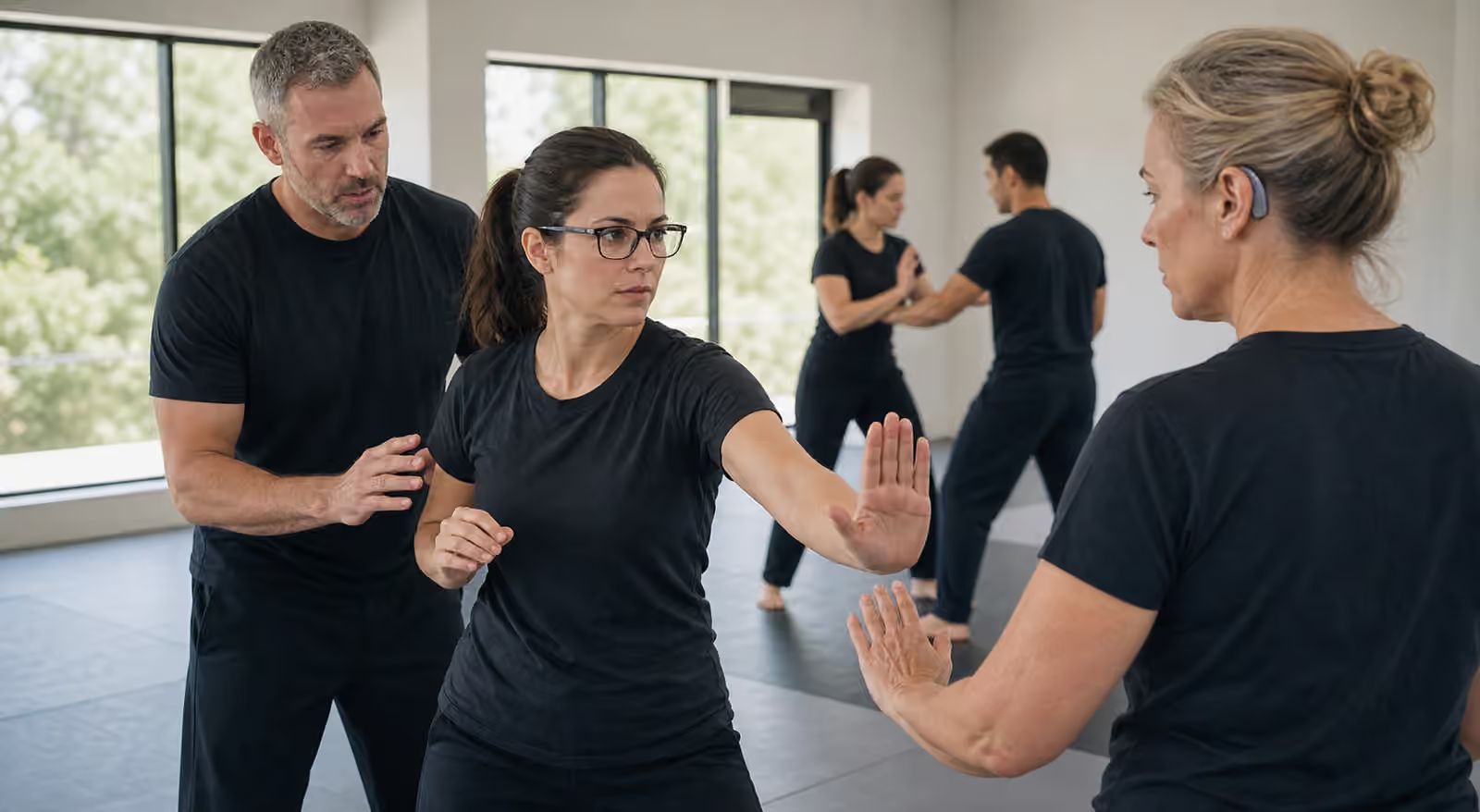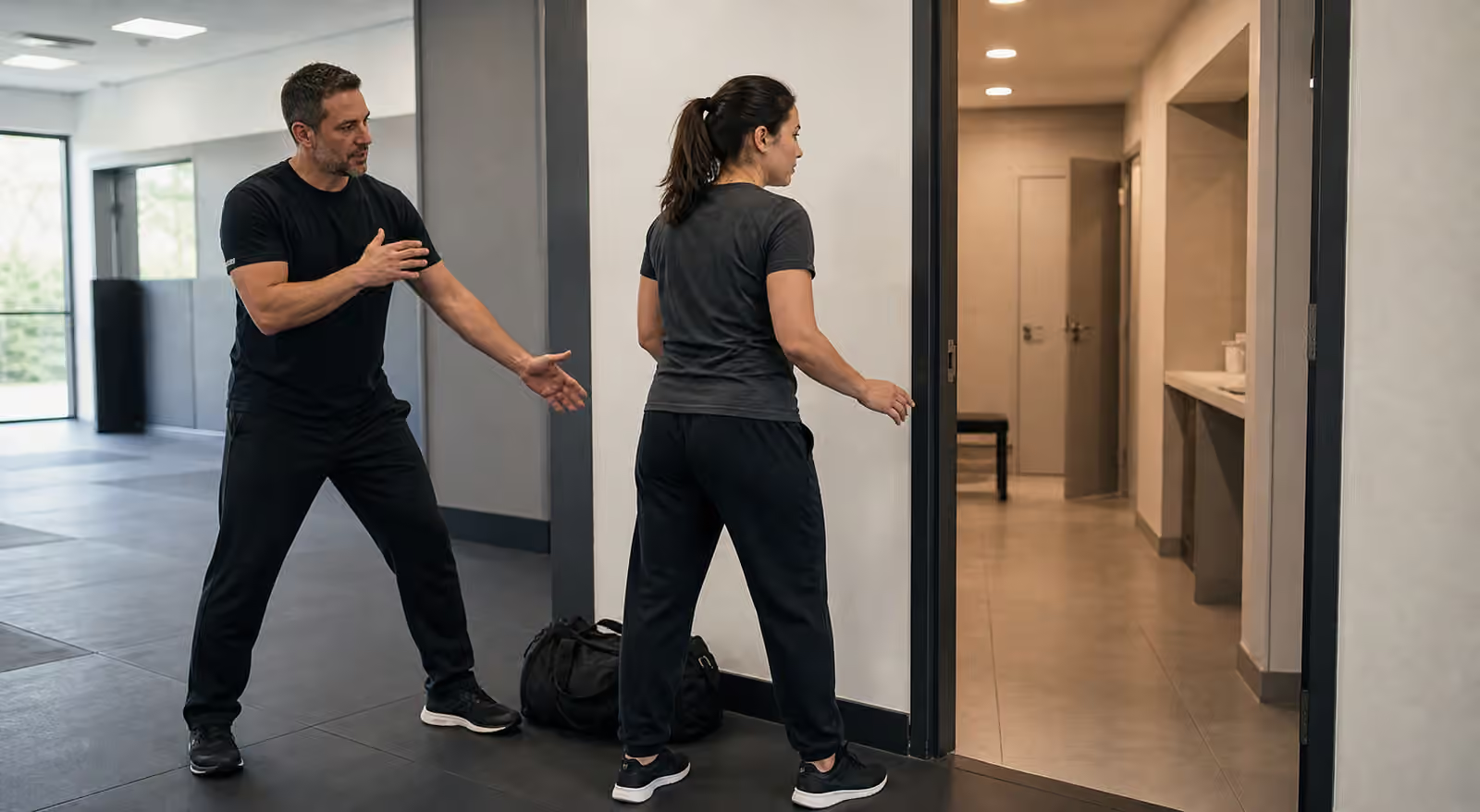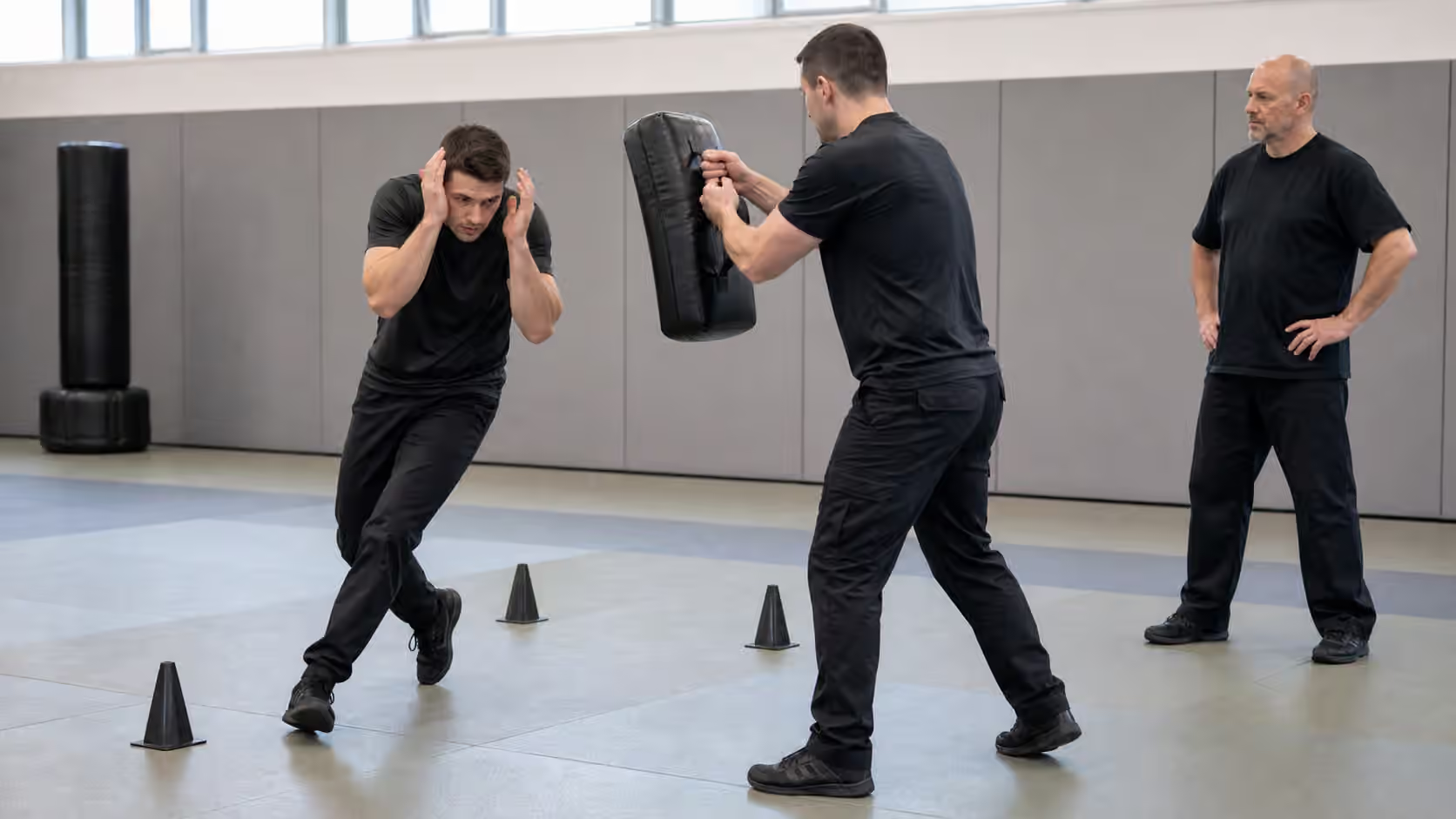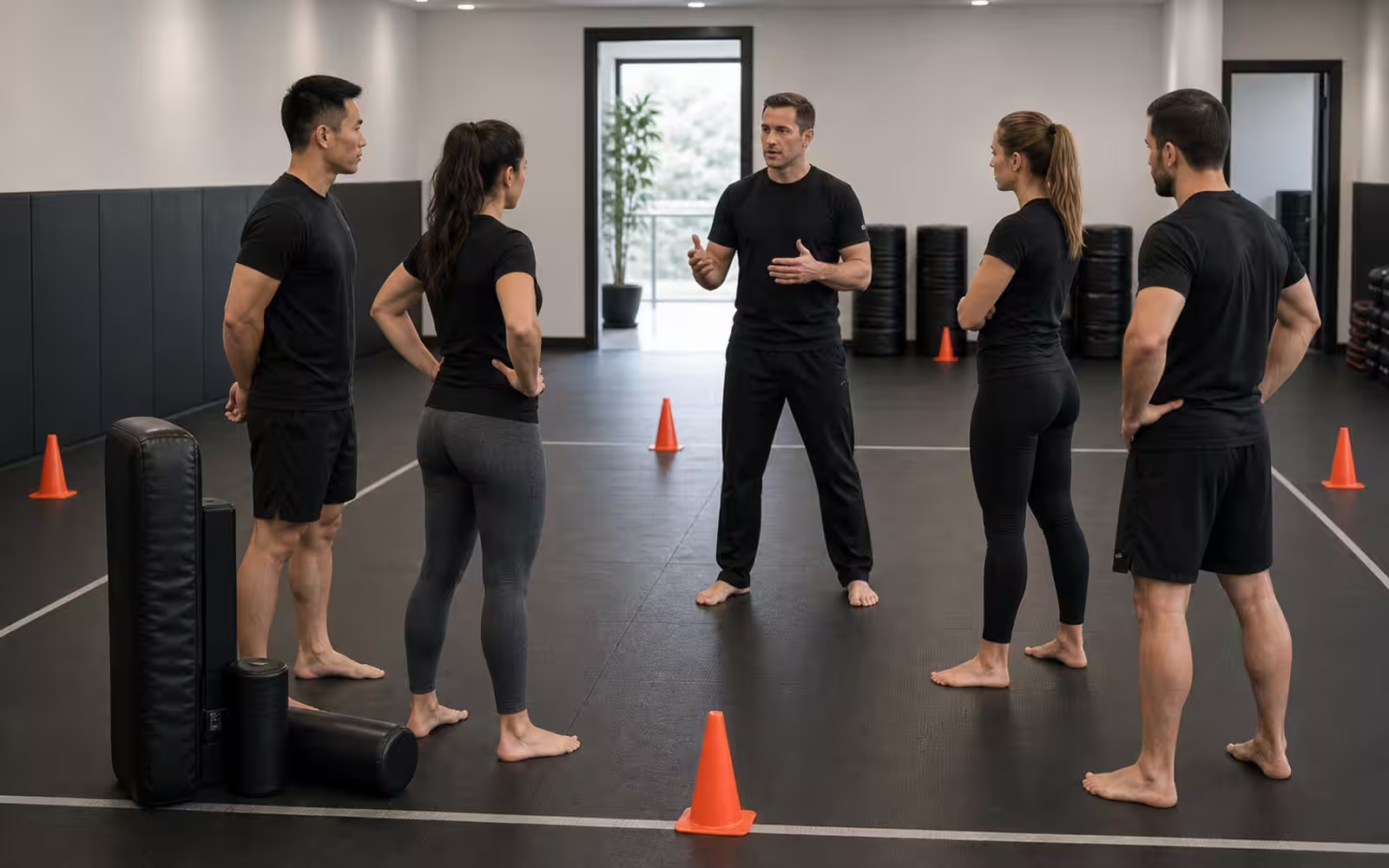
Scenario training is where Krav Maga can become either very useful or very foolish. The idea is sound: self-defense does not happen in a clean line, under perfect lighting, with everyone wearing gym clothes and waiting for the same count. People freeze. They talk. They misread. They crowd. They panic. They carry bags. They stand near walls, cars, tables, stairs, friends, strangers, and doors that may or may not open.
Training should eventually acknowledge that mess. But acknowledging mess is not the same as worshiping chaos. A good scenario drill has a reason. It has boundaries. It has safety rules. It has a way to stop. It has a debrief. It teaches students to make decisions, not simply to survive confusion until the timer ends.
The simplest scenario may begin with a conversation. One student stands near a marked exit. Another approaches too closely. The defender has to notice distance, use voice, angle away, and leave. Nothing spectacular happens. No one is thrown. No one wins applause. Yet the drill may be more valuable than a dramatic defense, because it trains the moment where many real problems can still be prevented.
Beginners sometimes want scenarios to answer the question, “What if they do this?” The more mature question is, “What is happening, and what is my safest responsible choice?” That change matters. A technique-first mind waits for a cue. A decision-first mind reads the whole scene. Who is with me? Where is the exit? Is the person confused, drunk, angry, predatory, panicked, or just socially clumsy? Can words still work? Is there a barrier? Is help nearby? Do I need to leave now?
Ethics enters before the first strike. Self-defense training gives people tools that can hurt others. That does not make the tools wrong, but it does make the training morally loaded. A school should be clear that skills are for protection, escape, and responsible defense, not ego repair. If students are encouraged to fantasize about punishing people, the room is drifting. The goal is to end danger, not to become dangerous for its own sake.
Law also matters, though laws vary by place and this guide is not legal advice. Students should understand that force is judged after the event by people who were not inside their body at the time. Cameras may show only part of the story. Witnesses may disagree. Injuries may be worse than expected. The fact that you felt afraid matters, but so do your choices, the threat, the timing, and whether you had safer options. Good training does not turn students into lawyers. It gives them enough respect for consequences to avoid easy slogans.
Consent inside the training room is part of the same ethic. Scenario drills can involve shouting, crowding, surprise, contact, restraint, or emotionally charged situations. Those elements should not be dropped onto students without explanation. A person can consent to train hard without consenting to every possible simulation. Clear drill descriptions, intensity levels, roles, stop words, and alternatives do not weaken the training. They allow more honest participation.
The role player carries responsibility too. If one student plays an aggressor, their job is not to act out personal fantasies. Their job is to give the defender the agreed problem at the agreed intensity. They must be able to stop instantly. They must know how to fall out of role. They must not add grabs, insults, weapons, or escalation that the instructor did not set. Good role play is disciplined service to the drill.
Weapons deserve special caution. Many Krav Maga schools teach weapon defenses, and some have serious instructor training behind them. Written guidebooks should not pretend to teach those skills. A knife, firearm, stick, bottle, or improvised weapon changes risk immediately and severely. The most responsible beginner lesson is often avoidance, compliance when appropriate, escape, barriers, and seeking qualified training if the subject is addressed at all. Anyone promising simple written answers to weapon problems is smoothing over danger.
Aftermath is another neglected part of scenario training. What happens after the movement? Do you leave? Call emergency services? Check yourself for injury? Find witnesses? Stop talking? Help someone else? Sit down because your legs are shaking? A drill that ends at the last strike may teach students to stop thinking too early. A responsible scenario asks what happens when the room goes quiet.
There is also the emotional aftermath. People can feel strange after intense drills. They may laugh, shake, get quiet, feel proud, feel embarrassed, or feel unexpectedly upset. This does not mean the training was bad, but the room should have enough maturity to let people come down. A short debrief, water, breathing, and permission to step aside can keep intensity from becoming residue. Instructors who treat emotional response as weakness are not preparing people for reality. Reality includes emotion.
Scenario training is also where ego appears. A student may discover they do not like losing. Another may enjoy playing the aggressor too much. Another may freeze and feel ashamed. Another may escalate every drill because they are afraid of being seen as soft. The instructor’s job is to keep the room honest. Sometimes that means praising restraint. Sometimes it means lowering intensity. Sometimes it means telling a strong student that control is the assignment. Sometimes it means reminding a nervous student that freezing in a drill is useful information, not a personal failure.
The best scenarios are narrow enough to learn from and alive enough to matter. A drill might focus on leaving a conversation, protecting space near a wall, recovering after being startled, moving with a bag in one hand, using voice around bystanders, or finding an exit after pad impact. None of these needs to become cinematic. In fact, the more cinematic a beginner drill becomes, the less likely it is to teach the beginner what they missed.
A good school will repeat ethical language until it becomes normal. Leave if you can. Use the least force that solves the danger. Stop when the danger stops. Protect your partner. Tell the instructor about injuries. Do not surprise people outside the drill. Do not treat training as permission to intimidate. These ideas may sound obvious, but repetition matters. Under stress, people fall back on what the room rewarded.
Krav Maga’s directness is valuable when it is wrapped in judgment. Without judgment, directness becomes bluntness. With judgment, it becomes clarity. You know what you are trying to protect. You know why leaving is success. You know that impact is a tool, not an identity. You know that the person across from you in class is helping you learn and deserves to go home intact.
Scenario training should leave students more sober, not more theatrical. It should make them better at reading situations, setting boundaries, managing adrenaline, and choosing exits. It should also make them more aware of how serious physical force is. The point is not to rehearse being a hero. The point is to practice staying human when the body is under pressure.