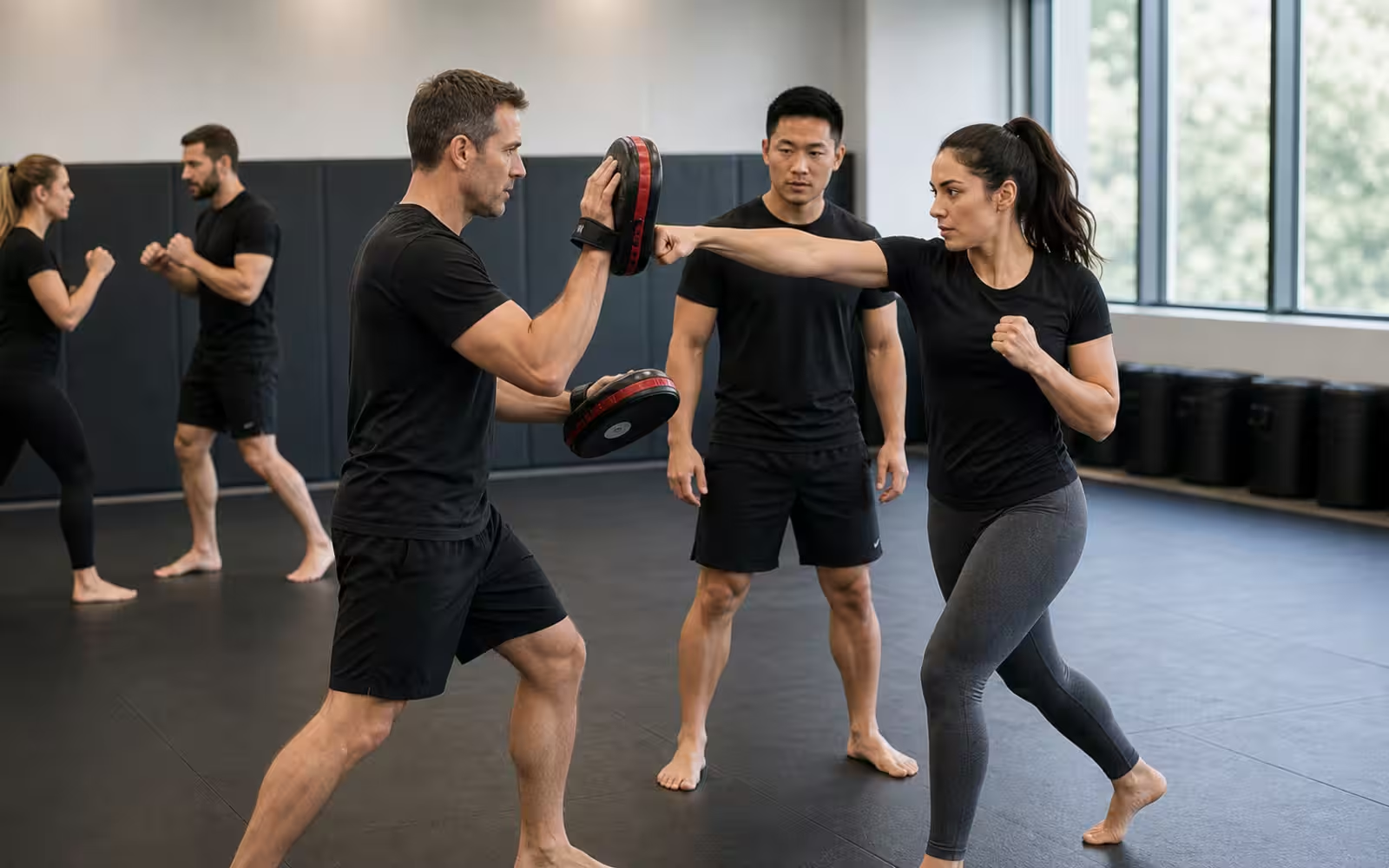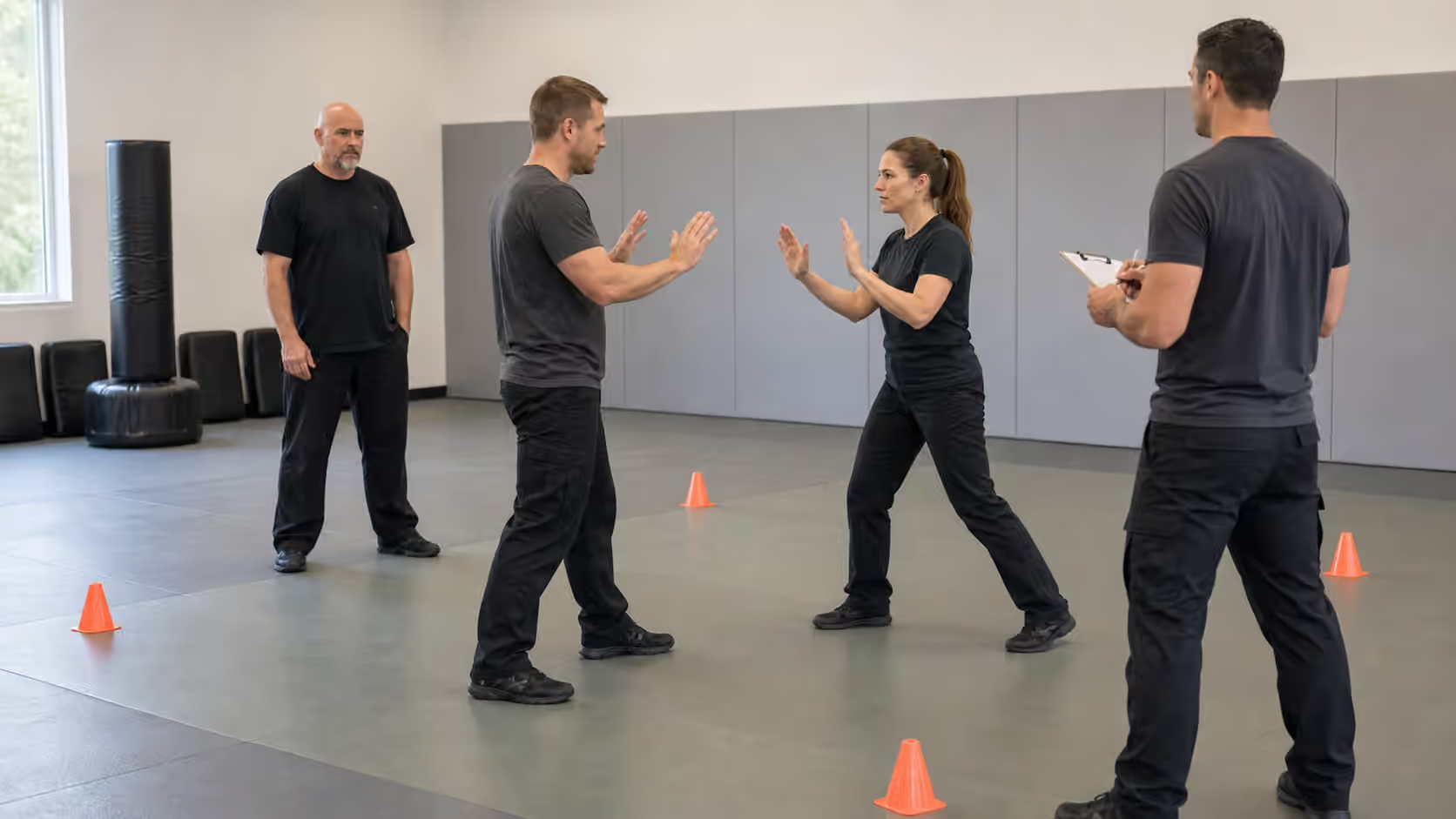
Scenario role-play is one of the most useful parts of Krav Maga when it is handled well. It can teach students that self-defense is not only a technique performed after a clean attack. It can include misunderstanding, social pressure, embarrassment, hesitation, witnesses, exits, voice, and the strange delay between noticing a problem and admitting it is a problem.
Handled badly, scenario role-play becomes theater. Students shout too much, act like villains from a film, surprise each other for entertainment, and leave the drill remembering adrenaline instead of judgment. The difference is not whether the room felt intense. The difference is whether the role-play taught a decision the student can carry into calmer, safer life.
Realistic Does Not Mean Wild
Scenario Training and Ethics already makes the broader case that self-defense practice needs judgment. Role-play is one way to practice that judgment. The student may need to decide whether to leave, speak, angle away, ask for help, comply, protect another person, or prepare for physical action. The scene gives the technique context.
But realism is often misunderstood. Realism does not mean maximum volume. It does not mean humiliating the defender. It does not mean ambushing a beginner who has not been taught the boundaries of the drill. Realism means the details serve the lesson. If the lesson is verbal boundary-setting, the role player should create a believable reason for the defender to speak. If the lesson is exit awareness, the room should contain an actual path to notice. If the lesson is after-action reset, the drill should include a stop point and a debrief.
A wild drill may feel more realistic because real events can be chaotic. That does not make it better training. Training reduces the problem enough to make learning possible, then adds complexity with care. A student who only experiences chaos may become more anxious, not more capable.
Roles Need Names
Before a role-play begins, everyone should know what job they have. The defender is not simply the hero of the scene. The role player is not simply the attacker. The observer is not a passive bystander. The instructor is not only a referee. Each role shapes the safety and usefulness of the round.
Training Roles in Krav Maga is useful because a scenario drill can fail when roles blur. A role player who was supposed to be mildly intrusive may become physically aggressive because the defender seemed calm. An observer who was supposed to track exits may drift into coaching during the round. A defender who was supposed to practice leaving may stay and argue because they want to win the scene.
Clear roles prevent that drift. The role player can be told what they want, how close they may come, what language is allowed, and when they must stop. The defender can be told what options are in play and what options are not. The observer can be given one thing to watch, such as distance, voice, hands, exit, or recovery after the stop. The instructor can keep the frame from becoming a contest.
The Role Player Carries Responsibility
The role player has power because they shape the emotional temperature. A good role player is not the person who can scare everyone. A good role player can give enough pressure to make the defender work while staying inside the assignment. That requires maturity. It is easy to add speed, sarcasm, crowding, or surprise. It is harder to feed exactly the lesson the instructor chose.
The role player should understand that a beginner’s nervous system is not a toy. Some students laugh when uncomfortable. Some freeze. Some become apologetic. Some overreact. Some carry old experiences that the room does not know about. This does not mean scenario training should be avoided. It means the person adding pressure has to remain responsible for the learning environment.
Safety Signals and Stopping Early applies strongly here. The stop signal is not decoration. If a student calls it, the scene ends. If the instructor calls it, the scene ends. If the role player notices the defender is no longer learning and is only enduring, the role player should know how to soften or pause under the instructor’s direction.
Voice Work Should Sound Human
Scenario drills often reveal that students have practiced strikes more than sentences. They may know how to hit a pad but not how to say “I do not want any trouble” without sounding either tiny or theatrical. That awkwardness is not a flaw. It is the reason to train.
De-escalation and Verbal Boundaries helps keep voice work grounded. The defender does not need a script full of clever lines. They need plain language that fits the moment. Early language may be polite and firm. Later language may be louder and simpler. A bystander instruction may need to name a task clearly. The role-play lets students feel how words change when the body is under mild pressure.
The role player should respond in a way that serves the drill. If the defender gives a clear boundary and the lesson is successful disengagement, the role player may back off so the defender can leave. If the lesson is recognizing boundary failure, the role player may ignore the first sentence and close distance within the agreed limit. The response should not be random. Randomness may feel exciting, but it teaches less than a well-chosen cue.
Props and Settings Need Restraint
Cones, chairs, bags, doorways, phones, pads, and low barriers can make a scenario richer. They can also distract from the lesson. A beginner who is still learning to use voice and maintain distance may not need a complicated restaurant scene with four props and three role players. The setting should be just detailed enough to make a decision visible.
Environmental Movement in Krav Maga is a good companion because the room itself can teach. A chair can show how space narrows. A doorway can show why standing in the threshold matters. A bag can show that hands may not be free. A wall can show that backing straight up has a cost. None of these objects needs a dramatic story. The object should ask a practical question.
Weapon props require even more restraint. Weapon Awareness in Krav Maga explains why caution belongs before technique. If a prop appears in a role-play, the instructor should be very clear about the purpose, intensity, legal and safety boundaries, and what the defender is expected to practice. Surprise weapon play is not a shortcut to realism. It is often a shortcut to bad habits and unnecessary emotional residue.
Debriefing Turns Heat Into Learning
Without a debrief, students often remember the loudest second and miss the useful one. A defender may obsess over a missed line while forgetting that they moved to the exit early. A role player may remember the defender’s hesitation but miss that the pressure was too high for the assignment. An observer may have seen the exact moment where the drill changed, but if nobody asks, the lesson disappears.
Class Debriefs and Training Journals offers a simple way to keep the learning. After a role-play, the debrief does not need to become a long speech. It can ask what the defender noticed first, what option they chose, what changed the scene, and what they would repeat differently. The role player can say whether the boundary felt clear. The observer can name one concrete detail. The instructor can connect it back to the training goal.
The debrief should avoid shaming. Scenario work touches embarrassment because students are practicing adult social conflict in front of other adults. If the room uses that embarrassment as fuel, people may perform toughness instead of learning. A useful debrief is honest, specific, and calm.
The Best Scenario Is Often Boring
Many real self-defense wins do not look cinematic. A person notices the conversation is wrong and leaves. A student moves to the other side of a doorway before feeling trapped. Someone uses a clear boundary and the other person stops. A defender gives up an object rather than fight over it. A friend is guided away before pride turns into a scene. These outcomes may look boring from the outside, but they are exactly the kind of judgment Krav Maga should respect.
Role-play can make those boring wins visible. It can teach students that leaving early is not failure, that asking for help is a skill, that silence may be less useful than a clear sentence, and that not every physical option deserves to be used. It can also teach when the situation has changed enough that physical protection must enter the picture.
Realism without theater is quieter and harder than it sounds. It asks the class to care more about learning than stories, more about judgment than adrenaline, and more about partner responsibility than performance. When a scenario drill does that, it earns its place in the room.