The most important sound in a Krav Maga room is not the smack of a pad or the shout at the end of a combination. It is the moment someone says stop and everyone believes them.
Beginners often arrive expecting intensity to be the proof that training is real. They want the room to feel serious. They want the drills to matter. That instinct is understandable, especially in a system that talks openly about fear, surprise, distance, and danger. But a room that cannot stop cleanly is not serious. It is only loud.
Good Krav Maga training needs a shared language for pausing early, lowering intensity, checking a partner, and calling a drill off before pride turns a useful exercise into a mess. Safety signals are not decorations around the real work. They are part of the real work, because self-defense training asks people to practice stress without losing judgment.
The stop signal is a training tool
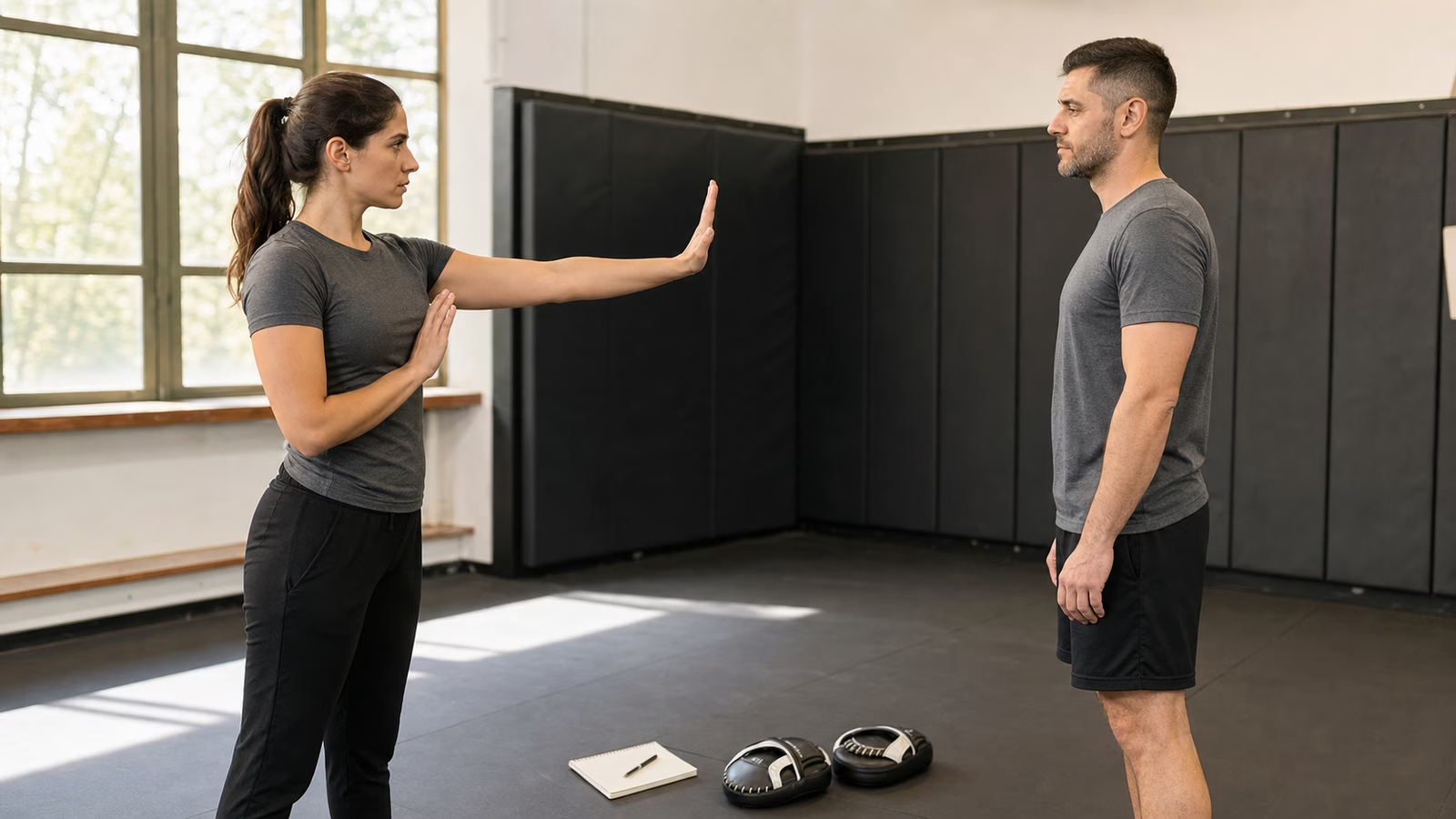
A stop signal is simple on purpose. It may be a raised open palm, a clear verbal stop, a tap on a partner, or a coach’s command that freezes the room. Different schools use different words and gestures, but the principle should be unmistakable: when the signal appears, the drill pauses without argument.
That pause protects bodies, but it also protects learning. If a partner is tangled, off balance, overwhelmed, injured, confused, or too close to the wall, the next repetition will not teach much. It will only add noise. A clean stop lets both people reset the distance, check the instruction, breathe, and return with better attention.
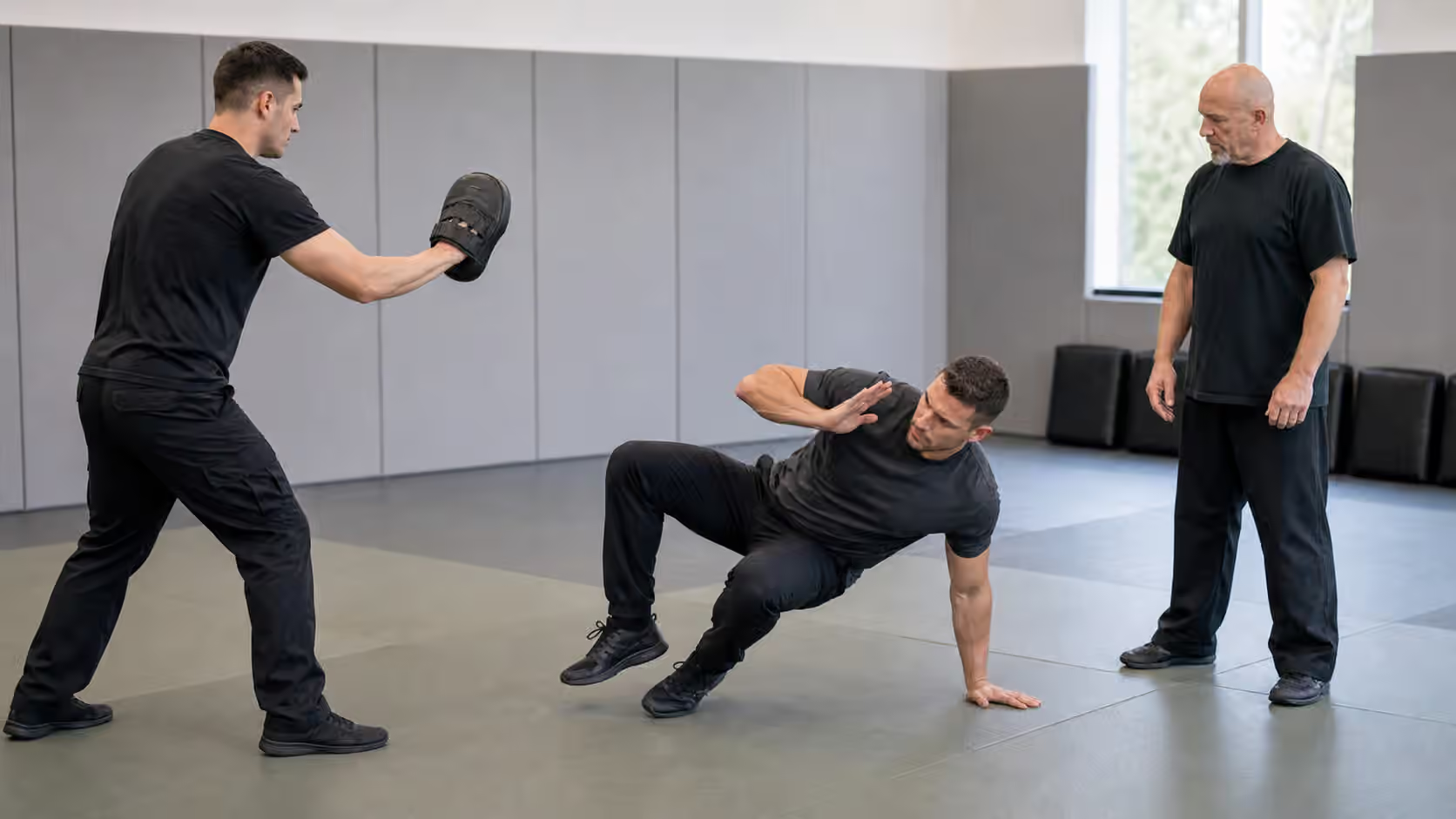
This is especially important in beginner classes because new students do not yet know what a safe mistake feels like. They may not recognize when a pad is being held badly, when a grab has become a joint crank, when a fall is drifting toward furniture, or when a partner’s face has changed from focused to frightened. Until that judgment develops, the room needs obvious brakes.
Stopping early is not weakness
Many adults have to unlearn the idea that stopping early means failing the drill. They grew up in sports rooms, school gyms, workplaces, or families where pushing through discomfort was treated as character. Sometimes that attitude is useful. It can help a person keep going when effort is merely unpleasant.
Krav Maga training asks for a sharper distinction. Discomfort, fatigue, embarrassment, and frustration can all be part of practice. Sharp pain, dizziness, panic, unsafe contact, uncontrolled speed, and confusion about the task are different. The first group may be trained through carefully. The second group asks for a pause.
Stopping early also protects the partner who did nothing wrong. If you are tired enough that your hands are flailing, you are no longer giving your partner honest practice. If you are irritated enough that the drill has become a private argument, you are no longer helping them learn. If you are too embarrassed to admit you missed the instruction, you may make their body pay for your pride.
The better beginner learns to stop before the room has to stop them.
Safety language has to be boring
The best safety language is not clever. It should not require interpretation. A partner should not have to guess whether you are joking, complaining, escalating, or giving feedback. Say stop. Say slower. Say too hard. Say I need a second. Say I did not understand the drill. Say my shoulder is not okay with that angle.
This language can feel awkward at first because it interrupts the performance of toughness. That awkwardness is useful. It reminds students that the room is not a stage. Nobody becomes safer because they hid important information from the person touching them.
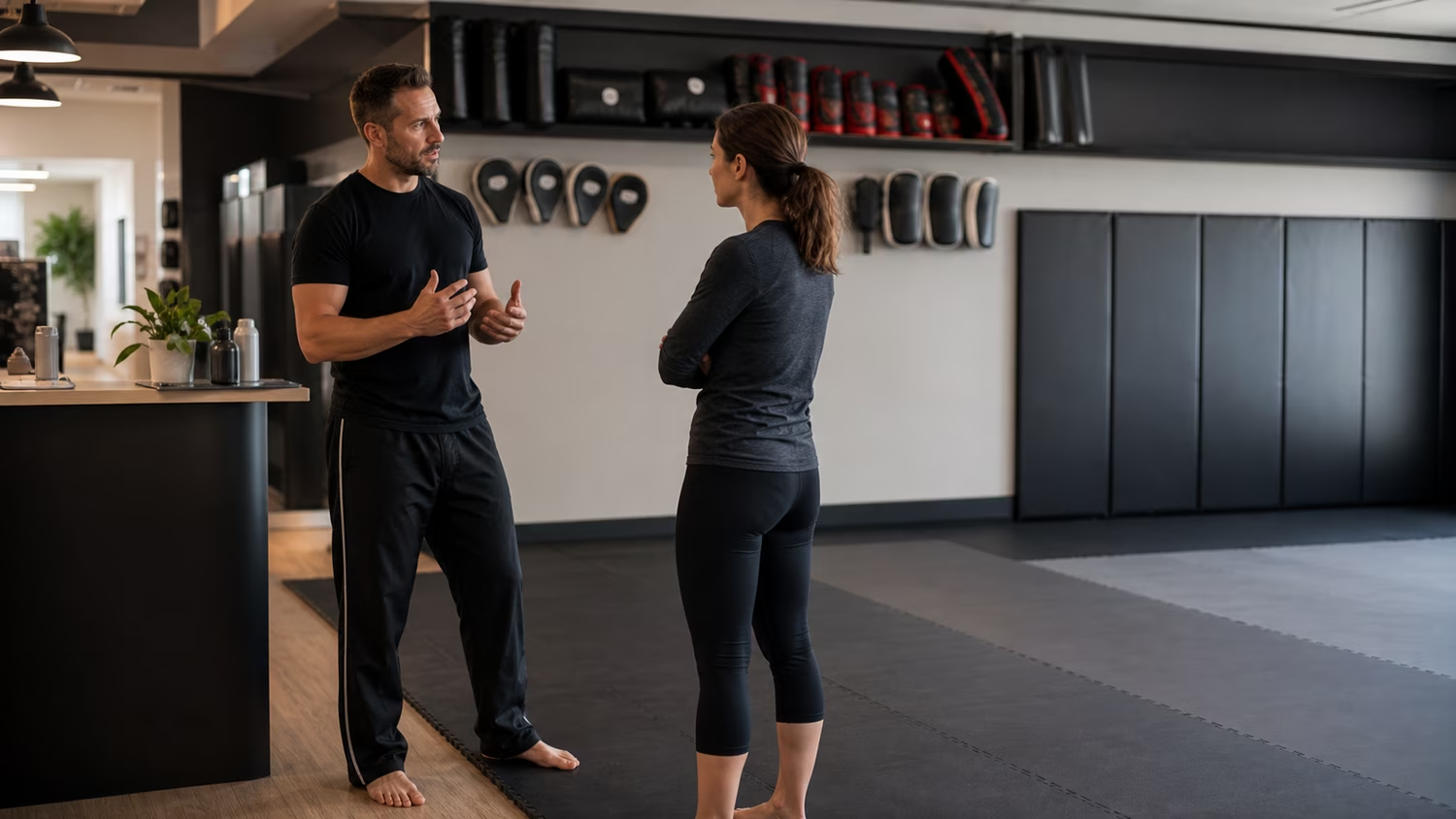
Coaches shape this culture more than slogans do. If an instructor treats every pause as a nuisance, students will learn to hide problems. If an instructor thanks people for speaking up, resets calmly, and keeps the class moving, students learn that stopping is part of training literacy. The difference may decide whether a beginner stays long enough to improve.
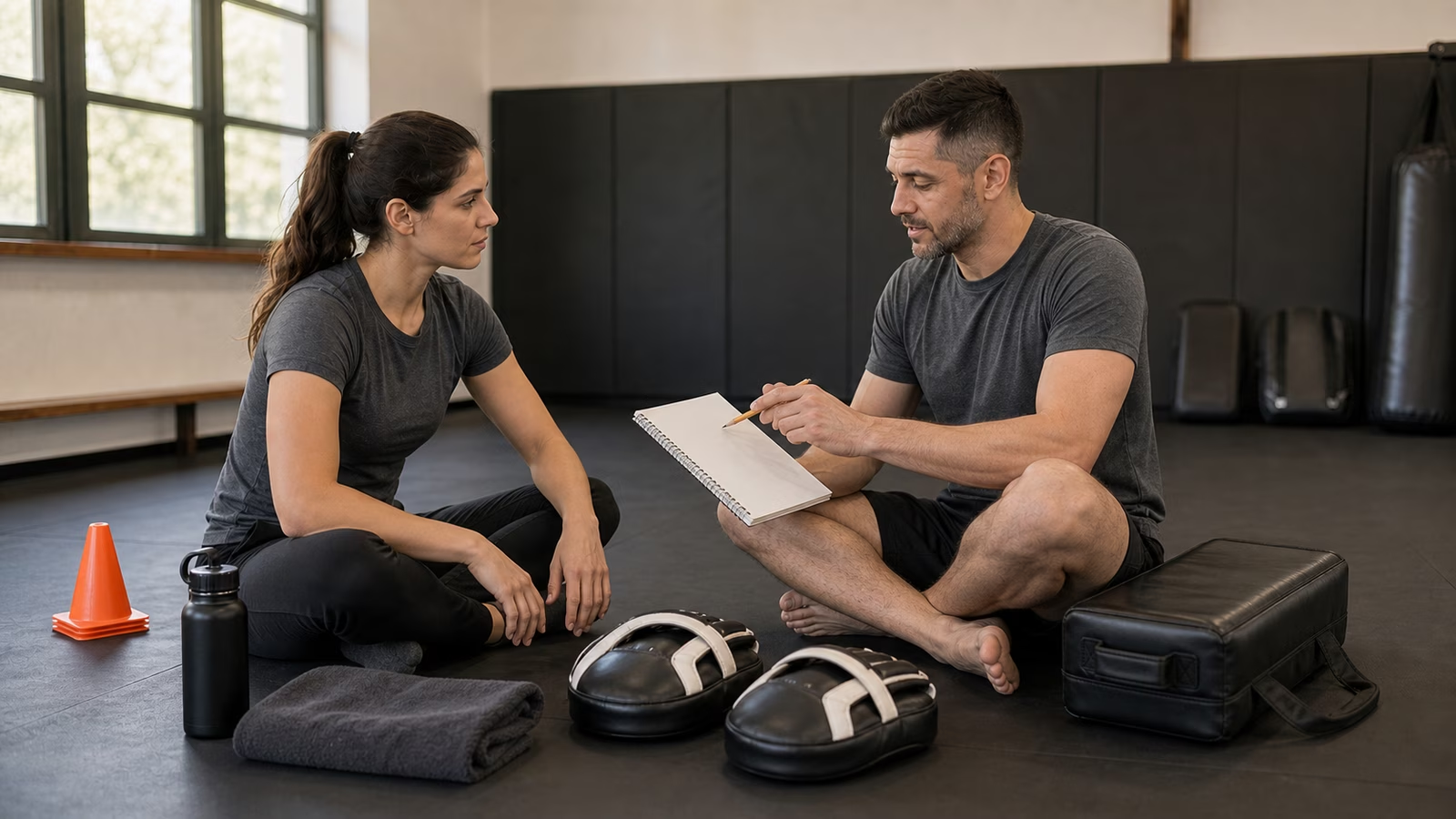
Choosing a Krav Maga School matters here because safety culture is visible before a class becomes intense. Watch how the instructor explains contact. Watch whether partners check each other. Watch whether beginners are rushed into speed they cannot control. Watch whether advanced students model patience or treat new people as equipment.
The partner has a vote
Partner work only works when both people have agency. A drill may be cooperative, resistant, pressured, or scenario-based, but it should not become one person’s private experiment on another person’s body.
This is why the partner has a vote about distance, speed, pressure, and contact. If your partner asks you to slow down, you slow down. If they ask to reset the grip, you reset the grip. If they say a movement hurts in the wrong way, you do not explain why it should not. You stop and get the instructor.
That does not make the class fragile. It makes the class usable. People can train harder over time when they trust the brakes. The student who knows a stop signal will be honored can tolerate more honest pressure than the student who suspects every concern will be mocked. Trust is not softness. It is the condition that lets adults practice difficult things without pretending the consequences are imaginary.
Partner Work in Krav Maga explains the contact side of this in more detail. The short version is that contact should have a purpose. Random intensity is not realism. It is just poor control with a confident face.
Pressure has a ladder
A good class does not jump from explanation to chaos. It builds a pressure ladder. The first rung may be a slow shape, then a cooperative repetition, then light resistance, then a timed drill, then a louder environment, then fatigue, then a more complex scenario. Not every class needs every rung. Not every student belongs on the same rung that day.
Safety signals let the ladder work. If a student cannot pause, the coach cannot accurately increase pressure. If a partner ignores signals, the drill cannot be trusted. If everyone treats stopping as failure, the class will either stay too tame or become reckless, because there is no honest way to find the middle.
The ladder also helps students name what went wrong. Maybe the technique was fine until speed rose. Maybe the stance collapsed only when the partner added resistance. Maybe breathing disappeared as soon as voices got loud. Maybe the student did not need more aggression; they needed a quieter repetition with cleaner distance.
This is where Breathing and Stress Recovery belongs beside safety signals. A pause is not complete until the student can come back enough to hear, speak, and choose. Panting in the corner with a frozen stare may be a normal stress response, but it is not a learning state yet.
The room should reward clean resets
In a healthy training room, resets are ordinary. A coach stops the class to fix a common mistake. A partner steps back because the spacing is wrong. Someone taps because pressure landed badly. A student asks to see the first step again. The class returns to work without drama.
That ordinariness is the goal. When stopping is rare and emotionally loaded, people wait too long. When stopping is normal, the room becomes more precise. Students take risks in a better way because they know the reset will catch them before the drill becomes foolish.
There is still responsibility on the student. Do not use safety language to avoid every hard moment. Do not call stop because you are annoyed that a partner is giving the resistance the instructor requested. Do not turn every correction into a negotiation. The point is not to make training comfortable at all times. The point is to keep it useful and controlled enough that discomfort can teach instead of derail.
The mature beginner learns the difference through repetition. They notice when fear is asking for breath, when pain is asking for care, when confusion is asking for instruction, and when pride is asking to be ignored.
Stopping is part of leaving
Krav Maga often talks about exits. Leave early, make space, do not stay to win a story you could avoid. The same logic belongs inside training. Stopping early in class is a miniature version of that larger habit. It teaches the body that it is allowed to interrupt momentum.
This matters because many bad decisions happen after the first warning sign. The distance was wrong, but the person kept going. The drill was unclear, but the student guessed. The partner was too intense, but nobody wanted to seem difficult. The wall was too close, but the class was moving fast. A stop signal gives people a practiced way to interrupt that chain.
No article can make a room safe by itself. That depends on instructors, students, space, supervision, humility, and the willingness to pause when the drill asks for more than the people in it can handle well. But a beginner who understands stopping early will see the room more clearly. They will know that safety is not the absence of pressure. It is the presence of control, communication, and trust.
The person who can say stop cleanly can also train harder when hard training is appropriate. They are not protecting themselves from learning. They are protecting the conditions that make learning real.