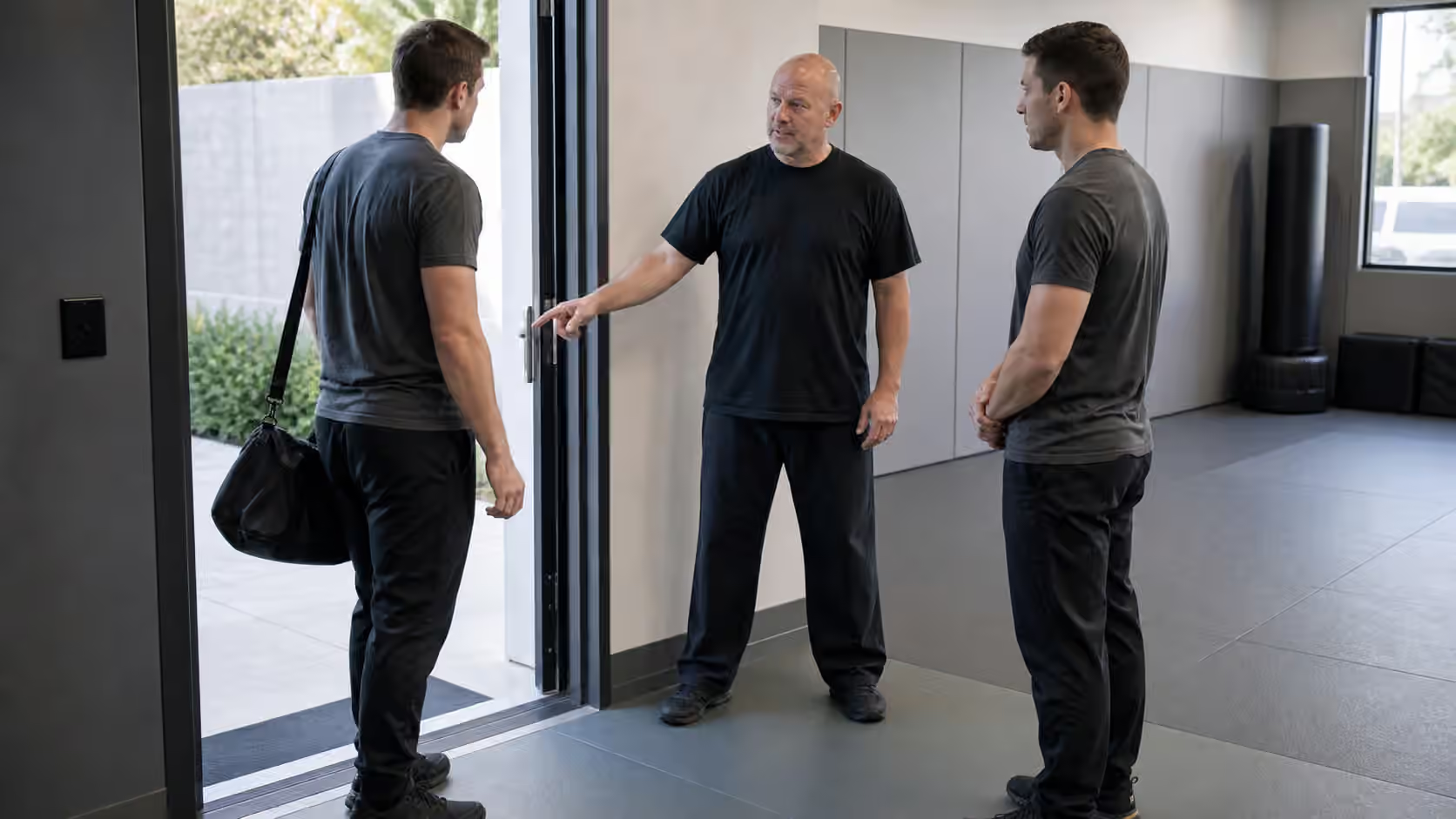
Restrooms, locker rooms, changing rooms, and similar private thresholds create a strange mix of ordinary routine and narrowed attention. People look down at bags, check pockets, wash hands, adjust clothing, manage children, change shoes, search for keys, or hurry because someone is waiting outside. Doors open and close. Sightlines are short. The body may be half turned, one hand may be occupied, and the social rules around privacy can make people slow to speak.
Krav Maga should approach this topic carefully. It should not turn private spaces into fear theater, and it should not ask students to act out humiliating scenes. The useful lesson is quieter: notice thresholds earlier, keep bags from owning both hands, preserve a lane to leave, and trust discomfort enough to change course before contact is the only remaining topic.
Privacy Can Delay Voice
People behave differently near private spaces. They may hesitate to make eye contact. They may avoid speaking loudly because they do not want to seem rude. They may excuse odd behavior because the setting is awkward. A person who would set a boundary quickly in a lobby may become quieter in a corridor outside a restroom or changing area.
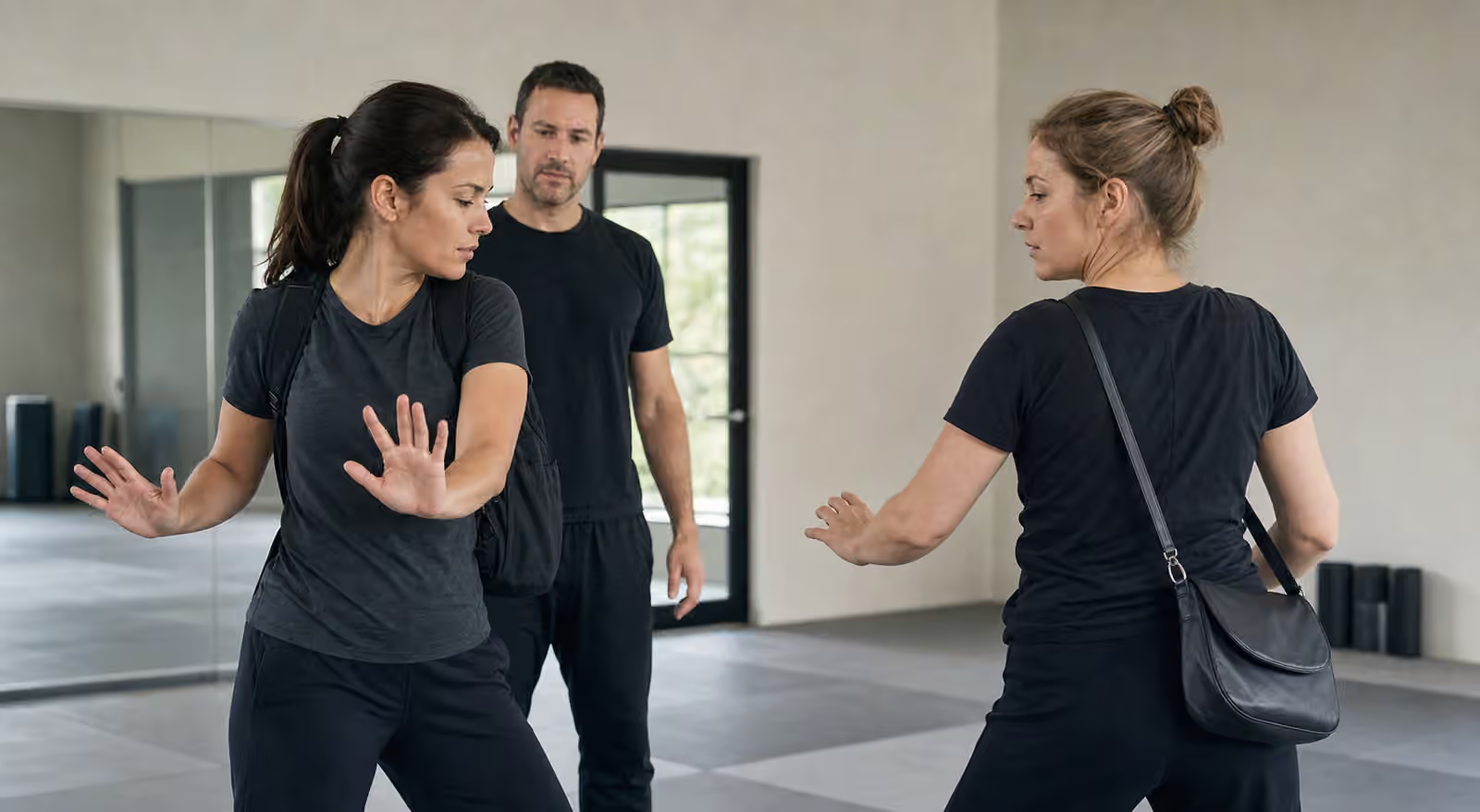
Voice Under Pressure matters here. The voice does not need to be dramatic. It may be a calm “I need space,” “I’ll wait outside,” “Go ahead,” or “I’m leaving.” The purpose is not to win a confrontation. It is to make the boundary clear enough that the body can move. Training should let students practice ordinary words in awkward settings without turning the drill into a performance.
The privacy of the setting also means role play needs restraint. A role player does not need insulting language, sexualized pressure, or humiliation to create a useful problem. A simple blocked doorway, an over-close question, a bag placed in the wrong lane, or a partner who fails to move when asked can teach enough. Scenario Role-Play in Krav Maga explains why realism without discipline becomes theater. That warning belongs strongly here.
The Doorway Is The Main Character
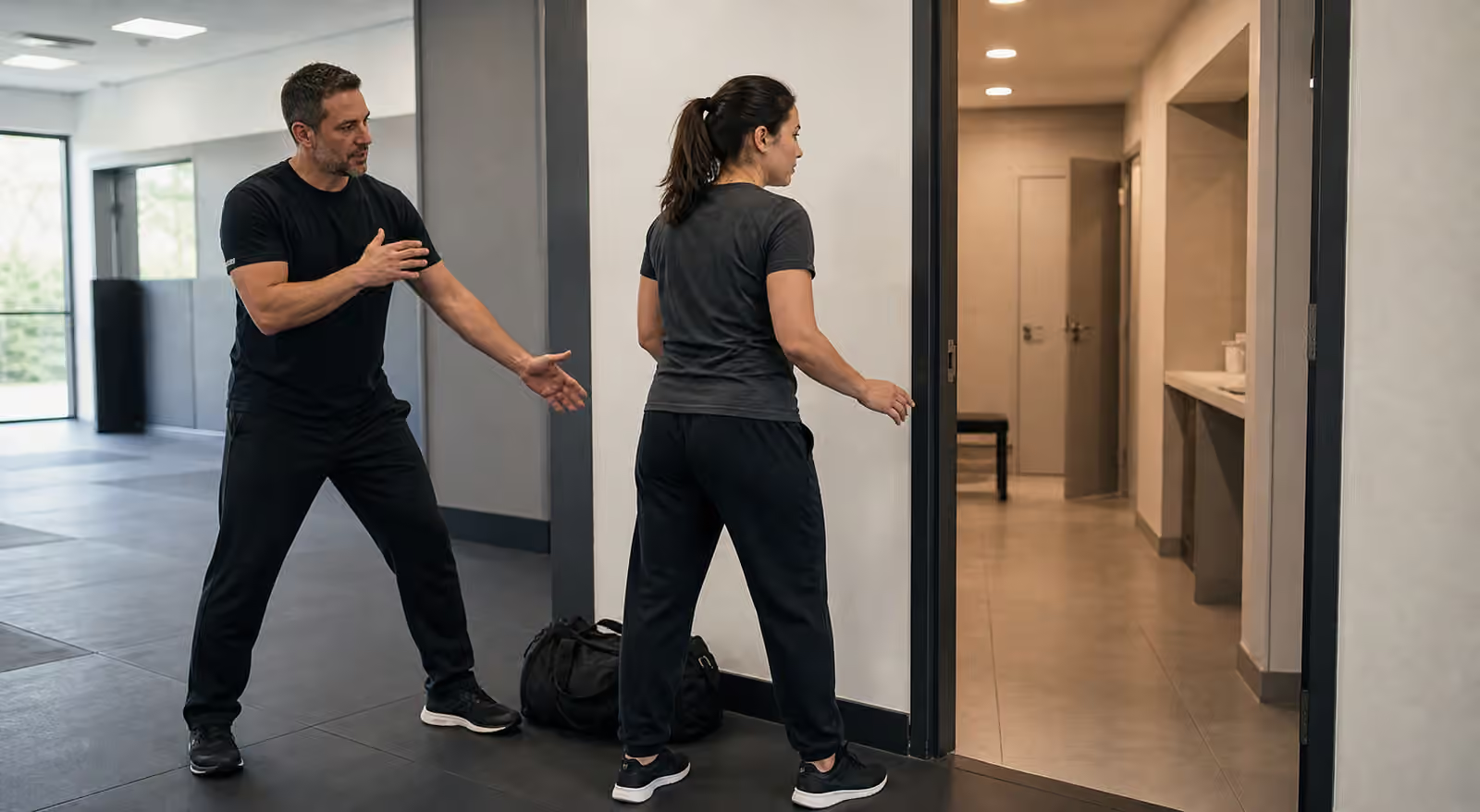
Restroom and changing-room awareness is mostly doorway awareness. A person is either about to enter, leaving, waiting, or standing in the small zone where other people need to pass. That zone can become crowded quickly. A door may swing inward or outward. A bag may be on the floor. A child may pause. Someone may stand too close because the hallway is narrow.
Threshold and Doorway Awareness gives the larger principle. A doorway is a decision point. Before crossing it, the student can look, free a hand, choose whether to enter now, and notice whether the exit lane is still available. None of that requires suspicion. It is the same ordinary attention used before stepping into an elevator, stairwell, parking garage, or crowded room.
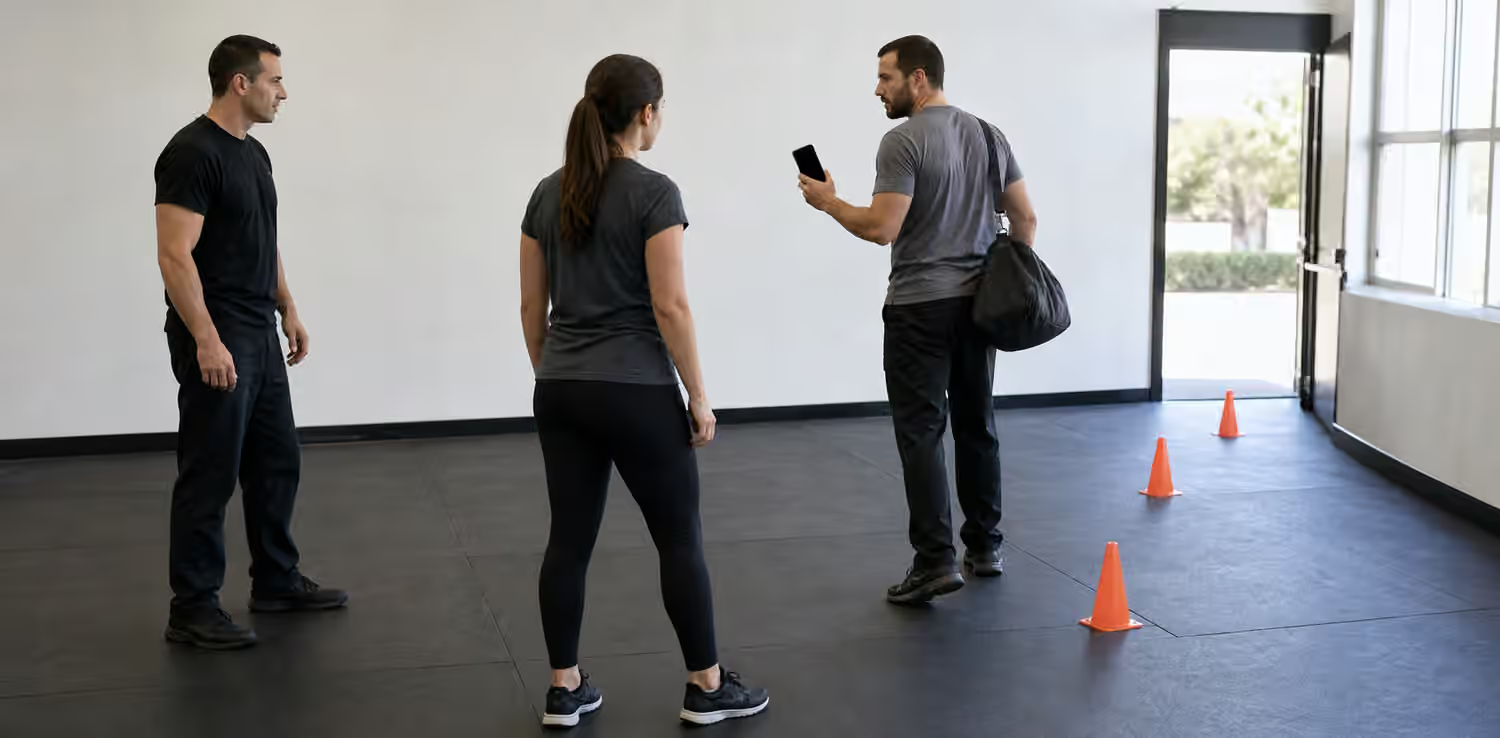
In a training room, the doorway can be marked with pads or cones. A student approaches with a gym bag, pauses, notices a partner standing near the frame, uses a short boundary, and chooses whether to enter, wait, or leave. The drill should reward the early decision. If every repetition ends with a physical answer, the class will miss the main lesson.
Bags And Clothing Narrow The Body
Private spaces often involve bags and clothing. A person may be holding a jacket, changing shoes, reaching into a backpack, or trying to keep belongings off the floor. These tasks bend the body and occupy the hands. They also make people reluctant to abandon the task because leaving halfway through feels inconvenient.
Backpack and Strap Awareness and Everyday Clothing and Footwear in Krav Maga both apply. A loose strap may catch. A coat may hide the hands. Shoes may not be fully tied. A towel, phone, or water bottle may become the thing the student keeps protecting while distance disappears.
The safer habit is to organize before entering the narrow space. Zip the bag before crossing the threshold. Keep one hand available when possible. Avoid standing in the doorway while sorting belongings. If something feels wrong, leave the task incomplete and move. A lost place in line or an awkward return is cheaper than being boxed in by pride and property.
Mirrors And Corners Can Mislead
Some locker and restroom areas include mirrors, corners, partitions, benches, and short hallways. Mirrors can help with awareness, but they can also pull attention into the reflection instead of the actual path. Corners can make people appear suddenly. Benches can turn an open route into a shin-level obstacle. Wet floors, loose clothing, and bare feet can further change movement.
This is where Environmental Movement in Krav Maga becomes practical. The environment is not decoration. It decides where feet can go. A student should not assume that a stance learned on open mats will remain stable near a wet sink area, a bench, a half-open door, or a bag on the floor.
Training can introduce these ideas without recreating a restroom. Chairs can mark benches. A mat edge can mark a wet zone. A pad can mark a door. The student practices entering, changing direction, and leaving without stepping backward into clutter. The goal is not to memorize a map. It is to feel how quickly a small private space changes the body’s choices.
Companions Make Privacy More Complicated
Restroom and changing-room settings often involve companions. A parent may be managing a child. A friend may be waiting outside. A teammate may be changing nearby. An older relative may need extra time. The student may feel responsible for someone else while also managing privacy and belongings.
Krav Maga When You Are Not Alone belongs in this conversation. Companion movement should be simple and early. It may mean waiting outside instead of entering a cramped space, choosing a staffed area, asking a friend to hold the bag, or guiding a child away from the doorway before sorting clothing. The exact choice depends on the setting. The principle stays steady: the person with less ability to improvise should influence the earliest decision.
In class, companion drills should be modest. One student carries a bag. Another plays a companion who pauses in the wrong lane. The defender uses calm voice and body position to keep the path open. No one needs to act frightened or predatory. The drill is about coordination under mild awkwardness, which is often closer to daily life than a dramatic scene.
Do Not Practice Dangerous Privacy Scenarios Casually
Some topics are too easy to mishandle. Anything involving changing rooms, restrooms, surprise contact, sexual threat, or trapped privacy needs qualified instruction, clear consent, and strict boundaries. Beginners should not improvise these scenarios at home or in informal groups. The risk of emotional harm, unsafe contact, and false confidence is too high.
Scenario Training and Ethics exists for exactly this reason. The harder the subject, the more disciplined the frame must be. Students should know what is being trained, what language is allowed, what contact is allowed, how to stop, and how to debrief. If the room cannot provide that structure, the room should choose a simpler drill.
The practical content does not disappear when the scenario is simplified. Students can still practice earlier exits, voice, bag management, doorway decisions, and attention to wet floors or blocked lanes. Those are the habits most likely to travel into real life anyway.
Leaving Early Is Not Overreacting
The hardest part of this topic may be permission. People worry about seeming rude, strange, or dramatic. They stay because they do not want to offend. They finish washing hands because stopping would look odd. They keep sorting a bag because they already started. Krav Maga should give students a better measure. If leaving early keeps more options open, it is not overreacting. It is using time well.
That does not mean every discomfort signals danger. Most awkward moments are only awkward. The skill is not panic. It is clean adjustment. Wait outside. Change rooms. Ask a staff member. Return later. Leave with the bag half closed. Use the wider door. Stand where the exit is visible. These are plain choices that keep the situation from becoming smaller.
Restroom and changing-room awareness is not about fear of private spaces. It is about respecting how privacy changes voice, posture, belongings, and exits. Good training keeps the lesson ordinary enough to use and careful enough not to make the room unsafe.