Krav Maga progress is easy to mistake for volume. A louder class feels more serious. A harder pad round feels more real. A faster partner drill feels like proof that something is happening. Beginners often leave the room measuring themselves by sweat, bruises, nervous excitement, and whether the final drill looked intense enough to tell a story about later.
Those signals are not useless, but they are poor rulers. Intensity can reveal skill, but it can also hide bad movement. A person can work hard while stepping off balance, holding their breath, ignoring distance, missing exits, and treating every correction as a threat to pride. They may feel exhausted and still have practiced the wrong lesson.
Better progress is quieter. It shows up when a student moves sooner, resets cleaner, notices spacing earlier, listens better under stress, asks more specific questions, and leaves class with a body that can train again.
The first sign is less confusion
The first month often feels messy because everything arrives at once. Stance, hands, footwork, pads, partners, voice, breathing, and unfamiliar words compete for attention. A new student may believe progress means adding more techniques quickly. Usually, the first real progress is that the room becomes less confusing.
You start to understand where to stand when the instructor demonstrates. You know how to hold a pad without making your partner chase it. You understand why the coach keeps talking about distance before contact. You recognize the difference between a warmup, a technical drill, and a pressure drill. You begin to hear repeated cues before they are directed at you.
This kind of progress can feel small because nobody applauds it. But it changes everything. A less confused student becomes a safer partner and a faster learner. They stop spending half the class decoding the room and start noticing the lesson.
Krav Maga Quickstart frames the first stretch of training around posture, attention, and permission to leave. Those are not beginner chores to rush through. They are the foundation that makes later pressure useful.
Cleaner movement beats bigger movement
Beginners often make movements larger when they want them to feel effective. Bigger steps, bigger swings, louder breathing, more tension in the shoulders, and more dramatic resets can create the feeling of effort. The problem is that large movement is not always better movement.
Clean progress looks like balance. A student steps without crossing their feet unnecessarily. They stop without drifting. They bring their hands back without being reminded every time. They strike a pad and recover instead of admiring the strike. They can move backward without falling into a chair, wall, or partner. Their chin does not float forward as soon as pressure rises.
Footwork and Balance belongs near any discussion of progress because it shows whether the body can carry the lesson. When footwork improves, other skills become less frantic. The student does not need to compensate with speed because the base is doing more work.
Clean movement also makes feedback easier. A coach can correct one thing when the rest of the body is not shouting. If everything is tense, oversized, and rushed, the correction gets lost.
Better partner work is visible
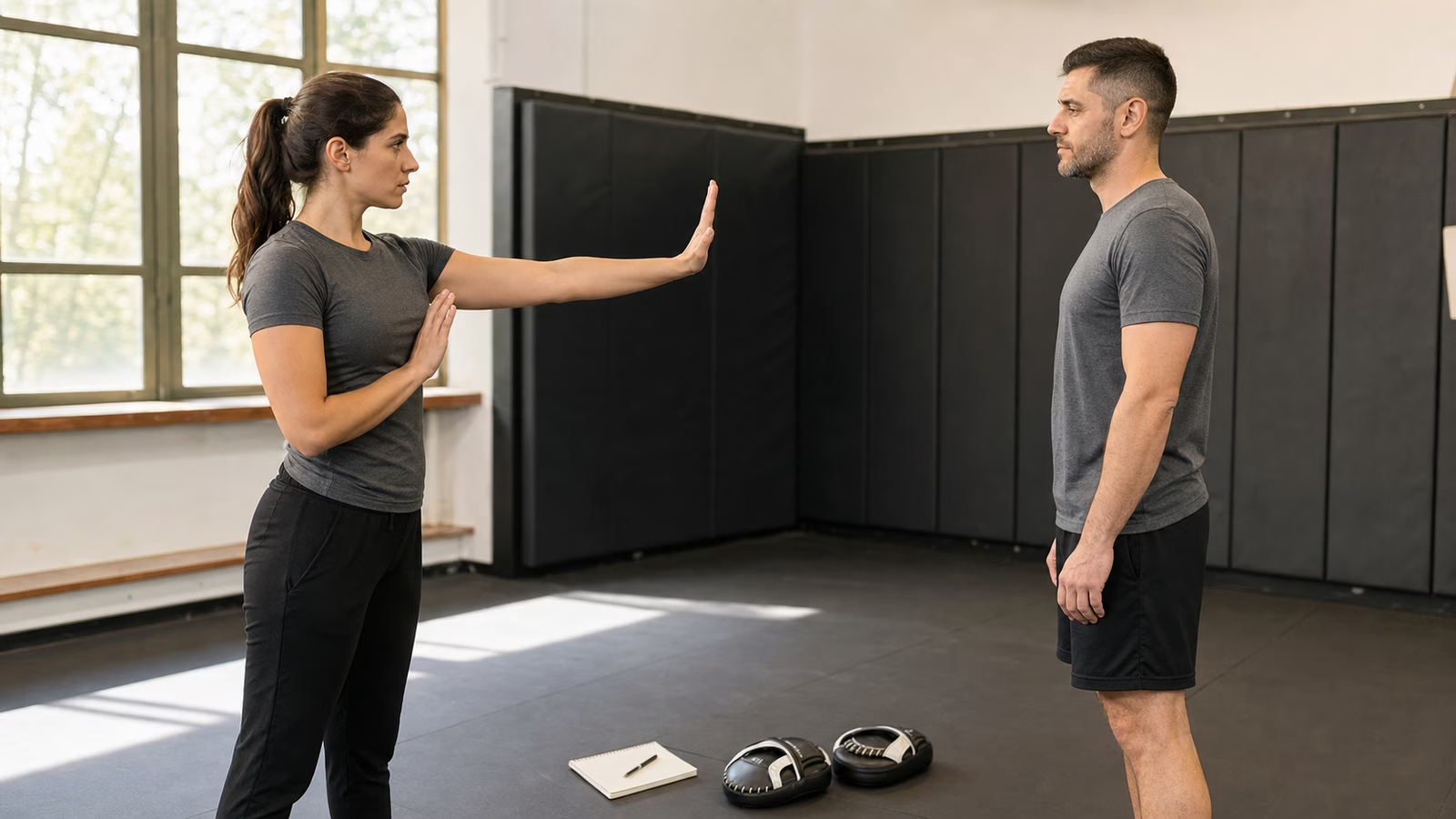
Krav Maga is learned with other people, and other people are not props. A student’s progress shows in how they treat partners. Do they check distance before the drill begins? Do they adjust pad height? Do they listen when someone asks to slow down? Do they reset without rolling their eyes? Do they understand that contact has a purpose?
The better partner is not the one who dominates every repetition. The better partner gives honest practice without making the room revolve around them. They can hold pressure at the level requested. They can add resistance without turning a technical drill into a private contest. They can stop when the stop signal appears.
Partner Work in Krav Maga and Safety Signals and Stopping Early explain this directly. A student’s progress is not only their own mechanics. It is also their ability to make the next person better and safer.
This is where maturity becomes physical. The student who wants to prove themselves often makes a poor partner. The student who wants the drill to work becomes useful.
Awareness becomes earlier and calmer
Progress in Krav Maga should not make the world feel more threatening. It should make ordinary attention arrive earlier. You notice exits without staring at them. You choose better spacing in a crowded room. You move around a group instead of threading through it. You put the phone away before crossing a dark parking lot. You sense when a conversation is becoming too tight and create space without drama.
That is different from suspicion. Suspicion makes every room hostile. Awareness makes more options visible. The student is not hunting for danger. They are preserving choices.
Distance, Awareness, and Exit is the core guide here. If months of training only make a person more eager to test physical answers, something has gone sideways. Real progress often looks like needing fewer physical answers because the student leaves earlier, speaks earlier, or stands somewhere better.
Recovery is a skill
A student who can work hard but cannot recover is only halfway trained. Pressure drills, pad rounds, and scenario work are useful when the student can come back, hear instruction, and try again with more information. If every hard drill ends in frozen staring, jokes that cover panic, or anger at correction, the training is not finished.
Progress shows when breathing returns sooner. The student can say what happened. They can admit confusion without shame. They can receive a correction while tired. They can distinguish fear from injury, fatigue from danger, and effort from effectiveness.
Breathing and Stress Recovery explains why this matters. Stress is not valuable just because it is stressful. It becomes valuable when the student learns to move through it and then return to a learning state.
Notes reveal the pattern
Training can feel random if you judge it class by class. One day you feel sharp. Another day your timing disappears. One partner helps you learn. Another exposes every weakness. A notebook makes the pattern visible.
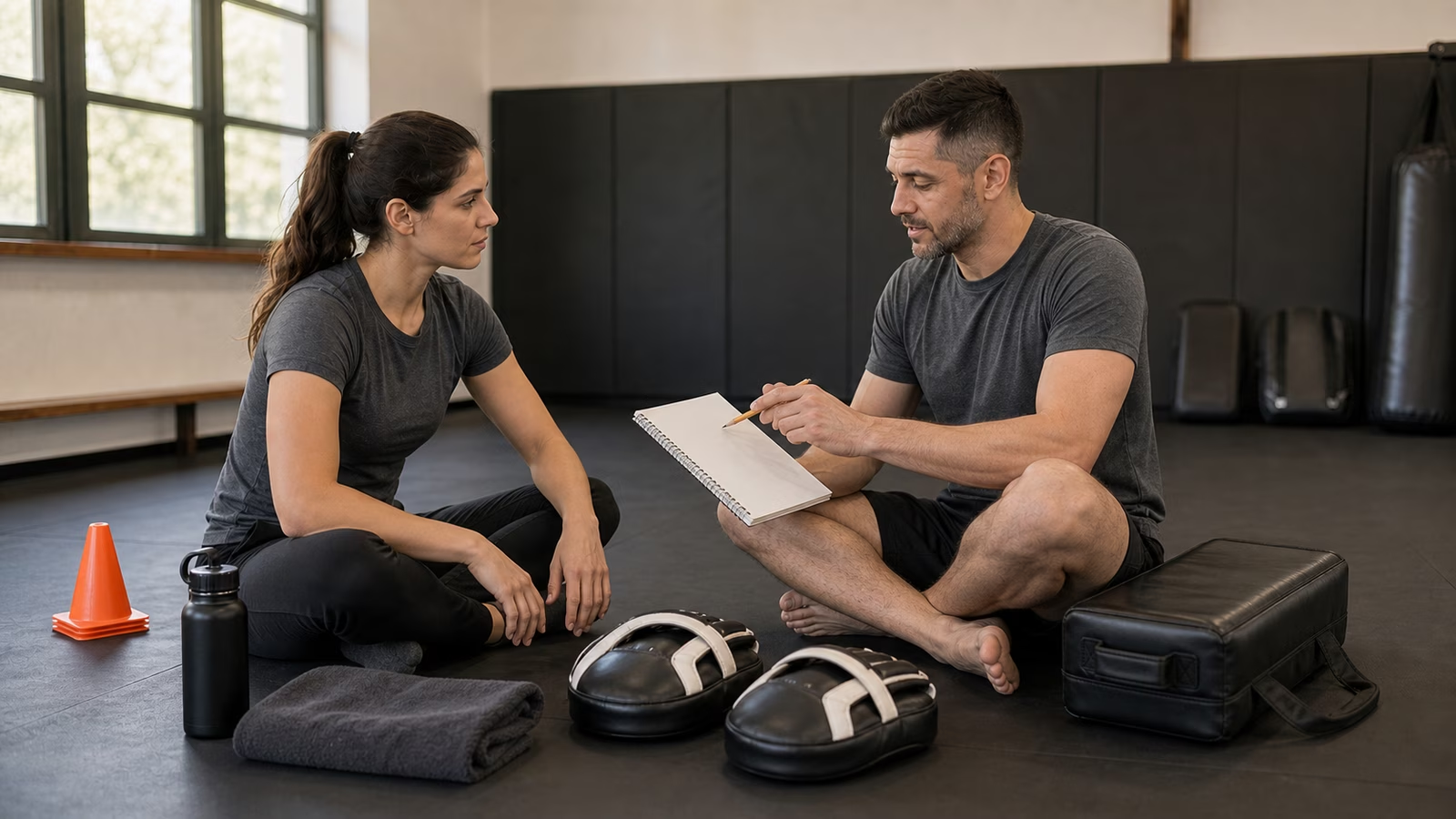
Write what the class was about, what correction came up repeatedly, what felt better, what still felt confusing, and what question you want to bring back. The notes do not need to be elegant. They need to be honest. After a few weeks, you may see that the same issue keeps returning. Maybe your shoulders rise under pressure. Maybe your stance narrows. Maybe you avoid using your voice. Maybe you rush the first repetition and learn more on the third.
Training Between Krav Maga Classes treats recall as practice because it is. Progress becomes easier to see when you stop relying on the feeling of the last class.
The mature beginner chases usefulness
There is nothing wrong with wanting training to feel alive. A class that never raises pressure may fail to prepare students for stress. But intensity is a tool, not a scoreboard. The question is not whether the drill was hard. The question is whether it taught something useful at a level the student could process safely.
The mature beginner learns to value boring signs. Cleaner stance. Better distance. More controlled contact. Faster recovery. Fewer unnecessary arguments with correction. More honest questions. Less confusion. More respect for the partner. More willingness to leave.
Those signs do not make dramatic clips. They make safer students.
Krav Maga progress is not a straight climb toward harder and harder drills. It is a widening ability to stay useful when the situation becomes less tidy. Sometimes that means more pressure. Sometimes it means slowing down. Sometimes it means admitting that the thing you most want to practice belongs in class, with coaching, not in your living room.
Do not chase intensity as proof. Chase the ability to see earlier, move cleaner, stop sooner, recover faster, and train again tomorrow. That is progress you can actually use.